REVIEW · OSAKA
Nara Private Tour with Pick and Drop and English Speaking Driver
Book on Viator →Bookable on Viator
Deer, temples, and gardens in one day. This private Nara tour is built around pickup-and-drop-off convenience and an English-speaking driver, plus a schedule you can bend a bit to your interests. I especially like how it targets the classics (Todai-ji, Nara Park) while also slipping in quieter texture like Naramachi and the palace ruins. One thing to consider first: it is mainly a car-and-driver setup, so you’ll pay several separate temple and garden entrance fees, and there is no listed guide.
For a lot of people, Nara is one of those days where transportation matters more than you expect. Routes between the deer park, the big Buddha, the museum, and the gardens can eat time. A private driver (up to 6 people) keeps the day from turning into a hopping sprint.
If your ideal day is a deep, spoken, expert-style tour inside every site, you should manage expectations. The driver can help with timing and directions, but the tour data does not include a separate guide.
In This Review
- Quick highlights: what makes this Nara plan work
- Nara in a private car: what you really get from this day trip
- Price and logistics: does $526.26 per group feel fair?
- Pickup and the English-speaking driver: how the day starts matters
- Stop-by-stop: Nara Park and the deer encounter you came for
- Todai-ji’s Great Buddha: the sight that anchors the whole day
- Kasuga Taisha Museum: history you can walk through at your speed
- Naramachi and Kofuku-ji: old streets and a classic pagoda setting
- Nara National Museum and the palace ruins: context without the pressure
- Isuien Garden and Yoshikien: your breathing space after the big sights
- Who this Nara private tour fits best
- Should you book this Nara private tour?
- FAQ
- How long is the Nara private tour?
- How many people can be in a group?
- Is pickup and drop-off included?
- Is there an English-speaking driver?
- Are entrance fees included in the price?
- Is there a guide included?
- Is this a private tour?
- Are there mobile tickets?
- What are the main stops on the tour?
Quick highlights: what makes this Nara plan work
- Private pickup and drop-off that keeps your start stress low and your day flowing
- English-speaking driver who can help you move between key areas efficiently
- Classic Nara hits: Nara Park, Todai-ji, Kofuku-ji, plus historic Naramachi
- Garden time that gives your feet a break: Isuien Garden and Yoshikien
- Customizable timing, so you can linger where you care most
- Mobile ticket included, which helps at some stops
Nara in a private car: what you really get from this day trip

Think of this as a full-day structure for seeing Nara with a private vehicle, not a scripted walking tour. You get transportation plus an English-speaking driver, and the itinerary is designed so you can hit the headline sights without constantly checking transit schedules.
That matters because Nara is not a single “one street” town. You’ll be bouncing between clusters: the deer park and Todai-ji area, then down into old-town streets like Naramachi, then out toward museums and garden spaces. In a group, traffic and parking add friction fast. With private transport, your biggest choices become how long you want to spend at each place.
It’s also a “pick your pace” style day. The plan lists times for each stop (often around 1 hour), but the experience is described as fully customizable, meaning you can usually adjust how much time you allocate. If you love gardens, you’ll want more time at Isuien and Yoshikien. If you’re temple-obsessed, you’ll probably spend longer at Todai-ji and Kofuku-ji.
You can also read our reviews of more private tours in Osaka

Price and logistics: does $526.26 per group feel fair?
The price is $526.26 per group (up to 6). If you fill all six seats, that’s about $87.70 per person for private transportation and an English-speaking driver for roughly 8–10 hours (travel time included).
Then there are the extras you should plan for. Entrance fees are not included, and the itinerary lists several paid stops:
- Nara Park: 469 Zoshicho, ¥621 per person
- Todai-ji Temple: ¥800 per person
- Kasuga Taisha Museum: ¥500 per person
- Nara National Museum: ¥700 per person
- Isuien Garden: ¥1,200 per person
If you do all of those paid locations, you’re looking at ¥3,821 per person in listed entrance fees (before any snacks or shopping). Most free stops on this plan include Naramachi, Kofuku-ji, Nara Palace Site Historical Park, and Yoshikien.
So is it value? For a family or a small group, yes, because you’re paying to avoid multiple transit legs and time-sinks. For solo travelers or couples, it can still be worthwhile if you hate logistics days—but you’ll feel the price more strongly, especially once entrance fees stack on top.
One more practical note: meals are not included, so you’ll want to bring a plan for lunch or accept that you may grab something near the route you choose.
Pickup and the English-speaking driver: how the day starts matters
This is a private tour, so you ride with your own group only. Pickup and drop-off are included, and you’ll receive a mobile ticket.
A big positive signal from the experience details is communication. One driver named Usama is specifically mentioned as being prompt and confirming pickup the night before. That kind of coordination can be the difference between a smooth morning and a frantic one.
I also like that the vehicle situation can be checked in your mind before you commit. The positive account describes a clean, large, air-conditioned vehicle, which is exactly what you want for a long day. On the flip side, another account raised concerns about a dirty van and risky driving behavior. You can’t control every driver, but you can control what you ask:
- confirm your pickup timing clearly
- ask about vehicle condition when you arrive
- set a comfortable expectation for safety and pace
If you book, treat this as “transport-first.” Your best day happens when the driver is competent and calm.
Stop-by-stop: Nara Park and the deer encounter you came for
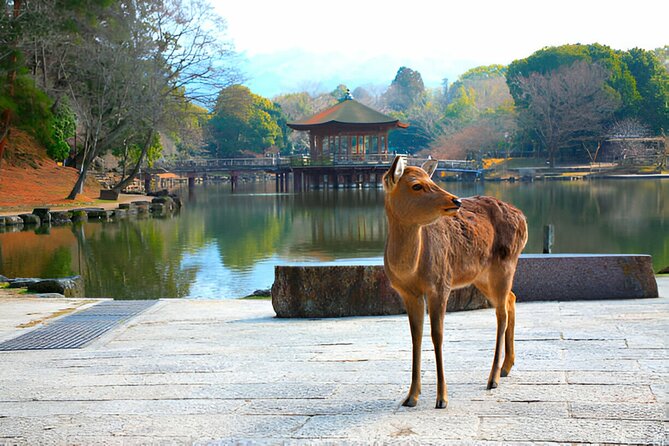
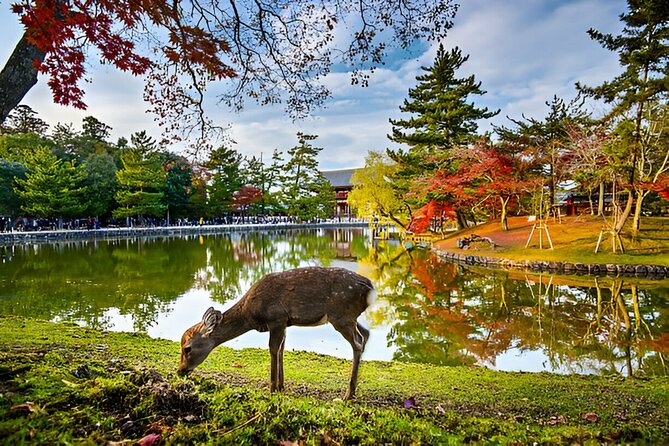
Nara Park is the opening act: a large, historic park with a reputation for deer that roam freely. The plan allows about 1 hour 30 minutes, and the highlights specifically call out interacting with the deer.
What’s good here is the sheer simplicity. You’re not sprinting between multiple long entrances yet—you’re getting into the atmosphere of Nara right away. If you want photos, this is a great place to spend a chunk of your morning or early afternoon.
The main consideration: timing and crowd flow. Nara Park can get busy, and deer are part of the scene. Give yourself a little wiggle room to step aside, observe, and avoid feeling rushed. If you’re visiting with kids, you’ll probably want more time than you think just to watch the deer behavior calmly.
Also remember: Nara Park has a listed entrance fee (¥621 per person), and it is not included in the tour price.
Todai-ji’s Great Buddha: the sight that anchors the whole day
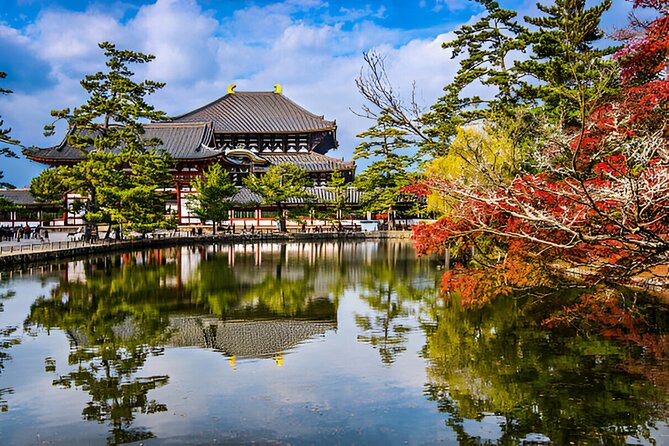
Todai-ji is the heavyweight. This UNESCO World Heritage site houses the Great Buddha (Daibutsuden), and the plan gives you about 1 hour here.
A one-hour window can be enough if you focus on the big moments: the main hall area, the main sight lines, and a quick read of what you can at your own pace. If you like to slow down and absorb details, you may want to use your flexibility and stretch longer.
This stop is not included in the tour price either. The listed entrance fee is ¥800 per person, and that’s worth planning for so you don’t feel hit with it at the last minute.
One practical tip for your visit: go in with a strategy for your photos. Todai-ji’s scale can fool you. Decide whether you want wide views first or close-up statue moments first—then you won’t burn time switching gears.
You can also read our reviews of more tours and experiences in Osaka



Kasuga Taisha Museum: history you can walk through at your speed
Instead of being only about outdoor shrine sights, this itinerary includes the Kasuga Taisha Museum for about 1 hour. Admission is not included, and the listed fee is ¥500 per person.
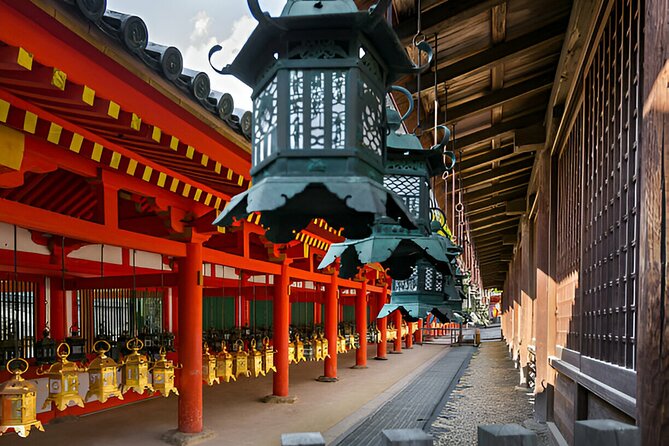
Why this works: museums can turn what looks like random architecture into something you understand. The museum is dedicated to the cultural and religious significance of Kasuga Taisha Shrine (which is UNESCO-listed), so you’re connecting the dots as you move through Nara’s spiritual sites.
Your booking notes also mention Kasuga Taisha’s lantern displays. The tour data here specifically lists the museum stop, so if lanterns are a top priority for you, confirm the timing and whether the day plan is set up for that experience. Lantern atmospheres usually depend on time of day.
Naramachi and Kofuku-ji: old streets and a classic pagoda setting
After the major landmarks, the day shifts into a more human scale with Naramachi, the historic district. The plan gives about 1 hour, and this stop is listed as free.
Naramachi is a smart choice because it breaks the temple cadence. You get traditional streets and a different kind of Nara “look,” which also helps with the mental fatigue that comes from bouncing between big indoor halls.
Then comes Kofuku-ji for about 1 hour. It’s listed as free, and it’s another major Buddhist temple complex with long historical roots. This is the part of the day where you can compare vibes: Todai-ji is monumental, while Kofuku-ji adds texture through its temple grounds and famous structures, including the five-story pagoda referenced in the tour highlights.
This pair—Naramachi plus Kofuku-ji—gives you variety without costing extra admissions beyond what you already paid earlier.
Nara National Museum and the palace ruins: context without the pressure
Two more stops aim to round out your understanding.
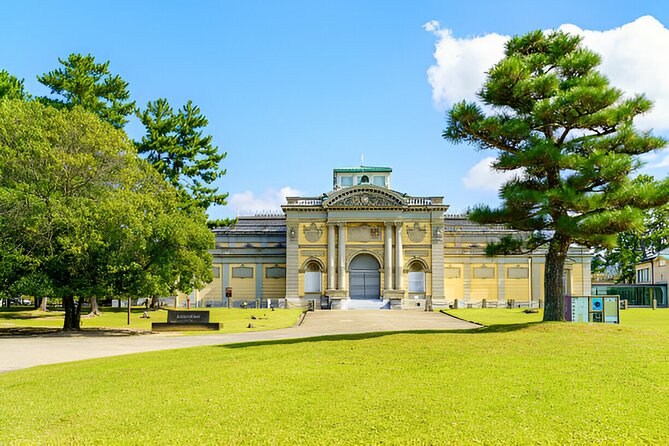
Nara National Museum is listed for about 1 hour, and admission is not included (¥700 per person). Museums aren’t everyone’s favorite when you only have one day, but this one can help you connect the dots between what you saw at the big temples and what existed behind the scenes.
Then there’s Nara Palace Site Historical Park for about 1 hour. This stop is free. The palace site preserves remnants of the ancient imperial capital’s layout, dating back to the 8th century.
What I like about adding the palace ruins is that it gives you a “bigger picture” view. Temples show religious life. Streets show daily life. Palace grounds show how power and planning shaped the city. Even if you only do a light walk and read key markers, it changes how the rest of your day feels.
Isuien Garden and Yoshikien: your breathing space after the big sights
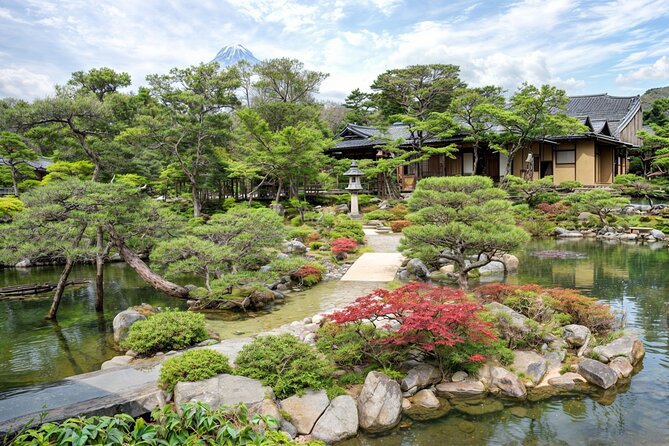
By the time you reach the gardens, your legs will want downtime. This itinerary includes both Isuien Garden and Yoshikien, which is a nice one-two: different garden styles, both focused on calmer pacing.
Isuien Garden is about 1 hour. Admission is not included and is listed at ¥1,200 per person. If you’re going to pay for a garden stop, this one is the main budget hit, so plan to treat it as a true rest window rather than a quick photo stop.
Yoshikien follows with about 1 hour and is listed as free. Because it’s free, it’s easier to enjoy without feeling like you have to “get your money’s worth.” It’s known for multiple garden styles (pond, moss, and tea field areas are part of what’s described), so you get variety without paying extra ticket time.
This garden sequence is one of the best reasons to choose a private day plan. In a rushed group tour, gardens often get cut. Here, you’re explicitly given time for them.
Who this Nara private tour fits best
This trip fits best if you want:
- a private, car-based day with minimal transit stress
- English help for navigation, timing, and moving between key Nara zones
- a balanced itinerary that includes both major sights and calmer breaks
- flexibility to spend longer where you care most
It might not fit if:
- you expect a separate, in-depth guide for every site (the data lists guide as not included)
- you’re traveling as a solo unit and don’t want to split the per-person cost
- your top priority is a heavily timed shrine event (lantern viewing depends on what’s actually planned)
Should you book this Nara private tour?
I’d book it if you’re traveling as a small group and you value comfort, convenience, and a day that doesn’t feel like a commute. The combination of Todai-ji, Nara Park, historic Naramachi, and at least one paid garden stop gives you a well-rounded Nara sampler that still has breathing space.
I’d think twice if you’re expecting a guide-led storytelling tour at every stop. This plan is strong on transport and scheduling, but the “who narrates?” question is not guaranteed in the info provided. If that’s important to you, you should confirm what the driver will do in terms of explanations.
And one final reality check: entrance fees are a meaningful add-on. If your budget is tight, you can still enjoy the free stops (Naramachi, Kofuku-ji, Nara Palace Site, Yoshikien), but Todai-ji and Isuien are hard to skip if those are your must-dos.
FAQ
How long is the Nara private tour?
The tour duration is about 8 to 10 hours, and travel time is included in that total.
How many people can be in a group?
The price is per group up to 6 people.
Is pickup and drop-off included?
Yes. Pickup is offered, and pickup and drop-off are included.
Is there an English-speaking driver?
Yes. The tour includes an English-speaking driver.
Are entrance fees included in the price?
No. Entrance fees for several stops are not included, including Nara Park, Todai-ji, Kasuga Taisha Museum, Nara National Museum, and Isuien Garden.
Is there a guide included?
No. A guide is listed as not included.
Is this a private tour?
Yes. It is private, and only your group will participate.
Are there mobile tickets?
Yes. Mobile ticketing is included.
What are the main stops on the tour?
The plan includes Nara Park, Todai-ji Temple, Kasuga Taisha Museum, Naramachi, Kofuku-ji Temple, Nara National Museum, Nara Palace Site Historical Park, Isuien Garden, and Yoshikien.