REVIEW · OSAKA
Osaka: Kuromon Market Food Walking Tour (6 stops, 6 tastes)
Book on GetYourGuide →Operated by MagicalTrip · Bookable on GetYourGuide
Osaka eats start fast. I love that Kuromon Market is guided by locals who steer you to the best stalls, and I love that the tour gives 5–6 tastes so you leave satisfied, not just snacky. The only catch: there’s no gluten-free accommodation, so check that before you book.
You’ll also get more than food. The route threads through places like Sennichimae Doguyasuji Shotengai, Hozenji Yokocho, and the Dotonbori area so you see how Osaka eats, shops, and hangs out. Guides such as Nina, Niko, Aina, Noz, and Aya are repeatedly praised for clear English and strong local context, plus they often help with lots of photos.
In This Review
- Key things I’d bet on
- Kuromon Market street-food value: is $49 actually fair?
- Where you meet and how not to miss the start
- Start at Picasso Japan: a quick warm-up before you eat
- Kuromon Ichiba Market: the included tastings that add up
- How to approach the tasting so you don’t regret it
- Sennichimae Doguyasuji Shotengai: knives, cookware, and practical souvenir ideas
- A practical tip for buying here
- A quick local restaurant stop and a breather on the route
- Hozenji Yokocho: alley vibes and a different Osaka rhythm
- Dotonbori finale: learn the scene, then enjoy it on your own
- What you might eat beyond the headline classics
- Dietary needs: what’s guaranteed and what’s not
- Souvenirs: kitchenware and tableware that actually travel well
- Who should book this Kuromon Market food walk
- Who should skip it
- Should you book it?
- FAQ
- How long is the Osaka Kuromon Market food walking tour?
- How many food tastings are included?
- Where do I meet the guide?
- Is this tour gluten-free friendly?
- Can vegetarians or vegans join?
- Are tour photos included?
- Do I need cash?
- Is the tour wheelchair accessible?
Key things I’d bet on
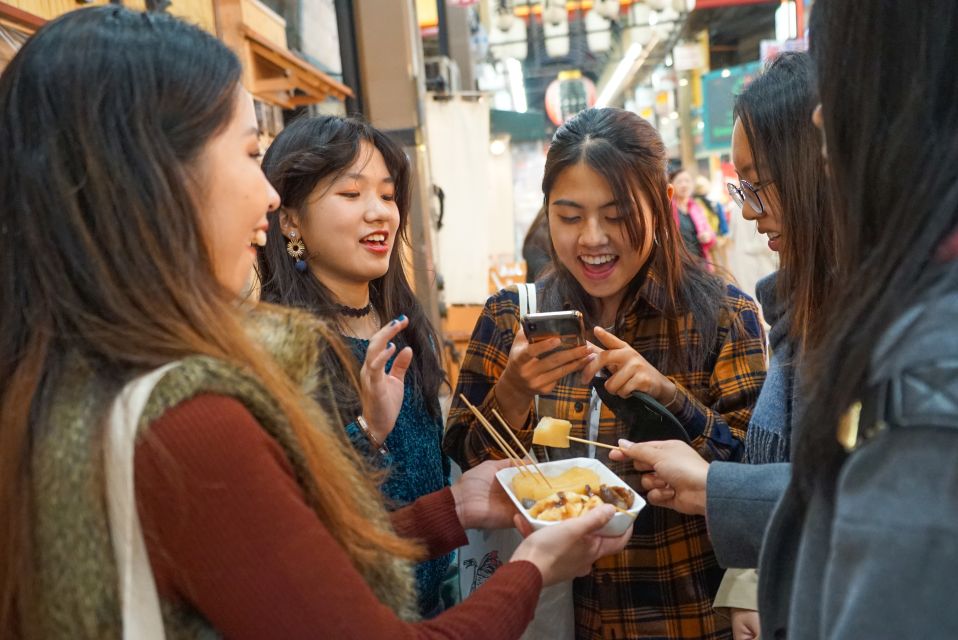
- 5–6 included food samplings that add up to a full meal for most people
- Local guide selection so you’re not guessing which stalls are worth your yen
- Kitchenware and knife-shop shopping ideas near Sennichimae Doguyasuji
- Street-level Osaka atmosphere, from market lanes to Hozenji’s alley vibe
- Tour photos included, which is great when you’re busy eating and walking
Kuromon Market street-food value: is $49 actually fair?
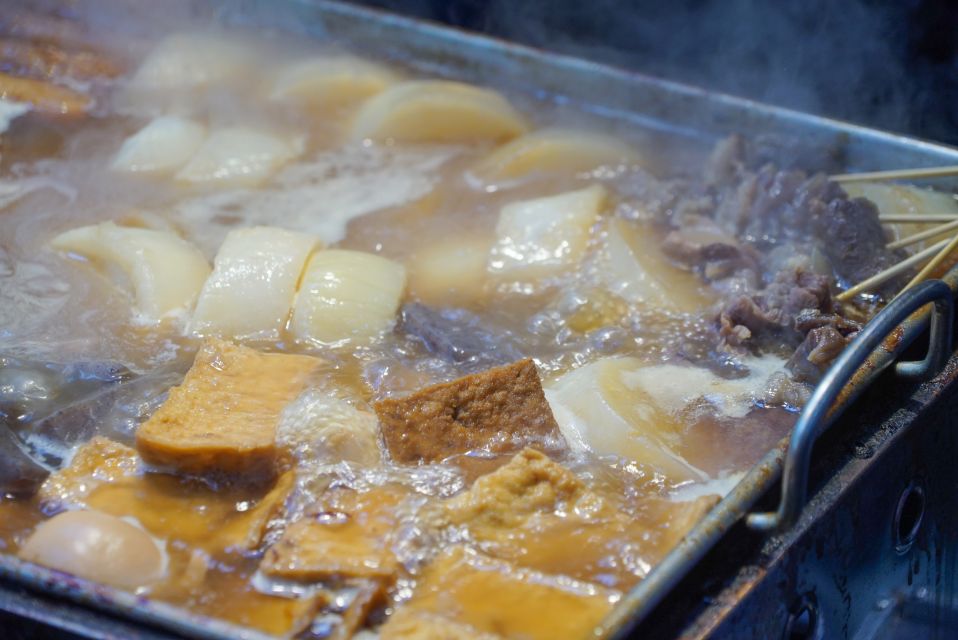
At $49 per person for about 2 hours, the value here comes from two things: the food volume and the guidance. Five to six tastings in Japan can be surprisingly filling—especially when they’re hot, grilled, and served as proper bites (not just a toothpick “sample”).
Then there’s the human part. In Kuromon, the hardest job isn’t finding food. It’s choosing the right stall, timing your order, and not getting swept into a line that leads to something you won’t enjoy. The guide does that sorting for you, and you’ll also get tips for where to buy kitchenware/tableware souvenirs after you’ve eaten.
You can also read our reviews of more walking tours in Osaka


Where you meet and how not to miss the start
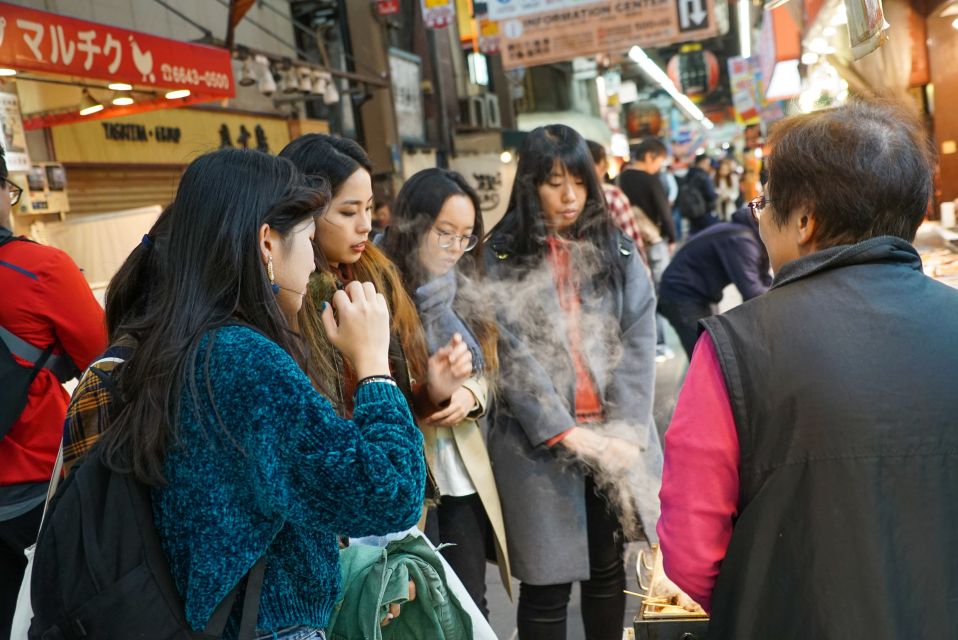
You meet in front of the SMBC ATM at Nippon-bashi 1chome, near Kintetsu Nippon-bashi Station (Exit 10). A guide holding a board with MagicalTrip is your easiest visual cue.
The tour starts on time, and late arrivals can’t join or get a refund. If you’re even a little unsure how long it’ll take you to find the ATM, build in extra minutes. Osaka stations are easy to navigate once you’re oriented, but orientation takes a minute.
Start at Picasso Japan: a quick warm-up before you eat
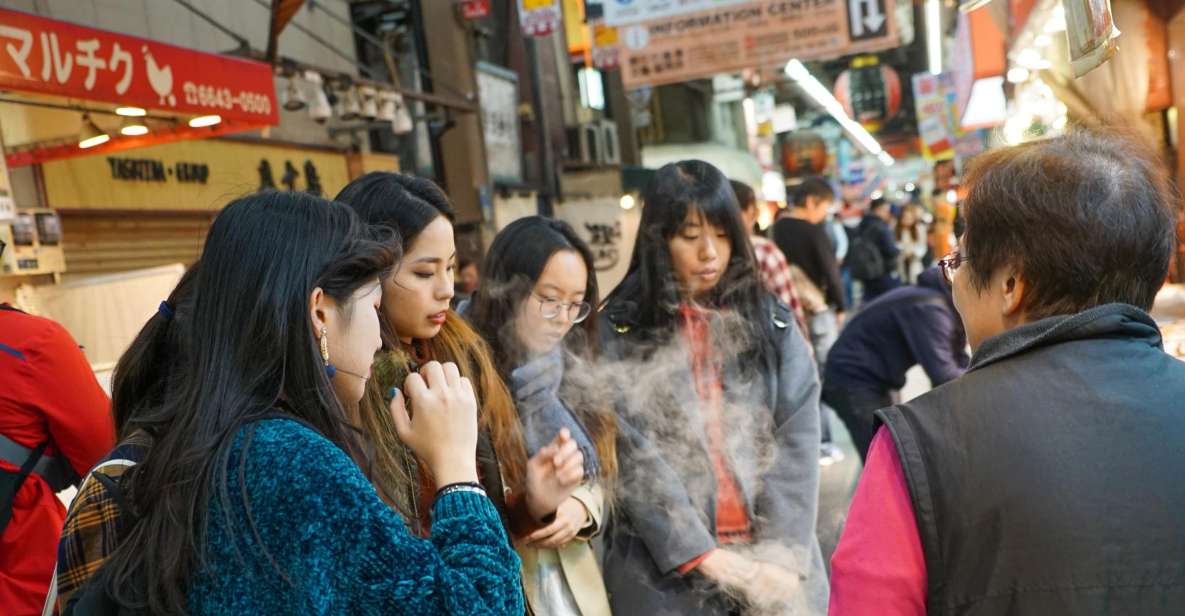
The walk begins at ピカソ日本一ビル. This isn’t just a random address. It sets you up for the market area with a short orientation that helps the rest of the tour make sense—where you’re headed and what to look for once the tasting stations begin.
You also get that early nudge of how the market works as a food neighborhood. That matters because Kuromon is busy, and once you’re in the flow, it’s nice to know what you’re seeing and why it matters.
Kuromon Ichiba Market: the included tastings that add up
Kuromon Ichiba Market is the star. You’ll spend about 30 minutes inside, moving stall-to-stall with a guide who picks the best options and helps you decide quickly.
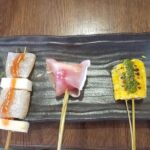
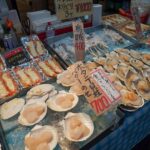
What you can expect to taste includes Osaka street-food favorites like takoyaki, grilled scallops, and yakitori skewers, plus other market bites. The point of the sampling style is simple: you get variety without spending the whole day running between places you might not choose on your own.
How to approach the tasting so you don’t regret it
Go in hungry. The tour is designed so you’re not forced to eat again right after (though you might want to, because that’s Osaka and the smell is hard to resist). If you’re used to “trying a little” on food tours, you’ll likely be surprised how much 5–6 tastings can add up.
Also, be honest with your guide about what you like. Many guides on this tour are praised for being friendly and making sure everyone gets a good spread—so you’ll get better results when you speak up early.
You can also read our reviews of more food & drink experiences in Osaka


Sennichimae Doguyasuji Shotengai: knives, cookware, and practical souvenir ideas
After Kuromon, you head toward Sennichimae Doguyasuji Shotengai (about 20 minutes). This is where the tour shifts from eating to Osaka shopping culture.
Doguyasuji is known for kitchen-focused shops—knives, cookware, and the kind of tableware you’ll actually use at home. People love this stop because it’s not generic souvenir shopping. You’re looking at tools and items tied to how Japanese meals are prepared and served.
One review detail that stuck with me: some groups really enjoyed seeing the knife and cookware areas up close. That’s the difference between “buying a trinket” and bringing home something that fits your real life.
A practical tip for buying here
Plan your carry. If you’re thinking about heavier cookware items, have a plan for bag space and weight. If you want something lighter, focus on tableware and smaller kitchen tools. The guide can point you toward good places for what’s worth the cost.
A quick local restaurant stop and a breather on the route
There’s also a short local restaurant stop (about 10 minutes). It’s brief, but it helps the tour flow. Walking through markets and alleys is exciting—then it gets tiring—so these short pauses keep the pacing comfortable for most people.
Think of it as the tour’s “reset button.” You’ll be able to regroup your energy before the next set of street scenes.
Hozenji Yokocho: alley vibes and a different Osaka rhythm
Next comes Hozenji Yokocho (around 10 minutes). This is one of those spots where the energy changes from market-food hustle to alley-life atmosphere. It’s also a nice visual break because you’re not always packed shoulder-to-shoulder with lines at stalls.
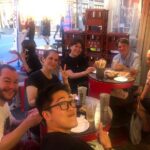
If you like street photography, this is a good place to pay attention. Some guides are praised for taking lots of photos during the walk, and alley settings tend to photograph well—especially when you’re not rushing.
Dotonbori finale: learn the scene, then enjoy it on your own
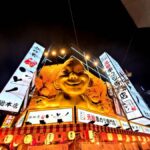
The tour ends with about 25 minutes around Dotonbori. This is where Osaka is loud and proud: neon, crowds, food signage, and that “you’re in the middle of it” feeling.
The value of arriving with context is big. If you know what you’re looking at—markets, alley food culture, and the neighborhood logic—you’ll enjoy Dotonbori more after the tour, when you go exploring on your own.
What you might eat beyond the headline classics
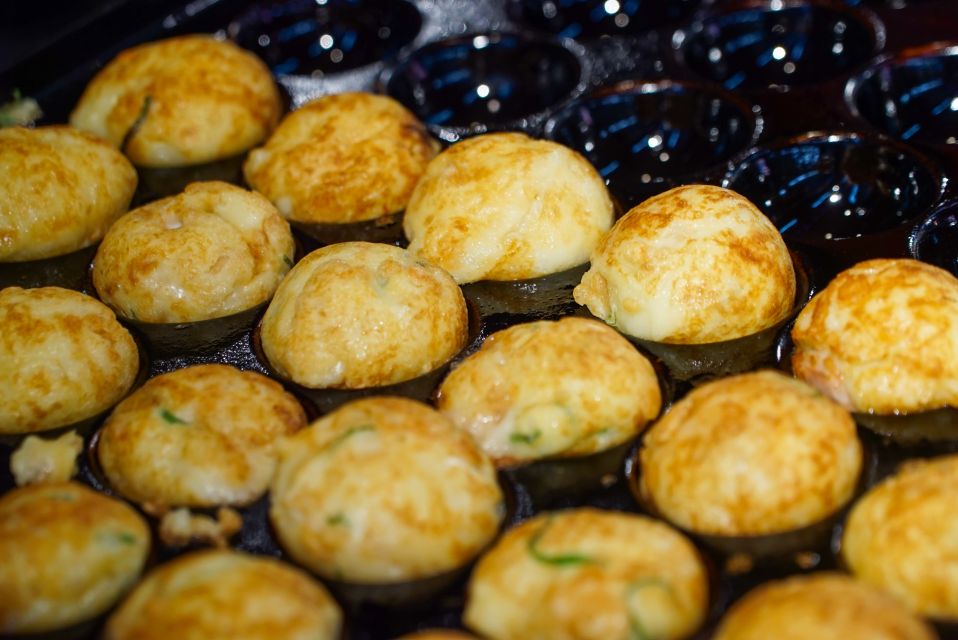
The tour is built around a short list of Osaka staples, including takoyaki, grilled scallops, and yakitori. On top of that, you may see other market items depending on the day’s offerings and what the guide selects for the group.
Some people have mentioned trying things like seafood variations, sweets such as taiyaki and mochi-style treats, and even more adventurous bites. The key is that the guide helps you make choices you might not pick if you were standing alone in front of a menu.
Dietary needs: what’s guaranteed and what’s not
- Gluten-free requests can’t be accommodated.
- Vegetarian and vegan requests can be accommodated, but options may be limited, and you need to inform the provider at least one day in advance.
- Allergy-free substitutions can’t be guaranteed because food is prepared in external kitchens.
If your diet has strict restrictions, message ahead and plan to be flexible. That’s not the fun answer, but it’s the honest one.
Souvenirs: kitchenware and tableware that actually travel well
One of the most practical parts of this tour is the souvenir angle. The food walk naturally leads into the shopping streets, and guides often share tips for where to buy Japanese kitchenware and tableware without wasting time.
What I like about this approach: it targets souvenirs you can use, not just display. If you like cooking or hosting, tableware and cookware make your trip feel real every time you use it.
Who should book this Kuromon Market food walk
This tour fits best if you:
- want an Osaka food introduction that’s only 2 hours
- like learning how a neighborhood became a food center
- enjoy street food but don’t want to play menu roulette
- value a guide who helps with photo moments and smart choices
It’s also a good fit for families and mixed-age groups—many guides are praised for handling the tour smoothly with kids and teens, and keeping things friendly without rushing.
Who should skip it
Skip this tour if:
- you need gluten-free food
- you’re wheelchair-dependent (some stops aren’t stroller or wheelchair accessible)
- you hate walking in heat (Osaka summers can reach extreme temperatures, so plan water and protection)
Also, if you’re prone to getting lost in busy areas, give yourself extra time before the meeting point so you’re not stressed when it’s time to start.
Should you book it?
Yes, if you want a short, high-reward Osaka food experience. For $49, the included 5–6 tastings, plus local selection and tour photos, make it a strong way to get your bearings and your appetite under control fast.
Book it early in your Osaka trip if you can. You’ll learn what to seek out later, especially around the Kuromon and Dotonbori food scene. If dietary restrictions are complicated, double-check with the provider before you go—because the tour handles preferences, but it can’t guarantee allergy-free substitutions.
FAQ
How long is the Osaka Kuromon Market food walking tour?
It lasts about 2 hours.
How many food tastings are included?
The tour includes 5–6 food samplings.
Where do I meet the guide?
Meet in front of the SMBC ATM at Nippon-bashi 1chome near Kintetsu Nippon-bashi Station (Exit 10). The guide will be holding a board that says MagicalTrip.
Is this tour gluten-free friendly?
No. The tour can’t accommodate gluten-free requests.
Can vegetarians or vegans join?
Yes, vegetarian and vegan requests can be accommodated, but options may be limited. You need to inform the provider at least one day in advance.
Are tour photos included?
Yes. Tour photos are included.
Do I need cash?
You should bring cash for your own additional food and drinks, since only the tastings are included.
Is the tour wheelchair accessible?
No. The tour is not recommended for wheelchair users, and some locations are not wheelchair or stroller accessible.