REVIEW · OSAKA
Osaka: Japanese Traditional Sweets Making and Tea Ceremony
Book on GetYourGuide →Operated by B.B.Advisors Inc. AN OSAKA · Bookable on GetYourGuide
Nerikiri flowers and matcha meet precision. I like how this Osaka class turns Nerikiri making into a hands-on craft, not a sit-and-watch show, and then sends you to the tea table for Uji Matcha with a grinding demonstration. Instructors like Maiko and Jun are especially good at keeping the pace clear, even when you’re working across languages.
My other big love is the ingredient quality: you use white/red bean paste made by Kyoto’s long-established shops, plus single-origin matcha meant for a clean, balanced cup. One possible drawback: the workshop is run in Japanese, and while English translation is provided as much as possible, you may still want to request extra English support ahead of time if you’re nervous about following instructions.
For $18 and 95 minutes, you get a real skill you can repeat at home. You also get something more satisfying than a souvenir: you leave with sweets you actually made, plus a better sense of how tea is treated in everyday Japanese culture.
In This Review
- Key Highlights You’ll Remember
- What You Make: Seasonal Nerikiri With Kyoto Bean Paste
- Uji Matcha Tea Steps: Grinding, Then Drinking Properly
- The 95-Minute Flow: What Happens Minute by Minute
- Price and Value: Is $18 Fair for Two Sweets Plus Tea?
- Finding the Workshop Near Higobashi and Osaka’s Train Lines
- Instructors, Language, and What Makes the Class Feel Smooth
- Who Should Book This Nerikiri and Matcha Workshop
- Should You Book This Osaka Wagashi and Tea Experience?
- FAQ
- How long is the experience?
- What will I make during the workshop?
- Is the matcha single-origin, and is it from Uji?
- What is included in the price, and what costs extra?
- Where is the meeting point?
- Is English provided, and is there an elevator?
Key Highlights You’ll Remember
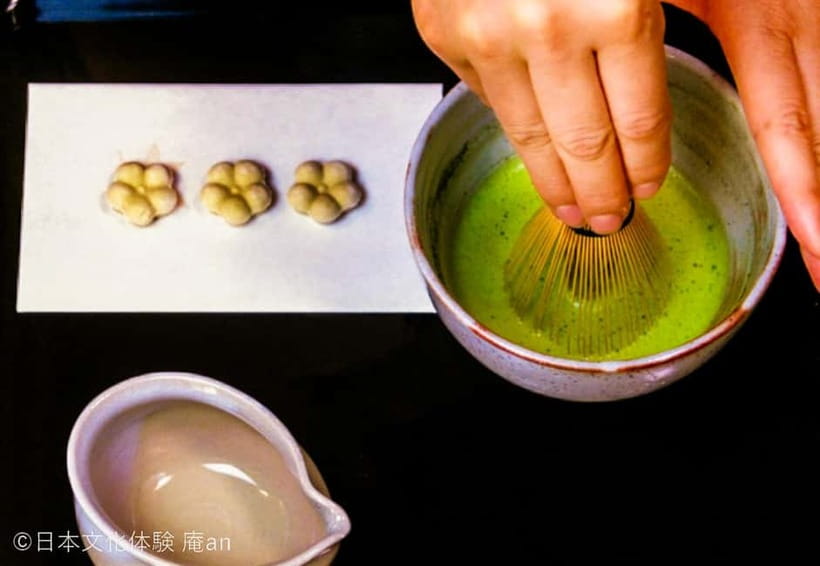
- Two seasonal sweets: you’ll shape both white-bean-paste sweets to match the time of year
- Kyoto bean paste, not generic mix: white/red paste from long-established Kyoto shops
- Single-origin Uji Matcha: plus a matcha grinding demonstration for context, not just tasting
- Nerikiri is high-grade wagashi: coloring and molding techniques focused on fine detail
- Calm, structured 95 minutes: clear blocks for sweets, tea explanation, then eating
What You Make: Seasonal Nerikiri With Kyoto Bean Paste
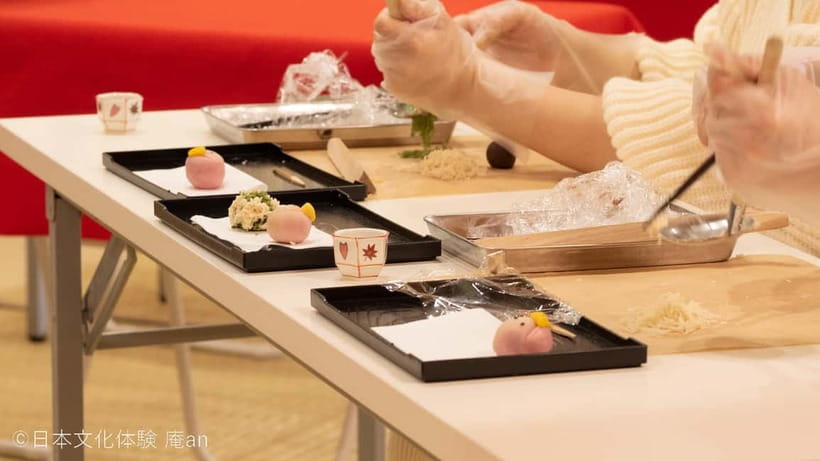
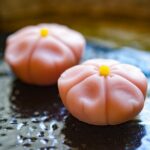
This class is centered on wagashi craft, specifically Nerikiri—a high-grade Japanese sweet made by coloring and molding bean paste into shapes tied to the season. The key difference from many tourist-friendly workshops is that you’re working with paste that’s described as coming from Kyoto’s long-established shops, including both white and red bean paste.
Here’s what that means for you on the table. You start with the coloring step, which sounds simple until you realize it’s part of the flavor and the visual result. Nerikiri is all about control: the paste texture needs the right feel, and the color needs to stay clean while you shape it.
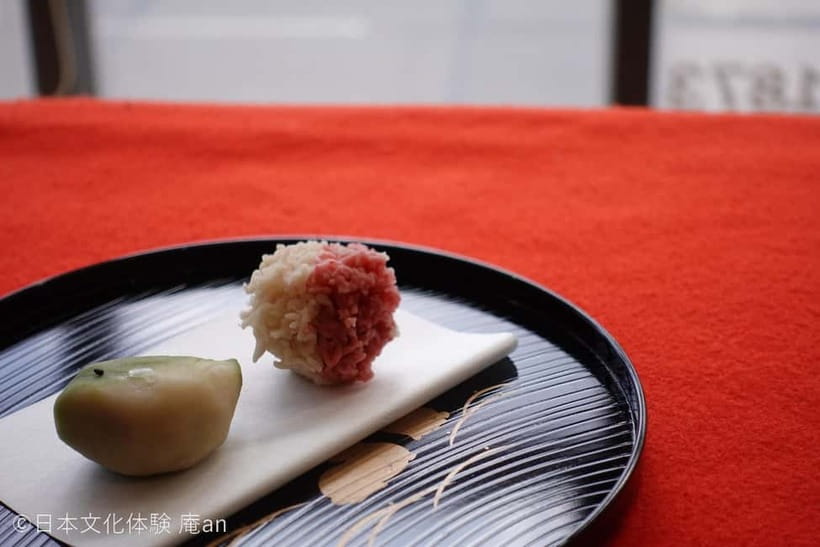
In your workshop, you’ll make two sweets. One portion is described as flower-shaped Kinton Nerikiri making, and the other is another Nerikiri design that matches the season. That “two sweets” detail matters because it gives you repetition. You’re not just going through one single trial run—you actually learn a method and then apply it again.
When you finally eat, you get the payoff. One review specifically noted that the high quality bean paste sweetness balances well with the matcha. That balance is a big part of why wagashi pairs with tea in the first place: the sweet is not meant to overpower. It supports the cup.
You can also read our reviews of more tours and experiences in Osaka
Uji Matcha Tea Steps: Grinding, Then Drinking Properly
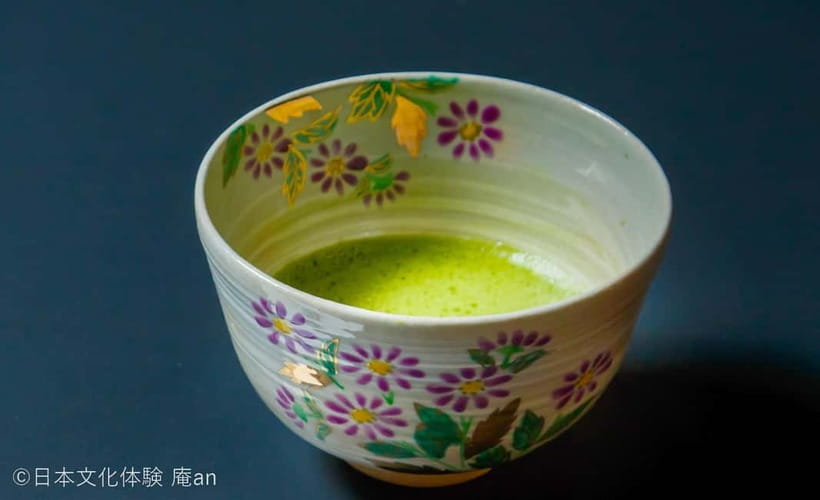
After Nerikiri, you shift to tea. The tea part of the experience is built around Uji Matcha and a matcha grinding demonstration. Even if you’ve seen matcha in cafés, you’ll likely learn why the grinding and preparation steps matter—because the class connects the ritual to the result in your cup.
You’ll get an explanation of the tea, then you’ll do the matcha grinding demonstration, and then you’ll go through the tea-ceremony experience. Your final step is tasting what you made alongside your own matcha tea.
A small but meaningful detail from the way the experience is described: you prepare the matcha after you make the sweets. That order helps your brain connect flavors. You’re not tasting randomly at the end—you’re seeing how the sweet and tea interact as a set.
One review also mentioned that the tea ceremony was more guided by explanation and Q&A than full choreography practice. Translation: if you want something more formal and intense, this may feel lighter. But if you want the cultural meaning plus a hands-on cup at the right time, it’s likely exactly the size of challenge you’re looking for.
The 95-Minute Flow: What Happens Minute by Minute
The schedule is tight, and that’s a good thing. You’re not trapped in a half-day activity that goes nowhere; you’re led through a sequence with built-in stops.
Here’s the rhythm you should expect:
0–55 minutes: Sweets first
- You begin with an explanation of Japanese traditional sweets.
- Then you start the Nerikiri process by coloring the white bean paste.
- You’ll continue with shaping, including the flower-shaped Kinton Nerikiri making portion.
- By around the mid-point, your sweets are formed and ready to move into the next phase.
Around 55 minutes: Break time
- There’s a break built into the plan. This helps if your hands are getting sticky from paste work.
65–85 minutes: Tea second
- You get an explanation about tea.
- You’ll see a matcha grinding demonstration.
- Then you’ll experience the tea-ceremony steps at your table.
85–95 minutes: Eat, drink, and leave
- You take photos.
- Then you enjoy the sweets you prepared with your matcha tea.
- Departure happens right after the tasting window.
Why this timing works: you don’t sit through the hardest part of either activity without rest. Also, the sweets and tea connect cleanly at the end, so you remember the sequence.
One more practical note: the organizers say they won’t be able to hold the event for delays. So if you’re using trains, build in a small buffer. This class runs like a workshop, not like a museum visit.
Price and Value: Is $18 Fair for Two Sweets Plus Tea?
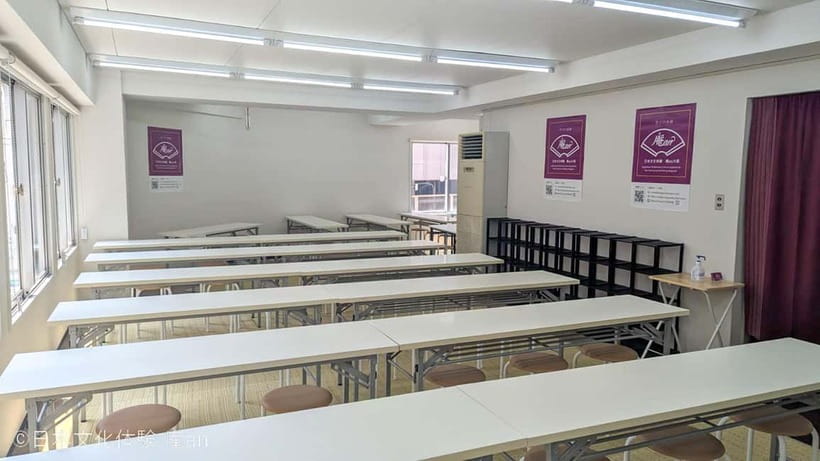
At $18 per person for a 95-minute session, this is priced like a “do it yourself” craft workshop, not a premium private tasting. And based on what you receive—tools included, two sweets made by you, and a matcha tea experience—it’s solid value for Osaka.
What makes it feel like good value:
- You’re not just learning theory; you’re doing Nerikiri shaping and tasting the result.
- You get matcha context through the grinding demo and tea-ceremony steps.
- The ingredients are described as higher quality, including Kyoto’s long-established bean paste and single-origin matcha.
Two costs you should know up front are optional add-ons:
- A take-out box for sweets costs 100 JPY
- A completion certificate costs 300 JPY
If you’re the kind of person who likes to document milestones, the certificate could be fun. If you just want to eat and go, you can skip it.
Finding the Workshop Near Higobashi and Osaka’s Train Lines
Location is one of the easiest wins here. You’ve got multiple nearby station options, and most walks are short.
If you’re arriving by train, you can use any of these:
- About a 1-minute walk from Exit 10 of Osaka Metro Yotsubashi Line Higobashi Station
- About a 5-minute walk from Exit 7 of Keihan Nakanoshima Line Watanabebashi Station
- About a 7-minute walk from Exit 10 of Osaka Metro/Keihan Line Yodoyabashi Station
- About a 10-minute walk from Exit 11-5 of JR Tozai Line Kitashinchi Station
- About a 15-minute walk from the South Central Gate of Osaka Station
One caution from real-world experience in the reviews: a couple people said it was hard to spot the building because it looked like an ordinary gray structure and Google Maps didn’t catch it well. So when you arrive, don’t just walk past and hope. Double-check the spot once you’re in the area.
Also, there’s no elevator in the building. You’ll need stairs to reach each venue. If you’re traveling with heavy bags or you’re sensitive to stairs, plan accordingly.




Instructors, Language, and What Makes the Class Feel Smooth
This experience is led by a Japanese instructor, and translation is handled thoughtfully. The guidance is described as being provided in English as much as possible, and you can contact them if you want to add English translation support.
What you’ll likely notice is the teaching style. Multiple reviews praised instructors for being patient and friendly, with clear explanations while answering questions. Names that came up include Maiko, Jun, and Mihiko, and they were repeatedly described as doing a good job bridging Japanese and English.
Here’s what that means for you:
- If you’re comfortable with basic travel Japanese, you’ll probably follow along smoothly.
- If you rely on English and want confidence, request English support ahead of time if that option is available to you.
- Even when English is limited, the class is structured so you can still participate by following the steps in front of you.
A detail I like: the experience includes the use of required tools. That matters because crafting Nerikiri isn’t something you can do well with random kitchen gear. The class setup is part of how you get results that actually look like the season.
Who Should Book This Nerikiri and Matcha Workshop
This class is a strong fit if you:
- Want a hands-on Japanese sweets activity in Osaka that isn’t just watching
- Care about craft details like coloring and shaping, not only taste
- Like tea culture but don’t want an all-day formal ceremony
It’s also a decent choice for families. One review mentioned bringing two daughters around ages 10 and 12, and both enjoyed it. For younger kids, the rules say children under 2 who sit on their parents’ lap are free.
One more small point: the class asks that those not participating won’t be allowed to enter. So if you’re traveling with friends who aren’t doing the workshop, plan for them to wait nearby rather than expecting them to sit in.
If you want something very spontaneous and loose, note that the schedule is fixed, and the organizers don’t accommodate delays. This is best when you treat it like a guided class with a start time.
Should You Book This Osaka Wagashi and Tea Experience?
If you want value, hands-on work, and a clear sequence, book it. This is one of those activities where the result is tied to your effort: two season-matched sweets made with quality paste, then matcha tea that you understand a little better after seeing it prepared.
I’d only hesitate if:
- You’re extremely worried about language, since the workshop is in Japanese and English support is described as provided as much as possible (not guaranteed in every moment).
- You can’t do stairs, since there’s no elevator in the building.
Otherwise, it’s a smart way to spend a cool hour and change in Osaka. You’ll come away with edible art, not just photos.
FAQ
How long is the experience?
The class runs for 95 minutes.
What will I make during the workshop?
You’ll make two Japanese sweets called Nerikiri that match the season, and you’ll also prepare and drink matcha.
Is the matcha single-origin, and is it from Uji?
The experience uses single-origin special Matcha, described as Uji Matcha in the class flow.
What is included in the price, and what costs extra?
Included: the experience itself and use of required tools. Not included: a sweets take-out box costs 100 JPY, and an experience completion certificate costs 300 JPY.
Where is the meeting point?
It’s near multiple stations, including Higobashi Station (1 minute walk from Exit 10), Watanabebashi Station (5 minutes from Exit 7), Yodoyabashi Station (7 minutes from Exit 10), Kitashinchi Station (10 minutes from Exit 11-5), and Osaka Station (about 15 minutes on foot from the South Central Gate).
Is English provided, and is there an elevator?
The workshop language is Japanese. English translation is provided as much as possible, and you can contact them to request additional help. There is no elevator, and you’ll need to take stairs.