REVIEW · OSAKA
Osaka: Tea Ceremony, Calligraphy, and Kimono Experience
Book on Viator →Operated by Japan Culture Experience · Bookable on Viator
Finding calm in Osaka is easy here. This private session bundles kimono dressing, a matcha tea moment, and hands-on calligraphy in one climate-controlled setting. It’s the kind of activity that feels slower than the city outside—peaceful, guided, and beginner-friendly.
I particularly like how much you get for the price: the kimono rental is complete (including the obi and accessories), and you’re guided step-by-step in English. I also love that you can take photos in your kimono and leave with your calligraphy as a real keepsake.
One thing to consider: transportation to the shop isn’t included, so you’ll want to plan how you’ll get to 山茶花 Sazanka Osaka in central Tennoji/Uehonmachi. Also, support is listed for English only, so this may not work as smoothly if you need another language.
In This Review
- Key Things You’ll Remember
- Sazanka in Tennoji: A Peaceful Break From Osaka Heat
- Kimono Fitting and Styling: What You’ll Actually Do
- The Matcha Tea Ceremony: More Than Sipping
- Calligraphy Session: Make It, Keep It
- Photos, Privacy, and the Private-Group Advantage
- Price and Value: Is $97.73 Worth It?
- Who This Osaka Cultural Workshop Is Best For
- Small Considerations to Plan Around
- Should You Book This Tea, Calligraphy, and Kimono Experience?
- FAQ
- What’s included in the Osaka tea, calligraphy, and kimono experience?
- How long does the experience last?
- Is this a private tour or shared group activity?
- Will there be English support during the session?
- Can I take photos while I’m wearing the kimono?
- What will I be able to take home?
- Can I cancel for a full refund?
Key Things You’ll Remember
- Full kimono rental with dressing service so you’re not figuring it out alone
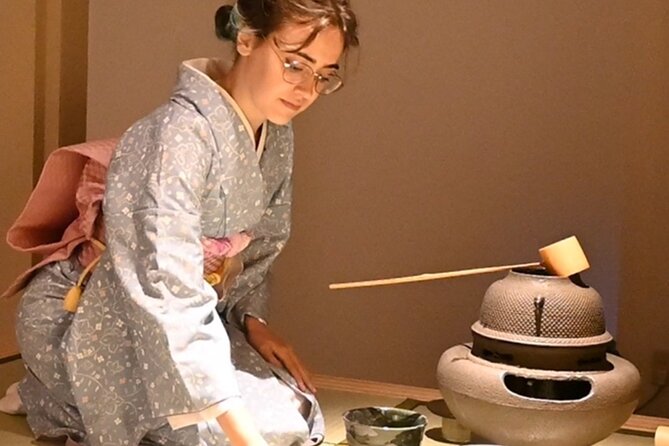
- Matcha tea ceremony with sweets plus guidance on meaning and significance
- Calligraphy tools and paper included, with a take-home creation
- Photo-friendly kimono experience (your camera will get used)
- Private, English-guided group setting with a calm indoor flow
- Climate-controlled comfort so Osaka weather is less of a factor
Sazanka in Tennoji: A Peaceful Break From Osaka Heat
This experience starts at 山茶花 Sazanka Osaka, located in Tennoji Ward, Uehonmachi (543-0001). The meeting point is at 5-chōme Uehonmachi in the Hayakawa Building, 2nd floor. It’s also described as near public transportation, which matters because the tour doesn’t include transportation to the store. In other words: plan your route, then show up ready to enjoy a calm indoor session.
The big advantage is the environment. You’re not waiting around outdoors or sweating through a long cultural “demo.” One review specifically calls it a retreat from Osaka heat, and the listing notes a climate-controlled indoor setting. That combination can make a huge difference on a summer afternoon when the city feels like it’s running on maximum intensity.
You’ll also appreciate the pace. The experience is built around a private format—only your group participates—so there’s room for questions and corrections. For beginners, that’s a real quality-of-life upgrade. You won’t be rushed or ignored while you learn what to do with the kimono straps, the tea tools, or the brush.
You can also read our reviews of more tours and experiences in Osaka.


Kimono Fitting and Styling: What You’ll Actually Do
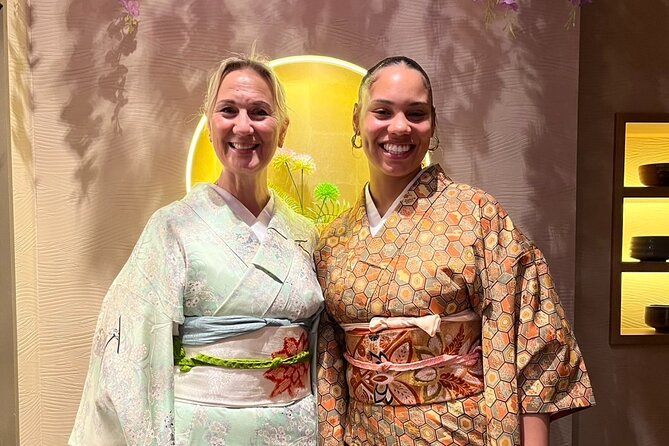
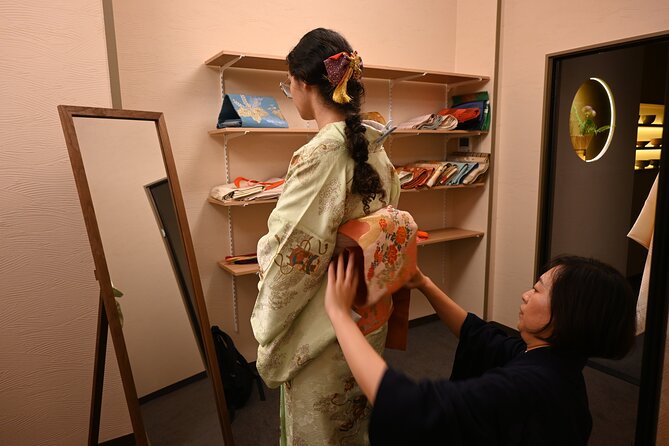
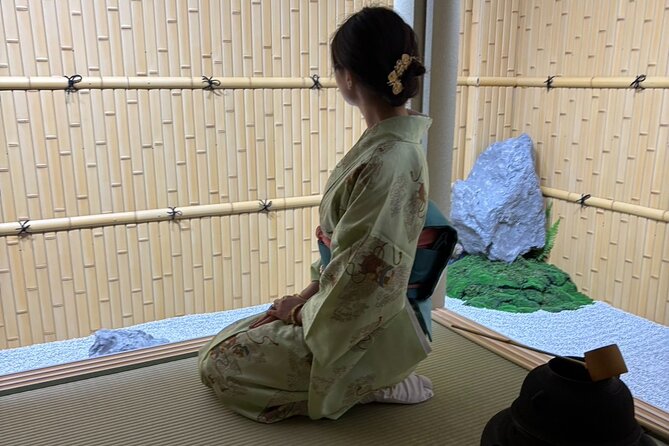
The heart of this session is the kimono rental and the private dressing service. Included with your experience is a full kimono setup: kimono rental plus obi and accessories, and a dressing assistant who handles the process with you.
What I like about this kind of service is that you get the full look, not just a costume. The goal is to help you wear it correctly so it looks right in photos and feels comfortable while you move around the workshop space.
From the way the experience is described, you’ll get to choose from a selection of kimonos before dressing. One review highlights getting fitted for kimonos with a wide choice, and another mentions hair styling as part of the dressing process. So yes, this is more than a quick robe pull-over. Expect a real transformation.
Practical tip for your planning: wear clothes that are easy to remove and replace. Even if you’re not doing it yourself, you’ll still spend time getting ready, and you’ll feel better if your outfit is simple. Also, if you’re sensitive to heat, remember you’ll be indoors—still, the dressing process can take a bit of time, so don’t schedule a stress-heavy activity right before.
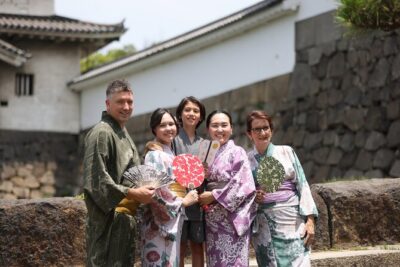
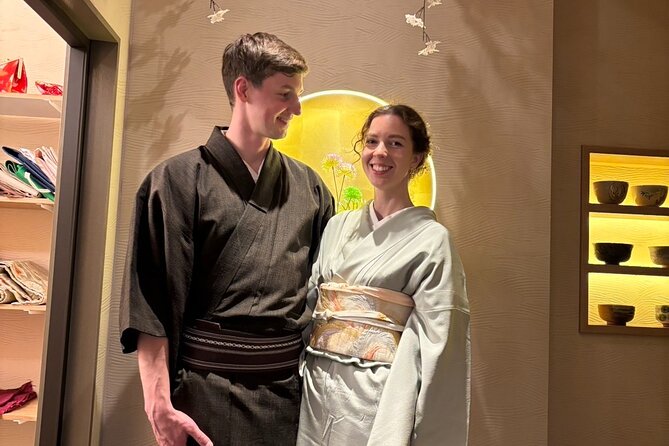
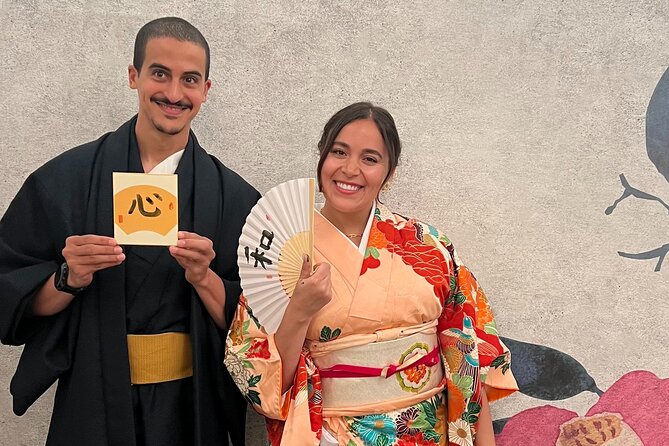
One more thing: you’re allowed to take photos in your kimono. That’s not a small detail. It changes how you experience the dressing. You’re not only learning; you’re creating a visual memory. If you bring a camera phone you’re comfortable using, you’ll likely want to take a few shots after styling is done.
The Matcha Tea Ceremony: More Than Sipping
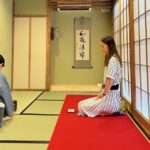
After the kimono fitting, you move into the tea ceremony portion. This is included with matcha and sweets, and it comes with English-speaking support and guidance.
Here’s what makes this component valuable: you don’t just watch a tea performance. You participate, and you get a framework for what you’re doing. One review specifically praises learning the history and significance of the tea ceremony. That’s the difference between a show and a lesson. You’ll understand the vibe—why certain actions matter—so you can appreciate the ritual while you’re doing it.
The listing describes a peaceful, private setting. In practice, that tends to mean you can focus on the moment without the usual distractions of public demonstrations. You’ll likely move at a human pace: drink, observe, learn what the gestures mean, and enjoy the sweets alongside the tea.
Matcha is one of those flavors that can be either love-at-first-sip or a surprise. If you’re cautious, you still get a guided introduction rather than a sink-or-swim tasting. And since sweets are included, you’re not stuck just with the strong green flavor. The overall structure feels like a gentle cultural reset.
Calligraphy Session: Make It, Keep It
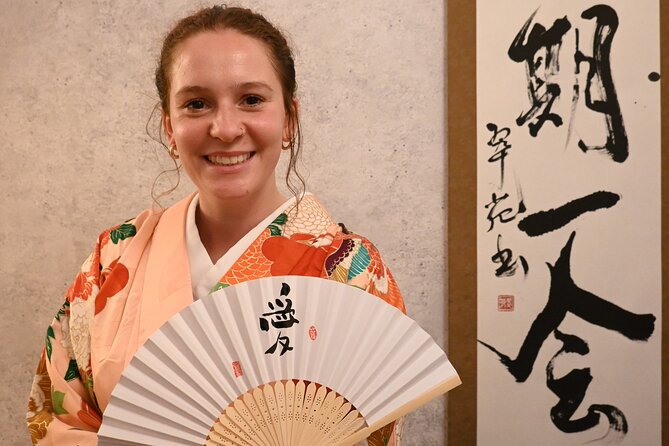
Then comes calligraphy. Tools and paper are included, and you’ll be guided through the process in English. The best part is that you bring your calligraphy home afterward, which gives this activity a lasting souvenir value. It’s one thing to buy a chopstick set with a dragon on it; it’s another to write something yourself and carry it in your own handwriting style.
One review mentions creating a fan as a take-home calligraphy piece. Even if your final project ends up looking different from what you might imagine, the takeaway is consistent: you’ll produce a physical item during the session rather than just copying a few strokes and leaving empty-handed.
This is also where being a beginner helps. Calligraphy isn’t something you need to already know. The tools and paper being provided means you’re not hunting for brushes or ink supplies when you arrive. And since English support is explicitly included, you’re less likely to get lost during instructions.
If you’re the type who worries about getting it wrong, calligraphy is a good place to relax. You’re learning process more than perfection. Your piece won’t match a master’s work on day one, but it will be yours—which is exactly what makes it meaningful.
Photos, Privacy, and the Private-Group Advantage
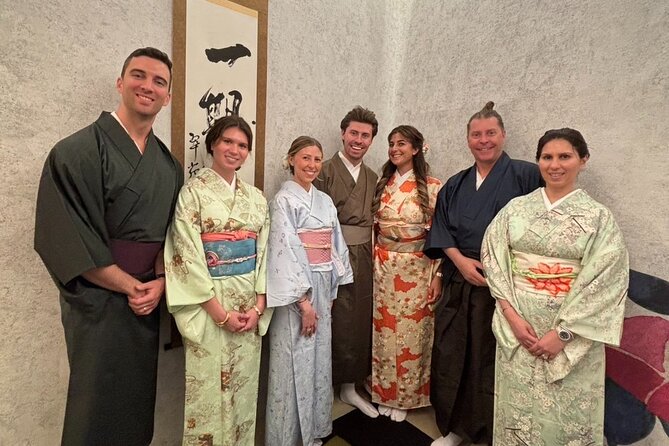
This is a private tour/activity. Only your group participates, which changes the experience in a practical way. You get more time for questions, and you’re not squeezed into a corner while someone else is being adjusted or instructed.
It also affects comfort. A kimono fitting can feel a little awkward the first time anywhere, especially if you don’t know the order of things. A private setup reduces that pressure. Your dressing assistant can correct fit and help you understand what’s happening without needing to manage multiple groups at once.
The experience also explicitly allows photos in your kimono. That’s great because kimono photography can be tricky in public spaces. Here, you can concentrate on getting a nice shot without juggling crowds, signage rules, or weather. Your camera time feels earned, not rushed.
One more practical benefit: you’re in a climate-controlled indoor environment. That helps with photo quality too. If you’ve ever tried to take decent photos while sweating through humidity, you know why this matters.

Price and Value: Is $97.73 Worth It?
At $97.73 per person for about 3 hours, this isn’t an ultra-cheap add-on. But it also isn’t just paying for an instructor. You’re buying a full package of real services and materials:
- Kimono rental including obi and accessories
- Private dressing service
- Tea ceremony with matcha and sweets
- Calligraphy with tools and paper
- English-speaking support and guidance
- A take-home calligraphy item
If you were to price these separately on the fly—kimono rental plus a lesson plus materials—the total can climb fast. What you’re really paying for here is convenience plus coaching. The fact that it’s private makes the value make more sense for couples, small friend groups, or families who want one calm, shared session rather than a busy group schedule.
So I’d think about value this way: do you want hands-on cultural participation with included materials and a guided flow, all in one place? If yes, the price starts to feel reasonable. If you only want a quick look at a kimono, this may feel more expensive than you want.
Who This Osaka Cultural Workshop Is Best For
This works well for beginners. The experience is designed with friendly English support and thoughtful guidance, so you’re not expected to already know tea ceremony etiquette or calligraphy basics.
It’s also a good match if you want a break from the city’s pace. One review calls it a retreat from Osaka heat, and the indoor setup supports that idea. If you’re visiting during hot months, or your schedule has a gap that needs something calm and structured, this fits nicely.
A private setting makes it great for:
- Couples who want photos and a shared activity
- Friends who want a memorable, hands-on cultural day
- Families with older kids or mixed-age groups who can handle a guided workshop
- Anyone trying to turn Japanese culture from something you read about into something you do
If you’re the type who hates instructions and wants full freedom, this may feel too guided. But if you enjoy learning how things work—even just a little—this is a strong choice.
Small Considerations to Plan Around
A few practical notes before you commit:
- Transportation isn’t included. You’re starting and ending at the meeting point, so you’ll need a plan to get there on your own.
- English only is supported according to the provided info. If you need another language, this may not be the right fit.
- It’s a 3-hour session. That’s a good length for a complete set of activities, but it’s still a block of time. If you’re trying to cover a long list of Osaka sights, slot it wisely so you’re not rushing afterward.
Also, remember the experience includes a private kimono dressing service. That means there’s some preparation in your timeline—arrive on time so the session doesn’t get stressed.
Should You Book This Tea, Calligraphy, and Kimono Experience?
I think you should book it if you want a complete cultural workshop, not a quick photo stop. The combination is smart: kimono dressing gives you the visual memory, the tea ceremony slows the experience down, and calligraphy gives you something tangible to bring home. Add in private, English-guided support in a climate-controlled space, and you get a very “worth it” kind of Osaka afternoon.
Skip it if you’re only interested in outdoor sightseeing, you need a language other than English, or you’d rather avoid planning transportation to a specific meeting address. For everyone else, this is the kind of activity that turns travel into a story you can hold in your hands.
FAQ
What’s included in the Osaka tea, calligraphy, and kimono experience?
It includes a full kimono rental (including obi and accessories), private kimono dressing service, a Japanese tea ceremony experience with matcha and sweets, and a calligraphy experience with tools and papers. English-speaking support and guidance are also included.
How long does the experience last?
The experience is approximately 3 hours.
Is this a private tour or shared group activity?
This is a private tour/activity. Only your group will participate.
Will there be English support during the session?
Yes. The experience includes English-speaking support and guidance. Interpretation in languages other than English is not included.
Can I take photos while I’m wearing the kimono?
Yes, you can take photos in your kimono.
What will I be able to take home?
Your calligraphy creation is something you can bring home.
Can I cancel for a full refund?
Yes. You can cancel for free up to 24 hours in advance for a full refund. If you cancel less than 24 hours before the experience starts, the amount paid will not be refunded. Cut-off times are based on local time.