REVIEW · OSAKA
Learning Zen of Japanese Calligraphy in kimono near Osaka Castle
Book on Viator →Operated by SAMURAI HONOR · Bookable on Viator
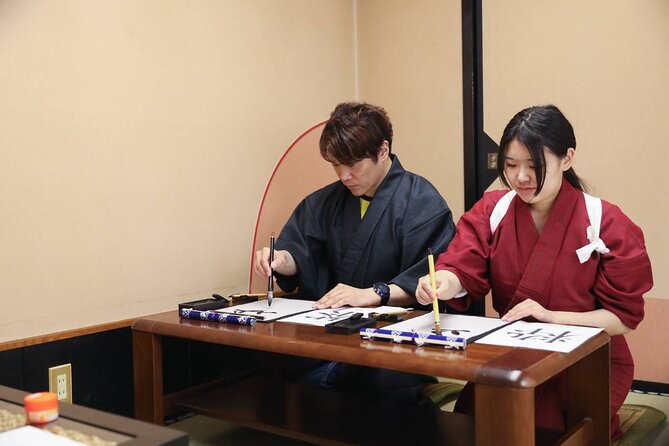
Japanese calligraphy in kimono is oddly calming. You’ll start by dressing in traditional attire near Osaka Castle, then learn shodo basics step by step with a professional shodo teacher and an English-Japanese/Chinese-Japanese translator to help you keep up. I love the hands-on brush practice and how personal it feels when you choose kanji and see your name turned into kanji characters. The one thing to consider: it’s beginner-friendly, so you may not get a deep lesson on the wider world of Japanese writing systems—expect strokes and results, not a full language lecture.
This is also a smart way to “do something real” in a short time. The class runs about one hour in a small group (up to 10), and you’ll leave with digital photos emailed to you plus your finished calligraphy. If you’re sensitive to movement or you have medical concerns, note it’s not recommended for people with back problems or heart conditions, and you’ll be wearing traditional clothing for the session.
In This Review
- Key things to know before you go
- Kimono shodo near Osaka Castle: why this class feels different
- The 1-hour flow: what happens from first brush to final draft
- Dress-up stage: kimono and the small details that affect comfort
- Shodo basics you’ll actually use: tome, hane, harai
- Choosing kanji: turning a word into a lesson in stroke order
- Your name in kanji: the surprise wooden tags souvenir
- Photo shoot + digital delivery: get the kimono moment without the hassle
- Value check: is $43.59 for one hour actually a good deal?
- Logistics that matter: where to meet and how to arrive ready
- Who should book this shodo-in-kimono class (and who should skip it)
- When things don’t go as planned: watch for temporary closures
- Should you book this calligraphy lesson near Osaka Castle?
- FAQ
- How long is the Japanese calligraphy (shodo) class?
- What does the class include besides calligraphy?
- Will I get help if I don’t speak Japanese?
- Can kids participate?
- Can I choose what kanji I write?
- What do I take home at the end?
- Are smartphones allowed for photos?
- Is the experience accessible for strollers?
- What health or safety limitations should I know about?
- Can I cancel for free?
Key things to know before you go
- Kimono dressing is part of the class, not an add-on photo op.
- You choose your own kanji, then learn stroke order and write a final draft.
- Brush basics come fast: tome, hane, and harai are taught as foundational movements.
- Your name can become kanji via a surprise wooden tag using your chosen characters.
- Photos are handled for you, with digital images sent to your email address.
- Small-group format (max 10) keeps the teaching personal.
Kimono shodo near Osaka Castle: why this class feels different
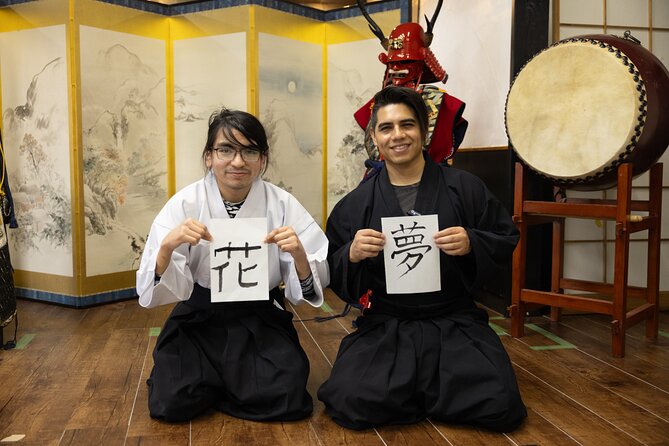
Osaka Castle is the kind of place where you can easily fill your day with big sights. This class gives you something quieter, more focused, and hands-on. You trade walking and noise for a calm routine: clothing first, then tools, then brushwork, then a final piece you can take with you.
What makes this experience work for most people is the structure. You won’t be staring at a worksheet wondering what to do next. The teacher walks you through posture and how to hold the brush, you practice specific movements, then you apply them to the kanji you choose. It’s traditional, but it’s also set up so you don’t feel lost if you’re starting from zero.
I also like the “translation support” detail. The class uses an English-Japanese or Chinese-Japanese translator, and the default language is English (other languages may be available if you ask). That’s a big deal in Japan, because calligraphy has its own vocabulary. You’ll spend less time guessing and more time painting strokes.
You can also read our reviews of more tours and experiences in Osaka.



The 1-hour flow: what happens from first brush to final draft
This class is built around a simple sequence, and you’ll move through it without rushing.
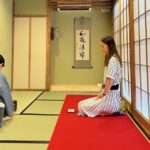
First, you’ll change into traditional Japanese clothing like a kimono (and sometimes hakama). The class starts with getting you dressed before anything else—so you can focus on the art instead of trying to figure out costume logistics during the lesson.
Then comes the “why” behind shodo. You’ll get context on how Japanese shodo differs from decorative writing you might see overseas. That part matters because it changes your mindset: shodo isn’t just spelling; it’s controlled movement, attention, and rhythm.
Next you move into the practical stage:
- you learn how to hold and use the brush and tools,
- you practice basic brush movements,
- you write your chosen kanji, including stroke order,
- you do a final draft with what you learned.
The last step is the satisfying one: a photo shoot where your kimono outfit and your finished artwork both get captured. Your photos are delivered digitally to an email address, which makes it easier than trying to juggle your phone while wearing traditional clothing.
Dress-up stage: kimono and the small details that affect comfort
The kimono part is more than costume. Wearing it changes how you carry yourself, which helps you write more carefully. You also get to slow down and look at yourself as part of the culture you’re learning.
A couple practical notes matter here:
- The experience isn’t stroller accessible, so if you’re traveling with a stroller, plan for that.
- You’ll want to use the restroom before dressing, because once you’re in traditional clothing, it’s not the moment to hunt for facilities.
- There’s an optional wagami add-on (collected hair plus kanzashi) for an additional ¥3,300 per person. If you want the full look, ask about it ahead of time.
One more comfort consideration: traditional clothing can feel warm, especially if you’re moving around to practice strokes. Even if you’re not doing anything intense, plan for that “Japan heat + outfit layers” feeling.
Shodo basics you’ll actually use: tome, hane, harai
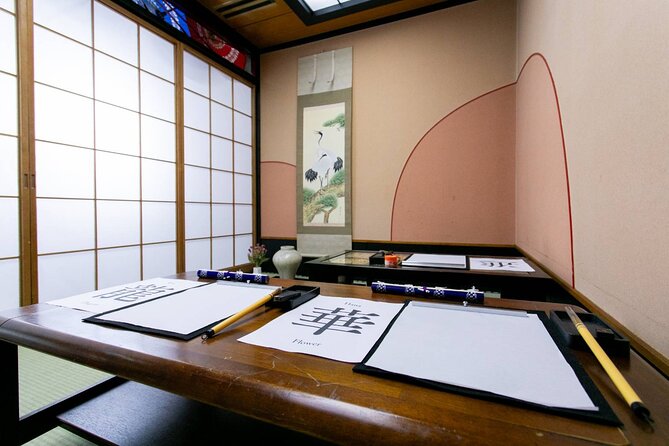
This class doesn’t throw you into complex characters right away. It teaches brush movement through a few foundational techniques:
- tome (the controlled stop of a stroke),
- hane (the springing flick at a stroke’s end),
- harai (the sweeping movement).
For beginners, this is the best way to learn. Instead of memorizing random rules, you build your strokes from the physical actions the brush requires. When those basics click, your kanji suddenly look more intentional—even if you’re writing something new.
The teacher also focuses on fundamentals like posture and grip. That’s important because calligraphy is hard partly because the brush behaves differently than a pen. The brush tip spreads with pressure, and the stroke can widen or thin based on your control. The quicker you learn how to hold and move, the faster your confidence improves.
Choosing kanji: turning a word into a lesson in stroke order
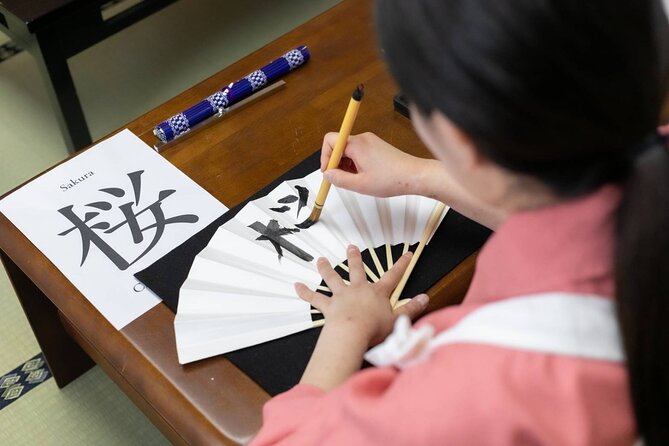
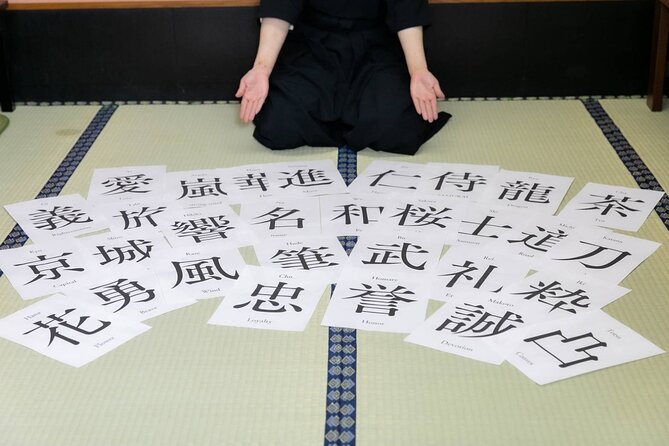
One of the most personal parts of this class is choosing what you write. You pick a favorite kanji to challenge yourself, and you learn its stroke order and how to build it step by step.
This is also where the class becomes more than “one pretty picture.” You’re practicing a system: how each stroke connects, how the order affects the balance, and how the final shape depends on earlier decisions. That’s why the final draft feels like a real achievement instead of a craft project.
If you’re worried about difficulty, here’s the trick: choose a kanji you genuinely like. You’ll pay more attention when it’s your word, not some random character assigned by the class.
And yes—kanji is famously tricky. Even within the same character family, stroke order and shape details matter. The structure here gives you a manageable way to tackle that without getting overwhelmed.


Your name in kanji: the surprise wooden tags souvenir
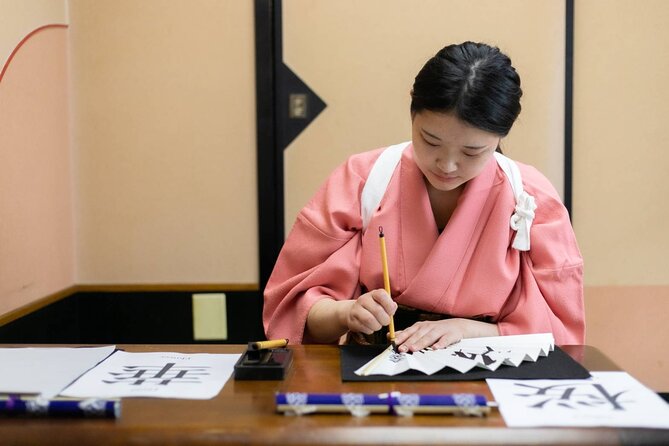
The “surprise” moment is one of the most memorable perks. The teacher writes the foreign names of participants on wooden tags using kanji characters they’ve selected for you.
That means your calligraphy experience becomes a keepsake that isn’t just your main piece. It also helps you connect your name to the writing system you just practiced, which makes it easier to remember later.
If you’re doing this as a gift—for yourself, a friend, or family—it’s one of those souvenirs that looks personal right away. It’s small, but it carries meaning.
Photo shoot + digital delivery: get the kimono moment without the hassle
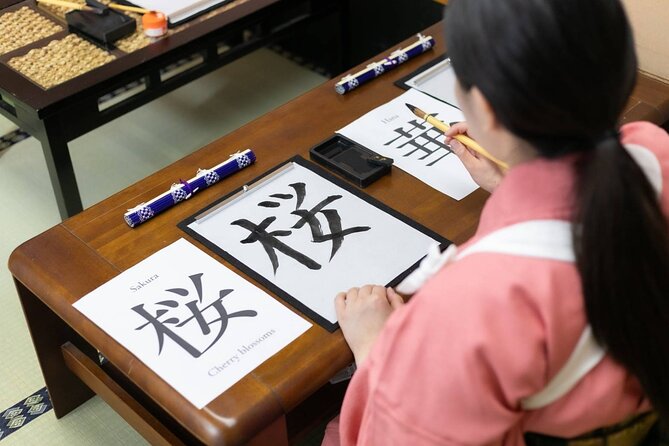
The photo step is handled in a way that doesn’t derail the lesson. You dress in kimono, create your artwork, then you capture both in a photo shoot. You don’t need to spend the whole session worrying about lighting or posing while your brush is drying.
Two practical photo rules are mentioned:
- Smartphone photography is permitted as long as you don’t take selfies or photograph other guests.
- Fixed tripods and video recording aren’t allowed because they may disturb others.
What I like about the setup is that it protects the calm classroom vibe. You can still document your outfit and your results, but the main focus stays on writing.
Afterward, photography is sent to a designated email address. That’s convenient because you won’t have to chase files from a host’s device, and you won’t have to worry about losing shots on the spot.
Value check: is $43.59 for one hour actually a good deal?
At $43.59 per person for about an hour, this is a good-value cultural activity if you care about doing something beyond sightseeing. You’re getting several things that usually cost extra when you piece them together:
- instructor time (professional shodo teacher),
- translation support (English-Japanese or Chinese-Japanese),
- traditional attire (kimono/hakama, etc.),
- structured practice (tools, brush movement instruction, stroke order),
- your final calligraphy product,
- and digital photos delivered by email.
The class is also small (max 10), which usually means less waiting and more attention when you’re learning grip, posture, and stroke control. In a short session, that matters.
One more value angle: it’s booked fairly in advance (about 36 days on average). That’s a sign the timing works well for visitors who want an efficient activity near Osaka Castle.
Logistics that matter: where to meet and how to arrive ready
This experience is near public transportation, and it ends back at the meeting point. Private transfers aren’t included, so plan to handle your own get-there.
The meeting point is listed at:
Japan, 536-0014 Osaka, Joto Ward, Shiginonishi, 2-chōme319 エクセレンス高山
Two timing rules matter:
- If you’re more than 30 minutes late, entry may be refused.
- You should be ready to change on arrival, so build in a little buffer.
Also: the location can be easy to miss if you’re expecting a big storefront. Give yourself extra time to spot the entrance and check the address exactly as written.
Who should book this shodo-in-kimono class (and who should skip it)
This is a great fit if you want:
- a beginner-friendly introduction to shodo,
- a calm, structured activity in a small group,
- a wearable cultural experience (kimono + art),
- a personalized result (chosen kanji + your name in kanji tags),
- and a take-home souvenir plus digital photos.
It’s also open to all skill levels, and kids can participate too. So it can work for families who want something different from temple photos and souvenir streets.
It’s not the best choice if:
- you have back problems or heart conditions (not recommended),
- you need stroller accessibility (it isn’t stroller accessible),
- you’re bringing pets (not suitable for pets).
And if you care about pace: it is designed for a full hour of instruction and practice, so you won’t feel like you’re sitting through a lecture. You’ll be writing, correcting, and rewriting until you’re satisfied.
When things don’t go as planned: watch for temporary closures
Most days, this should run smoothly like other small cultural classes. But there have been instances of temporary closure due to staffing problems, including a closure period listed as June 9–29, 2025.
So do this simple habit: after booking, double-check your confirmation details and messages close to your reservation time. If anything looks off, contact the provider early so you can adjust your Osaka Castle day plan.
Should you book this calligraphy lesson near Osaka Castle?
I’d book it if you want a hands-on cultural experience that’s short, structured, and actually creative. The best part is that you leave with something that represents you: your chosen kanji, a final piece, a wooden name tag, and photos that capture the kimono moment too.
Skip it if you’re chasing a deep lecture on Japanese writing systems or you need a fully accessible setup for strollers or mobility limits. Also, if you’re sensitive to a traditional outfit experience for health reasons, take the medical notes seriously.
If you’re planning your day around Osaka Castle, this is a smart add-on because it gives your visit a different texture. Instead of another photo stop, you get a calm skill—and a souvenir you can reread long after your trip.
FAQ
How long is the Japanese calligraphy (shodo) class?
It lasts about 1 hour.
What does the class include besides calligraphy?
You change into traditional Japanese attire such as kimono (and possibly hakama), practice shodo with a professional teacher, and receive photography that is sent to your email address.
Will I get help if I don’t speak Japanese?
Yes. There is an English-Japanese or Chinese-Japanese translator to help you navigate language barriers. The default language is English, and other languages may be available if you inquire.
Can kids participate?
Yes. The class is open to all skill levels, including kids.
Can I choose what kanji I write?
Yes. You can choose a favorite Japanese kanji to challenge yourself.
What do I take home at the end?
You write a final draft during the session, and you also receive digital photos. There is also a surprise wooden tag where the teacher writes your foreign name using the kanji characters you choose.
Are smartphones allowed for photos?
Smartphone photography is permitted as long as you do not take selfies or photograph other guests.
Is the experience accessible for strollers?
No. It is not stroller accessible.
What health or safety limitations should I know about?
It is not recommended for people with back problems or heart conditions. You also need to sign a liability waiver before the experience.
Can I cancel for free?
Yes. You can cancel up to 24 hours in advance for a full refund. If you cancel less than 24 hours before the start time, the amount paid will not be refunded.