REVIEW · OSAKA
Kyoto and Nara UNESCO Highlights Full-day Tour From Osaka
Book on Viator →Operated by Hotel Takitei · Bookable on Viator
Kyoto and Nara in one day can feel like a win. You start with the hillside drama of Kiyomizu-dera, then slide into Kyoto’s old streets before hitting the Senbon Torii at Fushimi Inari and finishing with deer time and Todaiji’s giant Buddha in Nara. Guides such as Lu, Leo, Jason, Yujun, and Zhao get praised for making the day run smoothly and for explaining what you’re seeing in more than one language.
I also like that the plan is built for real logistics: a shared bus tour with a max of 40 people, pick-ups from Osaka and Kyoto, and clear timing blocks with free time at major stops. One drawback to plan around: the day is compact and involves walking on slopes, and there have been mentions of heat when the bus wasn’t actively keeping cool at a stop, so bring sun protection and water.
In This Review
- Key Highlights You’ll Actually Feel During the Day
- How This 9-Hour Kyoto-to-Nara Day Works From Osaka
- Kiyomizu-dera Start: Old Streets, Big Views, and Uphill Reality
- Fushimi Inari’s Senbon Torii: Free Admission and Tight Photo Timing
- Nara Park Deer Time: A Fun Afternoon Break With Real Charm
- Todaiji Temple and the Great Bronze Buddha Finish
- Guide Power: What the Best Ones Actually Do for Your Day
- Price and Value: Why $62.75 Can Add Up Fast or Save You
- Getting Comfortable: Walking, Heat, and Small Day-Trip Tips
- Who This Tour Is Best For (and Who Might Want a Different Plan)
- Should You Book This Kyoto and Nara UNESCO Highlights Day Trip?
- FAQ
- How long is the Kyoto and Nara full-day tour from Osaka?
- What does the tour cost and what’s included in that price?
- Where do I meet the tour in Osaka and where is the end location?
- Is there a Kyoto pick-up as well?
- What temple entrance fees should I budget for?
- Is Fushimi Inari-taisha admission free?
- Does the tour include lunch?
- How big is the group and what languages does the guide speak?
- What should I bring or plan for during the day, given possible changes?
Key Highlights You’ll Actually Feel During the Day
- A two-part start: pick up at Nipponbashi in Osaka, then a second loading area in Kyoto
- Kiyomizu-dera + classic approach lanes with about 2.5 hours on site and uphill walking
- Fushimi Inari’s Senbon Torii for ~70 minutes with admission free
- Nara Park deer time (~1.5 hours of free time) plus a visit to Todaiji Temple
- Small-group energy (max 40) with multilingual guidance (English, Mandarin, Japanese) from guides like Lu, Leo, Jason, Yujun, and Zhao
How This 9-Hour Kyoto-to-Nara Day Works From Osaka
This is a bus-based day trip that links Kyoto and Nara with minimal stress on your part. The tour is about 9 hours 20 minutes, and it’s structured around three big blocks: Kiyomizu-dera in Kyoto, Fushimi Inari later in the day, and Nara Park (plus Todaiji) in the afternoon/evening.
The meeting rhythm matters. You’ll start at 8:40am at Nipponbashi Exit 2 (Osaka), and there’s also 9:50am at the Kyoto-Hachijoguchi Bus Loading Area. That means the bus is already assembling you before the main sights begin—handy if you’re staying in Osaka but want Kyoto highlights without wrestling with transit.
The tour uses a mobile ticket, and it’s a shared group tour (max 40 travelers). The guide rides with you and gives multilingual explanations (English, Mandarin, Japanese). In practice, that setup is best if you want a plan you can follow without spending your whole day figuring out routes.
You can also read our reviews of more tours and experiences in Osaka
Kiyomizu-dera Start: Old Streets, Big Views, and Uphill Reality
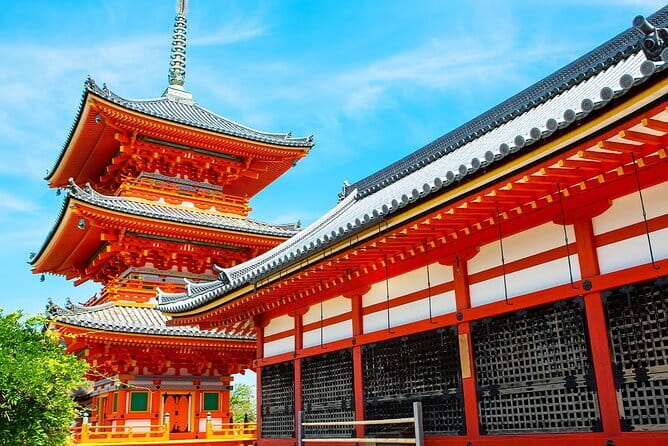
Your first stop is Kiyomizu-dera Temple, around 10:00am, with about 2 hours 30 minutes on site. Admission isn’t included, so budget $5 per person for the temple fee. This is also where you get the classic “Kyoto postcard” mood: the temple sits on a hillside with dramatic views, and the tour description specifically calls out autumn foliage scenery.
But Kiyomizu-dera isn’t just the temple building. The experience is also about the walk-in atmosphere and the approach streets—Ninenzaka and Sannenzaka, plus Ishibe Alley, with traditional wooden houses. Even when you’re just slowly moving, you’re absorbing the texture of old Kyoto: narrow lanes, stone steps, and little sidestreets that feel like they’re part of the temple complex rather than separate attractions.
Now the practical bit: expect uphill walking and steps. One review flagged this as a key consideration, and it’s consistent with how this area works. If your feet or knees are sensitive, wear supportive shoes and plan to move at your own pace. There’s also a note that the bus parking lot can be far from the scenic spot, so you’ll do more walking than you might expect from a “bus tour.”
What I like about this first block is that you get to experience the temple and the streets before the rest of the day gets busier. You’re not rushing off after a quick photo; you have time to wander, stop for views, and still make the later Kyoto-to-Nara schedule.
Fushimi Inari’s Senbon Torii: Free Admission and Tight Photo Timing
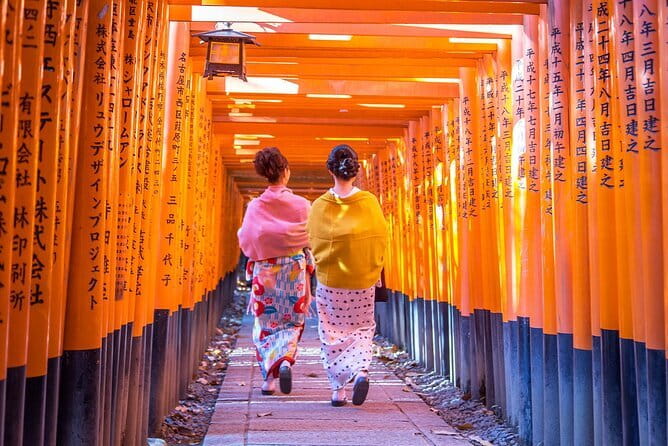
Next comes Fushimi Inari-taisha Shrine, scheduled for around 13:30 in Kyoto with about 70 minutes of time (free time on site). This is one of the most recognizable shrine experiences in Japan, thanks to the Senbon Torii, the thousands of torii gates that create long, tunnel-like paths.
Admission here is free, so you’re paying for time and logistics, not another ticket. That matters on a day trip like this. When you’re counting money, getting a major landmark with no entrance fee is a win.
The biggest thing to plan for is your walking pace. The torii paths involve stairs and longer sections beyond the first viewpoint. With only about 70 minutes, I suggest you pick your goal:
- If your goal is photos and atmosphere, stay closer to the main pathways and viewpoint areas.
- If you want deeper routes up the hill, be ready to move a bit faster and accept that you may not cover everything.
This is also a spot where it’s easy to get separated in a group setting if you wander without checking back at the agreed time. Use the guide’s guidance early: ask where to meet, and don’t assume the meeting point is obvious. The day runs on timing.
Nara Park Deer Time: A Fun Afternoon Break With Real Charm
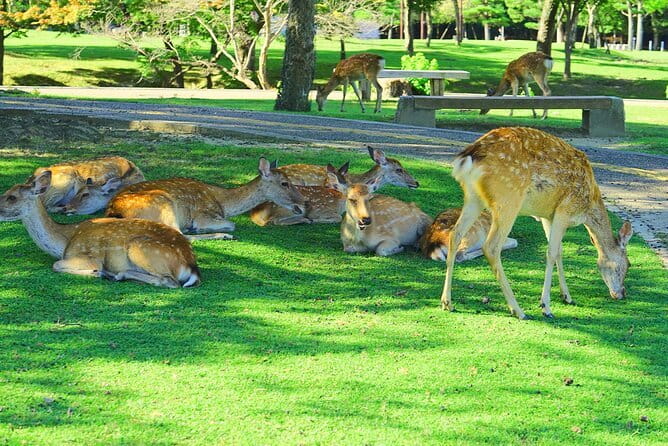
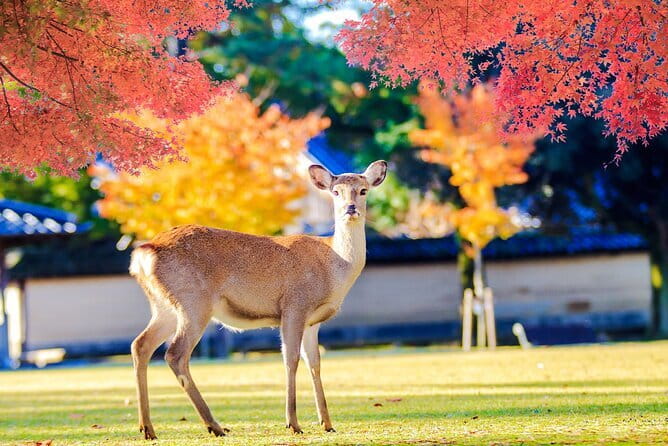
After Kyoto, the tour transitions to Nara Park at about 16:00, with roughly 1.5 hours of free time. Nara Park is famous for one reason that doesn’t need explanation once you see it: the deer.
This is a highlight in the reviews you were given, including notes specifically about feeding deer being memorable. Even if you’ve only seen deer photos online, being there in person changes things—more movement, more closeness, and a lot more personality than you’d expect.
The value of this stop inside a full-day tour is that it breaks up the temple-and-shrine rhythm with something light and human. It gives you a “Japan moment” you can talk about later that isn’t just architecture and incense.
You do need to keep practical expectations. Nara Park time is set and free, but it’s still within a tight overall day. If you get into the deer interaction and lose track of time, you’ll feel it later when you need to get to the next part of the day.
Todaiji Temple and the Great Bronze Buddha Finish
Nara Park is only half the story. The experience also includes a visit to Todaiji Temple, home to the world-famous large bronze Buddha mentioned in the tour overview. Entrance fees for Todaiji are $7 per person (not included).
Todaiji is the kind of place where your brain clicks into “wow” mode pretty quickly. It’s not just a building—it’s scale, and your body feels it. In a day trip schedule, that matters even more: the sooner you arrive with enough energy, the more you’ll enjoy the time instead of just checking boxes.
One caution from the reviews: the schedule can feel tight, and if you end up with less time than you hoped because of timing or closing conditions, you may wish you had stayed longer. The tour is built to fit Kyoto and Nara highlights into a single day, so if you’re the type who wants slow, long temple time, plan for the possibility that this will be more “see and absorb” than “linger.”
Still, even with a compressed schedule, you’re getting the core UNESCO-style temple experience: major temple architecture plus the iconic Buddha.


Guide Power: What the Best Ones Actually Do for Your Day
The guides are a big part of why this tour gets such strong feedback. You’ll see praise for guides including Leo, Lu, Jason, Yujun, and Zhao, with comments about humor, punctuality, and clear instructions.
Here’s what that means for you as a practical traveler:
- You’re not left guessing how long to stay at each site.
- You get context while you’re already in front of the thing, rather than trying to Google explanations while standing in a queue.
- You get help avoiding transit hassle, which is huge when you only have one day.
It’s also a shared group experience, so communication reduces stress. One review mentioned that the guide used group messaging to help people manage the day, which is exactly what you want when schedules are tight and walking is uphill.
If you’re traveling with someone who gets overwhelmed by planning, this is the style of tour that can carry you through. You still have to walk, but you don’t have to orchestrate the whole day.
Price and Value: Why $62.75 Can Add Up Fast or Save You
At $62.75 per person, this tour has one of the best values in a one-day Osaka-to-Kyoto-and-Nara plan—if you account for what’s extra.
Here’s the cost reality:
- Included: bus transportation, pick-up and drop-off from designated areas, and a multilingual guide.
- Not included: lunch, Kiyomizu-dera ($5), and Todaiji ($7).
- Fushimi Inari is free.
So your main extra costs are two temple tickets plus whatever you spend eating. That’s still reasonable given the number of big-name stops and the fact that you’re crossing regions in one day.
What you’re really paying for is time and transportation efficiency. Kyoto and Nara are doable on your own, but doing them correctly—without wasting hours on transit changes—takes real planning. This tour wraps that work into one schedule and moves you between areas.
When does it stop being a value? If you personally need long, slow time at each site, you might feel rushed. The upside is that you do see a lot of ground. The downside is you might want more breathing room at the final temple stop.
Getting Comfortable: Walking, Heat, and Small Day-Trip Tips
Even though this is a bus tour, it’s not a sit-and-watch route. Several parts of the day involve walking on slopes and stepping around in old-street areas.
Also pay attention to heat. One review mentioned that the bus felt like a hot box because the air conditioning wasn’t actively working while parked in a residential parking area, with temperatures around the high 90s. The included transportation is described as air-conditioned, but real-world conditions can still get uncomfortable.
My advice:
- Carry water and a small snack. Lunch isn’t included, and the day can feel tight.
- Wear shoes that handle steps and uneven surfaces.
- Bring sun protection for the outdoor walking segments.
- Don’t rely on credit cards at every stop—there’s a note that you should bring some cash since some locations may not accept credit cards.
One more logistics note: the bus parking lot can be a bit far from the scenic spots, so count on a walk even at each main stop. Build in patience for it.
Who This Tour Is Best For (and Who Might Want a Different Plan)
This tour is a good match if you want a one-day hit of Kyoto and Nara without planning every train connection. It’s especially strong for first-time visitors to the Kansai region who want major sights like Kiyomizu-dera, Fushimi Inari, Nara deer, and Todaiji in a single flow.
It’s also a solid choice for couples or small groups who would rather spend effort on photos and walking than on figuring out routes.
This is less ideal if:
- You hate uphill walking.
- You want lots of free time with no schedule pressure.
- You prefer slow museum-style pacing at a single temple.
In those cases, you may feel the day is compressed, especially around the final stop.
Should You Book This Kyoto and Nara UNESCO Highlights Day Trip?
If your goal is to maximize one day and you’re okay with a structured, walk-in schedule, I’d say yes—especially for the price and the mix of shrine and temple plus the deer moment. The strongest reasons to book are the efficient routing, the free Fushimi Inari ticket, and the guide help from multilingual professionals who’ve been praised for keeping things clear.
If you’re sensitive to heat, plan for it and bring what you need. And if Todaiji is the one place you truly want to linger, consider whether a day trip’s timing window will feel too short for you.
Bottom line: this is a very practical way to connect Kyoto and Nara from Osaka when you want big-name UNESCO-style stops plus one memorable, playful break with deer.
FAQ
How long is the Kyoto and Nara full-day tour from Osaka?
It runs for about 9 hours 20 minutes (approx.).
What does the tour cost and what’s included in that price?
The price is $62.75 per person. It includes pick-up and drop-off from designated areas, air-conditioned bus transportation, and a multilingual tour guide (English, Mandarin, Japanese). Lunch is not included.
Where do I meet the tour in Osaka and where is the end location?
In Osaka, the meeting point is Nipponbashi Exit 2 at 8:40am. The end of the tour is back at Nipponbashi (the tour lists Osaka as the only drop-off location for this trip).
Is there a Kyoto pick-up as well?
Yes. There is a second pick-up/loading area listed at 9:50am in Kyoto-Hachijoguchi Bus Loading Area.
What temple entrance fees should I budget for?
Kiyomizu-dera Temple is $5 per person (not included). Todaiji Temple is $7 per person (not included).
Is Fushimi Inari-taisha admission free?
Yes. The tour indicates admission is free for Fushimi Inari-taisha.
Does the tour include lunch?
No. Lunch is not included.
How big is the group and what languages does the guide speak?
The tour has a maximum of 40 travelers and the guide provides explanations in English, Mandarin, and Japanese.
What should I bring or plan for during the day, given possible changes?
Bring some cash, since certain locations may not accept credit cards. Also note that traffic, weather, or other unforeseen circumstances can lead to itinerary changes, including shorter sightseeing times or canceled attractions.