REVIEW · OSAKA
Osaka: Shinsekai Food Tour – 13 Dishes and 4 Eateries
Book on GetYourGuide →Operated by Travel Tokyo · Bookable on GetYourGuide
Street food in Osaka is serious business. In Shinsekai, you get that classic street-food hit along with a guided route that includes 13 dishes and a couple of worthwhile detours into the neighborhood’s quieter corners. You’ll sample Osaka favorites like takoyaki and taiyaki, then keep rolling into savory skewers and local comfort bites.
I especially like the way this tour balances big crowd-pleasers with less-obvious choices, so you’re not stuck eating the same two things. Another win is the inclusion of Janjan Yokocho alley and the Shinsekai Inari Shrine stop, which breaks up the constant snack pace. One consideration: since this is built around repeated tastings over three hours, it may not feel great if you’re avoiding lots of foods or you get full fast.
In This Review
- Key Highlights You’ll Care About
- Why Shinsekai Makes Sense for Your First Osaka Street Food Night
- Finding Your Guide: Daily Yamazaki in Ebisu Higashi
- Janjan Yokocho Alley: Snack Energy in a Smaller Space
- Shinsekai Inari Shrine: A Calm Break With a Reason
- The Star of the Show: 13 Osaka Dishes and What They Mean
- Takoyaki and the Osaka Crunch-Soft Contrast
- Taiyaki: Warm Sweet Comfort
- Kushikatsu: The Skewer That Gets the Compliments
- Doteyaki: Osaka Comfort Bite
- Where the Variety Really Helps
- How the 3-Hour Pace Feels (and How to Prepare)
- Price and Value: What $77 Gets You in Osaka
- Who This Tour Fits Best
- Should You Book This Shinsekai Street Food Tour?
Key Highlights You’ll Care About
- Start at Daily Yamazaki in Ebisu Higashi so you can meet your English-speaking guide at a real local landmark
- 13 dishes across 4 eateries, which makes it easy to try a lot without planning routes
- Janjan Yokocho alley visit for that narrow, backstreet Osaka vibe
- Shinsekai Inari Shrine stop for a calmer moment to reset between bites
- Osaka staples like takoyaki, kushikatsu, taiyaki, and doteyaki in one outing
Why Shinsekai Makes Sense for Your First Osaka Street Food Night
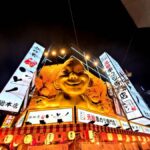
Shinsekai is one of those places that feels like it runs on snacks. The energy is part of the experience. You’re walking through a district known for street-side eating, and the best part is that the tour doesn’t just throw food at you. It gives you a route, so you’re not wandering around hungry and guessing.
I like that this tour leans into the neighborhood identity: you’re not only eating famous items, you’re also seeing the backstreet corners that make Shinsekai feel like Shinsekai. And because the guide is there in English, you get context while you’re actually eating, not later when you’re already full and tired.
There’s also a good variety of flavors baked into the plan. Expect round, crispy, and saucy bites like takoyaki; warm, flaky sweets like taiyaki; and “this is why Osaka has fans” comfort food like kushikatsu and doteyaki. It’s a smart mix for people who want a real food snapshot of the city.
You can also read our reviews of more food & drink experiences in Osaka


Finding Your Guide: Daily Yamazaki in Ebisu Higashi
The tour kicks off at Daily Yamazaki in Ebisu Higashi, where you meet your local guide before heading into Shinsekai. That meeting point matters more than it sounds. In Japan, a clear starting location helps you avoid that stressful moment of trying to locate a guide in a crowded area.
From what I’ve seen in the feedback, the guides bring strong, practical explanations. People specifically praised Bell and Tara for sharing what the foods mean and how the stops connect to the area. That kind of guidance turns a simple eating walk into something more useful: you learn why certain bites are paired with the local vibe you’re seeing.
Timing also helps here. Since it’s 3 hours, you’re not committing to a half-day food marathon. You can fit this into a dinner plan and still have time to explore after.
Janjan Yokocho Alley: Snack Energy in a Smaller Space
One of the most interesting stops is Janjan Yokocho, an alley that feels like it exists for foot traffic and quick bites. This is the kind of place where the narrow lanes and tight food layout make everything feel closer—smells, sounds, and the general sense that people are here to eat and talk.
Why it’s worth including: it gives you a contrast to the main streets. Instead of just marching through a loud area, you get a more intimate street-food atmosphere. And because the tour is guided, you’re more likely to notice the little cues that tell you what to try and how to order.
This is also where the tour’s “try lots, don’t overthink” approach shines. You’ll be working through multiple tastings during the outing, so an alley stop helps you keep that steady momentum without it turning into random wandering.
Shinsekai Inari Shrine: A Calm Break With a Reason
Between the lively eating lanes, the route pauses at the Shinsekai Inari Shrine. This is one of those stops that can easily get skipped on a casual food walk, but it’s a nice reset during a snack-heavy experience.
In the feedback, people pointed out how the guides explained the shrine’s context and history, which makes the visit feel more than like a photo stop. I like adding a calm, respectful moment during a food tour because it changes the pace. Your brain gets a breather. Your stomach catches up. Then you’re ready for the next round of Osaka specialties.
Even if you’re not the “temple person,” a shrine stop can still add value. It helps you understand how the area balances daily life, food culture, and local traditions—right in the same neighborhood.
The Star of the Show: 13 Osaka Dishes and What They Mean
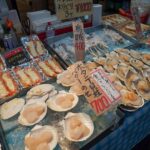
This tour focuses on classic Osaka street food. It’s not a “one bite and done” gimmick. You’re sampling 13 dishes across 4 eateries, so you get to compare flavors and textures instead of just checking off one famous item.
Here are the big hitters you can expect, and what they’re like:
You can also read our reviews of more tours and experiences in Osaka

Takoyaki and the Osaka Crunch-Soft Contrast
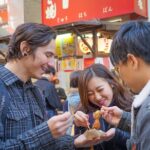
You’ll have takoyaki, those round bites with a crispy outside and warm, savory filling. They’re a perfect street-food starter because they’re portable and share-friendly, and you can usually smell them before you see them. On a guided route, takoyaki also sets the tone early: this is flavorful, hot food made for walking.
Taiyaki: Warm Sweet Comfort
For a sweet pause, the tour includes taiyaki, a traditional Japanese pastry. It’s typically served warm, with a crisp-yet-tender shell that gives way to a sweet filling. I like how this balances the savory bites. It also helps you experience Osaka sweets in a way that doesn’t feel disconnected from the rest of the evening.
Kushikatsu: The Skewer That Gets the Compliments
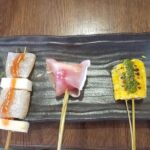
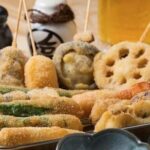
If you like crispy fried snacks, you’ll understand why kushikatsu is a standout. The tour includes juicy golden skewers, and the feedback specifically called it out as too good to miss. The appeal is simple: it’s crunchy, it’s snackable, and it’s very “Osaka street food” in character.
One practical point: since this is fried, it’s best to pace yourself. You’ll want to keep enough room for the next bites, not just go full fry-all-the-way.
Doteyaki: Osaka Comfort Bite
The plan also includes doteyaki, which is the kind of dish that feels like comfort food rather than just street munching. It’s a heavier, cozy option compared to the lighter snack formats. I like having at least one “stay-warm and slow down” item on a tasting tour. It makes the experience feel more complete and less like you only ate fast food.
Where the Variety Really Helps
The best value in this tour isn’t only that you’ll eat famous items. It’s that you’ll try a mix that covers:
- crunchy and saucy street snacks
- warm sweet pastry
- fried skewers
- a comfort-style dish
That variety is also why people reported trying foods they hadn’t had before. If you’re new to Osaka street food, this is exactly the kind of structure that helps you taste broadly without wasting time.
How the 3-Hour Pace Feels (and How to Prepare)
A 3-hour tour is a sweet spot. Long enough to cover multiple stops and multiple tastings. Short enough that you can still enjoy the rest of your evening.
You’ll be wandering through backstreets and hitting several different food moments rather than sitting down for a formal meal. That means you should mentally prepare for an active snack walk. Plan to wear comfortable shoes and expect that you’ll be stopping often.
Also, the included route pieces (Janjan Yokocho alley and Shinsekai Inari Shrine) help break the food rhythm. You’re not only consuming; you’re also moving through the neighborhood in a way that makes the food feel tied to place. That’s the difference between eating for calories and eating for understanding.
Price and Value: What $77 Gets You in Osaka
At $77 per person for a 3-hour guided experience, the value mainly comes from two things: the number of tastings and the added context.
Let’s do the math in plain terms: 13 dishes for $77 is roughly $6 per dish, and that’s before you factor in a local guide plus the visits to Janjan Yokocho and Shinsekai Inari Shrine. Even if you think some dishes cost more than others, the “bundle” logic still holds. You’re paying for convenience, variety, and interpretation.
In the feedback, the standout praise was for the food quality and the fact that the tour didn’t feel repetitive. People also liked that the guide explained the shrine stop instead of rushing you through it. That combination is what turns the price into something that feels fair.
Who This Tour Fits Best
This Shinsekai food tour is a strong pick if you:
- want a guided, English-speaking route through Osaka street food
- enjoy eating a variety of dishes rather than choosing one specialty restaurant
- like tours that include both food and neighborhood context
- want a practical introduction to Shinsekai without doing the planning yourself
It’s also a good match for couples and small groups who want shared bites and easy conversation, since the format is built around tasting lots of items in sequence. If you get overwhelmed by lots of food choices at once, this plan removes that stress by doing the ordering and guiding the stops.
Should You Book This Shinsekai Street Food Tour?
I’d book it if you want an efficient, high-rotation way to experience Osaka’s street food culture in 3 hours, with a guide who helps you connect the dishes to the neighborhood. The strongest reasons are clear: people consistently praised the kushikatsu, liked the mix of familiar and unfamiliar foods, and enjoyed how guides explained the shrine stop and area context.
One “don’t ignore this” factor: you’ll be eating 13 dishes, so go with an appetite and a flexible pace. If you’re not comfortable with that amount of food, you might prefer a shorter tasting plan instead.
If that sounds like your kind of evening, this tour is a solid bet for Shinsekai.