REVIEW · OSAKA
Osaka Private Half-Day Tour with a Local – Secrets & Highlights
Book on Viator →Operated by City Unscripted · Bookable on Viator
Osaka is best when someone shows you shortcuts. This private half-day walking tour mixes big-name sights with small lanes your feet would miss, and it does it on your schedule. Your guide is matched to your personality, then adjusts the day as you go.
I especially like that the tour starts by learning you. You fill out a pre-tour questionnaire, then you get direct communication with your host to shape the route around your interests, pace, and must-sees.
One thing to consider: it’s mostly walking. You’ll move between stops on foot, and any train or taxi transfers (if needed) are handled case-by-case at your expense.
In This Review
- Key highlights you’ll feel right away
- How a personality-matched guide changes Osaka
- Starting in Dotonbori: where Osaka already makes sense
- Osaka Castle park views: history stories without the full day grind
- The temple founded in 593: quiet calm in the middle of town
- Behind Dōtonbori’s walls: narrow lanes and the moss-covered Fudō-myōō
- Shinsekai’s retro mood: Paris and New York vibes in Osaka
- Canal signage and backstreet arcades: the Osaka you remember
- What’s included vs what you’ll need to budget for
- Walking pace, start times, and getting around smoothly
- Price at $114.17: how to judge the value of a private half-day
- Who this Osaka private walk is perfect for
- Should you book this Osaka private half-day?
- FAQ
- How long is the Osaka private half-day tour?
- Is this tour private or shared?
- Where do we meet the guide?
- Does the tour include pickup?
- Is food included in the price?
- Are attraction tickets included?
- Will we use public transportation?
- Can I get a refund if I cancel?
- Is the tour suitable for most travelers?
Key highlights you’ll feel right away
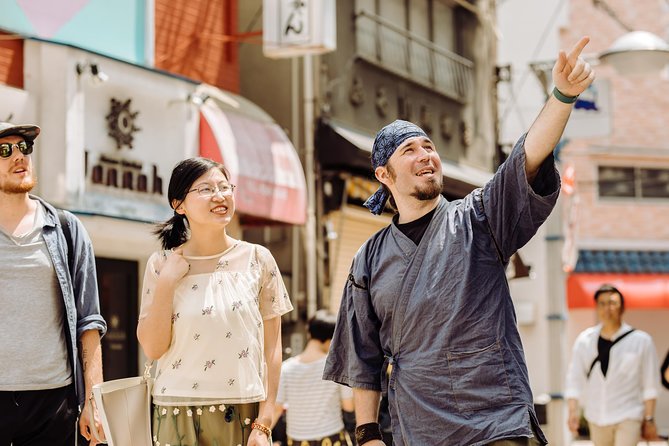
- Personality-matched guide who tweaks the plan mid-walk
- 3 to 4 hours of efficient touring without a full-day commitment
- Old Osaka contrast: temple quiet, then Dotonbori energy, then Shinsekai nostalgia
- Optional food stops are on you since food and tickets aren’t included
- Real flexibility if your pace changes or you have specific requests
- Guides known for photos and smooth navigation, including metro/IC help in some cases
How a personality-matched guide changes Osaka
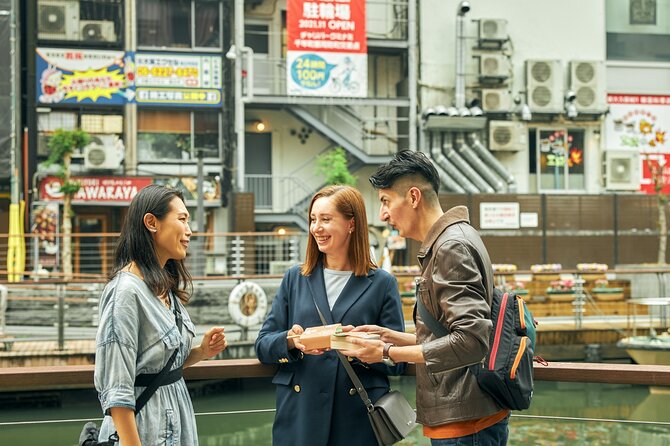
Osaka can be loud. It can also be confusing if you don’t know where the neighborhoods begin and end. This tour tries to fix both problems by starting with you, not a rigid script.
After booking, you complete a short questionnaire about your interests and priorities. Then your guide personally reaches out to plan a route that fits how you like to travel—history-focused, food-focused, hidden-alley hunting, or just an easy day that still feels meaningful. In practice, that’s what makes a private tour more valuable than a checklist: you’re not stuck watching what everyone else wants.
I also like that this tour is private in the cleanest sense. Only your group joins, so your guide can slow down, speed up, or spend extra time on something you actually care about. Some past guides on this experience were praised for exactly that: being fun, flexible, and willing to answer questions without rushing you out the door.
And yes, you’ll still see the major highlights, but with the useful context that helps them click. That’s the difference between taking photos of places and understanding why they matter.
You can also read our reviews of more private tours in Osaka

Starting in Dotonbori: where Osaka already makes sense
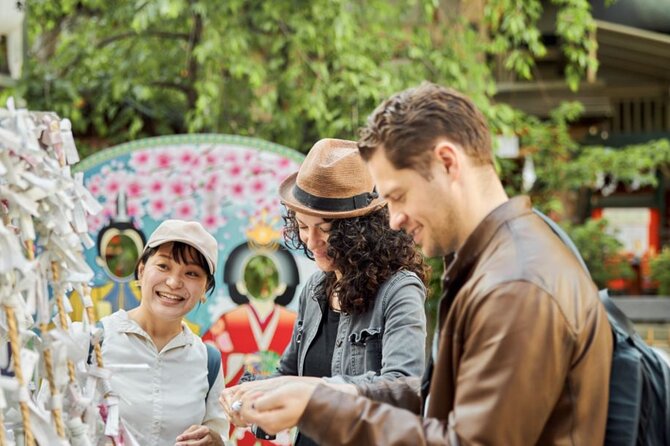
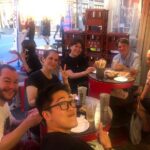
You meet at Starbucks Coffee – Tsutaya Ebisubashi in Dōtonbori. It’s a convenient, easy-to-find landmark in one of Osaka’s most recognizable districts. Starting here matters because Dōtonbori sets the tone for the whole half-day: bright signs, busy streets, and that Osaka humor and appetite for good food.
From the first steps, a good private guide helps you read the area quickly. You’ll learn what to ignore, what to circle back to, and how to move through crowds without wasting time. Even if you’re jet-lagged, this kind of orientation walk can get your bearings fast.
This is also where the “local friend” vibe shows up. Many guides paired with this tour have been described as communicative and upbeat, with strong English (and in some cases Japanese) support. That combination is underrated on day one, especially if you want to ask questions beyond the basics.
Osaka Castle park views: history stories without the full day grind
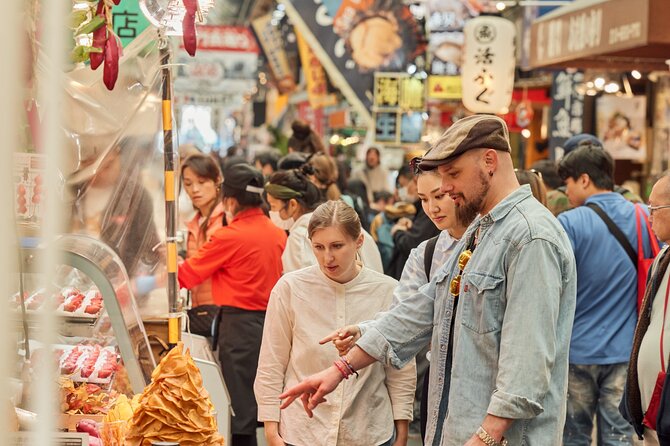
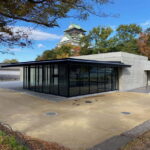
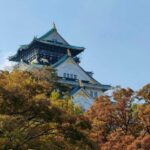
One stop focuses on a top Osaka landmark from the surrounding park area. You get the big visual moment—stone walls, moats, and seasonal views—without turning the day into an all-day museum crawl.
This part works well because it’s a reset. After Dōtonbori’s energy, the castle park gives you space to breathe and look. Your guide shares stories tied to samurai and shoguns, plus how the city’s history shaped what you’re seeing. Even if you’ve seen castle photos before, the explanations can make the silhouette feel real.
A possible drawback: castle experiences can become crowded or weather-dependent. Since your tour is short, you’ll get the best views the guide thinks suit the moment, but you won’t have unlimited time for every building detail. If you want a deep, fully guided castle interior visit, this won’t replace a dedicated castle half-day on its own.
The temple founded in 593: quiet calm in the middle of town
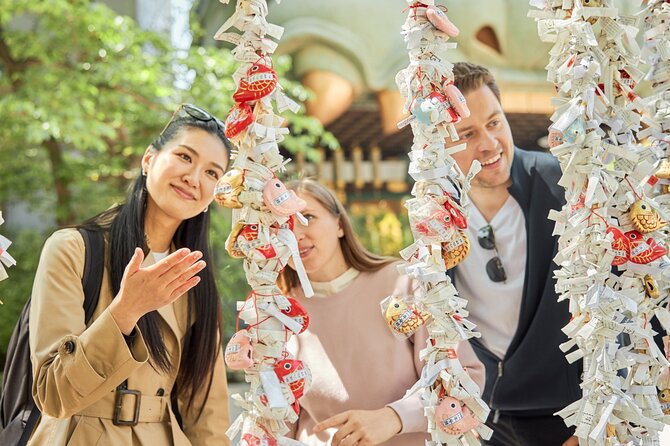
Next comes Japan’s oldest official Buddhist temple, founded in 593. The point of this stop isn’t just the date (though that alone is impressive). It’s the sudden shift in pace: you step away from modern noise and get a more grounded feel for older Osaka culture.
Temples like this offer a different kind of learning. You’re not just hearing facts; you’re watching the space. Your guide can point out cultural context that makes the place feel less like a photo stop and more like a living tradition.
In a short tour, this kind of calm stop is smart. It prevents the day from feeling like you’re only sprinting between landmarks. You get a moment to slow down, look around, and ask questions in a setting that naturally encourages it.
Behind Dōtonbori’s walls: narrow lanes and the moss-covered Fudō-myōō
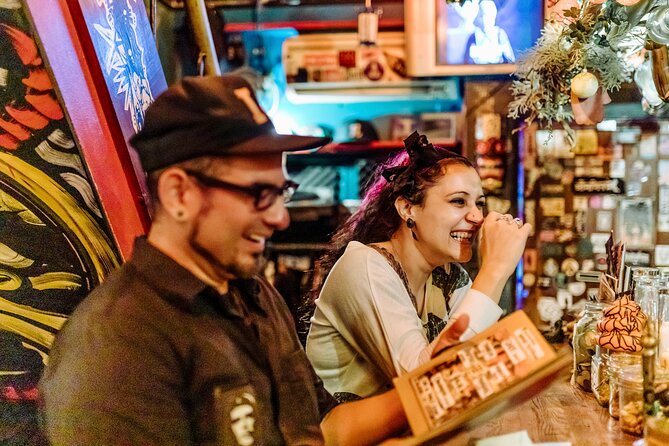
Then you move into a narrow alleyway tucked behind Dōtonbori, lined with small restaurants and traditional shops. This is where Osaka feels older and more lived-in, because the streets compress and the details get closer.
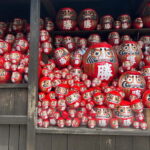
Don’t miss the moss-covered Fudō-myōō statue mentioned as a standout detail on this route. It’s the kind of small religious artwork that most people walk past without noticing. With a guide, you get the chance to see what it is, why it’s there, and how locals interpret these kinds of features.
This stop also highlights a key value of a private tour: route flexibility. If you’re curious about street-level culture—craft shops, everyday snacks, older signage—your guide can shape how long you linger in these lanes. You’re not forced to keep moving just because the group clock says so.
You can also read our reviews of more tours and experiences in Osaka
Shinsekai’s retro mood: Paris and New York vibes in Osaka
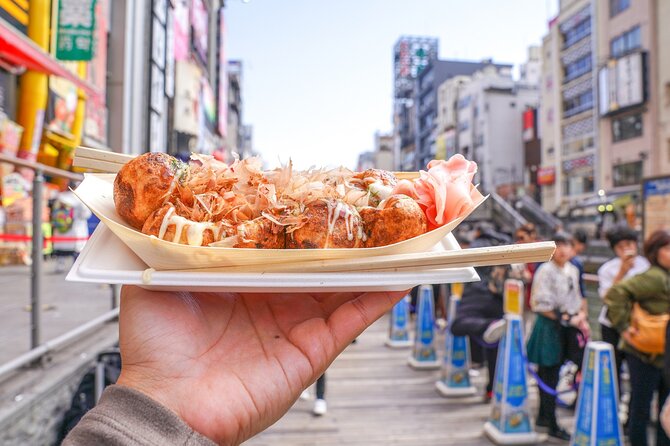
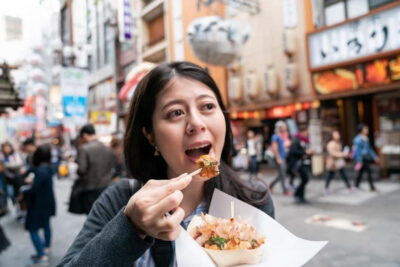
After temple calm and alley charm, you head to Shinsekai, a nostalgic district known for retro atmosphere and street food—especially deep-fried favorites. Shinsekai’s look is part of the attraction: it’s modeled after early 1900s Paris and New York, but it’s unmistakably Osaka in character.
What I like about this stop is the contrast. You’ve just been in spiritual quiet and compact backstreets. Shinsekai gives you playful nostalgia and a snack-friendly environment, so the day shifts from “learn and look” to “wander and taste.”
A practical note: deep-fried food can be heavy if you’re trying to sample everything. If you’re doing this on an empty stomach, you’ll probably love it. If you already ate a big lunch, keep your expectations realistic and plan to taste, not tackle.
Also, because Shinsekai is a walking-and-looking district, your pace matters. Since this tour is flexible, you can spend more time at the viewpoints and streets you care about most, and less time where you’re only passing through.
Canal signage and backstreet arcades: the Osaka you remember
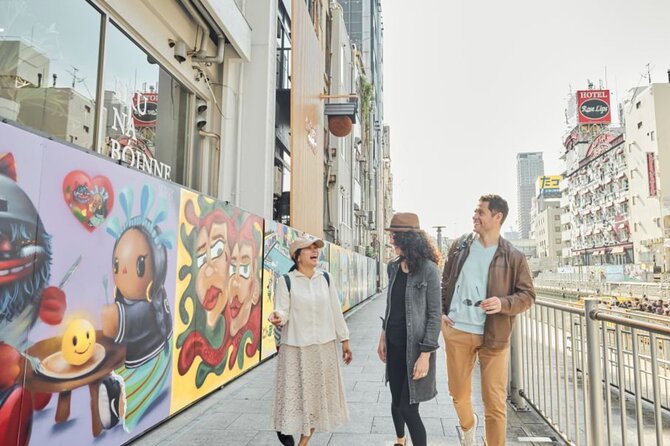
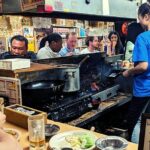
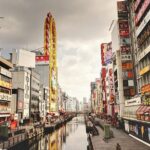
To wrap, you return to the iconic entertainment zone feel—strolling along the canal under bright signage, then moving into backstreet arcades packed with food stalls and unique shops.
This is where the guide’s job becomes practical, not just storytelling. You’ll learn how to navigate the dense flow of people, where to pause for photos, and how to pick what fits your appetite and interests. If you’re into browsing, these arcades can turn into your favorite part of the day because they feel like you’re discovering things, not buying things off a map.
One more way this stop earns its value: it’s built for conversation. In a private tour, you can ask, Where should I go after this? What should I skip? What’s the real local play here? A good guide turns the final leg into a launchpad for your next day in Osaka.
What’s included vs what you’ll need to budget for
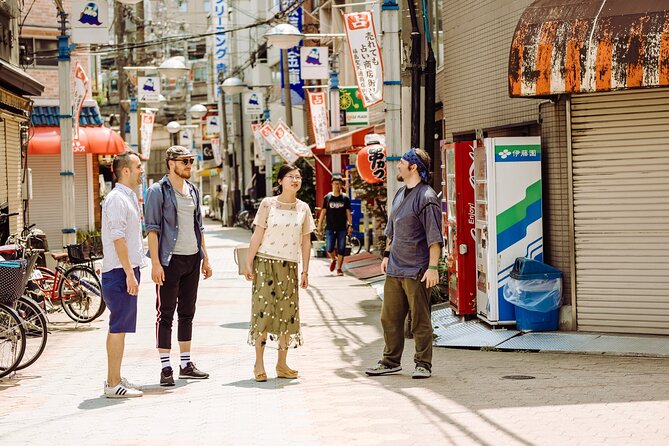
The tour includes a private walking experience, plus insider tips from a local. You also get flexible start times, tailored planning via questionnaire, and direct communication with your host for recommendations.
What’s not included is the stuff that often surprises people:
- Food, drinks, and tickets to attractions aren’t covered
- Transportation isn’t included (this is primarily on foot; public transport or taxis may be used at extra cost)
- Gratuities are optional
That means you should budget for snacks as you go. Think of this tour as the guide-powered “great places to walk and learn” experience, not a fully catered meal plan. If you want a food-heavy day, ask your guide for bite-sized options and then pay directly.
Also, since some movement between stops may use trains or taxis if needed, you may want cash or a card ready for small transport costs. Your guide can discuss the exact approach after your reservation is finalized.
Walking pace, start times, and getting around smoothly
This is a 3 to 4 hour walking tour. It’s long enough to cover multiple neighborhoods, but short enough to keep your energy up. Still, Osaka’s streets can involve uneven sidewalks and stairs in spots, depending on which arcades and alleyways you’re walking through.
Here’s how to make it work for you:
- Wear comfortable shoes you trust
- Tell your guide your pace preference in advance
- Don’t be shy about asking to slow down or skip a segment
One notable detail from past experiences with this tour: guides have been praised for adapting to mobility concerns. Since you’re already completing a questionnaire, you can set expectations early so the day matches your needs.
If you’re new to Japan transit, this tour can also help you get oriented. Some guides have been specifically praised for walking guests through metro tickets and IC card systems. Even if you don’t need that step, having guidance for basic logistics can reduce stress fast.
Price at $114.17: how to judge the value of a private half-day
At $114.17 per person for roughly 3 to 4 hours, this is not a budget group tour price. It’s priced for a true private experience with guided planning.
So where does the value come from?
- You’re paying for a tailored route, not a generic route
- You get the time flexibility of real conversation and adjustments
- A good local guide can save you time you would otherwise waste searching for the right streets, the right entrances, and the right order
In other words, you’re buying efficiency plus local context. If you’re traveling with a friend or partner, the private format often feels more reasonable than it first appears, especially when you can agree on what you want to see and let the guide handle the rest.
If you’re traveling solo and you’re hoping to spend the day mostly on your own, you might not feel the same value. But if you want a strong first-day orientation and you like the idea of someone steering you toward the best small details, this price can make sense quickly.
Who this Osaka private walk is perfect for
This tour is a great fit if you want:
- A first-day introduction to Osaka with smart context
- A mix of major sights and small lanes
- A guide who can shift the day based on your questions and interests
- A short window in Osaka where you still want variety
It can also work well for families, couples, and travelers who prefer guided learning without feeling trapped in a schedule. The consistent theme in positive feedback is that guides bring personality: fun, helpful, photo-friendly, and flexible.
If you hate walking, need long seated breaks, or want a lot of museum time, you might prefer a different format. This one is built around walking and neighborhood storytelling.
Should you book this Osaka private half-day?
I’d book it if you’re the type who enjoys small details and wants a local hand guiding your first steps. The combination of personality-matched guidance, short duration, and neighborhood variety is exactly what makes a half-day tour feel worth it.
I’d skip it (or at least rethink expectations) if you want food and tickets covered, or if you’re expecting a fully stop-and-go transit day with lots of rides. This experience is fundamentally a walking tour, and that’s the deal.
If you do book: send a clear questionnaire and ask for what you actually want. If you care about history, say so. If you care about street food, say that too. With a private guide, the better you communicate, the more the day becomes yours.
FAQ
How long is the Osaka private half-day tour?
It runs about 3 to 4 hours.
Is this tour private or shared?
It’s private. Only your group participates.
Where do we meet the guide?
You meet at Starbucks Coffee – Tsutaya Ebisubashi (Dōtonbori, Chuo Ward, Osaka).
Does the tour include pickup?
Pickup is offered.
Is food included in the price?
No. Food and drinks are not included.
Are attraction tickets included?
No. Tickets to attractions are not included.
Will we use public transportation?
The experience is primarily walking. Public transport or local taxis may be used to transfer between sites, and exact transportation costs can be discussed with your host.
Can I get a refund if I cancel?
Free cancellation is available. You can cancel up to 24 hours in advance for a full refund. If you cancel less than 24 hours before the start time, it isn’t refunded.
Is the tour suitable for most travelers?
Most travelers can participate. Service animals are allowed as well.
![[1 Group Only] Osaka Street Food Tour for Family - The takoyaki moment: what’s included (and why it’s a smart anchor)](https://9.osakaadventures.com/wp-content/uploads/1-group-only-osaka-street-food-tour-for-family-400x267.jpg)