REVIEW · OSAKA
Osaka: Minoh Waterfall & Katsuo-ji Temple Half-Day Tour
Book on GetYourGuide →Operated by Cornwall Ltd · Bookable on GetYourGuide
A waterfall escape beats Osaka streets. This half-day tour pairs the quiet of a riverside walk to the 33-meter Minoh Waterfall with the odd-and-fun culture of Katsuo-ji’s red Daruma dolls. The trade-off is that from February to May, the trail uses a detour, so the walk can feel a bit more demanding than usual.
I like that the whole plan is built for real viewing time, not rushing. You walk about 50 minutes each way along mostly paved paths, then you get time to wander temple grounds with slopes and stairs. I also like that you’re in a small group (up to 10), which makes it easier to ask questions when your English guide, like Toshi, Sophie, or Yu, is explaining what you’re seeing.
One more practical note: the price is good for what’s included, but transport isn’t, so you’ll want to budget for the local bus/ride between areas. If you like calm nature stops plus a memorable photo-and-temple combo, this tour fits the bill close to Osaka.
In This Review
- Key highlights and what matters most
- Why Minoh Waterfall feels like an easy reset from Osaka
- Meeting at Hankyu Minoh Station and spotting your guide
- The riverside walk: 50 minutes to the Minoh Waterfall
- What’s different from February to May
- Photo stop at the waterfall: what to focus on
- Head back on foot, then transfer toward Katsuo-ji
- Katsuo-ji Temple: Daruma dolls, victory vibes, and hillside views
- How the 4-hour half-day pacing actually works
- Price and value: what you’re paying for (and what you’re not)
- Who should book this Osaka Minoh + Katsuo-ji tour
- Should you book? My quick decision guide
- FAQ
- Where do I meet for the Osaka Minoh Waterfall & Katsuo-ji tour?
- How long is the walk to Minoh Waterfall?
- Is transportation included in the tour price?
- What’s included in the tour?
- What changes happen from February to May?
- What should I bring?
- Is this tour suitable for wheelchairs or young children?
Key highlights and what matters most
- Minoh Waterfall Trail to a 33-meter drop with photo-friendly stops and river sounds doing most of the talking
- Katsuo-ji Temple and thousands of Daruma dolls—a simple walk through a very eye-catching tradition
- Up-close, slow sightseeing time rather than a quick “look and go” schedule
- Small group size (10 max) means better pacing and more chances to ask questions
- Seasonal detour (Feb–May) affects difficulty so wear your best shoes and bring stamina
Why Minoh Waterfall feels like an easy reset from Osaka
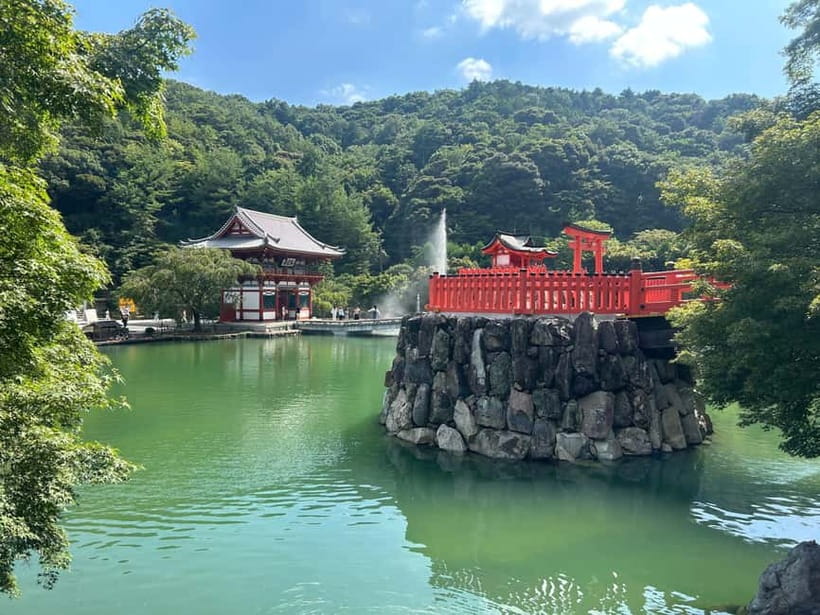
Osaka can be fast and loud. This tour is the opposite. You start in Minoh and shift into forest quiet as soon as you’re walking the riverside path. The sound of water and the shade do something your photos can’t fully capture: they make the whole area feel cooler and calmer, even when the city is buzzing in the background.
The payoff is the waterfall itself. Minoh Waterfall is about 33 meters tall, and the viewing spots give you that satisfying “there it is” moment. It’s not just a waterfall photo opportunity. The trail’s gentle rhythm—then the gradual build toward the drop—makes the moment land.
The second half is culture, but not in a museum-stuffy way. Katsuo-ji Temple is known as the Temple of Victory, and the grounds are famous for red Daruma dolls. You can spend time just walking, looking closely, and soaking in the hillside views without feeling like you’re trapped in a checklist.
You can also read our reviews of more tours and experiences in Osaka



Meeting at Hankyu Minoh Station and spotting your guide
You meet at Hankyu Minoh Station, at the main ticket gates. It’s the kind of meeting point that’s easy if you arrive with a little buffer time. Your guide will be waiting just outside the gates and can be identified by a bright fluorescent green band attached to their bag.
Why this matters: you don’t want to start your day hunting for the right person while everyone else is already moving. If you’re the kind of traveler who likes a smooth start, be there early enough to get oriented—especially if it’s a busy travel season.
You’ll also want to remember the tour’s rule set. Pets aren’t allowed, baby strollers and large luggage aren’t allowed, and bare feet aren’t permitted. Comfortable walking shoes matter more than you think here, because you’ll be doing multiple stretches of walking plus temple stairs.
The riverside walk: 50 minutes to the Minoh Waterfall
The guided hike runs about 50 minutes one way along mostly paved paths. That phrase—mostly paved—helps. You’re not climbing technical terrain, but you are on a real walking path. Expect a steady walk through greenery with viewpoints that pop up as the river corridor opens.
I like this pacing because it’s long enough to feel like you’re leaving the city behind, but short enough to keep the day relaxed. You’re not “training for a hike.” You’re strolling with a purpose: reach the waterfall, then take a photo break with time to actually look.
What’s different from February to May
From February to May, the usual route to Minoo Waterfall is closed, so you’ll take a short detour. The operator notes that this makes the walk a bit more challenging and requires a bit more physical stamina. Translation: wear shoes with decent grip, take it slow on steeper sections, and don’t treat it like an effortless stroll if you’re not used to hills.
If you’re the kind of person who likes nature but dislikes surprises, this is the key detail to plan around.
Photo stop at the waterfall: what to focus on
Once you reach the waterfall, you’ll get time for photos and sightseeing. A waterfall is one of those subjects where the first few minutes matter. If you only photograph the front view, you’ll miss the full effect.
Here’s how I’d aim your attention:
- Look for how the water spreads and changes texture as it drops.
- Turn your head slightly to find different sightlines—some angles make the falls feel wider, not just taller.
- Pause longer than your camera needs. Water sounds and mist (even light mist) help you “feel” the scene.
The tour doesn’t rush you through this stage. That’s a big part of the value: the day is only about 4 hours, so those minutes at the falls are doing real work.




Head back on foot, then transfer toward Katsuo-ji
After the waterfall time, you return on foot to the station area, again about 50 minutes along the path. This second walk is useful. You see the trail from the opposite direction, and the same river corridor feels different once you’ve reached the main attraction.
Then you shift from walking mode to transport mode. The plan uses bus transfers from the Minoh area toward Minoh-Kayano Station, and then onward up the mountain toward Katsuo-ji Temple. In other words, you’re not trying to climb everything yourself.
There’s also an operator note about taxi use: it says a taxi can be more cost-effective than the bus and gives a smoother, more comfortable ride. Even if the exact mode varies by day, the goal is the same—reduce the stress of getting uphill and give you more time to enjoy the waterfall scenery and temple grounds.
This matters if you’re visiting from Osaka and you don’t want to spend your half-day wrestling with multiple transit steps. An experienced English guide can make the transfers feel less confusing, and that kind of help showed up in past experiences during busier holiday periods.
Katsuo-ji Temple: Daruma dolls, victory vibes, and hillside views
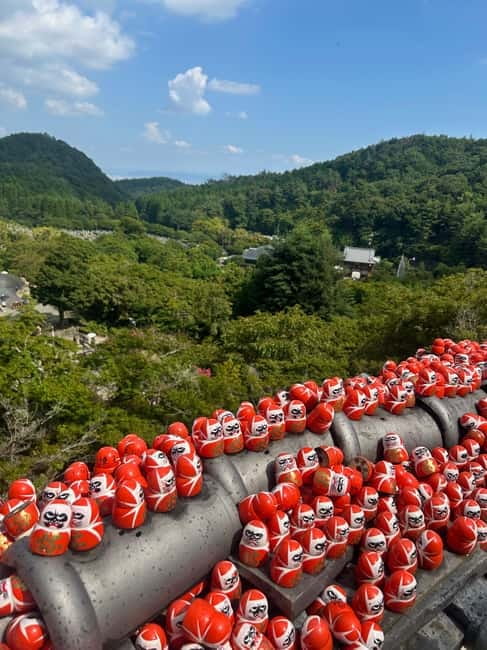
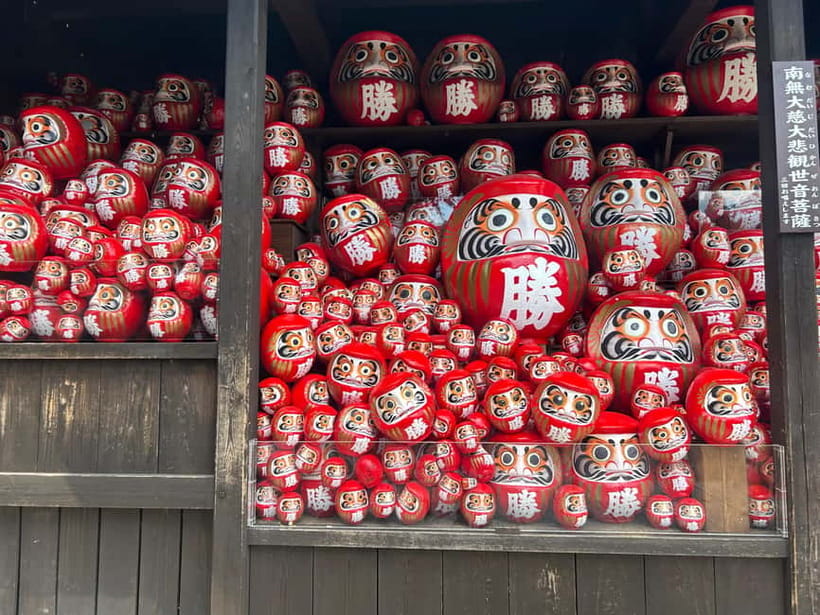
Katsuo-ji Temple is the “Temple of Victory.” The standout feature is its massive collection of red Daruma dolls—thousands of them—creating a powerful visual field the moment you enter. Daruma dolls are symbols tied to perseverance and good fortune, and the temple experience leans into that idea without needing extra explanation.
The tour gives you about 40 minutes to explore. That’s enough time to do the basics (see the ornate gates, walk around the gardens, and take in the hillside scenery) and also enough time to linger if something catches your eye. The grounds include slopes and stairs, so you’ll want to plan on some uphill effort once you’re on temple steps.
You might also find small shopping areas. It’s the kind of place where you’ll spot souvenirs and temple-related items without it feeling like a theme park.
If you’re a solo traveler, this temple time can feel especially good. The setting is calm, and the guide’s job is to keep you moving at a comfortable pace while still giving you space to look around.
How the 4-hour half-day pacing actually works
This is a half-day tour with a compact rhythm:
- A longish walk to the falls, around 50 minutes
- Photo and sightseeing time at the waterfall
- Another return walk, again about 50 minutes
- Transfers toward Katsuo-ji by bus (with the option of a smoother ride depending on conditions)
- Temple exploration time, about 40 minutes
The overall duration is about 4 hours. That schedule is short enough to keep your day flexible, but long enough to leave Osaka and come back with something you can point to: waterfall views plus Daruma photos plus temple gardens.
The best part is how the day alternates energy levels. You start with nature, then do cultural sightseeing, and you’re not stuck with nonstop stairs or nonstop walking. It’s a good “near Osaka escape” if you don’t have a full day to spare.
Price and value: what you’re paying for (and what you’re not)
At $47 per person, the price is more about guidance than transport. You get an English-speaking local guide, an admission fee, and a guided hike to the waterfall. Transportation is not included.
So how is it good value?
- You’re paying for a guide who can connect what you see (forest path, waterfall, temple tradition) to context.
- You’re paying for time efficiency: the plan groups walking and temple visiting so you don’t spend the whole day figuring out routes.
- You’re paying for a small-group pace, up to 10 people, which matters for a trail visit.
If you compare this to DIY, you could absolutely piece it together on your own. But the guide reduces friction: meeting point clarity, route decisions, and navigating public transit up into the mountains. That’s especially helpful during festive or busy periods, when transfers can be more stressful.
The only real “cost” you should plan for is transportation. Budget for the buses (and possibly a taxi leg if that’s used), and you’re set.
Who should book this Osaka Minoh + Katsuo-ji tour
This tour makes the most sense if you want a clean mix of nature and culture close to Osaka, without spending an entire day on logistics.
You’ll probably love it if you:
- enjoy walking outdoors and want waterfall scenery with time to photograph
- want Katsuo-ji’s Daruma experience without having to plan every step
- like small groups and clear guidance in English
It may not fit you if you:
- need a fully flat route (the temple has slopes and stairs)
- are traveling with young children or limited mobility
- want a stroller-friendly outing (strollers aren’t allowed)
Also, it’s not recommended for children under 6, people with mobility impairments, wheelchair users, or people over 80. If you’re in any of those groups, you’ll likely feel the walking and temple steps too much for a short half-day plan.
Should you book? My quick decision guide
Book this tour if you want a calm break near Osaka with a real payoff. The Minoh Waterfall walk gives you that nature reset, and Katsuo-ji’s Daruma displays turn it into a photo-worthy, memorable culture stop.
Don’t book this tour if you hate walking on uneven changes in elevation or you’re sensitive to stairs. Also, if you’re visiting between February and May, plan for a detour and treat the walk as slightly more active than usual.
If you do book, bring cash, pack rain gear in case the weather shifts, and wear grippy shoes. The day is short. Your comfort gear matters more than you’d think.
FAQ
Where do I meet for the Osaka Minoh Waterfall & Katsuo-ji tour?
Meet at the main ticket gates of Hankyu Minoh Station. Your guide will be just outside the gates and can be identified by a bright fluorescent green band attached to their bag.
How long is the walk to Minoh Waterfall?
The walk from Minoh Station to the waterfall is about 50 minutes one way along mostly paved paths.
Is transportation included in the tour price?
No. Transportation is not included. The tour uses bus transfers between areas.
What’s included in the tour?
You’ll get an English-speaking local guide, admission fees, and a guided hike to Minoh Waterfall.
What changes happen from February to May?
From February to May, the usual route to Minoo Waterfall is closed, so the tour takes a short detour. The walk is a little more challenging than usual and requires a bit more physical stamina.
What should I bring?
Bring cash. Also wear comfortable walking shoes and consider bringing rain gear if needed.
Is this tour suitable for wheelchairs or young children?
No. The tour is not suitable for children under 6, people with mobility impairments, or wheelchair users. It also isn’t suitable for people over 80.