REVIEW · OSAKA
Osaka: Private and Fully Customized Tour with Hotel Meet Up
Book on GetYourGuide →Operated by GoWithUs Tours · Bookable on GetYourGuide
Osaka gets personal on this private walk. What makes this experience work is the hotel meet-up and the fact that your guide (often Kieran) adjusts the plan to your pace and interests in real time. I also like how the tour mixes landmark time with street-level Osaka, so you’re not stuck in just photo stops.
A possible drawback: it’s built around walking and public transit, so comfortable shoes matter, and tickets plus train fares usually cost extra on top of the base price.
In This Review
- Key things to look for
- Why the hotel meet-up matters in Osaka
- The Osaka Castle block: what you gain in one guided hour
- The transit rhythm: short train hops, mostly walking
- Shinsekai: street texture and a different Osaka mood
- Kuromon Ichiba Market: planning your eating without the guesswork
- Dotonbori: the lights, the noise, the Osaka feeling
- Ninenzaka and Sannenzaka, then Yasaka Shrine: a cultural finale option
- Custom tailoring: how Kieran makes it feel like your day
- Price and the real cost of your day
- Logistics to think about before you go
- Who should book this tour
- Should you book this private Osaka tour?
- FAQ
- FAQ
- How long is the tour?
- Is hotel pick-up included?
- Is the guide English-speaking?
- Is this a private tour?
- What’s included in the price?
- Are food and drinks included?
- Do I need to pay for attraction tickets?
- Is the tour wheelchair accessible?
Key things to look for
- Hotel meet-up on foot so you start fast without hunting meet points
- English-speaking private guide who adapts the itinerary on the fly
- Signature streets and neighborhoods from Osaka Castle area to Shinsekai and Dotonbori
- Food-friendly timing, with market and street areas in the middle of the day
- Cultural finale option that includes Ninenzaka and Sannenzaka lanes and ends at Yasaka Shrine
- Public transport + walking route for an authentic feel, at your own pace with the guide
Why the hotel meet-up matters in Osaka
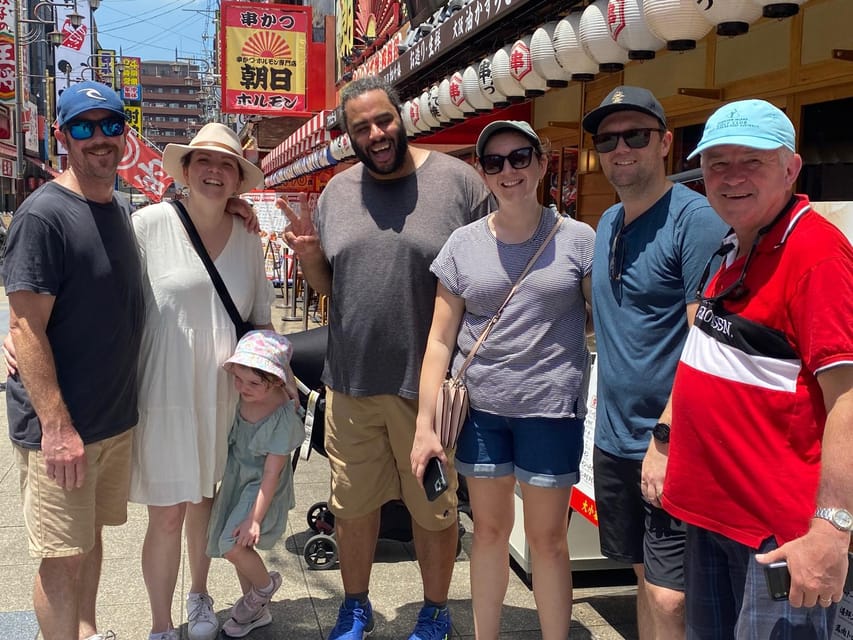
Osaka is easy to get around, but it’s also easy to waste time at the start. This tour solves that with an honest-to-goodness meet-up: the guide comes to your accommodation and can meet you in the lobby on foot. If you’d rather start somewhere else, they can also arrange a meeting point at a train station or a location you prefer.
That one choice changes the whole day. You skip the morning scramble, you can ask questions before you ever leave, and you can settle into the plan faster—especially if you’re traveling as a family or you’re jet-lagged.
It’s also private, so you’re not squeezed into a group pace. In several bookings, people highlighted that Kieran adapted the tour as the morning went—so the route feels like it belongs to you, not a script.
You can also read our reviews of more private tours in Osaka

The Osaka Castle block: what you gain in one guided hour
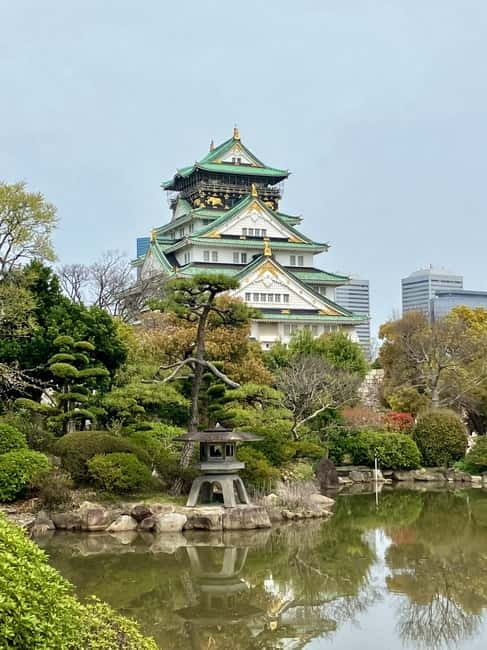
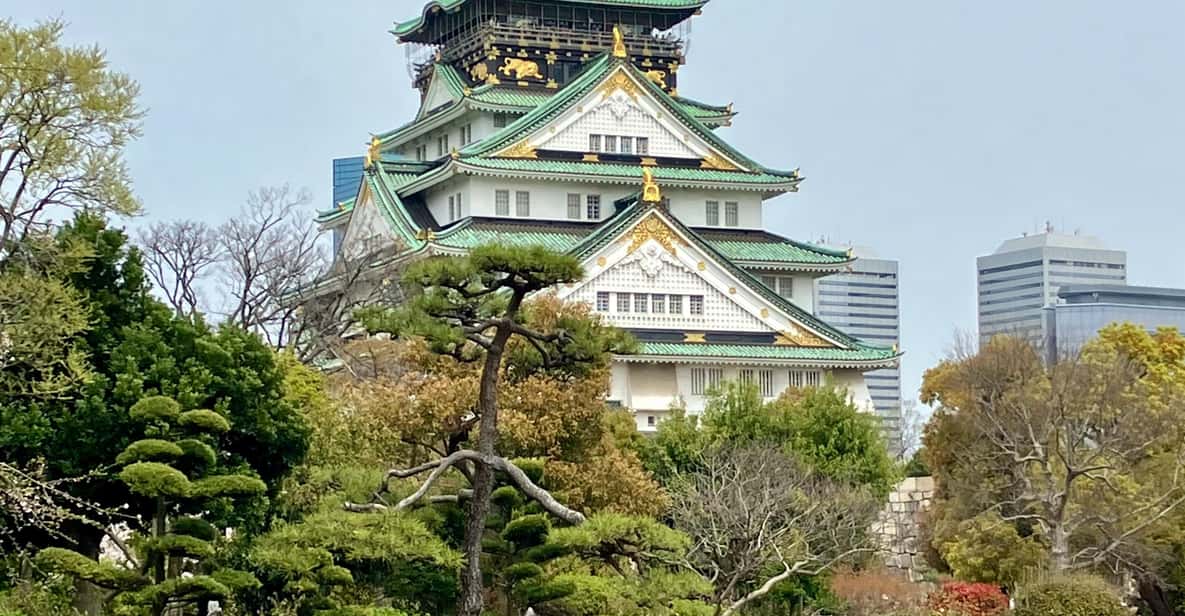
The tour’s first major stop is Osaka Castle, with a guided visit lasting about one hour. Even if you’re not a hardcore architecture person, the castle area is a strong way to get your bearings in Osaka. It gives you context: why this place matters historically and how the surrounding area functions as a public space now.
One practical note: the Osaka Castle attraction itself requires an entry ticket, and that ticket isn’t included. So if the castle grounds and exhibits matter to you, plan for the additional cost (Osaka Castle tickets are listed separately, around ¥600).
This hour is a smart starter because it sets up how you’ll understand the rest of the day. After you see the main landmark and get the story behind it, Shinsekai and Dotonbori make more sense as parts of the same city—modern life and older layers rubbing elbows.
The transit rhythm: short train hops, mostly walking
Between stops, the itinerary includes a quick train segment (about 10 minutes) and then short on-foot transitions. That matters because it shapes what you’ll actually feel: frequent changes of scenery, not long stretches of transit boredom.
Transportation fees are not included. The tour gives a rough estimate for train fares (about ¥200 to ¥1,500, depending on what you do and which route gets used). The upside is that your guide can choose the most efficient path for your timing and energy level, while you’re still moving at a human pace.
Also, the walking is real. The tour is marked as wheelchair accessible, but the company still lists it as not suitable for people with back problems or heart problems. If walking for a few hours is tough for you, consider whether you’ll be able to pause often, or whether a shorter or less walking-heavy option would fit better.
Shinsekai: street texture and a different Osaka mood
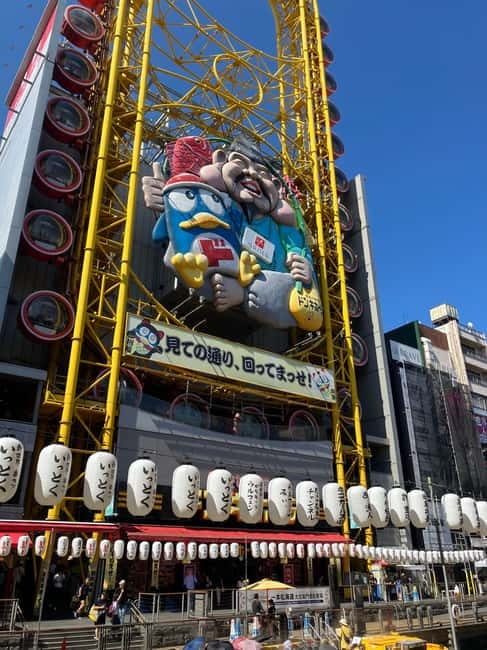
Next up is Shinsekai, with about one hour of guided time. This is the kind of neighborhood that changes how you read a city. Instead of the big “must-see” energy, Shinsekai shows the texture of everyday Osaka life: local rhythms, signage, street life, and a more down-to-earth feel.
This stop is also where a good guide earns their keep. The value here isn’t just where you stand for photos—it’s the background and the small course corrections. In past tours, Kieran was praised for sharing context and answering lots of spontaneous questions without rushing people out the door. That’s especially useful in places like Shinsekai, where you can easily miss the meaning behind what you see.
If you’re the type who likes to understand why a district feels a certain way, this hour is likely to click.
Kuromon Ichiba Market: planning your eating without the guesswork
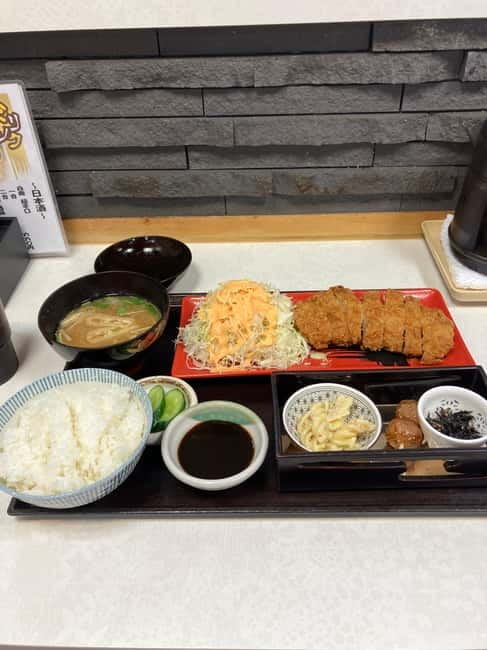
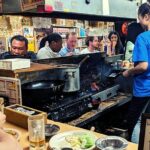
Then comes Kuromon Ichiba Market, guided for about 30 minutes. This is a tight window, but it’s a strong one if you want market energy without spending your whole day hunting stalls.
Food and drinks are not included, so you’re in control of what you buy and how much you spend. But the guide’s role is practical: pointing you toward what’s worth your time and helping you navigate the area with less indecision.
In one highlighted experience, a guide even helped with a very specific, nostalgic request: hunting down a candy from the 1970s. That’s the kind of detail that makes a market stop feel personal instead of generic.
If you’re visiting Osaka briefly, a guided market stop is also efficient. You get oriented, you learn what the place is known for, and you leave with ideas for where to eat later on your own.



Dotonbori: the lights, the noise, the Osaka feeling
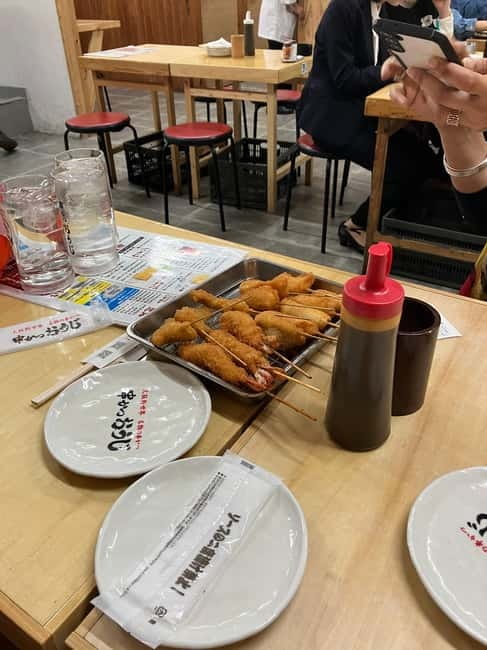
After the market, the tour shifts toward Dotonbori with a guided visit lasting about one hour, plus a short walk between areas (about 5 minutes on foot in the provided flow).
Dotonbori is the area most people picture when they imagine Osaka, and the guide helps you make sense of it fast. You’ll see the visual energy up close, but more importantly, you’ll understand how to move through it without feeling lost.
This is also a good time to ask for suggestions that fit your interests—snacks, casual meals, or even where to go next after the tour ends. Multiple reviews mentioned that Kieran offered recommendations beyond the tour itself, which is exactly what you want after you’ve spent the morning learning the city’s logic.
Ninenzaka and Sannenzaka, then Yasaka Shrine: a cultural finale option
Here’s the part that feels extra special if you want more than just Osaka city scenes. The tour highlights include strolling the scenic lanes of Ninenzaka and Sannenzaka, and it concludes with a visit to Yasaka Shrine.
Those locations are known for their old-street atmosphere and their connection to Kyoto culture, so they add a different flavor to the day. The timing is the main question—this is a 3 to 5 hour tour—so your guide’s customization matters.
The good news is that this experience is built for that kind of adjustment. Reviews repeatedly mentioned that Kieran tailored the tour on the fly based on who’s in the group, including families traveling with children. If you want a finale that’s more spiritual and scenic than purely street-level city energy, this is the piece to watch for when you confirm your exact route.
Custom tailoring: how Kieran makes it feel like your day
The most consistent praise across the bookings is not a single landmark. It’s how the day is managed.
People liked that Kieran:
- adapted the tour to specific needs, not just a fixed loop
- stayed flexible when plans changed during the morning
- shared context and history in a way that made the sights easier to understand
- handled lots of questions patiently
- helped with extra ideas after the tour ended
There’s a big difference between a guide who recites facts and a guide who helps you connect the dots. In this tour, the emphasis seems to be on understanding what you’re seeing and then using that to make smart choices for the rest of your time in Osaka.
If you’ve got specific interests—food, neighborhoods, photography, culture—or if you’re traveling with kids who need shorter attention bursts, this type of customization is often the difference between a tour that feels like a checklist and one that feels like a plan you actually enjoy.
Price and the real cost of your day
The tour price is $109 per person for 3 to 5 hours, and it includes:
- a guided experience with an English-speaking local guide
- hotel pick-up / meet-up (in the lobby area on foot)
- a private group format
- customization based on your preferences
What’s not included matters for budgeting. You should expect:
- food and drinks
- Osaka Castle attraction ticket (listed at about ¥600)
- other attraction tickets (listed roughly ¥200–¥1,800)
- train fares (rough estimate ¥200–¥1,500)
So is it good value? For me, it is when you compare it to the cost of (a) paying for transit and entry tickets on your own and (b) spending time figuring out routes while also trying to get the right context.
This price becomes especially reasonable if you’re:
- traveling as a small group and want a guide instead of self-guiding
- short on time and want fewer wasted hours
- the type who benefits from explanations, not just photos
If you’re the type who loves wandering with no structure and already knows your way around, you may prefer to save money and DIY. But if you want a day that runs cleanly and fits your interests, the guide time is the product—and it’s clearly the part people remember.
Logistics to think about before you go
A few practical items will make this day feel smooth:
Shoes: walking is a core part of the plan.
Energy level: it’s a short-to-medium tour, but it moves.
Extra cash for tickets: Osaka Castle and any other paid stops add up.
Weather plan: if you hit rain, your comfort becomes more important than usual.
Questions welcome: the guide experience seems built for a lot of back-and-forth, including random questions and small requests.
Also note the guide is English-speaking, and the tour is marked as wheelchair accessible. Still, the operator lists it as not suitable for people with back or heart problems, which suggests you should judge it by the walking component, not just the accessibility label.
Who should book this tour
This is a strong fit if you:
- want a private guide in Osaka who can adapt
- like street life as much as big sights
- care about understanding what you’re seeing (context is a major theme in the positive feedback)
- might need a plan that works for different ages or interests
It may not be ideal if you:
- struggle with walking and need long sit-down breaks
- want a very rigid schedule with no customization
- dislike paying extra for tickets and transit
One more thought: if you’re chasing nostalgia or specific local finds, this guide approach can be a plus. The candy-from-the-1970s request story is a perfect example of how a personal request can become part of the day.
Should you book this private Osaka tour?
If you want a guided Osaka day that feels flexible, personal, and efficient, I’d book it. The strongest reasons are simple: hotel meet-up, private tailoring, and a guide (Kieran) who actively adjusts and explains instead of rushing through stops.
If you’re comfortable paying for tickets and taking a good amount of walking in stride, this is a smart use of a few hours. If you’re hoping for a fully packaged day with no extra costs and minimal walking, you may want to compare against options that include entrances and fewer transitions.
FAQ
FAQ
How long is the tour?
The duration is listed as 3 to 5 hours, depending on starting time and how the route is tailored.
Is hotel pick-up included?
Yes. The guide meets you at your accommodation, typically in the lobby, and can also arrange a meet point at a specific train station or location you prefer.
Is the guide English-speaking?
Yes. The live tour guide provides English.
Is this a private tour?
Yes, the tour is a private group.
What’s included in the price?
Included are the guided tour with an English-speaking local guide, immersive walking experience (alternative transportation is available at your expense), and the hotel pick-up. The itinerary is also tailored to your preferences and interests.
Are food and drinks included?
No. Food and drinks are not included.
Do I need to pay for attraction tickets?
Yes. Osaka Castle tickets are not included (listed around ¥600), and other attractions may have additional ticket costs (listed roughly ¥200–¥1,800).
Is the tour wheelchair accessible?
It is listed as wheelchair accessible. However, it is also listed as not suitable for people with back problems or heart problems.