REVIEW · OSAKA
Samurai Armor & Sword experience with phot near Osaka Castle
Book on GetYourGuide →Operated by 株式会社武士の誉れ · Bookable on GetYourGuide
Samurai training is surprisingly hands-on. This Samurai Armor & Sword experience near Osaka Castle mixes real iai basics with a chance to try samurai armor and a cutting-style lesson using a real sword. I love how structured the instruction is, and I love that the vibe is more discipline than theme-park cosplay; one drawback is that if you’re aiming for a specific time slot, scheduling hiccups have happened for some bookings due to overbooking.
You’ll spend 90 minutes at Bushi no Homare (Samurai Honor) in Joto-ku, Osaka—private and taught in English. You’ll need a T-shirt, and you should plan to arrive about 30 minutes early so you can change and get ready.
In This Review
- Key points I think you’ll care about
- Samurai Honor near Osaka Castle: what this is really about
- Finding the dojo: the Honor of the Samurai sign and Osaka address cues
- Step one: gi and hakama, then bowing at the shrine
- Samurai manners and safe handling: how sword etiquette shapes the lesson
- Iai basics with an iai practice sword: Battou, Chiburui, Nottou
- The real swords moment: kata, swings, and a controlled cutting try
- Suiting up: samurai armor, helmet, and the “spear at the ready” setup
- Photo shooting that feels like a finish, not an afterthought
- Price and value near Osaka Castle: is $106 for 90 minutes worth it?
- Who should book Samurai Honor, and who might skip it
- Should you book Samurai Armor & Sword near Osaka Castle?
- FAQ
- Where is the meeting point?
- How long is the experience?
- Is it private, or is it a shared group?
- What languages are available?
- What do I need to bring?
- Is samurai armor included?
- Do they take photos, and how do I get them?
- What time should I arrive?
- Is transportation or pickup included?
- Who is this not suitable for?
- Is food allowed during the class?
Key points I think you’ll care about
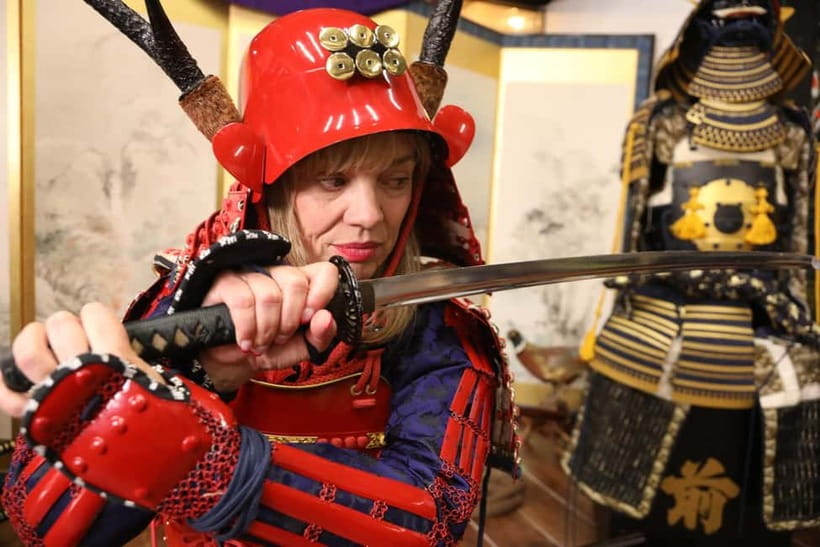
- Near Osaka Castle: One of the closest real-feeling samurai experiences you can fit into a castle day.
- You don’t just watch: You practice stance work (iai), including Battou, Chiburui, and Nottou steps.
- Real kit, real feel: Samurai clothing first, then armor indoors, including helmet and the sword set-up.
- Cutting attempt: You get to try your hand with a real samurai sword under instruction.
- Photo included: A quick commemorative shoot with digital delivery by email.
- Private group pace: English-speaking staff means you can ask questions without guessing.
Samurai Honor near Osaka Castle: what this is really about
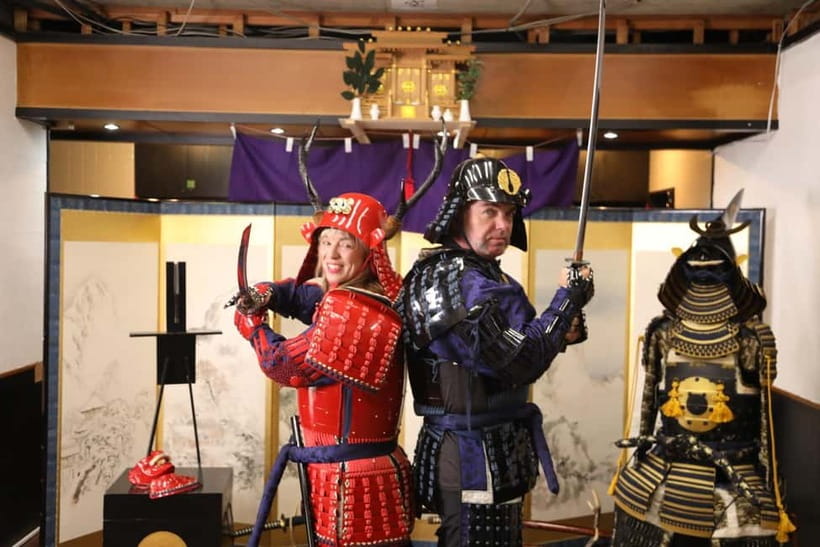
This isn’t a quick “wear the armor, take a photo, leave” stop. The whole flow is built like training: you change into samurai-style clothing, bow, learn etiquette, practice basic sword movements, then you move into heavier moments like armor and cutting.
The value here is that the experience tries to explain how samurai thought about a sword—not just how to swing one. The instructor talks about responsibility, staying ready, and how sword handling fits into daily life. That context matters because it changes how you move. You stop treating the weapon like a prop and start treating it like something you handle with care.
One more practical point: it’s private group. That usually means less waiting for your turn and more time to get corrections.
You can also read our reviews of more tours and experiences in Osaka.



Finding the dojo: the Honor of the Samurai sign and Osaka address cues
Meet at the shopfront landmark: a wooden sign that reads Honor of the Samurai. The landmark is a rack with Samurai Honor activity pamphlets in front of the store, and there are usually kimonos and hakama hanging around—so if you see fabric drying, you’re very likely close.
The address listed for the location is Excellence Takayama 1F, 2-3-19 Shiginonishi, Joto-ku, Osaka-shi, Osaka 536-0014. The note about Apple Maps being wrong is the kind of detail that saves stress, so use Google Maps for navigation.
Timing matters. Plan to arrive about 30 minutes early. You’ll need time to receive instructions and change clothes before training starts.
If you’re doing this on a day with Osaka Castle sightseeing, this is a good “next step” activity because it turns your brain from historical sights into physical practice.
Step one: gi and hakama, then bowing at the shrine
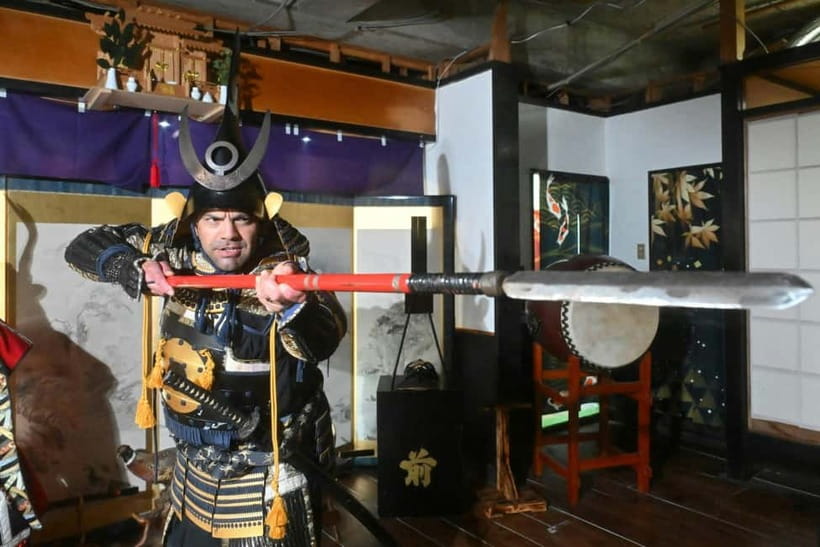
The experience starts with preparation. You’ll change into samurai costume (dogi and hakama), then put yourself in samurai mindset. It sounds ceremonial, but it’s also practical: you’ll be more comfortable moving, and you’ll follow the sequence the instructors use.
Then comes the bow. Training begins and ends with a bow before a shrine set inside the dojo space. For me, that’s one of the clearest signals that this is taught like a discipline, not just a “cool photo activity.” You’ll feel the rules right away—respect, attention, and safety.
You’ll also get instruction on the sword’s role and on manners. The idea presented is that samurai weren’t only fighters in war. In peaceful times, they still carried the sword close and trained the idea of readiness into daily behavior—down to how they’re positioned when sleeping or eating.
Samurai manners and safe handling: how sword etiquette shapes the lesson
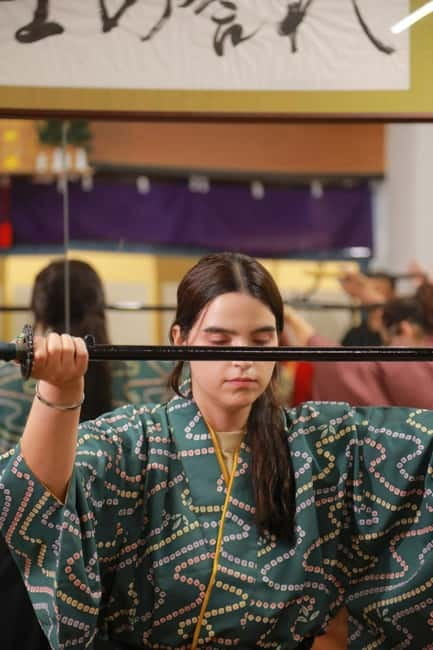
You’re taught why samurai sword culture wasn’t casual. The instruction explains that young boys learned with wooden swords early on, then at around age 15 they were allowed to wear a serious sword—when the responsibility hits. The message is that carrying a deadly weapon in public isn’t about showing off. It’s about duty and self-respect.
You’ll also learn a specific walk concept. The sword goes in a belt at the waist with blade orientation so it stays controlled. When walking, the lesson says to walk on the left side of the road so sheaths don’t knock into each other. The bushido angle here is about readiness: keep the sword’s mouth (koiguchi) cut and ready to draw quickly, without sloppy movement.
This is a big part of why the experience feels “real.” Even before you swing, you’re being trained to control your body and space. For you, that means fewer “random flail” moments and more confidence when it’s time for practice.
Iai basics with an iai practice sword: Battou, Chiburui, Nottou
Once you’re set up, you practice the fundamentals with an iai practice sword. The lesson gives you named steps so you can track what you’re doing:
- Battou: pulling the sword from the scabbard to cut
- Chiburui: the symbolic action after a cut, described as removing blood from the blade
- Nottou: returning the sword to the sheath
You’ll work from stances, then learn the flow from standing control to sword draw to the finishing actions. The instruction emphasizes weight and technique, not just arm strength. When the timing is right, you’re meant to hear a characteristic sound from the sword—described as a hi-nari type of feel.
If you’re used to casual fitness workouts, this part might surprise you. The movements are simple on paper, but your timing and body alignment make the difference. I like this section because it gives you something measurable: you can feel when the pull and draw are clean.


The real swords moment: kata, swings, and a controlled cutting try
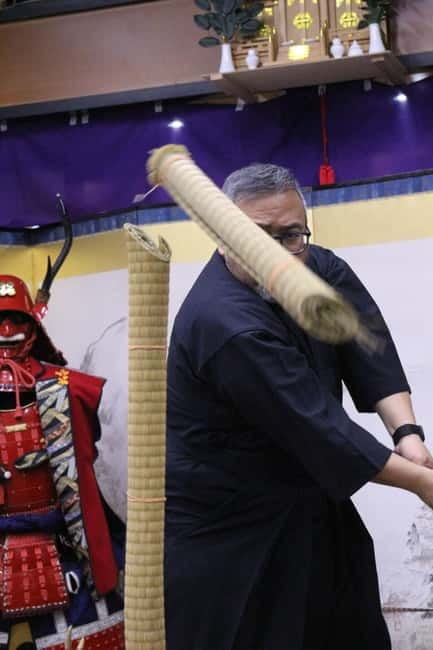
After the basics, you move into more direct practice guided by a master instructor. You’ll do basic kata and stances, then practice sword swings. The goal isn’t just to look like a samurai. The goal is to learn correct mechanics and safer control in a way you can actually repeat.
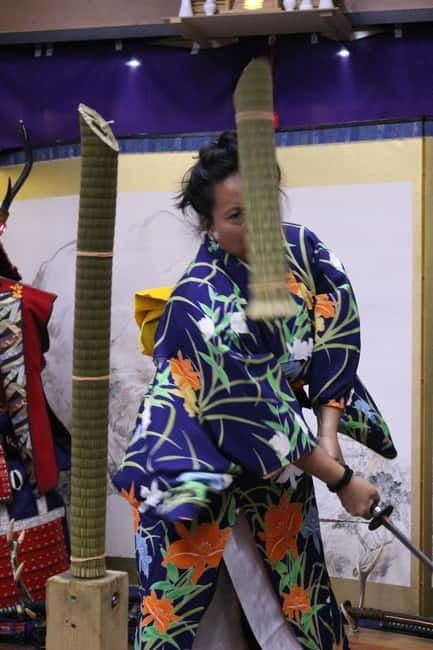
Then you reach the highlight: trying your hand at cutting with a real samurai sword. The experience frames this as world-class cutting performance territory, and the important part for you is that it’s supervised. You’re not left alone with a blade and a wish.
What this teaches beyond the thrill is respect for the tool. If you take the instruction seriously, you’ll leave understanding why sword training is built on form first and power second.
One caution: if you’re worried about your comfort level with weapons, you should treat this as a skills lesson. It’s not a casual demo, and you’ll be expected to follow the instructor’s pace and safety rules.
Suiting up: samurai armor, helmet, and the “spear at the ready” setup
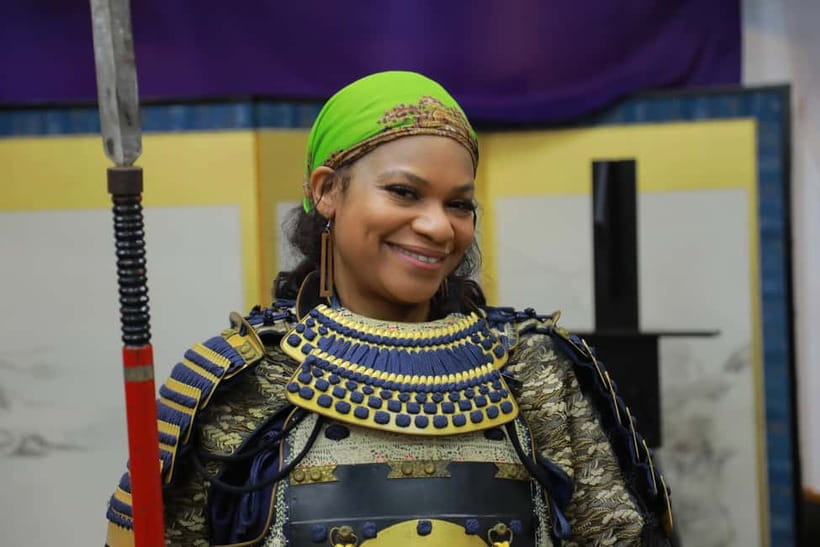
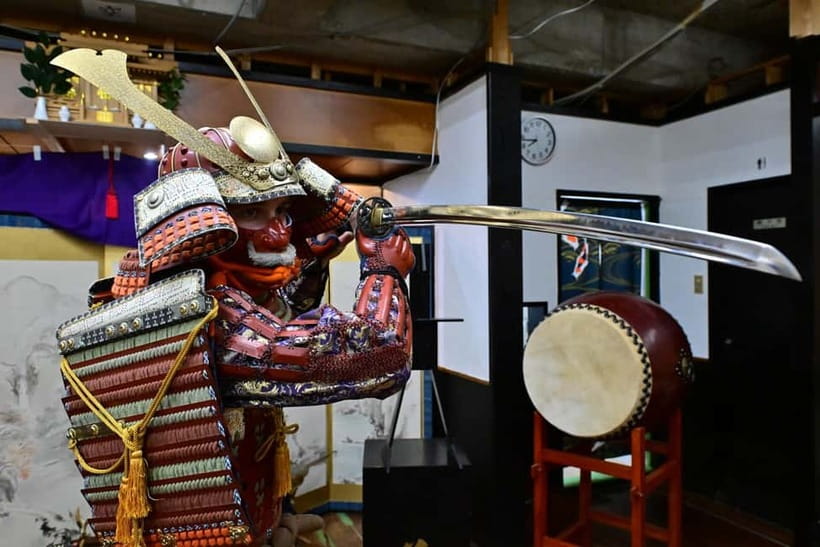
Wearing armor is a standout moment. The experience includes samurai armor indoors, including the helmet. They also describe the full ready-to-fight look—armor plus sword at the waist and a spear (naginata) positioned at the ready.
This part works best if you’re the type of person who likes physical detail. You’ll notice how the armor changes posture and how it forces you to move more deliberately. Even if you’ve seen samurai armor in museums, it’s different when it’s on your body.
Before you go into the heavier sword parts, armor also changes the emotional tone. It’s harder to “play around” when you feel the weight and the fit. That helps the whole class stay disciplined.
Photo shooting that feels like a finish, not an afterthought
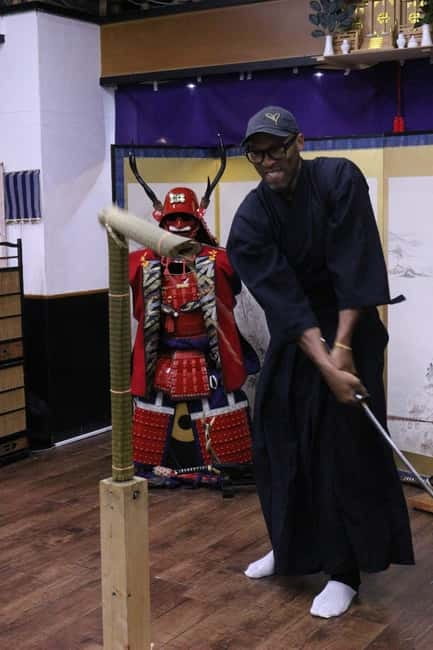
You get a photo shoot as part of the experience. The photo is described as a commemorative shot taken with the armor. That matters because you spend time learning and practicing, then the pictures become a real wrap-up instead of the main event.
The photos are sent to a designated email address. So you don’t have to rush and you don’t have to worry about awkward edits on the spot.
If you’re planning a day around Osaka Castle, this is also a nice bridge: you go from viewing history from the outside to creating a memory that matches what you actually did.
Price and value near Osaka Castle: is $106 for 90 minutes worth it?
At $106 per person for 90 minutes, the price lands in the “experience class” range for Osaka. What you’re paying for is the combination of (1) time with an instructor in a structured drill format and (2) multiple hands-on stages: wearing costume, walking/sword etiquette practice, iai basics, and a chance to try cutting.
Some sword experiences are just photos plus watching. This one includes actual technique practice steps you can track—Battou, Chiburui, Nottou—and then a heavier highlight with the real sword. That makes the money feel more justified, especially if you’re the kind of traveler who likes skills you can summarize after.
The private group format can also improve value because you’re more likely to get corrections and guidance when you need it.
Only drawback to consider: there’s at least one reported case of cancellation caused by overbooking in recent bookings. It doesn’t mean it will happen to you, but I’d still keep an eye on updates close to your time.
Who should book Samurai Honor, and who might skip it
This suits you best if you want something more physical than a museum visit. You’ll enjoy it if you like structured instruction, Japanese discipline themes, and a clear step-by-step training flow.
It’s also a strong fit for a couples or solo Osaka day where you want a focused activity near Osaka Castle without needing a long multi-stop itinerary.
It’s not a fit if you’re looking for a casual, kid-friendly adventure. The experience lists it as not suitable for children under 10, people with altitude sickness, and people over 80. Food, baby strollers, and pets aren’t allowed (assistance dogs are allowed).
Should you book Samurai Armor & Sword near Osaka Castle?
If you want an authentic-feeling samurai practice session—armor, iai basics, manners, and a supervised cut try—then I think it’s an easy yes. The private format and English-speaking instruction also make it easier to learn instead of just watch.
If you’re nervous around blades, this might still work, but treat it like a skills class and follow instructions closely. And if your schedule is tight, keep checking confirmation messages because overbooking cancellations have been reported.
FAQ
Where is the meeting point?
You meet at a wooden sign that reads Honor of the Samurai. It’s a rack with Samurai Honor activity pamphlets in front of the store, and there are kimonos and hakama hanging nearby.
How long is the experience?
The duration is 90 minutes.
Is it private, or is it a shared group?
It’s a private group.
What languages are available?
English and Japanese. English is the default language for interpreters.
What do I need to bring?
Bring a T-shirt. You’ll change into the samurai clothing provided.
Is samurai armor included?
Yes. Samurai clothing is included, and you wear samurai armor indoors.
Do they take photos, and how do I get them?
Yes, there is a photo shooting included. The photo data is sent to a designated email address.
What time should I arrive?
Please arrive 30 minutes before your reserved time so you can get instructions and change clothes.
Is transportation or pickup included?
No. Pick up and drop off at the train station or hotel isn’t included, and transportation is not included.
Who is this not suitable for?
It’s not suitable for children under 10, people with altitude sickness, and people over 80. Baby strollers and babies under 1 year are also not suitable for the experience environment.
Is food allowed during the class?
No. Food isn’t allowed.