REVIEW · OSAKA
Osaka: Food Tour Kuromon Market & Dotonbori with Guide
Book on GetYourGuide →Operated by AMIGO TOURS JAPAN GK · Bookable on GetYourGuide
Neon signs and snack stops. This guided Osaka walk strings together Kuromon Market tastings and the big Dotonbori lights, with enough structure that you can focus on eating instead of hunting. I especially like how the tour hits iconic comfort foods in recognizable places, like takoyaki at Wanaka and a proper custard tart finish. One thing to consider: it’s not for everyone, since it’s not suitable for wheelchair users, and one past departure had a guide no-show issue.
You’ll also get more than food by moving through neighborhoods that feel local, not staged. Stops like Hozenji and the Ebisu Bridge photo spot with the famous Glico sign give you landmarks you can point to later. A possible drawback is that while the guide is bilingual (English and Spanish), one review suggests you may want a Japan-based guide if your main goal is deep, Japanese-cuisine-only commentary.
In This Review
- Key Highlights You’ll Actually Use
- Starting Point Outside Hotel Royal Classic Osaka: Meeting and Getting Oriented
- Kuromon Market at Wanaka: Takoyaki You Can Compare
- Mitoya and the Hozenji Area: Dango, Streets, and Small-Place Charm
- Kushikatsu Yokozuna Near Gigo: Okonomiyaki and Crispy Skewers
- Egg Tart at the Sweet Finale: Flaky Crust, Creamy Center
- Dotonbori Neon Walk and Ebisu Bridge Glico Sign Photos
- Price and Value: Why $84 Can Make Sense for Food-Focused Travelers
- What to Bring, What to Skip, and Who This Tour Fits Best
- Should You Book This Osaka Food Tour?
- FAQ
- Where do I meet the guide?
- What food tastings are included?
- What languages is the guide available in?
- Is the tour wheelchair accessible?
- What should I bring for the tour?
- Are entrance fees included?
- Are pets allowed?
- Can I cancel and get a full refund?
Key Highlights You’ll Actually Use
- Kuromon Market tastings at specific shops, so you skip guesswork
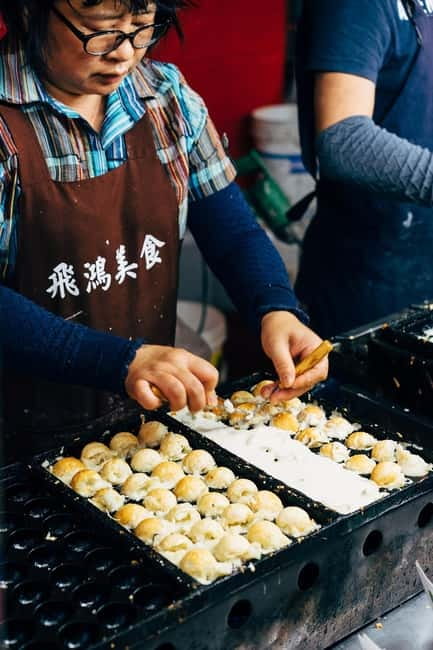
- Wanaka takoyaki: crispy outside, creamy inside style
- Mitoya three-colour dango dumplings: chewy, colorful rice-flour bites
- Kushikatsu Yokozuna near Gigo for kushikatsu and okonomiyaki flavors
- Egg Tart custard tarts with a delicate crust and rich filling
- Dotonbori + Ebisu Bridge (Glico sign) for classic Osaka photos
Starting Point Outside Hotel Royal Classic Osaka: Meeting and Getting Oriented
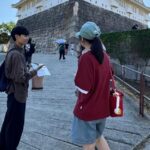
This tour starts at a clear, easy-to-find location: meet your guide outside Hotel Royal Classic Osaka, and look for an Amigo Tours sign. The practical part matters here. If you arrive late, you can miss the whole flow, especially in dense areas like Kuromon Market where everyone is moving.
Plan to arrive at least 10 minutes early. That buffer keeps you from feeling rushed, and it helps the group stay on schedule for food windows at popular stalls and shops. You’ll also be doing a lot of street walking, so your first job is footwear. Bring comfortable shoes; Osaka’s sidewalks are fine, but you’ll still want your feet to be happy for the full circuit.
What I like about this setup is that the meeting point doubles as your reset point. The end of the tour brings you back to the same place, so you’re not left figuring out your way back after eating your way through multiple neighborhoods.
Before you go, also take weather seriously. The tour advice specifically calls for bringing an umbrella or raincoat, plus clothing suited for cold or hot seasons. If winter conditions include snow and slush, you’re told to bring an extra change of socks and shoes that can handle getting wet. That’s the kind of detail that prevents a perfect food day from turning into a cold, sore-foot one.
You can also read our reviews of more food & drink experiences in Osaka
Kuromon Market at Wanaka: Takoyaki You Can Compare
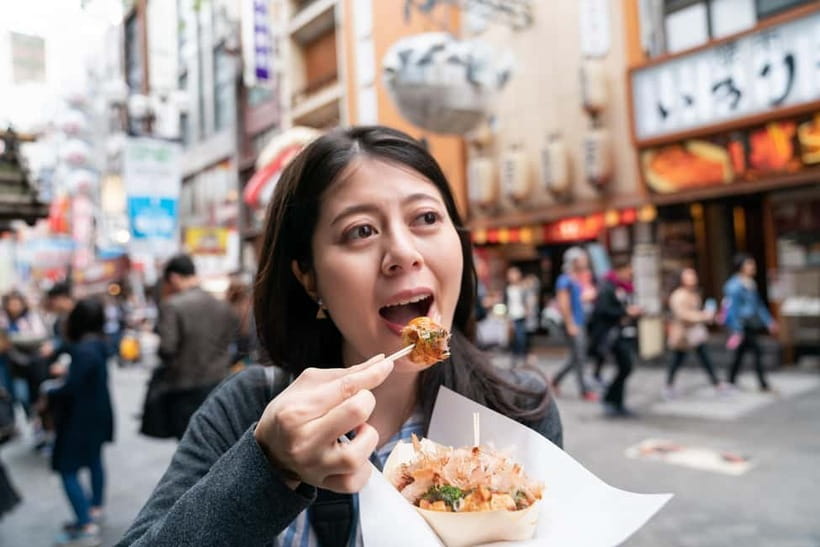
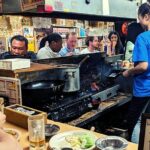
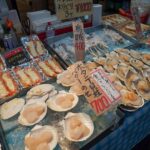
Kuromon Market is where the senses go first. You get the nonstop buzz of a classic food market, with lots of fresh local specialties around you. The big advantage of going with a guide is you’re not just wandering and hoping you pick the right place. You have a target, and the tour leads you to a standout takoyaki stop.
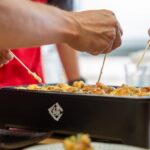
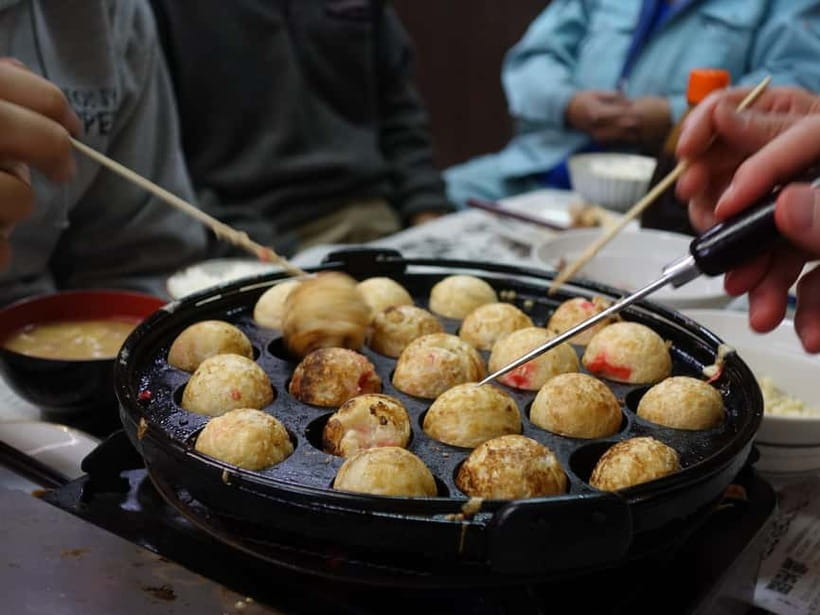
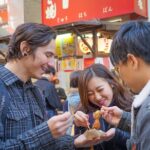
Your first major tasting is at Wanaka, where you try takoyaki. This is Osaka’s famous street-food ball: crispy on the outside, soft and creamy on the inside. The tour structure helps here because you get to focus on texture and flavor rather than standing in line trying to decode menus while hungry.
Why this stop is valuable: Kuromon Market can overwhelm you if you go on your own. You’ll see everything from seafood displays to snack counters, and it’s easy to order something that looks good but isn’t quite right. With this tour, you taste one of the city’s best-known items in a way that makes it easier to judge what you’re eating.
A practical tip: take a second to watch how the takoyaki is handled and served. Even if you don’t understand every menu word, you can usually tell the differences in doneness and sauce timing. That’s part of the fun. Bring your camera, and don’t be afraid to pause right after your first bite to decide what to look for later.
Mitoya and the Hozenji Area: Dango, Streets, and Small-Place Charm
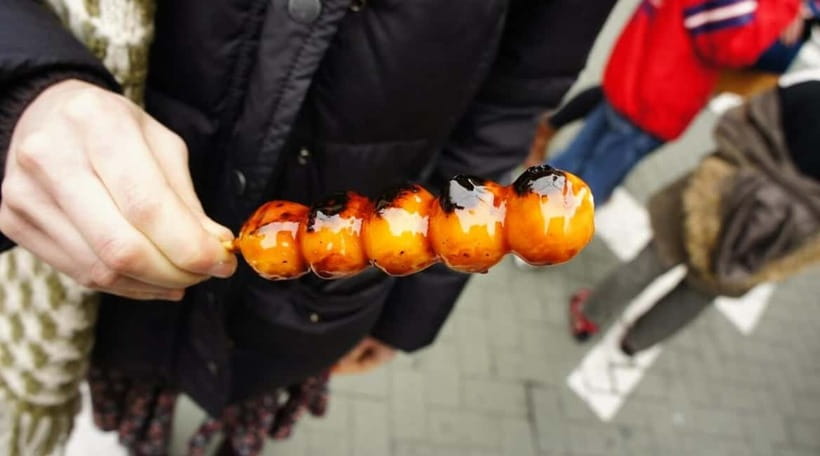
After takoyaki, the tour shifts from one type of comfort food to another. Next up is Mitoya for the Three Colour Dango Dumpling—a skewer of chewy, colorful rice-flour dumplings. These are the kind of bites you can slow down for. They’re sweet and satisfying, but they also give you a break from the fried-food intensity.
This stop matters because it balances the meal. Takoyaki tends to be savory and snacky. Dango gives you a different texture and flavor rhythm, so you don’t feel like you’re only getting one note for the whole outing.
Then you move into the Hozenji area. This is where the tour starts feeling like more than a food list. Hozenji is known for atmosphere, and on this kind of walking route you get a chance to see how small streets and local corners fit into the big Osaka story. Even if you’re mainly there to eat, that neighborhood context helps your brain file what you’re experiencing as real place, not just a food stop.
If you like photo-friendly details, this part of the walk gives you more to frame than just storefronts. It’s also a good time to refill your water habits. The itinerary is food-forward, and the walking adds up, so taking short pauses keeps the experience comfortable.
Kushikatsu Yokozuna Near Gigo: Okonomiyaki and Crispy Skewers
The tour’s next standout is the Kushikatsu Yokozuna stop, located in front of Gigo. Location helps here: being right by a landmark like Gigo makes it easier to keep your bearings while you move and regroup.
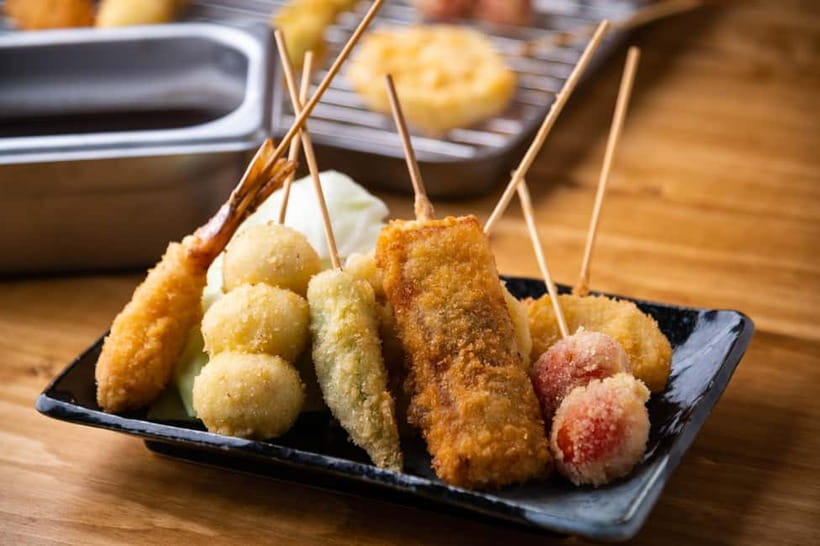
You’ll get to try two Osaka specialties here: okonomiyaki and kushikatsu.
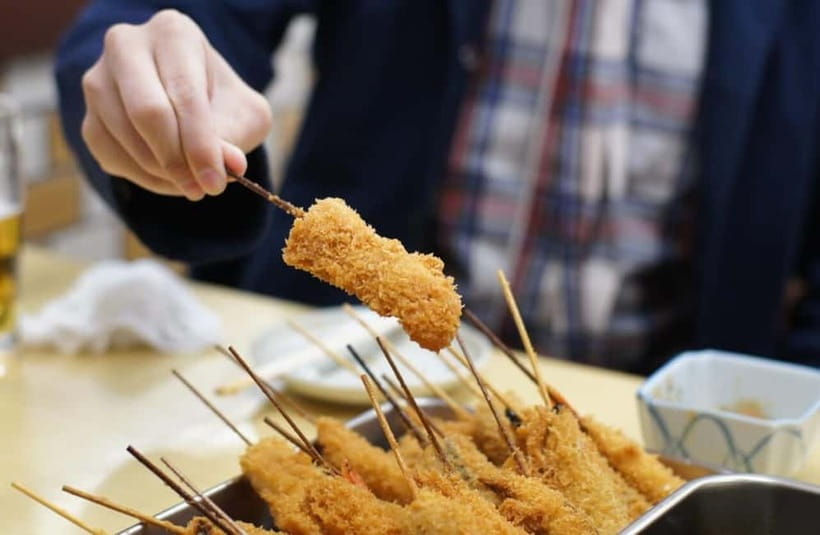
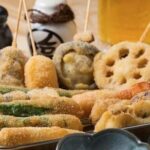
Okonomiyaki is a savory pancake built for flavor layering—think toppings and sauce and a satisfying, griddle-cooked feel. Kushikatsu is the one Osaka people love for a reason: crispy deep-fried skewers, served with a tasty dipping sauce. The key difference you’ll notice is texture. Okonomiyaki is broad and savory and comforting. Kushikatsu is crunchy, portable, and snackable, which makes it perfect for a walking tour.
Why I think this is a smart stop for value: it gives you two iconic items in one location cluster, so you’re not spending the whole tour bouncing between far-apart places. You also get variety in cooking styles—griddle-style for okonomiyaki, deep-fried crisp for kushikatsu.
One practical note: fried food can fill you up faster than you expect. Keep an eye on your pace. You don’t want to rush your first bites so much that you’re too full for dessert.
Egg Tart at the Sweet Finale: Flaky Crust, Creamy Center
At Egg Tart, you end with a classic dessert move: custard tart. The description is spot on for what you’re looking for—a delicate, flaky crust and a rich, creamy filling.
This is a great finale because it cleans up the heavy notes from earlier stops. After takoyaki and fried skewers, a custard tart gives you smooth, gentle sweetness. It also feels like a proper Osaka food-tour ending instead of a random snack at a random time.
If you want to make this part extra enjoyable, pace your dessert bite. Custard tarts are best when you can actually taste the temperature and texture differences: warm custard, crisp crust, and sauce sweetness (if served with it). If you eat it too fast while still overheated from walking, the crust can soften before you get the full experience.
Also, take a photo if the shop has a display wall or signature presentation. You’ll have plenty of neon shots later, but dessert photos are the ones that keep your memory tied to flavor.
You can also read our reviews of more tours and experiences in Osaka

Dotonbori Neon Walk and Ebisu Bridge Glico Sign Photos
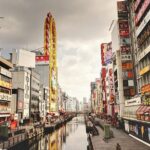
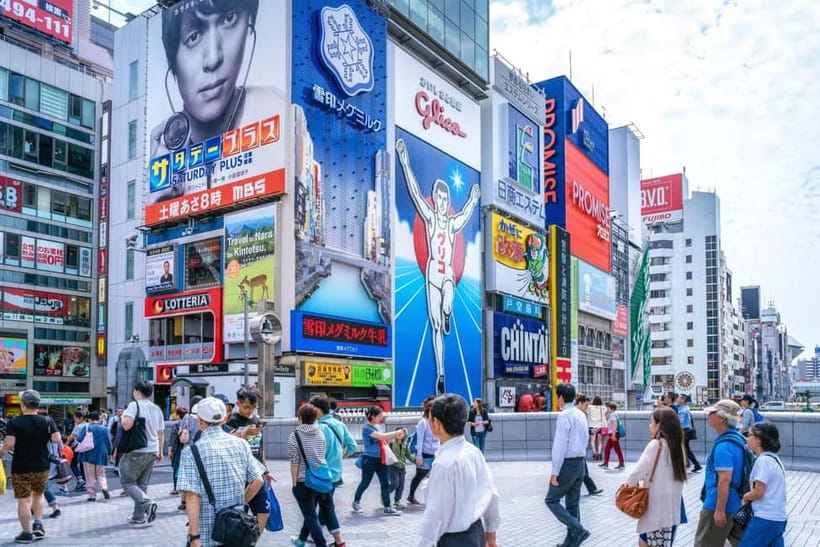
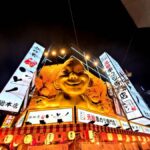
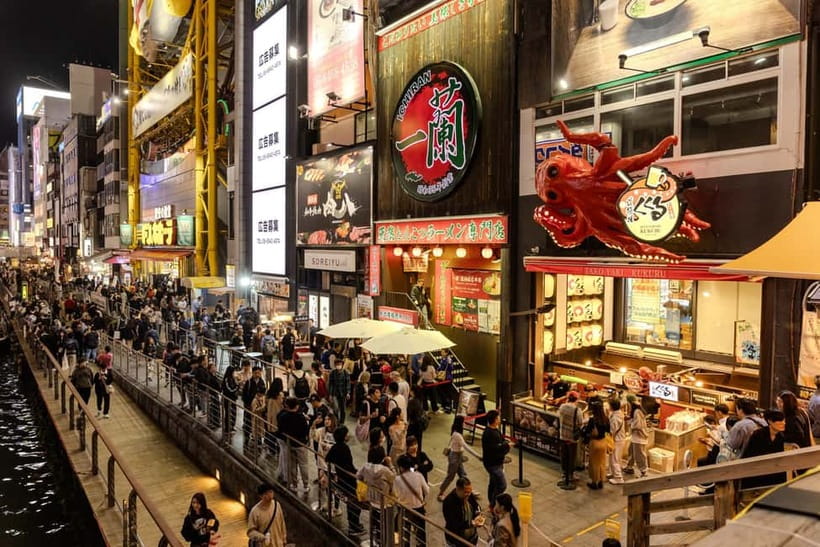
Then comes the Osaka mood shift: Dotonbori. This is the entertainment district where neon lights pull your eyes forward and crowds move like a tide. You’ll walk the streets, admire the bright billboards, and soak in the energy of the area.
I like that the tour doesn’t treat Dotonbori like a single photo stop. You get time to wander the district on foot, which helps you actually see what makes it feel unmistakably Osaka. Even if you’re not shopping or club-hopping, the signage, lighting, and street layout give you a sense of how the city performs after dark.
Before you wrap up, you visit Ebisu Bridge for a photo with the Glico sign, one of Osaka’s best-known landmarks. This is a classic “you came to Osaka” moment. The whole point is simple: get the shot, then enjoy the walking before heading back.
If you’re photographing, plan your timing. Neon looks best when you’re not rushed, and Ebisu Bridge can be crowded. Give yourself a minute to step into a clear angle rather than grabbing the first photo and moving on.
Price and Value: Why $84 Can Make Sense for Food-Focused Travelers
At $84 per person, this tour isn’t a bargain snack crawl. It’s more like a guided tasting circuit where you’re paying for structure, access to specific shops, and a bilingual guide in English and Spanish.
So is it worth it? For the right traveler, yes.
You’re not just paying for random bites. You’re getting tastings of emblematic Osaka dishes across multiple stops: takoyaki, three-color dango, okonomiyaki, kushikatsu, and a custard tart. That’s a lot of food variety packed into one organized route. You’re also paying for the guide’s ability to help you order and move smoothly between neighborhoods.
Where it might feel pricey is if you already know Osaka street-food basics and plan to pick your own places. In that case, you could compare prices and snack volume on your own. But if you want the planning weight lifted and you’d rather spend time eating and photographing instead of researching, this price starts to look more reasonable.
Also, note what isn’t included: entrance fees to specific attractions, plus any extra meals or drinks not mentioned. That doesn’t mean you’ll face surprise fees, but it does mean you shouldn’t assume everything is covered beyond the tastings.
What to Bring, What to Skip, and Who This Tour Fits Best
This tour is simple on paper, but small choices make it better in real life.
Bring:
- Comfortable shoes
- Camera
- Umbrella or raincoat, plus sunglasses and sunscreen
- Cold-season gear like warm clothing and an extra change of socks if snow gets into your plans
Skip:
- Pets are not allowed
Not a great match if:
- You use a wheelchair, because it’s listed as not suitable for wheelchair users
- You want a fully Japanese-led culinary deep-dive where everything is taught from a local insider lens, since one review raised concerns about authenticity and guide background
Best fit:
- You want an organized Osaka night-or-evening-style walk focused on local street foods
- You like knowing what you’re ordering and eating, with stops at named places like Wanaka, Mitoya, Kushikatsu Yokozuna, and Egg Tart
- You enjoy landmarks like the Glico sign photo moment, not just food-only wandering
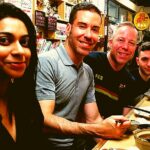
And a small note from guide praise: in past departures, guides such as Paula and Angeles received standout compliments for being energetic and knowledgeable about local attractions as the group walked. That matters because the tour’s best parts come from what you learn while you’re on the move.
Should You Book This Osaka Food Tour?
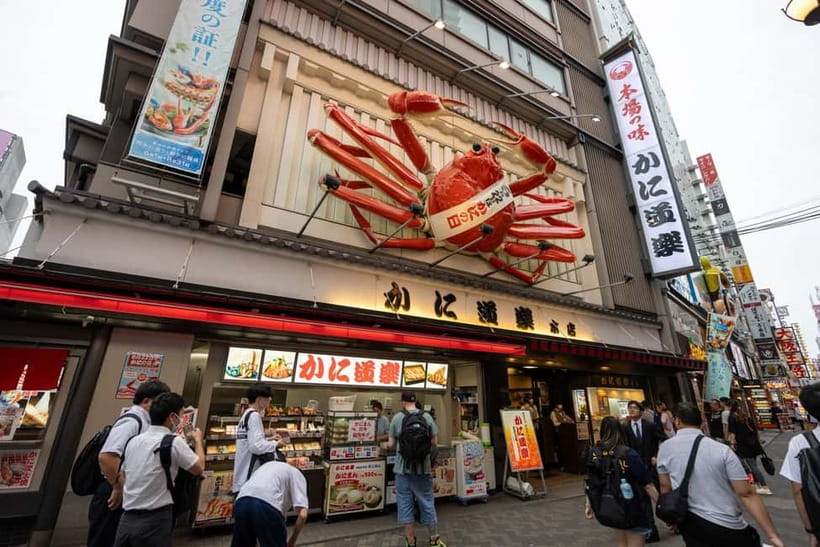
I’d book this tour if you want a guided, food-first route through Osaka that takes you to Kuromon Market, then over to the neon spectacle of Dotonbori, ending with the Ebisu Bridge Glico sign photo. The named tasting stops make it easier to trust you’ll actually get good examples of each dish, not just whatever is nearby.
I’d think twice if you have mobility needs that conflict with a walking route, or if you’re extremely picky about guide nationality or cuisine-only expertise. Also, since one past departure had a guide no-show problem, I’d treat it like any popular tour: be early, keep your confirmation handy, and don’t plan something tight right after the end time.
If you’re aiming for a fun, structured taste of Osaka street foods with iconic city atmosphere baked in, this is a solid pick.
FAQ
Where do I meet the guide?
Meet at the meeting point outside Hotel Royal Classic Osaka. The guide will be waiting with an Amigo Tours sign.
What food tastings are included?
The tour includes tastings of takoyaki at Wanaka, Three Colour Dango Dumpling at Mitoya, okonomiyaki and kushikatsu at Kushikatsu Yokozuna, and a custard tart at Egg Tart.
What languages is the guide available in?
The guide is bilingual in English and Spanish.
Is the tour wheelchair accessible?
No. It is not suitable for wheelchair users.
What should I bring for the tour?
Bring comfortable shoes and a camera. The tour also recommends an umbrella or raincoat, plus appropriate clothing for the cold or hot season, sunglasses, and sunscreen. In cold or snowy conditions, bring warm clothing and an extra change of socks and shoes in case you get wet.
Are entrance fees included?
No. Entrance fees to specific attractions are not included.
Are pets allowed?
No. Pets are not allowed.
Can I cancel and get a full refund?
You can cancel up to 24 hours in advance for a full refund.