Osaka in four hours, with real stories. I like Namba Yasaka Shrine for its 12-meter lion head and myth backdrop, and I like Den-Den Town for how pop-culture shopping feels mixed with everyday street life. The main thing to consider is timing: queues and holiday crowds can slow the walk, especially at the shrine.
This tour’s rhythm works: short walks, clear photo stops, and then actual Osaka texture through food lanes and back alleys. I especially enjoy the stop at Kuromon Market and the neon-photo stretch in Dōtonbori, then the calm you get when you step into Hōzenji Temple with its mossy statue and lantern-lit lanes.
In This Review
- Namba Yasaka Shrine’s 12-Meter Lion Head: A Myth You Can See
- Den-Den Town: Osaka’s Anime, Retro Games, and Gachapon Fun
- Kuromon Market: Osaka’s Kitchen and the Art of Eating on the Move
- Dōtonbori Glico Sign to Neon Canal: Photo Time With a Story Guide
- Hozenji Temple After the Neon: Lantern Calm and Mossy Realness
- Ai’s Storytelling Style: Why This Tour Feels Like More Than Directions
- Price, Timing, and Logistics: Is $40 Worth It?
- Where the Walk Starts and Ends (So You Don’t Waste Time)
- Who Should Book This Osaka Walking Tour—and Who Might Skip It
- Should You Book This 4-Hour Osaka Walking Tour?
- FAQ
- How long is the Osaka walking tour?
- What is the tour price?
- Where does the tour start and where does it end?
- What time does it begin?
- Is there a group size limit?
- Do I need to buy tickets for the main stops?
- Do I get a mobile ticket?
- How far in advance should I book?
- How does confirmation work after booking?
- What is the cancellation policy?
Namba Yasaka Shrine’s 12-Meter Lion Head: A Myth You Can See
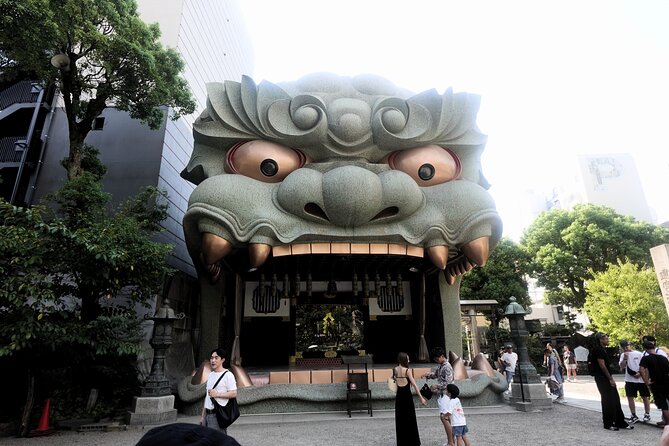
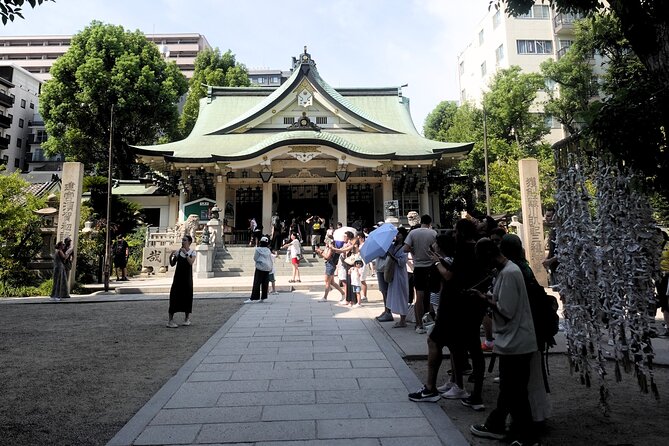
Your tour starts in the backstreets of Namba at Namba Yasaka Shrine, a place that feels both theatrical and very Osaka. The headline is the enormous lion-head stage—about 12 meters tall. Locals associate it with swallowing evil spirits and bringing good fortune, and you’ll see why people treat it like a serious symbol rather than a random photo prop.
This is a strong opening for a couple reasons. First, it gives you a story framework for the rest of the walk: Osaka isn’t only street food and neon—it’s also folklore, ritual, and meaning. Second, it’s a quick win for first-timers. You don’t need a deep background in Japanese religion to appreciate what’s happening. The guide helps you understand how to look at it with respect, not just curiosity.
Practical heads-up: the shrine stop can take around 40 minutes, and it may involve a wait if you’re there during peak season. If you’re visiting around major holidays, plan for extra time and keep your pace easy.
Den-Den Town: Osaka’s Anime, Retro Games, and Gachapon Fun
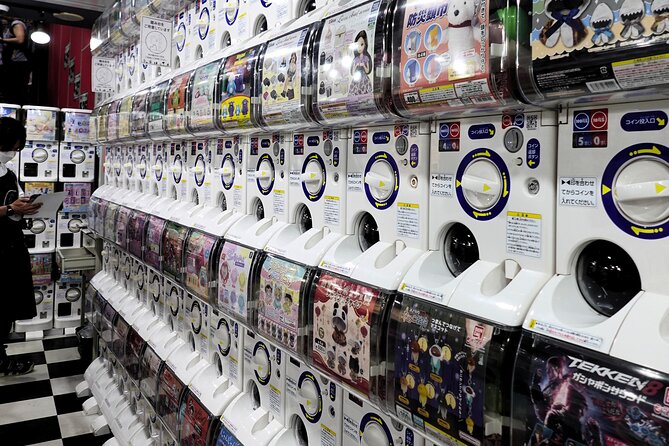
After the shrine, you head into Nipponbashi (Den-Den Town)—often described as the west’s version of Akihabara. This area is all about pop culture: anime goods, manga, retro games, and those small, quirky collectible shops that make you wander longer than you meant to.
One of the most fun breaks here is the gachapon moment. You drop in a coin, twist the knob, and get a surprise toy. It sounds silly until you do it. Then it becomes a tiny ritual—something to share, laugh about, and compare across the group.
This stop is about 30 minutes, which I like because it keeps your walk feeling fresh. You get the vibe without getting stuck shopping for an hour while the rest of the tour moves on. If you’re the type who likes browsing but not getting trapped in one store, this timing fits.
You can also read our reviews of more walking tours in Osaka


Kuromon Market: Osaka’s Kitchen and the Art of Eating on the Move
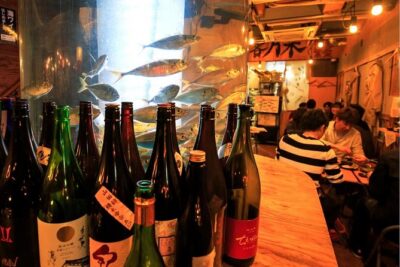
Next comes Kuromon Market, a covered arcade-style market people often call Osaka’s Kitchen. The look is instantly familiar—rows of food stalls, everyday shoppers, and that mix of seafood, produce, and ready-to-eat snacks. The vibe isn’t museum quiet. It’s busy, loud, and practical.
This is where I think the tour becomes more than sightseeing. Markets like this are how you learn the real city rhythm: what locals buy, what looks good in the moment, and how food culture shapes a neighborhood. Even if you only sample one or two items, you’ll feel the local logic of the place.
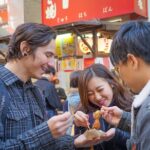
From the guide moments highlighted in past groups, this is also where food advice lands well. There’s a good chance you’ll get help with first-taste choices—like takoyaki, and other hot bites that show up right at the stall counter. If you want to eat like a smart tourist (not like a random hungry person wandering into the wrong line), the guide’s role matters here.
You don’t need to plan a big meal. Think snacks-first. Walk-and-nibble. Then save your appetite for Dōtonbori’s neon district.
Dōtonbori Glico Sign to Neon Canal: Photo Time With a Story Guide
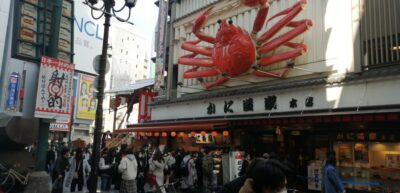
Then you step into Dōtonbori, Osaka’s entertainment district. This part is all energy: bright signs, busy streets, and the famous Glico running man imagery people come from around the world to photograph.
You’ll also get time near the canal area—one of those stretches where the city looks like it’s putting on a show just for you. What I like is that this section isn’t only about clicking photos. Your guide adds meaning and context, so the neon doesn’t feel like random eye candy. You learn how Dōtonbori’s humor and commercial glow fit into Osaka’s identity.
This stop is about 50 minutes, which is a good length. You’re not rushed through the best angles, but you also aren’t stuck so long that you lose track of time and hunger. If you’re traveling with camera gear, this is the segment to slow down and frame carefully. The light changes as the crowd shifts.
Hozenji Temple After the Neon: Lantern Calm and Mossy Realness
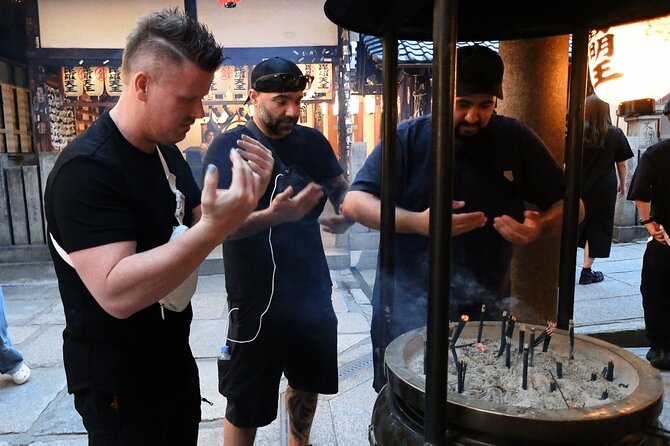
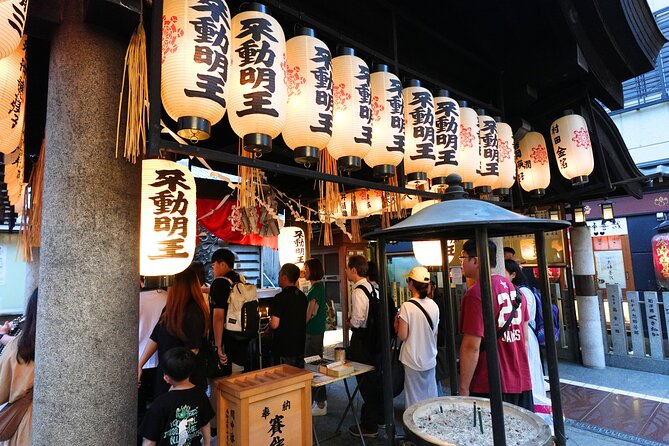
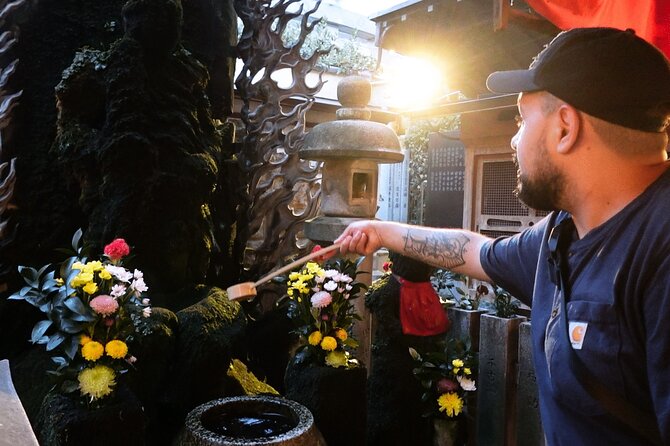
After the bright streets, you’ll step into Hōzenji Temple. This is where the tour’s balance shows. You leave the neon and step into something older-feeling, with a moss-covered statue and lantern-lit alleys that give you that nostalgic Osaka mood.
I like this contrast a lot. It’s not just “more sights.” It’s a deliberate shift in atmosphere—noise to quiet, commerce to ritual. Even if you’re not a temple person, the lantern lanes help you slow down and notice details you’d miss if you stayed in the entertainment district the whole time.
The guide’s storytelling also helps here. Instead of you guessing what you’re looking at, you get a simple explanation of what visitors do, what the elements represent, and how the setting connects to the myths you saw at the shrine earlier.
If you’re tired from walking, this is a good place to reset. If you’re not tired, it’s still a good place to “feel” Osaka without rushing.
Ai’s Storytelling Style: Why This Tour Feels Like More Than Directions
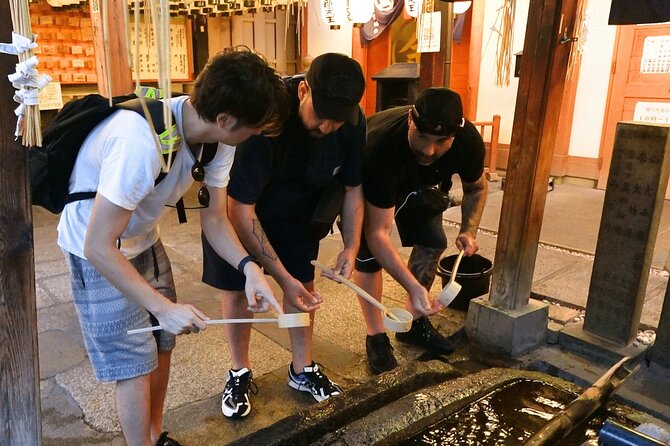
A big reason people rate this walk so highly is the guide experience—often associated with Ai. The common theme is that she doesn’t just point. She explains. She connects legends to places, and she keeps it easy to follow.
A few practical strengths stand out:
- She shares the meaning behind shrine rituals, including how people pray.
- She adds humor and light local detail, which keeps the tour from turning into a lecture.
- She teaches small pieces of language and local flavor, including Osaka dialect words.
- She helps you make a first food choice, including takoyaki, so you don’t have to guess what to order.
That combination is why the tour works for different personalities. If you want stories, you get stories. If you want hands-on fun, you get gachapon and food lanes. If you want both, you get both.
And because the group is capped at 10 travelers, the pace stays friendly. It’s not a factory line where you sprint from one stop to the next and hope you catch up.



Price, Timing, and Logistics: Is $40 Worth It?
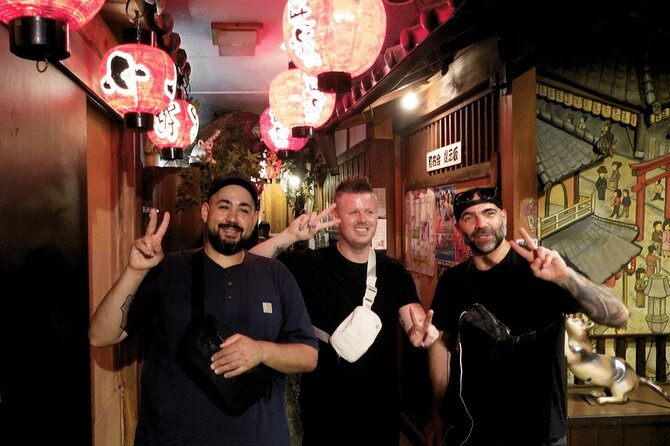
At $40 per person for about 4 hours, this tour is priced like an experience built around a guide plus a smart route. The good value angle is that several stops don’t require extra admission at least at the shrine and Den-Den Town segments (noted as free there). You’re paying mostly for the walking plan, timing, and the guide’s interpretation.
The schedule starts at 2:00 pm, which is a sweet spot. You dodge some of the busiest morning travel, and you still reach Dōtonbori and Dōtonbori-adjacent streets with enough daylight for photos. You also end the tour in the lively area around Ebisubashi, so you can keep exploring without fighting transit right away.
Timing detail that matters: the itinerary covers several mood shifts—myth shrine, pop-culture shopping lanes, a market snack stretch, neon canal photos, then lantern-temple calm. That kind of variety takes coordination. This is where paying for a guide makes sense, because it keeps the pieces connected.
The only “value risk” is simple: if the day is crowded (especially around big holiday periods), queues can eat into the schedule. The good news is that queues are not unique to this tour. They’re part of the experience of visiting major Osaka sights.
Where the Walk Starts and Ends (So You Don’t Waste Time)
The meeting point is in Namba, in Naniwa Ward near Shikitsunishi 2-chōme, at South Hills Namba Sannbokan (the tour lists a Google Maps-ready location). The walk ends in the Dōtonbori food district area around Ebisubashi, in Chūō Ward near Shinsaibashi-suji.
Why this matters: if you’re already in that part of Osaka, you’re not spending time commuting to a random pickup corner. And if you plan to keep eating after the tour, ending around Ebisubashi is convenient. You can stay in the same neighborhood ecosystem instead of leaving it right at the finish.
Also note the tour uses a mobile ticket, so you’ll want your phone charged and ready in case you need to show anything on the spot.
Who Should Book This Osaka Walking Tour—and Who Might Skip It
This is a strong choice if you:
- Want an easy first-time Osaka overview without committing to a full day
- Like mixed interests: folklore, street life, pop culture, and food
- Prefer small group touring (max 10)
- Enjoy walking routes that include both quiet and loud moments
You might consider skipping it if you’re looking for deep, structured temple history or long museum-style stops. This is a walking tour with snapshots and story beats, not a slow academic march.
Should You Book This 4-Hour Osaka Walking Tour?
I’d book it if you want your Osaka day to feel like Osaka: part myth, part market, part neon comedy, part lantern calm. The pairing of Namba Yasaka Shrine with Den-Den Town, then Kuromon Market, then Dōtonbori and Hōzenji Temple is exactly the kind of mix that helps first-timers understand the city’s personality fast.
Before you go, do two simple things:
- Arrive a bit early so you’re not stressed at the start. Meeting points in city backstreets can be easy to miss when you’re hungry.
- If you’re traveling during peak holiday periods, expect the shrine area to potentially be slower and plan your day with that reality.
If you want a guided route that turns everyday streets into meaningful stops, this one is a good bet.
FAQ
How long is the Osaka walking tour?
The tour is scheduled for about 4 hours.
What is the tour price?
It costs $40.00 per person.
Where does the tour start and where does it end?
It starts in Naniwa Ward near Shikitsunishi 2-chōme (South Hills Namba Sannbokan) and ends in Chūō Ward near Ebisubashi in the Dōtonbori area.
What time does it begin?
The start time is 2:00 pm.
Is there a group size limit?
Yes. The tour lists a maximum of 10 travelers.
Do I need to buy tickets for the main stops?
The Namba Yasaka Shrine stop is listed as free admission, and the Den-Den Town stop is also listed as free admission. Other stops aren’t labeled with separate ticket info in the details provided.
Do I get a mobile ticket?
Yes. The tour includes a mobile ticket.
How far in advance should I book?
It says this tour is booked on average 5 days in advance.
How does confirmation work after booking?
Confirmation is received at the time of booking.
What is the cancellation policy?
You can cancel for free up to 24 hours in advance for a full refund. If you cancel less than 24 hours before the start time, the amount paid is not refunded.