REVIEW · OSAKA
One-Day Osaka Bike Adventure: 5–6 Hours
Book on Viator →Operated by In Kansai Experiences · Bookable on Viator
Osaka by bike makes the city feel smaller. In one 5–6 hour loop you hit Osaka Castle, Shitennoji, and Shinsekai, plus a few quieter stops you’d miss on your own. It’s also the kind of tour where a guide helps you connect the dots between neighborhoods and the food scene.
I especially like the way this route covers a lot of ground without feeling like a race. You get a real city overview from a guide (many guests mention guides like Matt, Mayco, Takuma, and Akira by name), and you stop often enough to take photos and ask questions.
One thing to plan for: you’ll need moderate fitness and the ride isn’t for everyone. The tour isn’t recommended for kids age 12 and under, and it’s not possible for riders under 140cm.
In This Review
- Key takeaways before you pedal
- Why cycling Osaka beats walking for a first day
- Tenma meeting point, bikes ready, and your day’s tempo
- Nakanoshima Park: riverside calm and old Osaka business district vibes
- Mint Museum stop (no entry): modern Japan taught from the street
- Osaka Castle Park: postcard photos, short history stops, and a small climb
- Shitennoji Temple: oldest-temple serenity without the time sink
- Shinsekai and Tsutenkaku: blue-collar Osaka street energy
- Tower Knives Osaka: a hands-on maker stop in the middle of the day
- Namba Yasaka Shrine: quick charms, woodblock prayers, and a fun photo moment
- Lunch plans that fit the route (and vegetarian support)
- Getting value for $106.12: what’s included and why the day works
- Who this tour suits best (and who should skip it)
- FAQ
- FAQ
- How long is the One-Day Osaka Bike Adventure?
- What major Osaka sights will I see?
- Is lunch included, and can I request vegetarian food?
- What’s included in the tour price?
- Is this a small group tour?
- What if the weather is bad?
- Should you book this bike tour?
Key takeaways before you pedal
- Small-group feel (max 8 riders) means you’re not just shuffled along.
- A cover-the-city route that links riverside areas, temple history, and modern street life.
- Photo breaks built in, including Osaka Castle Park and Tsutenkaku at Shinsekai.
- Hands-on stop at Tower Knives Osaka, where you can try using tools.
- Lunch as part of the day, with vegetarian options available if you request ahead.
Why cycling Osaka beats walking for a first day
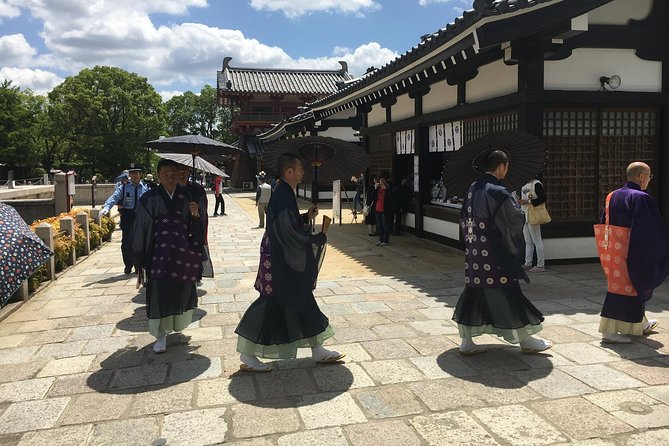
Osaka is easy to get around, but it’s still big. Bikes are the sweet spot when you want to see the city quickly and still feel like you’re moving through real neighborhoods, not just crossing between train stations.
Walking works if you plan to linger. Bike touring works if your priority is structure: a clear loop, smart timing, and stops that give context. That’s exactly what you get here—especially with the mix of major landmarks and lesser-known corners.
You also feel the city differently at bike speed. You get the breeze along the water, you notice local rhythms near shrines and street stalls, and you can spot small details that would be easy to miss on foot.
You can also read our reviews of more cycling tours in Osaka
Tenma meeting point, bikes ready, and your day’s tempo
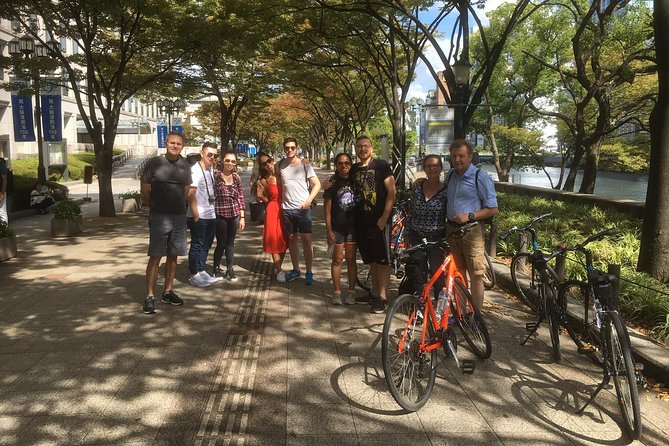
Your morning starts at Tenma (Kita Ward), with the tour beginning at 9:30 am and ending back at the same meeting point. The duration is listed as about 5 to 6 hours, and the pace is generally described as leisurely in a way that still gets you around.
Logistically, the setup is straightforward: you get an English-speaking guide, plus a bike, helmet, and bottled water. You’ll also use a mobile ticket, which is one less thing to manage while you’re figuring out Osaka.
In practice, this kind of tour lives or dies by timing. Here, the route is designed around frequent short stops—so even if a sight is famous, you don’t lose an hour hunting for it. That matters when you’re trying to cover Osaka Castle, Shitennoji, and Shinsekai in the same day.
Nakanoshima Park: riverside calm and old Osaka business district vibes
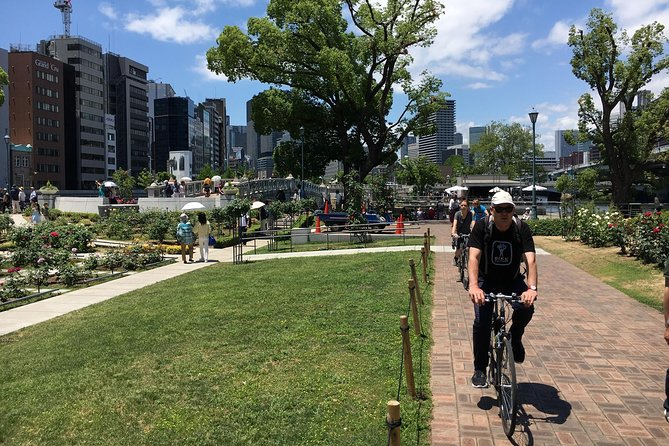
The ride opens at Nakanoshima Park, a great warm-up stop. You’ll cycle through landscaped grounds and old buildings tied to Osaka’s earlier business district identity.
This is the part where you settle in on your bike. The scenery helps, too: it’s a pleasant, calmer stretch that gives you a sense of Osaka beyond the tourist hotspots. Expect a quick reset, not a long museum day—this is a “feel the area” stop.
A practical note: it’s also a nice place to get oriented for how the day will move—short cycling bursts, quick commentary from the guide, then back on the bike.
Mint Museum stop (no entry): modern Japan taught from the street
Next comes the Mint Museum area. You won’t have time to go inside, but you do stop in the grounds and learn about the location’s role in Japan’s modernization.
I like stops like this because they keep the tour moving while still giving you meaning. You’re not just seeing a pretty exterior; you’re learning why this part of Osaka matters historically.
It’s also a good example of how the tour handles your time. When a place is important but doesn’t fit the schedule, you still get the story without losing the day.
Osaka Castle Park: postcard photos, short history stops, and a small climb

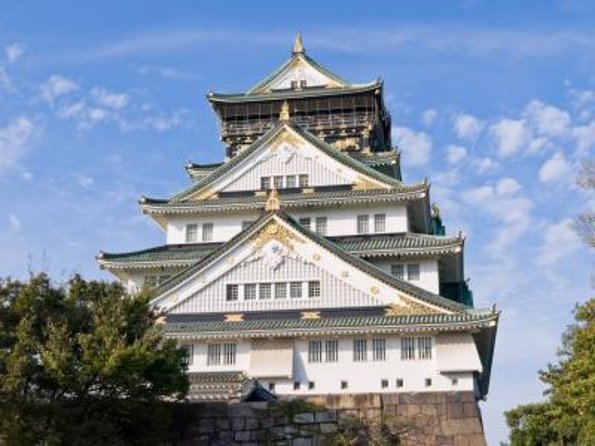
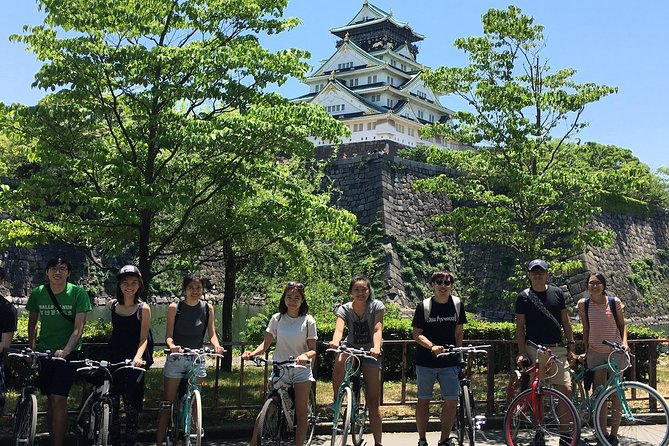
Osaka Castle Park is one of the biggest “yes, that’s the one” stops. You bike through the greenery, pause for postcard-worthy photos, and get an explanation of the castle’s role in Japan’s history and culture.
There may even be a sweet treat moment—ice cream is suggested as a possible add-on. It’s a classic “you earned this” break after time on the bike.
One consideration: while the ride is generally described as easygoing, there can be slight hills in the Osaka Castle area. If you’re not used to cycling, take it slow on any elevation and let your guide manage the group. The good news is that the tour isn’t built like a fitness test.


Shitennoji Temple: oldest-temple serenity without the time sink
Shitennoji is next, and it’s a meaningful stop. This is described as Japan’s oldest Buddhist temple, and the visit focuses on serenity and learning about its place in Japan’s development.
I like that the stop is short—about 15 minutes—because it keeps the day balanced. You get the key experience of being in an ancient space, then you move before fatigue sets in and before the city turns into pure crowds.
This is also where the guide storytelling matters most. A short stop becomes powerful when you know what you’re looking at and why it’s important in Osaka’s timeline.
Shinsekai and Tsutenkaku: blue-collar Osaka street energy
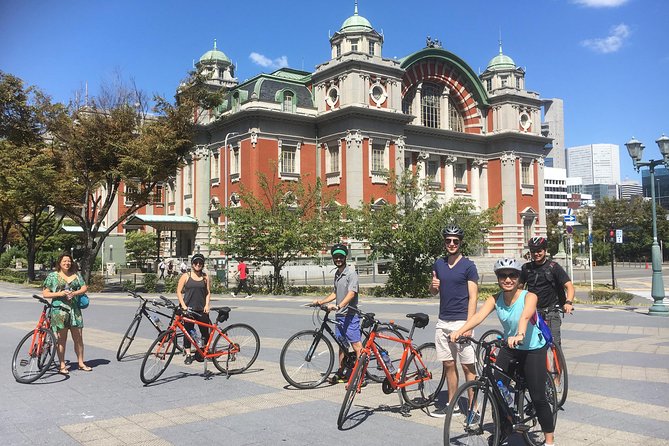
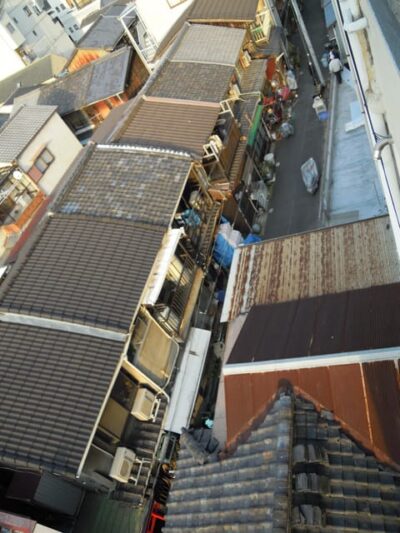
Shinsekai is where the tour turns lively again. You’ll explore the famous blue-collar Osakan district and aim for photos under Tsutenkaku tower, plus views of everyday local life.
A big plus here is that the stop isn’t just sightseeing. You’re encouraged to look for colorful locals and consider street food along the way (depending on what you spot and what sounds good to you).
What you’re really doing in Shinsekai is contrasting Osaka’s “major landmark” image with the city’s everyday culture. That contrast is what makes a bike tour feel like more than a checklist.
Tower Knives Osaka: a hands-on maker stop in the middle of the day
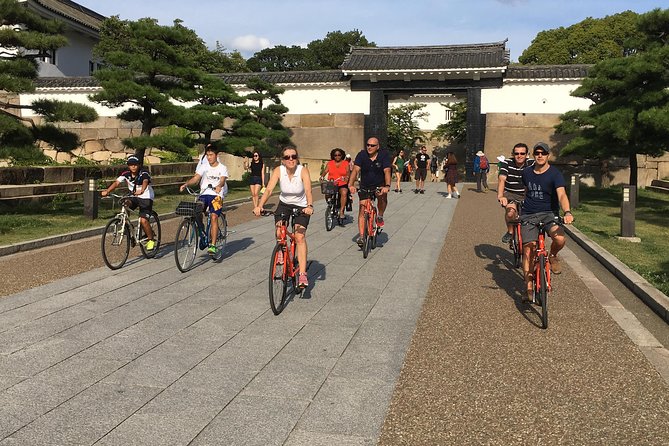
Tower Knives Osaka is one of the more unique stops on this route. You’ll get a personal introduction to a consultant tied to Japan’s famous knife-exporting reputation, hear about knife-making history in the area, and then get a chance to use tools yourself.
This is a rare moment in a sightseeing loop where you do something. Even if you’re not a “craft person,” hands-on time makes the trip stick in your memory.
From a tour-planning angle, it also breaks up the pattern. You’ve had parks and temples and street life—then suddenly you’re in a workshop-style learning moment.
Namba Yasaka Shrine: quick charms, woodblock prayers, and a fun photo moment
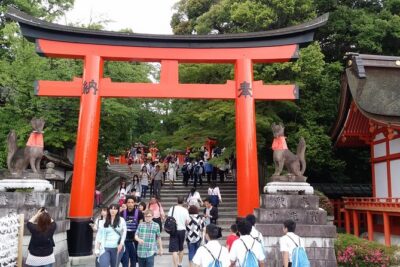
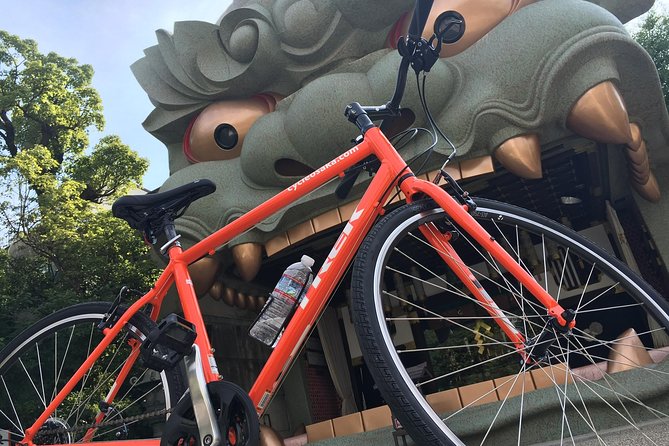
On the way back, you’ll make a brief stop at Namba Yasaka Shrine. It’s described as quirky and photogenic, and you’ll see prayers written on woodblock plaques.
You’ll also have a chance to pick up your own good luck charm. This last stop is short (around 5 minutes), which is perfect when you’re already full of highlights and you just want a small, memorable wrap-up.
Lunch plans that fit the route (and vegetarian support)
Lunch is included, and the guide will discuss lunch options on the day. Vegetarian options are available if you request at booking.
This matters because lunch can derail pacing. Here, the lunch break is placed inside a route that already moves efficiently between neighborhoods. That reduces the stress of trying to find a good place while you’re tired and hungry.
Also, several guides are praised for making this meal a highlight. The food part isn’t treated like an afterthought. It’s tied into the day’s theme: local culture and local flavor, not generic convenience food.
If you’re picky or have dietary needs, don’t wait until you arrive. Vegetarian support exists, but you need to request it ahead of time.
Getting value for $106.12: what’s included and why the day works
At $106.12 per person for about 5 to 6 hours, the value comes from what you’re not paying for or planning yourself.
You’re getting:
- an English-speaking guide
- a bike and helmet
- bottled water
- lunch
- a route designed to hit major Osaka sites in one day
If you tried to do this on your own, the cost would shift. You’d pay for bike rental and likely spend time figuring out logistics and routes. The guide’s job isn’t just pointing to landmarks—it’s choosing the order, building in time for photos, and giving you the context that makes each stop feel connected.
And because the group is capped at 8 riders, you get a more personal rhythm than the big bus tours. That small-group element is a major part of the price-to-experience ratio.
Who this tour suits best (and who should skip it)
This is ideal if you want an efficient first look at Osaka and you like learning while you move. It’s also good if you like variety: parks, temple history, a classic castle area, a street-life neighborhood, and a hands-on craft stop.
You should have moderate physical fitness. The ride is described as easygoing and generally flat, with the one notable exception being possible slight hills around Osaka Castle. If that’s manageable for you, you’ll likely enjoy the easy pace and the frequent breaks.
This is not recommended for children age 12 and under, and riders under 140cm can’t join. If you’re traveling as a family, this height rule is the main reality check.
FAQ
FAQ
How long is the One-Day Osaka Bike Adventure?
The tour runs about 5 to 6 hours, starting at 9:30 am and ending back at the meeting point.
What major Osaka sights will I see?
You’ll ride past and stop for highlights including Osaka Castle Park, Shitennoji Temple, and Shinsekai, plus stops at Nakanoshima Park, the Mint Museum grounds, Tower Knives Osaka, and Namba Yasaka Shrine.
Is lunch included, and can I request vegetarian food?
Lunch is included. Vegetarian options are available if you advise the operator at booking, and the guide will discuss lunch choices on the day.
What’s included in the tour price?
The tour includes an English-speaking guide, bike and helmet, bottled water, and lunch.
Is this a small group tour?
Yes. The maximum group size is 8 travelers.
What if the weather is bad?
The experience requires good weather. If it’s canceled due to poor weather, you’ll be offered a different date or a full refund.
Should you book this bike tour?
If you want a fast, structured intro to Osaka that still feels local, I’d book it. The route covers the city’s big-name anchors plus street-level flavor, and the day is built around short stops that don’t waste time.
Skip it only if cycling is a hard no for you, you’re worried about hills around Osaka Castle, or your group includes a rider who doesn’t meet the height/age guidance. If you can handle a moderate bike day, this is one of the best ways to get your bearings fast and leave with a clear sense of what Osaka is about.