REVIEW · OSAKA
Himeji Castle and Akashi Kaikyo Bridge Walking Tour from Osaka
Book on Viator →Operated by JTB Global Marketing & Travel Inc. · Bookable on Viator
A white heron castle and a world-class bridge in one day. This tour is built for people who want rail travel done for them, with an English-speaking guide pacing the key sights from Osaka to Hyogo. You’ll ride the JR Shinkansen, learn the stories behind Himeji Castle, and then shift to bridge views over Akashi Strait.
Two parts I like a lot: the guided walk through Himeji Castle, plus the lunch stop that keeps you fueled without hunting around. The buffet at Hotel Nikko Himeji is a solid mix of Japanese and Western options, and the day’s second highlight is the Maiko Marine Promenade with glass sections over the water. One consideration: you do real walking and steps, so plan for a lot of time on your feet.
In This Review
- Key highlights you’ll actually feel
- Osaka to Himeji by Shinkansen: the convenience you pay for
- Entering Himeji Castle’s White Heron: what 2 hours really means
- The catch: Himeji is stairs and stamina
- Hotel Nikko Himeji buffet lunch: a reset that actually works
- Akashi Kaikyo Bridge from Maiko: exhibition center to glass-floored views
- Bridge Exhibition Center
- Maiko Marine Promenade: the part with real wow factor
- Timing, pacing, and the walking math you should respect
- Trains: what non-reserved means in practice
- Price and value: is $246.33 a fair deal for one day?
- Who should book this Himeji and bridge tour?
- Should you book it?
- FAQ
- What time does the tour start, and where do I meet the guide?
- Where does the tour end?
- How long is the tour in total?
- What train rides are included?
- Is there a lot of walking?
- Do I need socks for Himeji Castle?
- What’s included besides sightseeing?
- Is the lunch buffet vegetarian or allergy-friendly?
- What do I do at the Akashi Kaikyo Bridge?
Key highlights you’ll actually feel
- Shinkansen with non-reserved seats: you get the big Japan rail experience without planning ticket logistics all day.
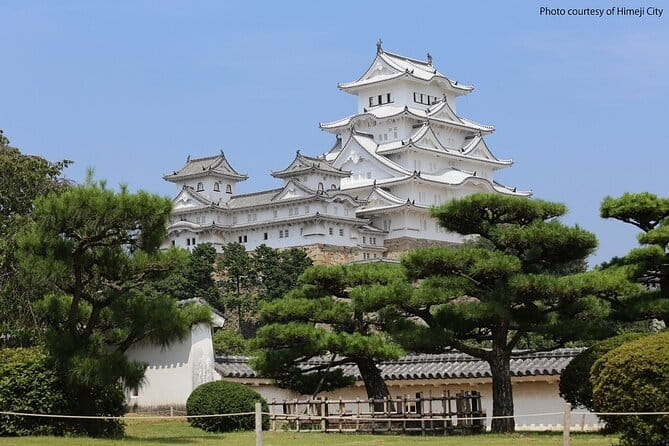
- UNESCO Himeji Castle focus: a full guided stroll through a national treasure complex known as Shirasagi Castle (White Heron).
- Socks help inside the castle: shoes come off, and socks are recommended for comfort.
- Akashi Kaikyo Bridge scale from Maiko: the promenade and the Bridge Exhibition Center are geared for seeing the engineering up close.
- Buffet lunch at Hotel Nikko Himeji: a changing seasonal buffet served buffet-style so you can reset before the bridge.
- Small group size: up to 15 people, which tends to make keeping everyone together easier on foot.
Osaka to Himeji by Shinkansen: the convenience you pay for
You start in central Osaka at Hotel Granvia Osaka around 8:40am, then connect to Osaka Station. From there, the tour uses the JR Shinkansen to get you to Himeji Station in about 35 minutes, and the seats are non-reserved. Translation: you’ll want to be ready when boarding starts, but you’re not stuck hunting for seats like you would on your own.
One underrated value here is that you’re not juggling transfers with a suitcase of questions. A licensed English guide helps you stay oriented, and the pacing is realistic for a one-day sightseeing hit. When people get frustrated in Japan, it’s often because they spend more time figuring out the next train than seeing the place. This tour is basically designed to prevent that.
Also, the guide can be the difference between seeing a castle as scenery and understanding it as a system of power. In past groups, guides with names like Aki, Seiko, June, Saiko, and Mrs Mijuki have been praised for clear English and lots of room for questions. You shouldn’t expect a rigid lecture; you’ll get explanations that match where you are standing.
You can also read our reviews of more walking tours in Osaka


Entering Himeji Castle’s White Heron: what 2 hours really means
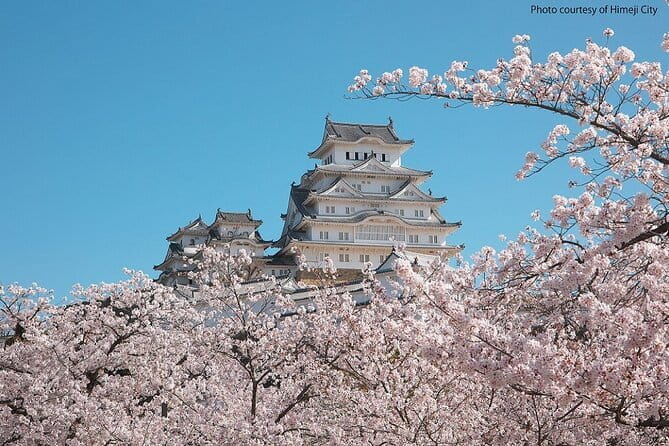
When you reach Himeji, you walk about 20 minutes to the castle. That walk matters more than it sounds, because you’ll arrive ready to go straight into the sightseeing rhythm. Himeji Castle is a UNESCO World Heritage site and a national treasure, famous for its white exterior, often nicknamed Shirasagi Castle (White Heron Castle) because the silhouette resembles a bird in flight.
The tour’s castle time is about 2 hours, with admission included. That’s a good chunk for a place like this because it lets you go beyond quick photo stops. You’ll cover the sprawling grounds, see the five-story complex, and get guided context about feudal-era Japan. The main thing I’d tell you is to plan for pace changes: you’ll do both open-air viewing and interior viewing, and you’ll want to follow the group so you don’t miss the story the guide ties to each area.
One practical tip that affects comfort: shoes must be removed inside the castle, and wearing socks is recommended. Even if you love walking shoes, you’ll likely end up with colder or less grippy floors inside if you don’t have socks. Bring a pair you’re okay wearing for a while.
The catch: Himeji is stairs and stamina
The castle is not a lazy stroll. Between slopes, courtyards, and staircases, you can feel it in your calves and knees. Some visitors specifically warn that it may be rough if you have knee or hip limitations or replacements. If you’re unsure, be honest with yourself: this is a history-and-architecture site where movement is part of the experience.
Hotel Nikko Himeji buffet lunch: a reset that actually works
After the castle, the tour feeds you at Hotel Nikko Himeji. You get a lunch buffet for about 1 hour 15 minutes, and admission is included.
I like this lunch stop because it’s structured. You’re not hunting for a restaurant that can handle your schedule, and you’re not eating in a rushed corner. The buffet is described as seasonal, and it’s served buffet-style with both Japanese and Western options. That mix is helpful on days like this because you can choose something familiar if your stomach is tired of seafood-heavy meals.
Two practical notes from the tour rules:
- Diet requests are not accepted, including vegetarian or allergy-friendly meals. If you need special food, you’ll want to handle that carefully before you book.
- The buffet format is easy to manage, especially when you still need energy for the bridge walk afterward.
In other words, lunch here isn’t just a break. It’s a planned reset so you don’t arrive at Akashi Kaikyo Bridge running on fumes.
Akashi Kaikyo Bridge from Maiko: exhibition center to glass-floored views
Next you head back onto trains, this time from Himeji to Maiko Station, using non-reserved local service for about 50 minutes. Maiko Station is a short walk from the bridge area, which keeps the day moving without turning into a transit-heavy slog.
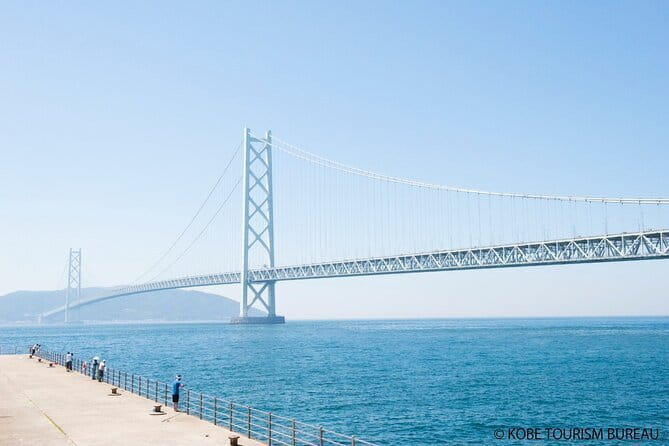
Akashi Kaikyo Bridge is the kind of structure you understand faster when you see it. It stretches about 12,828 feet (3,910 meters) between Kobe and Awaji-shima Island, and the tour builds in time to learn about it before you just look up and snap photos.


Bridge Exhibition Center
At Maiko, you start with exhibits at the Bridge Exhibition Center. This matters because the bridge is engineering-heavy. If you know what you’re looking at, the scale becomes more than a postcard.
Even if you’re not a technical person, the exhibits tend to make the long suspension span feel tangible. You walk in, you see the “how,” then you walk out and see the “what.”
Maiko Marine Promenade: the part with real wow factor
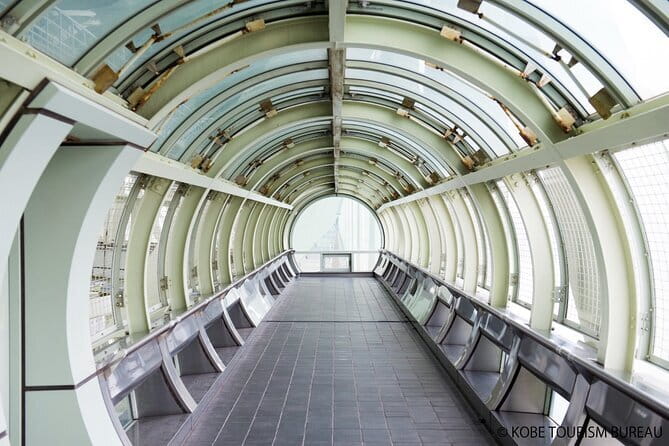
Then comes the walk: the Maiko Marine Promenade. It’s an observation walkway with sections of glass flooring that let you glimpse the water of Akashi Strait below your feet. The promenade sits about 47 meters above the water, under the bridge roadway, so you get a viewpoint you can’t easily recreate on your own.
This is where the tour earns its second highlight. The bridge isn’t just something you stare at from a distance. You’re physically close to it, and the glass sections give your photos a more dramatic angle. Some guides in past groups also helped people find the best spots for pictures and pacing so you don’t get stuck behind slower walkers.
One balanced expectation check: the time here is about 45 minutes. That’s enough for the promenade walk and viewing, plus the exhibition time, but it’s not a full-day bridge festival. If your personal top goal is bridge time above all else, know you’re trading some time here for deeper castle time.
Timing, pacing, and the walking math you should respect

The tour runs about 8 hours 50 minutes total, with the itinerary portion listed at 5 hours 25 minutes. The remaining hours are the travel and transition time. That’s normal for this route, but it helps to know in advance so you’re not surprised when the day feels long.
You’re also given a walking total of about 4.0 km (2.5 miles). The number is moderate, but don’t treat it like a flat city-walk. Here, walking includes courtyards, stairs, and uneven-feeling castle pathways. Add in shoe-removal logistics and you’ll feel like you’ve done more than 2.5 miles.
Clothing tip: wear shoes and clothing that you can walk in for hours. Bring socks you’re comfortable with since you’ll likely remove footwear during the castle visit. If you’re sensitive to cold, consider slightly warmer socks than you’d usually wear in Osaka.
Trains: what non-reserved means in practice
Both train legs use non-reserved seats, and seating is not guaranteed. This matters because you may need to stand briefly depending on crowding. The upside is you still get the Shinkansen experience outbound and the local train back without extra planning headaches.
The best strategy is simple: keep your daypack light, and don’t count on having your full bag under the seat immediately when you board.
Price and value: is $246.33 a fair deal for one day?
At $246.33 per person, this is not a cheap day trip. But it also bundles several things that often cost time and stress if you do them yourself: Shinkansen transport, guided storytelling, admission coverage, and a planned lunch.
Here’s how I’d think about value:
- Transport: You’re using rail for the whole day, including the Shinkansen segment. Even if you know Japan rail, buying tickets and managing transfers takes mental energy.
- Admission: Castle entry is included, as are other admission fees mentioned in the tour includes.
- Guide: You’re paying for a national government licensed English guide interpreter fee, and the guide’s role is more than “walk here, see that.” It’s helping the castle make sense and keeping you organized.
- Lunch: The buffet at Hotel Nikko Himeji isn’t just a snack stop, and it’s scheduled with time to eat and reset.
Could it feel expensive if you’re only in it for a quick look at two attractions? Possibly. One theme in feedback is that people who wanted a longer bridge experience or more variety felt shorted. But if your goal is a clean, well-organized day that strings together the best of Himeji and Akashi efficiently, this price starts to look like paying for friction-free logistics.
Who should book this Himeji and bridge tour?

This tour makes the most sense if you:
- Want a guided day trip from Osaka without figuring out routes and train boarding on your own.
- Care about Himeji Castle not just as a photo location but as a place with feudal-era meaning.
- Like a day that mixes historical architecture with modern engineering views.
- Prefer a smaller group experience (the tour caps at 15 people).
It’s also a good fit for first-timers who feel intimidated by Japan transit. Riding the Shinkansen here is a highlight by itself, and the tour structure helps you experience the system without feeling lost.
I’d be cautious if you:
- Have knee or hip issues or struggle with lots of stairs. The castle is physically demanding.
- Need vegetarian meals or allergy-friendly substitutions. The tour rules say meal requests aren’t accepted.
- Want extended time on the bridge. You get about 45 minutes in the bridge-area experience, then it’s back to trains.
Should you book it?
If you want an efficient, organized day that hits UNESCO Himeji Castle and the engineering wonder of Akashi Kaikyo Bridge with a real lunch break, I’d book this. The biggest payoff is not only what you see, but how smoothly the day runs: Shinkansen outbound, guided castle time, a buffet reset, then a glass-floored bridge promenade before heading back to Osaka.
If your priorities are mobility comfort, long stops, or special dietary needs, you should think twice. This is a walk-and-steps day, and lunch options have limits.
FAQ
What time does the tour start, and where do I meet the guide?
The tour starts at 8:40am and meets at Hotel Granvia Osaka (3-chōme-1-1 Umeda, Kita Ward, Osaka).
Where does the tour end?
The tour ends around 5:30pm at Osaka Station.
How long is the tour in total?
It’s about 8 hours 50 minutes total.
What train rides are included?
You’ll ride a JR Shinkansen from Osaka Station to Himeji Station (non-reserved seat) and then a local train from Maiko Station back to Osaka Station (non-reserved seat).
Is there a lot of walking?
Yes. Total walking distance is about 4.0 km (2.5 miles), plus stairs and time on foot at the castle and bridge areas.
Do I need socks for Himeji Castle?
Socks are recommended because you must remove your shoes to walk inside Himeji Castle.
What’s included besides sightseeing?
The tour includes lunch (buffet) and admission fees and transportation costs listed in the tour, plus an English guide interpreter fee.
Is the lunch buffet vegetarian or allergy-friendly?
No. The tour states that vegetarian meals and allergy-friendly meals are not accepted.
What do I do at the Akashi Kaikyo Bridge?
You’ll visit the Bridge Exhibition Center and then walk the Maiko Marine Promenade, which includes sections of glass flooring for views down to the water.