REVIEW · OSAKA
The Dark Side of Osaka Walking Tour
Book on Viator →Operated by Localized Walking & Food Tours · Bookable on Viator
Osaka at night can feel like a different country. This walk takes you through Shinsekai and the Tobita Shinchi red-light area, with a guide that connects street scenes to social history. I especially liked the way it uses the streets themselves as the lesson plan, not a clipboard of facts.
Two things I really love: the pacing (about two hours, with short stops you can actually absorb) and the guide focus on context. A guide named Jay set the tone for me with clear, thoughtful explanations about daily life and social rules in the neighborhoods you usually skip.
One possible drawback: this route is intentionally gritty, and the first stretch can feel like you are simply walking through working-class streets. If you want only postcard scenes and famous landmarks, this may feel too real for your taste.
In This Review
- Key Highlights You Should Know Before You Go
- Entering Osaka’s Night Mode at 5:30
- Shinsekai First: Retro Streets, Tsutenkaku Energy
- Nishinari Dobutsuen-mae: Where Osaka Feels More Working-Class
- Jan Jan Yokocho: A Narrow Alley Between Shopping and Snack Time
- Tobita Shinchi: Osaka’s Red-Light District, Explained Like a Neighborhood
- Tsutenkaku Hondori Shopping Street: Finish With Food and Photos
- Price and Timing: Is $25 Worth It?
- What Guides Like Jay, Matt, and RICO Actually Do
- How to Make the Dark Side Tour Work for You
- Should You Book This Tour?
- FAQ
- What time does the tour start?
- Where do I meet the guide?
- How long is the walking tour?
- How much does it cost?
- Is the ticket mobile?
- Is admission included for the stops?
- Are snacks included?
- How many people are in the group?
- What if the weather is bad?
- Is a service animal allowed?
Key Highlights You Should Know Before You Go
- Small group size (max 15) keeps questions and side stories from getting lost.
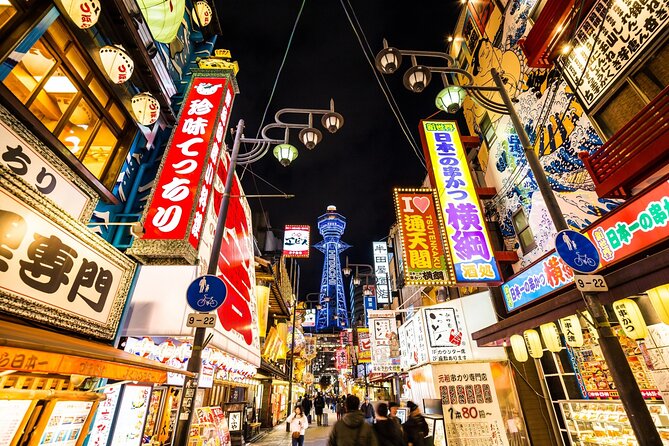
- Starts at 5:30pm at MEGA Don Quijote Shinsekai, so you catch Osaka in its evening mood.
- Five neighborhood stops cover Shinsekai, Nishinari, Jan Jan Yokocho, Tobita Shinchi, and Tsutenkaku Hondori.
- Adult-neighborhood history is part of the point, including Tobita Shinchi’s long timeline and controlled environment.
- All fees and taxes are included, with a mobile ticket sent at booking.
- Admission at the stops is free, but you still need to plan for your own food/snacks.
Entering Osaka’s Night Mode at 5:30
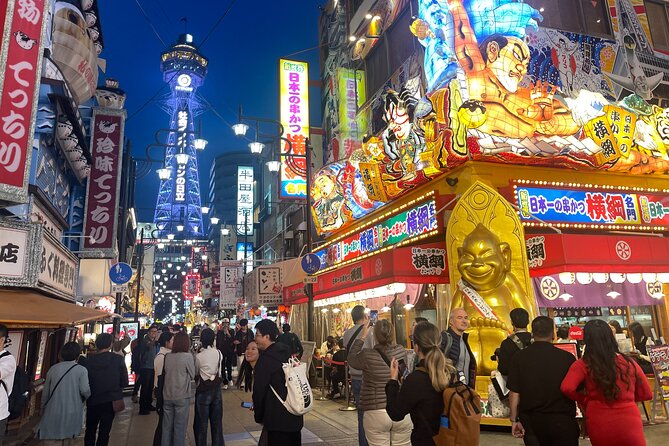
This tour is built for the evening. At 5:30pm the sidewalks around Shinsekai start to feel busy in a very specific way—people moving between shops, restaurants, and late-day errands—so the “dark side” theme lands faster than it would in daylight.
The meeting point is right at MEGA Don Quijote Shinsekai (a super easy anchor because it’s hard to miss). You’ll walk together as a small group (up to 15), which matters because guides can answer questions without turning the night into a blur of single-file marching.
Also, plan on good shoes. You’re covering several blocks across multiple districts in roughly two hours, and the route is designed for walking close to street life, not long sightseeing detours.
You can also read our reviews of more walking tours in Osaka


Shinsekai First: Retro Streets, Tsutenkaku Energy
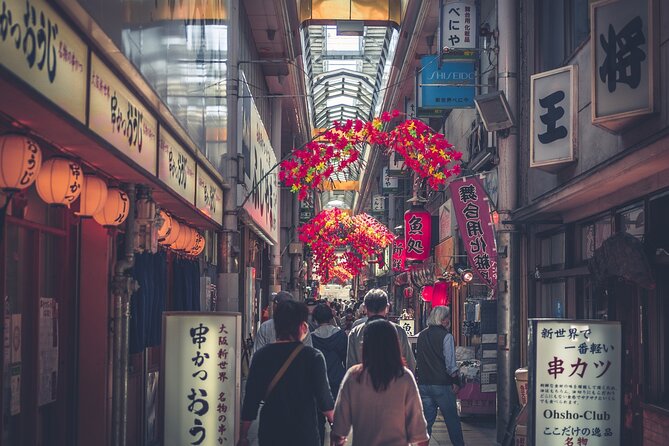
Your first stop is Shinsekai, which literally means New World. It’s one of Osaka’s most recognizable neighborhoods for a reason: it blends retro nostalgia with real local movement, and it sits near Tsutenkaku Tower.
Shinsekai has roots going back to 1912, and your guide uses that long timeline to explain why the area looks the way it does today. You get a feel for the “old entertainment district” vibe, with narrow streets, signage, and that mix of old-world form and modern daily use.
What I liked most here is that you’re not just staring at a tower or taking photos. You’re watching how people use the space—shopping, eating, passing through—and then getting the social context behind it. That turns the neighborhood from scenery into a story you can read with your eyes.
One caution: this is the part that can feel most like a normal nightlife stroll. If you’re hoping for the darkest scenes right away, you’ll still get them—but the tour gradually ratchets up the intensity.
Nishinari Dobutsuen-mae: Where Osaka Feels More Working-Class
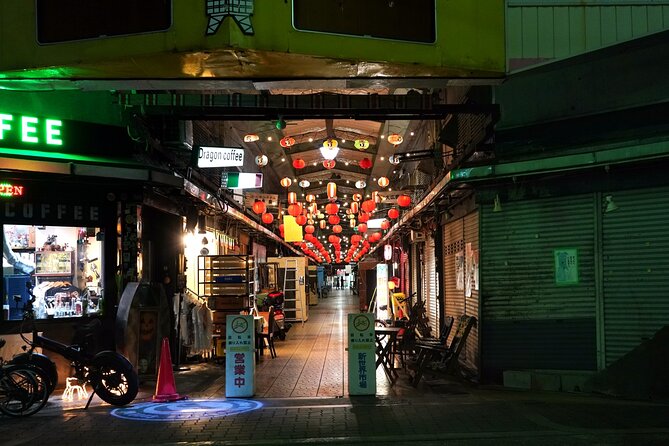
Next you head to Nishinari, specifically around Dobutsuen-mae Deep Osaka Street. Nishinari is described as having a raw, authentic charm, and the guide frames it as a neighborhood shaped by day laborers and a working-class community.
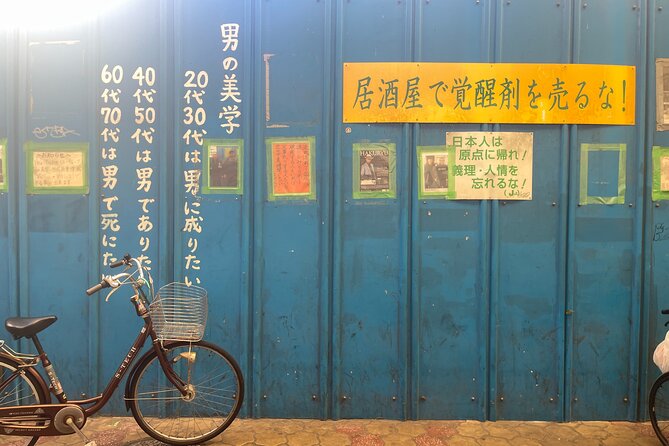
This is where the tour shifts tone. Instead of polished tourist strips, you’re walking streets that feel more like everyday Osaka—small storefronts, local rhythms, and the kind of atmosphere you only notice when someone points out what you’re actually seeing.
Why this stop matters: the tour’s theme is not just “shady nightlife.” It’s about the social edges of the city—how different communities live side by side, and how historical economic patterns still show up in street layout and neighborhood identity.
The possible drawback is simple: you might feel like you’re taking in less visually dramatic scenery here. If you judge a tour by how many big sights you see, this part could frustrate you. If you judge it by how well you understand a place, it’s one of the most important segments.
Jan Jan Yokocho: A Narrow Alley Between Shopping and Snack Time
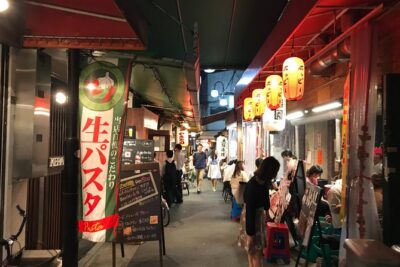
Then you move into Jyanjyan Yokocho, also known as the Nanyodori Shopping District—an alleyway near Tsutenkaku. This is a more playful change of pace: a charming, nostalgic street where shopping and dining overlap in a tight space.
The street is known for its retro feel, and it’s exactly the kind of place where you can’t really keep wide distance from the scene. That narrow layout makes the atmosphere personal: you’re closer to the signs, the menus, and the flow of people passing through.
This stop is also a timing sweet spot. With about 20 minutes here, you get time to notice the details without the tour dragging on. I’d treat this like your moment to decide whether you want snacks later or right now—because snacks aren’t included, and you’ll want to plan for your own bites.
If you’re the type who likes to ask questions, this part tends to work well too. Guides often use the alley as a springboard for explaining how nightlife districts evolved into street-eating and small-shop corridors.
Tobita Shinchi: Osaka’s Red-Light District, Explained Like a Neighborhood
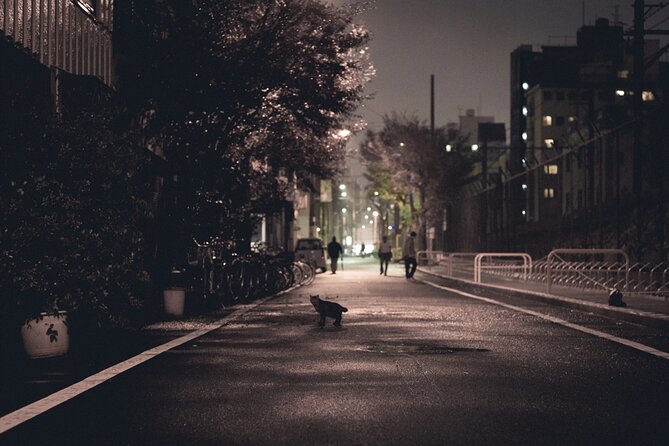
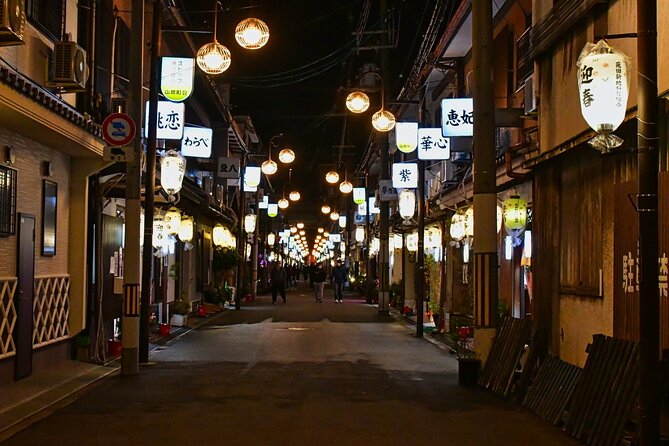
Now for the centerpiece: Tobita Shinchi, described as Osaka’s most famous and largest red-light district, with history over a century. This is where the “dark side” promise becomes more literal, but the tour still keeps its focus on how the area is organized and understood.
You’ll learn about the district’s unique architectural style and that it’s run in a tightly regulated way. That’s the key phrase: the guide isn’t presenting it as chaos or shock value. You’re seeing how long-standing systems shape a street environment—signage, layout, and the rules that keep activity orderly.
I think this stop is best for travelers who enjoy learning the social structure behind places. If your curiosity is mainly about aesthetics, you might still appreciate it, but the value here comes from understanding the human and historical framework.
Respect matters in neighborhoods like this. Keep your questions thoughtful, avoid turning it into a spectacle, and be mindful of the fact that real people live and work nearby. A good guide will set that tone early, and the street context will do the rest.


Tsutenkaku Hondori Shopping Street: Finish With Food and Photos
Your final stretch brings you to Tsutenkaku Hondori Shopping Street, an arcade near Tsutenkaku Tower. Expect a lively mix of shops and the classic Shinsekai retro energy, now with the relief of knowing you’re near the end.
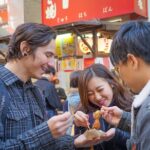
This last stop is practical for one reason: since snacks aren’t included, you’ll likely want to pick something up here if you’re hungry. You can also use the time to grab souvenirs or revisit the tower area for photos with a fresh angle.
I like ending this way because it balances the heavier theme with everyday street life. It reminds you that even districts with tough reputations still connect to normal routines—shopping, eating, meeting up, wandering.
When you finish around Tsutenkaku, you’re also in a good position to keep exploring nearby without having to relocate across town.
Price and Timing: Is $25 Worth It?
At $25 per person for a roughly two-hour night walk, you’re paying for the guide’s ability to make sense of what you’re seeing. This isn’t a museum-style tour where you rent a headset and follow a script. It’s closer to guided street reading: context first, sightseeing second.
The value is strengthened by what’s included: all fees and taxes, plus a mobile ticket. The itinerary also notes free admission at each stop, so you’re not getting nickel-and-dimed for entry fees mid-walk.
What you should plan for yourself: snacks. The tour doesn’t include them, so build in a budget and energy for at least a small bite during the route or after you finish.
One more practical factor: the experience requires good weather. If it gets canceled due to poor weather, you’ll be offered a different date or a full refund. For a night walk through streets, this matters more than you’d think—comfort and visibility affect how much you can enjoy the stories and scenes.
What Guides Like Jay, Matt, and RICO Actually Do
The standout theme from different guides you might get—Jay, Matt, or RICO—is how clearly they connect street corners to social history. Guides don’t just point. They explain the why: what these districts were known for, how the neighborhoods function, and what the “rules” of each place look like on the ground.
You’ll also get answers to questions, and that turns the tour from watching into understanding. If you’re comfortable asking things (politely), you’ll get more out of it than a passive walk.
Another shared strength is pace. The itinerary breaks into shorter blocks—about 30 minutes for Shinsekai and Nishinari, then 20-minute segments for the shopping alleys and red-light district. That structure helps you keep attention through the shift from retro streets to heavier themes.
How to Make the Dark Side Tour Work for You
This tour works best when you show up with the right expectations. Think of it as cultural street education, not a hunt for dramatic attractions. Some stretches look more ordinary than flashy, especially the working-class side, and that’s by design.
Here’s how to get comfortable fast:
- Wear shoes you can walk in for two hours on city sidewalks.
- Bring a light layer if the evening air turns cool.
- Keep your camera use respectful, especially near sensitive areas.
- Save room for snacks, since you’ll want your own food options.
If you’re easily unsettled by adult-neighborhood topics, don’t force it. Tobita Shinchi is a red-light district, and the tour’s purpose is to explain its place in Osaka’s social story. It may be better suited to travelers who like candid, grounded city context.
Should You Book This Tour?
I’d book The Dark Side of Osaka Walking Tour if you want to understand Osaka beyond the shiny highlights. You’ll get a guided walk through Shinsekai and Nishinari, plus street-level context for Tobita Shinchi, and you’ll finish near Tsutenkaku in time for food and photos.
Skip it if you want mostly famous landmarks and clean, tidy sightseeing. This route asks you to handle gritty neighborhoods with sensitivity and to focus on interpretation over spectacle.
If you like learning how cities work—who lives where, how districts evolved, and what rules shape street life—this is a smart use of an evening and one of the better ways to see a side of Osaka that many first-timers miss.
FAQ
What time does the tour start?
It starts at 5:30 pm.
Where do I meet the guide?
Meet at MEGA Don Quijote Shinsekai, located at 3-chōme-4-36 Ebisuhigashi, Naniwa Ward, Osaka.
How long is the walking tour?
It takes about 2 hours.
How much does it cost?
The price is $25.00 per person.
Is the ticket mobile?
Yes, the tour uses a mobile ticket.
Is admission included for the stops?
The itinerary lists free admission ticket at each stop, and the tour includes all fees and taxes.
Are snacks included?
No, snacks are not included.
How many people are in the group?
There is a maximum of 15 travelers.
What if the weather is bad?
The experience requires good weather. If it’s canceled due to poor weather, you’ll be offered a different date or a full refund.
Is a service animal allowed?
Yes, service animals are allowed.