REVIEW · OSAKA
Osaka: Traditional Japanese Ikebana Flower Art Experience
Book on GetYourGuide →Operated by Evesson Inc. · Bookable on GetYourGuide
One hour makes Japanese art feel doable. In Osaka, this hands-on Ikebana workshop turns a centuries-old flower philosophy into something you can make with your own hands, guided by Fooraku. It’s taught at a calm, modern gallery space in Kyomachibori, so you get art, culture, and a break from the city all in one tidy session.
What I especially like is the teaching level: you’re working with a senior Sogetsu instructor with 30+ years of experience. You’ll also build an arrangement step by step while all tools and materials are provided, then get a commemorative photo to mark the moment. The main thing to consider is simple but important: you’ll be handling real flowers, so let them know about any plant allergies ahead of time.
In This Review
- Key things you’ll notice right away
- Ikebana in Osaka: A Modern Room for an Ancient Craft
- Meet Fooraku, Your Sogetsu Master Guide
- VADE MECVM Showroom #2 in Kyomachibori: Where the Aesthetics Start
- Your 1.5-Hour Workshop Flow: From Materials to Finished Arrangement
- What You’ll Learn: Balance, Line, Form, and Space
- The Cultural Exchange Moment After Class
- Price and Value: Is $103 Reasonable for This Experience?
- Who This Osaka Ikebana Class Is Perfect For
- Should You Book This Ikebana Workshop in Osaka?
- FAQ
- Where is the Ikebana workshop located?
- How long is the workshop?
- What is the price per person?
- Is the class taught in English?
- Who teaches the workshop?
- Is it a small group?
- What’s included in the workshop?
- Do you get a photo of your arrangement?
- What should I do if I have plant allergies or want a private session?
Key things you’ll notice right away
- Sogetsu instruction with Fooraku (a senior master with 30+ years of experience)
- A modern Osaka gallery setting at VADE MECVM Showroom #2 in Kyomachibori
- No special tools needed: scissors, containers, and flowers are provided
- A complete arrangement you create yourself, not just a demo
- Principles you can reuse at home: balance, line, form, and space
- A small group size (limited to 6) plus time to chat after
Ikebana in Osaka: A Modern Room for an Ancient Craft
Ikebana is often described as Japanese flower arranging, but the best way to understand it is as a design practice. You’re working with nature, yes. But you’re also shaping line, space, and balance—almost like visual poetry with stems and leaves.
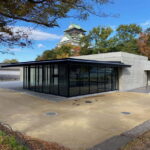
That’s why I like the setup in Osaka. The workshop happens in a quiet, modern gallery at VADE MECVM Showroom #2 in Kyomachibori. It’s not a loud, touristy studio. The clean, minimalist space lets your arrangement feel like the star of the room, and it keeps the focus on the ideas behind Ikebana, not distractions.
You’ll be in English during the class, which matters if you want to learn the philosophy, not just copy a picture. And since it’s a small group (up to six), you’re not lost in a crowd. You can ask questions and get personal guidance as you work.
You can also read our reviews of more tours and experiences in Osaka.

Meet Fooraku, Your Sogetsu Master Guide
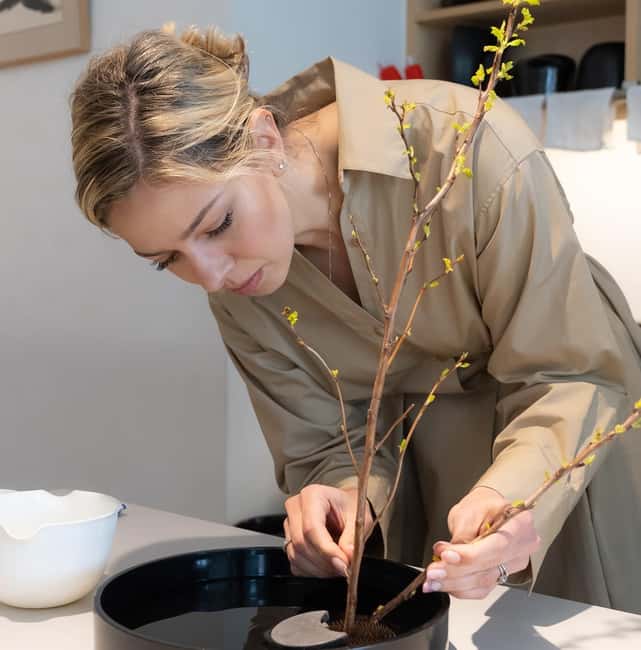
The teacher is a big deal in any art class, and here you get a real pro. The instructor, Fooraku, is a senior master of the Sogetsu Ikebana school and has more than 30 years of experience.
Sogetsu is known for its approach, and what you’ll feel in the workshop is practical creativity. You’re not being asked to memorize rigid formulas. Instead, you learn the principles that define Ikebana, and then you apply them to what’s in front of you that day.
In the experience, Fooraku guides you through both the how and the why. The how is the step-by-step construction of your arrangement. The why is the mindset: creating harmony between nature, design, and your own expression. That’s the part that tends to stick long after the stems are in the trash and the scissors are put away.
VADE MECVM Showroom #2 in Kyomachibori: Where the Aesthetics Start
The location does more than keep things convenient. The VADE MECVM Showroom #2 space in Kyomachibori is described as simple, modern, and calm—an atmosphere that matches what you’re learning.
Ikebana looks clean, but it’s not effortless. You need time to see proportions, negative space, and the relationship between materials. A serene room helps you slow down and notice those details. When the room is busy, your brain speeds up and you end up placing stems instead of composing.
Also, because it’s a showroom-style gallery, you’re stepping into a setting where Japanese art is treated like art, not a quick show-and-tell. That makes the whole session feel grounded. And if you want something memorable beyond a photo, this kind of venue supports it.
Your 1.5-Hour Workshop Flow: From Materials to Finished Arrangement
The workshop runs about 1 hour 45 minutes (often listed as a 2-hour block for scheduling). The pacing is designed for real beginners and for art lovers who want structure without feeling boxed in.
Here’s what the flow effectively means for you:
First, you settle in with the basics. You’ll learn what to look for in Ikebana—how the design is built around line and balance. Then you move into hands-on making, with guidance from Fooraku as you place and adjust stems.
Second, you work with everyday materials that are provided for you—flowers, a container, and scissors. That’s a huge value point. You don’t need to hunt for supplies beforehand, and you don’t arrive anxious about buying the wrong tools. You can focus on creativity and decision-making inside the class.
By the end, you finish your own unique arrangement. At that point, you’ll also get a commemorative photo of your work. It’s a small add-on, but it’s a practical one. Ikebana arrangements can be fleeting, and photos help you remember what you designed and how it looked in the exact form you created.
If you’re the type who likes making something tangible during a trip, this format hits that sweet spot: enough time to build confidence, not so long that you feel stuck.
What You’ll Learn: Balance, Line, Form, and Space
This class doesn’t just teach flower placement. It teaches the guiding ideas behind Ikebana.
You’ll learn the key principles that define Ikebana:
- Balance
- Line
- Form
- Space
These terms matter because they’re not only about the final look. They’re decision tools. When you understand balance and space, you stop thinking of your arrangement as a pile of stems. You start thinking of it as a composition—what goes where, what supports the shape, and what you intentionally leave out.
A practical way to think about it: Ikebana uses space as part of the design. Empty areas aren’t wasted. They help the structure breathe. That’s why you’ll likely notice your own habits changing during the workshop. You’ll place stems more carefully, pause more often, and adjust with purpose instead of guessing.
The best part is that you’ll take away skills you can continue at home. The materials will be different when you’re in your apartment or house, but the principles are transferable. That’s the difference between a souvenir workshop and a skill-based one.
And because it’s open to all levels, you don’t need to pretend you know what you’re doing. The class is built for people starting from zero, including complete beginners.

The Cultural Exchange Moment After Class
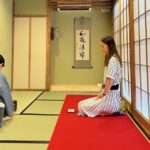
One of the nicest surprises here is that the workshop isn’t treated as a strict, one-way lesson. After the session, there’s time for a cultural exchange.
You’ll have a chance to relax and talk freely with others. People chat about Japanese traditions, food, daily life, and whatever else comes up. That’s a genuine social bonus, especially in a small group where conversation feels natural.
This matters because it turns the experience from a “check the box” activity into a small human moment. You get to practice a little cultural listening, too—how people explain what matters to them, and how your own perspective lands with them.
Price and Value: Is $103 Reasonable for This Experience?
At $103 per person for about 1 hour 45 minutes, the price might look steep if you’re thinking of it as a casual craft class. But the value comes from what’s included and what you’re learning.
You get:
- Instruction from a Sogetsu senior master (30+ years)
- All necessary tools and materials (flowers, containers, scissors)
- Your own arrangement made during class
- A commemorative photo
- A small-group setting (limited to six)
- A cultural exchange after the workshop
That combination is the key. Many “flower workshops” either feel demo-heavy, require you to buy supplies, or keep the instruction general. Here, you pay for expert guidance and a guided process where everything you need is already handled.
If you’re choosing between doing one workshop or squeezing in multiple short activities, this one earns its spot. You leave with a real creation, a new way to look at design, and a memory that’s not just a street photo.
Who This Osaka Ikebana Class Is Perfect For
This is a strong pick if you want a calmer, art-forward Osaka experience. It’s especially suitable for:
- First-time visitors who want a hands-on cultural activity without needing Japanese language skills
- Anyone who enjoys art, design, or creative structure (even if you’re not “artsy”)
- Travelers who like small-group settings where you can ask questions
- People who want something more meaningful than a standard museum visit
It also fits well if you like the idea of learning a skill you can reuse at home. The principles—balance, line, form, space—aren’t limited to one set of flowers. They’re a way of thinking.
If you’re the kind of person who wants a fast, no-thinking activity, you might find this slower and more reflective. But if you enjoy focus, it’s ideal.
Should You Book This Ikebana Workshop in Osaka?
If you like the idea of learning an art form with real structure, this is an easy yes.
Book it if you want:
- Expert teaching from Fooraku (Sogetsu, 30+ years)
- A modern, calm gallery setting in Kyomachibori
- A true hands-on class with materials provided
- Skills you can use after your trip
Skip or reconsider if:
- You have plant allergies and can’t manage the exposure (tell them in advance to see what can be done)
- You’re only looking for something super short or purely passive
For most travelers who are curious about Japan beyond food and photo stops, this class is a smart use of time. You’ll leave with a completed arrangement, a photo to remember it, and a fresh way to see simplicity.
FAQ
Where is the Ikebana workshop located?
The workshop takes place at VADE MECVM Showroom #2 in Kyomachibori, Osaka.
How long is the workshop?
It lasts about 1 hour 45 minutes.
What is the price per person?
The price is listed as $103 per person.
Is the class taught in English?
Yes, instruction is in English.
Who teaches the workshop?
The instructor is Fooraku, a senior master of the Sogetsu Ikebana school.
Is it a small group?
Yes. The group size is limited to 6 participants.
What’s included in the workshop?
You get instruction, and all materials and tools are provided, including scissors, vases, and flowers.
Do you get a photo of your arrangement?
Yes, you receive a commemorative photo of your arrangement.
What should I do if I have plant allergies or want a private session?
Let them know in advance if you have plant allergies. Custom and private sessions are also available upon request.