REVIEW · OSAKA
Osaka: Private Tea Ceremony and Calligraphy Experience
Book on GetYourGuide →Operated by Japanese Culture Experience WA NO MA · Bookable on GetYourGuide
Tea and ink in one quiet hour. This private Namba class pairs tea ceremony with calligraphy souvenir—you’ll taste and whisk matcha, then write your own kanji-based name artwork. The downside: it’s not suitable for wheelchair users.
I like that the experience is built for calm, with full attention from instructor Wanoma, plus real flexibility in pacing and photos. You can ask for slow moments, keep things photo-friendly, and still learn the details without feeling rushed.
In This Review
- Key things I’d highlight before you go
- A calm 135-minute break in Namba
- Finding the studio near Shinsaibashi-suji (and what to bring)
- Tea ceremony hour: matcha you make, sweets you taste twice
- Calligraphy hour: choose your theme, practice strokes, write your kanji
- What makes the souvenir actually feel like yours
- Who this is best for (and when to skip)
- Price and value: why $64 feels fair for a private class
- Should you book Wa No Ma in Osaka?
- FAQ
- How long is the Osaka tea ceremony and calligraphy experience?
- Is this a private experience?
- What languages are available during the class?
- What is included in the price?
- What should I bring?
- Is the experience accessible for wheelchair users?
- Do you offer anything different for young children?
Key things I’d highlight before you go
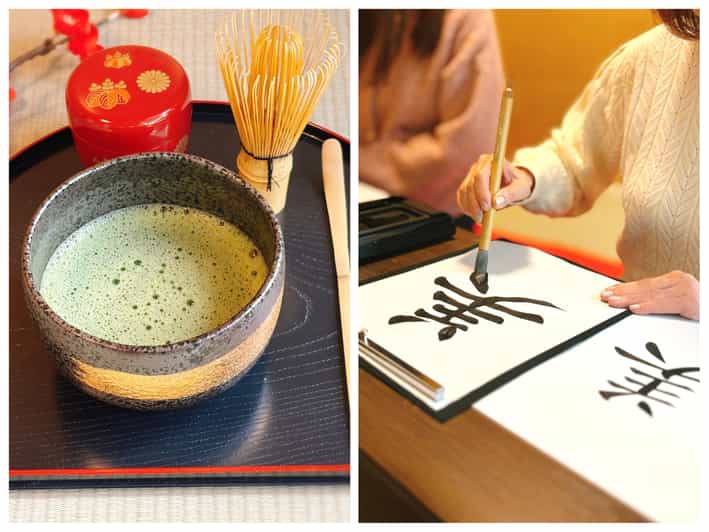
- Private, not scripted for a crowd: your group gets its own guided time block.
- Matcha hands-on: you don’t just drink it—you learn how to make it.
- Two sweet tastings during tea: you’ll sample multiple types of Japanese sweets twice.
- Kanji that connects to you: your name and/or chosen character(s) are guided with personality in mind.
- Take home something made by your hands: colored paper calligraphy plus a stamped finish.
A calm 135-minute break in Namba
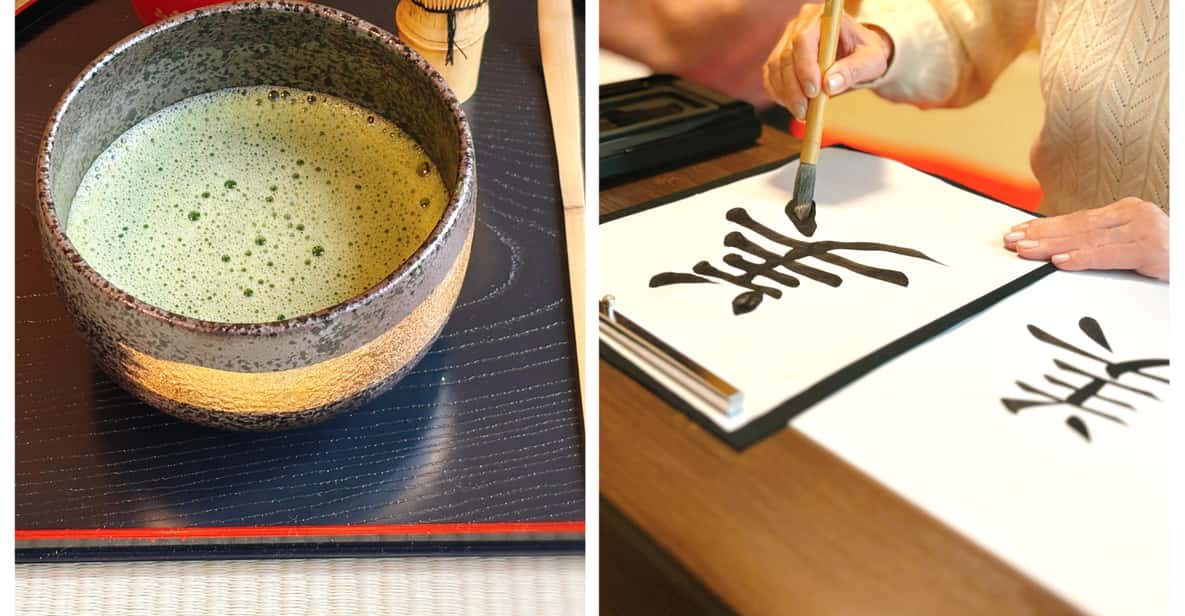
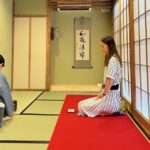
This is the kind of Osaka experience that feels like an exhale. Instead of racing from landmark to landmark, you get a structured but gentle flow: tea rituals first, then calligraphy—both taught step-by-step by Wanoma.
The private format matters more than you might think. A shared classroom is still educational, but private time lets you slow down, ask follow-ups, and actually follow what the instructor is doing with you. In several write-ups, the theme is the same: the instructor’s full attention makes the class feel personal and peaceful.
And yes, you can take photos anytime. So if you want to document the whisking, the bowls, or your paper before you start writing, you won’t feel like you’re interrupting a strict “no photos” routine.
You can also read our reviews of more private tours in Osaka


Finding the studio near Shinsaibashi-suji (and what to bring)
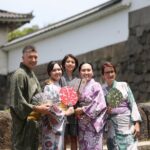
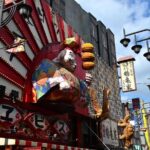
Your meeting point is outside New Osaka Hotel Shinsaibashi. Walk west for about 30 seconds from the entrance, and look for the blue vending machine near the front. The staff will wait in front of the main entrance about 5 minutes before your scheduled time, and you’ll notice them quickly because they’re wearing kimonos.
What to bring is simple: socks. That matters here because this is the kind of studio experience where you’ll want to be comfortable and ready to move in a small, indoor space.
Two quick rules to plan around:
- No smoking during the experience.
- Wheelchair users are not suitable for this activity, based on the provided info.
Tea ceremony hour: matcha you make, sweets you taste twice
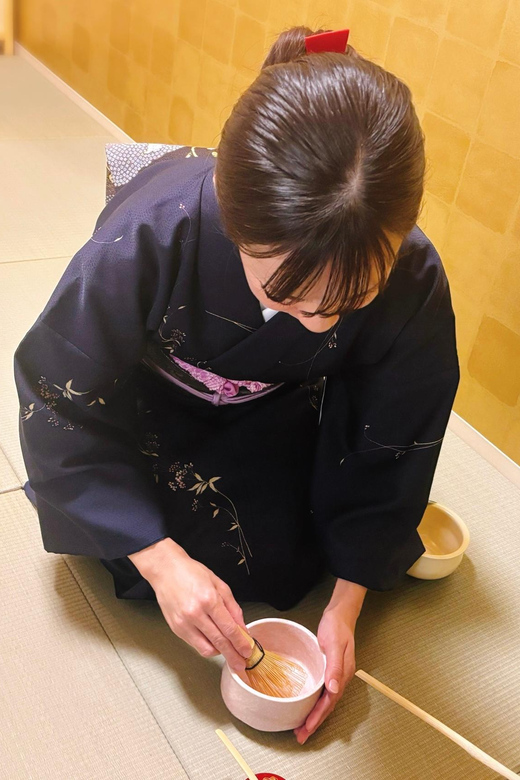
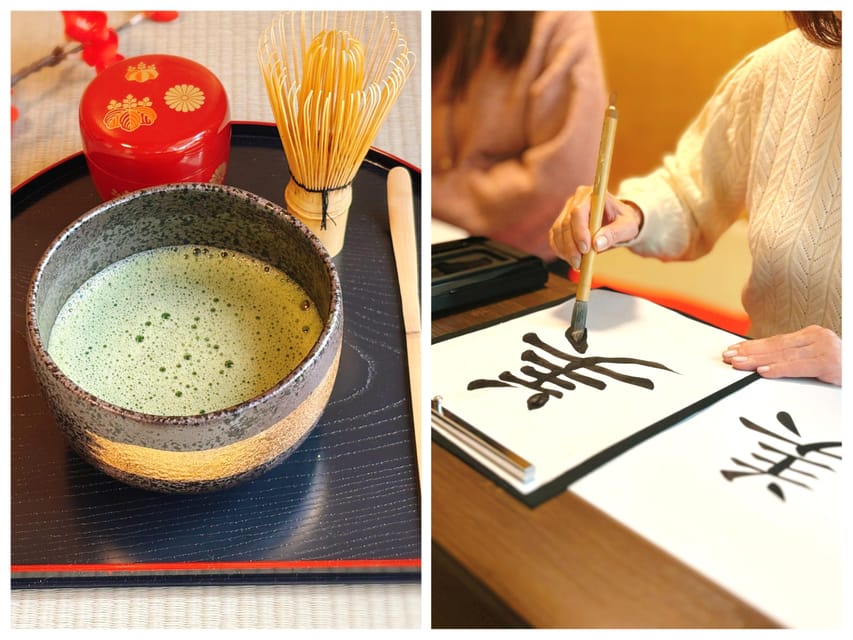
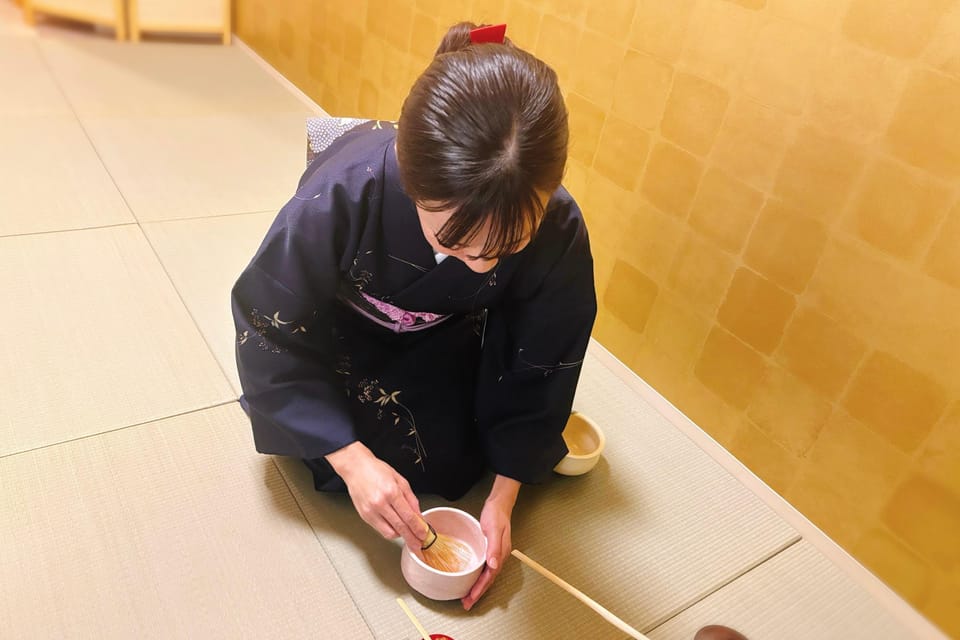
The tea ceremony part is built like a mini lesson plus a do-it-yourself practice. You’ll learn the flow of the ritual, then you’ll make your own matcha—so you understand what’s happening, not just what it tastes like.
One standout detail: you can pick a tea bowl that expresses how you feel that day. That turns something abstract into a personal choice. It also helps you pay attention to the small things—the bowl shape, the way you hold it, the rhythm of the ceremony—because you’re not doing it mindlessly.
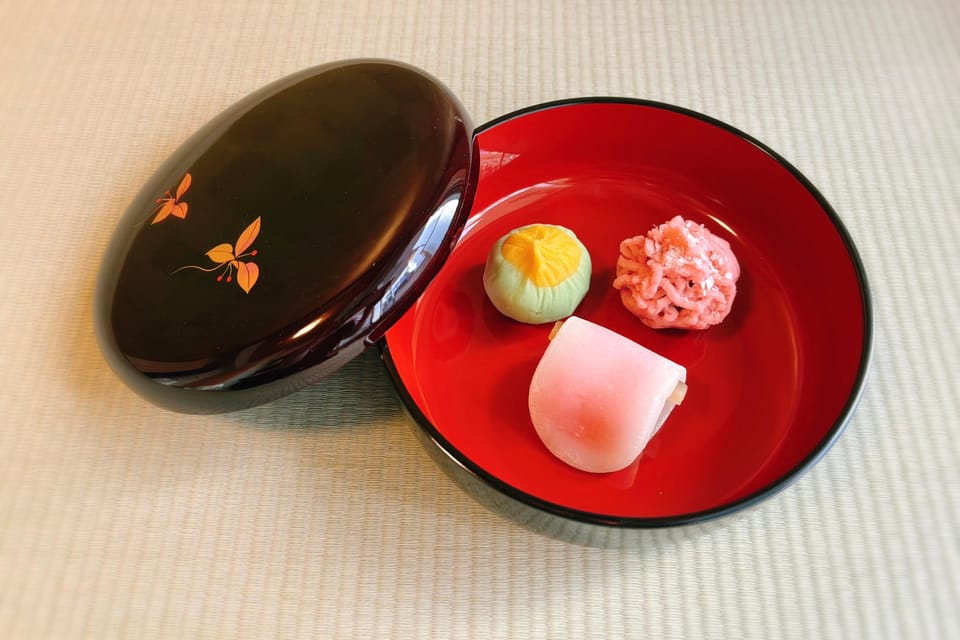
Here’s what you’ll also enjoy: Japanese sweets in two rounds. You’ll sample different types of sweets twice during the ceremony, alongside your matcha. In the learning portion, Wanoma can also explain why sweets and presentation can connect to seasons, which makes the tasting feel less random and more meaningful.
If you’re new to matcha, don’t worry. This is taught as a relaxing experience for beginners. You’ll still learn the basics clearly, and you’ll get to enjoy the taste after the effort of making it yourself.
Practical note: if you have dietary needs, this setup doesn’t list meal restrictions. When that’s the case, your best move is to tell the instructor ahead of time or during the start of class and ask what’s possible with the sweets they have that day.
Calligraphy hour: choose your theme, practice strokes, write your kanji
The calligraphy lesson starts with choice—because this isn’t just about copying. You begin by selecting a theme for what you want to write today. You can tell Wanoma your favorite letters and words, and she’ll guide you toward the best kanji to express yourself.
Then comes the teaching portion: a detailed lecture on basic practices. You’ll get the fundamentals for stroke work before you jump into your final piece. That’s a big deal for first-timers, because brush calligraphy is all about the sequence and pressure, not just “being good at writing.”
After that, you choose your paper. You’ll pick from several types of colored paper—so your finished souvenir won’t look like a plain worksheet. The final steps are personal and celebratory:
- write your name in Japanese characters
- stamp your initials
- you’re done
There’s also a kid-friendly option. For young children, you can do water calligraphy, which prevents messy hands and dirty clothes. If you’re traveling with little ones, that’s one of the smartest ways to keep the experience fun instead of stressful.
And one of the most distinctive highlights here: your name can be converted into kanji based on personality. That adds a story to what you create, which is why this isn’t just a craft project. It becomes a souvenir with meaning.
What makes the souvenir actually feel like yours
A lot of “write something Japanese” stops at a quick attempt. This class goes further by making sure what you end up with reflects your selections and the guidance you receive.
The personality-based kanji idea is the big emotional hook. You’re not just producing a pretty symbol. You’re building a piece that’s meant to represent you, which makes it much more satisfying to hang, frame, or pack carefully in your suitcase.
The colored paper also helps. White paper is fine, but color makes your final work look like art instead of a practice sheet. And the initial stamp gives it that finishing touch that feels official—like you completed a real piece, not just a short trial.
If you like souvenirs with a narrative, this will fit your style. You’ll likely remember the small decisions: the theme you picked, the bowl you chose in tea, the character(s) you practiced, and the stroke corrections you were taught.

Who this is best for (and when to skip)
This experience is ideal if:
- you want a quiet cultural activity that doesn’t require prior knowledge
- you’d rather do one meaningful thing well than many fast things
- you love hands-on learning—especially matcha making and brush work
- you want a souvenir you can say I made this, with actual reason behind it
It can also be a solid option for families, especially if you value an instructor who can adjust pacing. The format explicitly allows you to request slower steps (for example, matching a child’s pace), and it’s taught as a friendly, guided experience.
When to skip: if you’re counting on wheelchair accessibility, the provided information says it isn’t suitable. Also, if you only want a quick tea taste without instruction or craft time, 135 minutes may feel like more than you need.
Price and value: why $64 feels fair for a private class
At $64 per person for about 135 minutes, you’re not paying for a walk-through. You’re paying for a private teaching session with an instructor guiding your tea ceremony and your calligraphy.
Here’s where the value comes from:
- Private attention: your time isn’t split across many people, so instruction sticks.
- Materials included: colored paper for calligraphy is included, so you’re not buying supplies.
- Hands-on matcha: you’re making matcha yourself, and you get the tasting experience built in.
- Sweets included: you’ll have Japanese sweets during the ceremony (twice), which adds to the overall experience.
In plain terms, this is one of the better ways to spend money in Osaka if your goal is cultural learning plus a personal takeaway. If your budget is tight, group classes might look cheaper—but they usually trade away the kind of pacing and focused help that makes this feel calm rather than chaotic.
Should you book Wa No Ma in Osaka?
Yes, if you want a private, calm class that turns Japanese culture into something you can do with your own hands. This is especially worth it when you care about the details: making matcha properly, writing a kanji-related souvenir on colored paper, and getting guided feedback so your piece doesn’t feel random.
I’d book it if you like experiences that give you something to bring home besides photos. Your finished calligraphy is the reason this works. The tea hour is the mood-setter; the calligraphy is the keepsake.
Skip it only if you need wheelchair accessibility, or if you’d rather do a short, low-commitment tea tasting.
FAQ
How long is the Osaka tea ceremony and calligraphy experience?
The experience runs for 135 minutes.
Is this a private experience?
Yes. It’s listed as a completely private group experience with close instructor attention.
What languages are available during the class?
The instructor can work in English and Japanese.
What is included in the price?
All fees and taxes are included, plus colored paper for calligraphy, matcha and various Japanese sweets, and the matcha making experience, along with the instructor.
What should I bring?
You need to bring socks.
Is the experience accessible for wheelchair users?
No. The activity is not suitable for wheelchair users.
Do you offer anything different for young children?
For young children, water calligraphy is offered to help prevent hands and clothes from getting dirty.