REVIEW · OSAKA PREFECTURE
Kyoto private tour (Shore excursion available from Osaka or Kobe port)
Book on Viator →Operated by ALL STAR OSAKA WALK · Bookable on Viator
Kyoto in one day, with no stress. What makes this shore excursion click is the private, national licensed guide and the way you knock out major landmarks without playing transit roulette across town. I also like that entrance fees and lunch are included, so you can focus on the sights instead of tallying tickets. One thing to plan for: you still pay for local transportation on the day, and you’ll do plenty of walking in hot or busy conditions.
This is built for first-time Kyoto visitors who want structure and flexibility in the same package. Your guide meets you at your hotel or at Osaka/Kobe port, and you get a private format with just your group. Start time is 9:00 am, and the day runs about 8 hours, with timing that can shift around cruise docking and departure.
In This Review
- Quick highlights before you go
- Why Kyoto from Osaka or Kobe port actually works
- The private guide effect: what it changes for you
- Stop 1: Kinkakuji Temple and the “instant wow” factor
- Stop 2: Sanjūsangendō’s 1,001 statues moment
- Stop 3: Tatsumi Daimyojin Shrine for a quick Gion taste
- Stop 4: Gion streets—geiko, maiko, and what you should look for
- Stop 5: Fushimi Inari-taisha and the torii gate tunnel
- Lunch, soft drink, and included tickets: where the value shows up
- Price and what you still pay on the day
- Transportation choices: public transit vs a private van
- Photo strategy and stamina for a one-day Kyoto rhythm
- Who should book this private Kyoto shore excursion
- Should you book this Kyoto private tour from Osaka or Kobe port?
- FAQ
- Where does the tour start and end?
- How long is the Kyoto private tour?
- What are the main stops on the day?
- What’s included in the price?
- Do I need to pay for local transportation?
- Is this really a private tour?
- What if my cruise timing changes?
- What about language during the tour?
- Can I cancel and get a full refund?
Quick highlights before you go
- Private guide attention: no merging into a crowd, and you can ask questions along the way
- Ticket-covered icons: Kinkakuji, Sanjūsangendō, Gion, and Fushimi Inari entrance fees included
- Gion photo stop done right: Tatsumi Daimyojin for quick context, then time in the Gion streets
- Fushimi Inari torii gates with time to look: a full stop, not a drive-by
- Lunch and a soft drink included: fewer decisions mid-day when you’re out walking
Why Kyoto from Osaka or Kobe port actually works
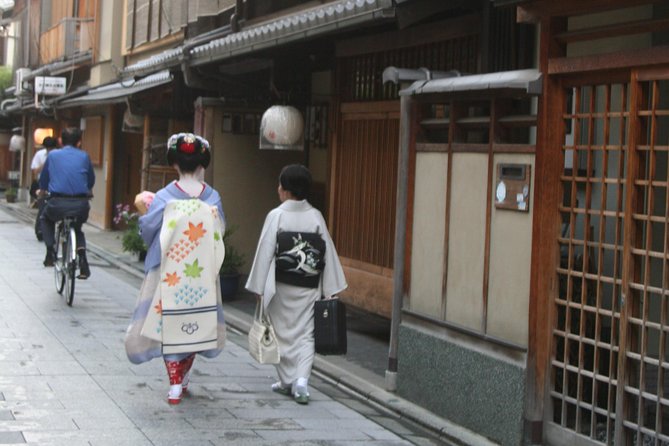
Kyoto gets big fast, and doing it in one day can feel like a sprint. The smartest part of this tour is the time math: you start from Osaka or Kobe, you leave with a plan, and your guide helps you move between neighborhoods without you having to figure everything out alone.
You also get something most DIY days lack: real context while you’re standing in front of the sights. That’s the difference between seeing temples and understanding why they matter to Kyoto and Japan. With a licensed guide, you’ll get clear commentary that keeps the day from turning into a checklist.
Finally, it’s a good fit for cruise travelers and hotel travelers alike because the day is designed around a single, contained window. If your cruise schedule shifts, the route timing can change so you’re not stranded waiting for a fixed plan.
You can also read our reviews of more private tours in Osaka Prefecture

The private guide effect: what it changes for you
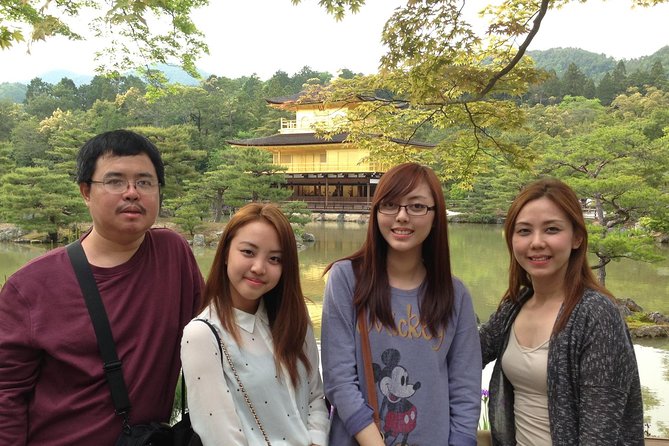
I like private tours because your day stops being generic. If you want more time for photos, you don’t have to ask your way through a sea of strangers. If you’re tired, your guide can pace the stops so you still finish the core highlights.
The guide quality shows up in the details: people mention guides like Asuka H, Kori, Ichiro, Kaori, Kiora, and Keiko for being attentive, organized, and good at English communication. One recurring theme in the feedback is that guides weren’t just reciting facts—they answered questions and adjusted to preferences, including adding options when guests asked for a specific focus.
Another practical win: you’re not pushed through at a hard pace. That matters in Kyoto because lines, crowds, and stairs can slow everything down. When the day runs into the evening darkness for you, having a patient guide makes the difference between frustration and a calm finish.
Stop 1: Kinkakuji Temple and the “instant wow” factor
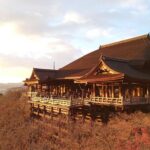
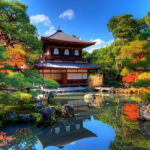
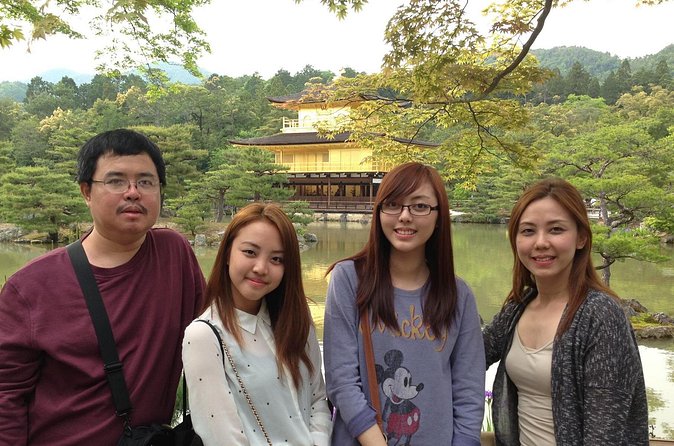
Kinkakuji, the Golden Pavilion, is the kind of place where you understand why people screenshot it. The appeal isn’t just the color—it’s the setting and the feeling that Kyoto can look both historic and cinematic at the same time.
You get about 50 minutes at this stop, with the admission ticket included. That’s enough time to see the main views without rushing, and to notice details beyond the obvious. If it’s crowded, keep your expectations flexible: the best photos sometimes come from small position changes and waiting for a better line of sight.
A small consideration: this stop tends to be popular, so expect crowds. Your guide can help you time your approach and choose viewpoints so you’re not stuck staring at backs of heads the whole time.
Stop 2: Sanjūsangendō’s 1,001 statues moment
Next up is Sanjūsangendō Temple, known for the long hall packed with 1001 Buddhist statues. If you’ve only ever seen a single statue at a time, this stop hits differently—your brain has to switch gears from looking for one hero object to reading an entire scene.
You’ll have about 40 minutes here, and the entrance ticket is included. This is a “slow your eyes” kind of stop. Give yourself time to scan the hall rows and notice how the space feels when you’re surrounded by repeating forms.
The main drawback: it can be physically a bit demanding to look around and stay in place for photos. If you have limited stamina, plan for a few short breaks rather than trying to power through.
Stop 3: Tatsumi Daimyojin Shrine for a quick Gion taste
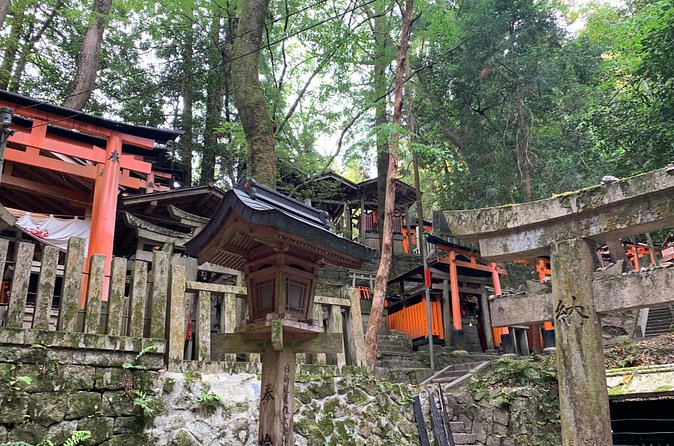
This is the stop that sneaks in atmosphere without taking over the schedule. Tatsumi Daimyojin Shrine is tied to the Gion geisha district, and it’s a great photo moment if you’re walking through the area anyway.
You get around 10 minutes, with admission free. Treat it like a short “context checkpoint.” It helps connect the cultural world behind Gion before you head into the streets.
Because it’s brief, don’t overthink it. Use the time to get a few photos, then move on with energy for the bigger Gion and Fushimi Inari moments later in the day.





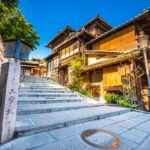
Stop 4: Gion streets—geiko, maiko, and what you should look for
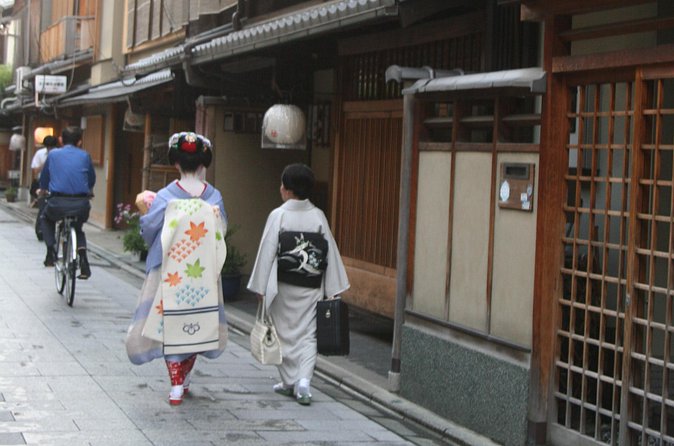
Gion is the Kyoto stop many people picture before they arrive. Here, you get about 30 minutes and the entrance ticket is included. The goal isn’t to hunt for a performance—it’s to understand the neighborhood’s traditional character and the way Kyoto organizes daily life around culture.
You’ll see old tea-house areas and get a chance to recognize the differences in how the district feels day-to-day. If you’re lucky, you might catch a glimpse of geiko or maiko, but the real win is learning what you’re looking at while you’re there.
Two practical tips from how this kind of stop works:
- Go in expecting crowds and narrow sidewalks.
- Let your guide help you find calmer angles for photos so you’re not constantly shuffling for space.
If it’s a hot day, Gion can drain your energy quickly. You’ll be glad you did the indoor-heavy stops earlier (Kinkakuji and Sanjūsangendō) because it gives you variety in your walking load.
Stop 5: Fushimi Inari-taisha and the torii gate tunnel
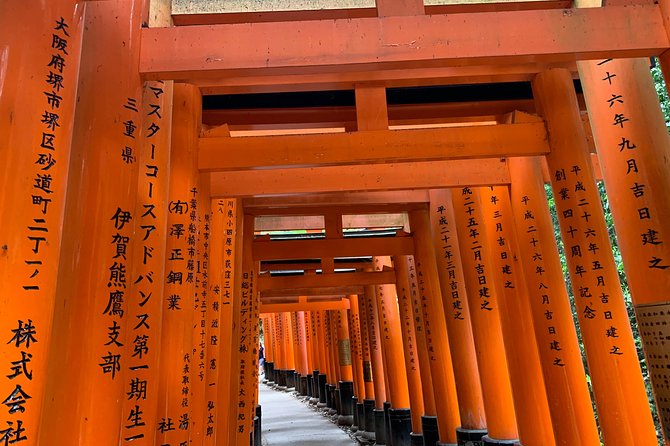
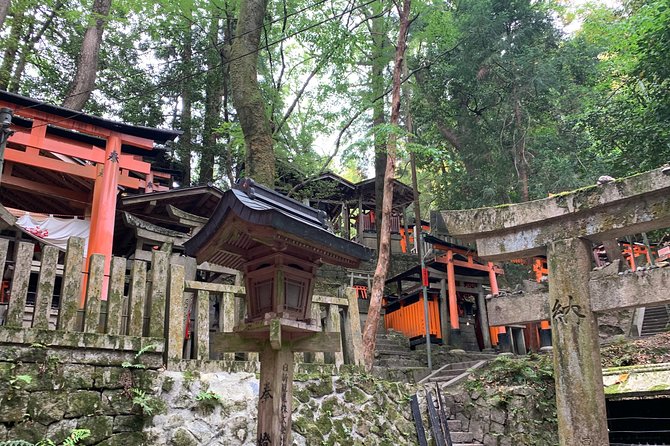
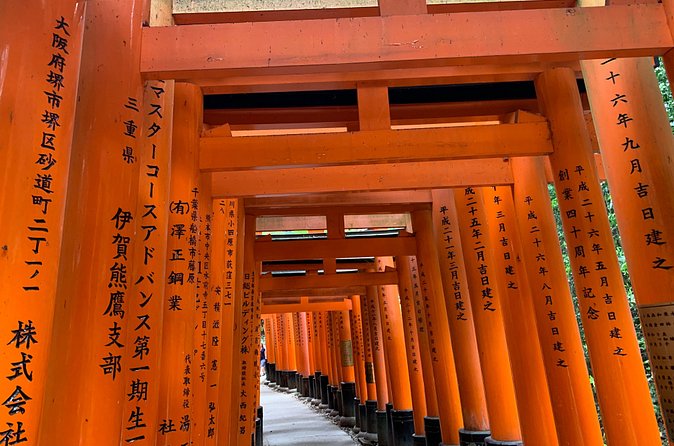
Fushimi Inari is one of those places you hear about for a reason. The famous torii gate tunnel is unique here, and you also get a longer 50-minute stop with admission included.
This is the part of the day where your priorities matter most. Some people want the iconic gate line from the ground level. Others want to climb for deeper views. Since this tour is private, you can usually follow your guide’s pacing choices without worrying about slowing down a whole bus.
One caution: this is also a high-traffic area. Plan to be patient if you hit bottlenecks around the torii corridors. A guide who knows how to manage timing can help you spend your time looking, not waiting.
If you’re doing this on a cruise day, the timing matters. Your guide can help you keep your momentum so you still enjoy the full stop before you head back toward your meeting point.
Lunch, soft drink, and included tickets: where the value shows up
The tour includes lunch and one soft drink, plus entrance fees for multiple stops, including Kinkakuji, Sanjūsangendō, Gion, and Fushimi Inari. That’s a big deal for real-world value because Kyoto attractions can add up fast once you’re paying admissions one by one.
It also reduces decision fatigue. Midway through a long day, having lunch handled means you’re not hunting for a place while you’re already tired and sunburn-prone. People in the feedback also mention enjoying simple fun lunches like conveyor-belt sushi on similar days, which points to the fact that lunch is chosen for ease and enjoyment.
The tour covers guided time and cultural commentary too, which is where you’ll feel the “private” part most. You’re paying for the translation of what you’re seeing into something that sticks after you leave.
Price and what you still pay on the day
At $237.79 per person for an ~8-hour private day, you’re not buying a cheap ticket. You’re buying time, logistics, and guide attention. For many visitors, that’s the best kind of spending in Japan: paying more to remove friction.
But you should budget for transportation, since it’s not included. The tour information gives you a clear range:
- About 7,000–9,000 yen per person using public transport
- From around 6,000 yen per person if you’re a JR Rail Pass holder
- From around 80,000 yen per party (up to 8 people) if you charter a private van
This is also where your comfort level matters. Public transport can work, but the day includes multiple stops and walking. Private van is recommended especially if you expect long walks or you’re traveling during very hot conditions.
So the “value math” looks like this:
- If you travel as a couple or small group and you hate transit stress, a van can be worth it.
- If you’re flexible and want to save money, public transport can keep costs lower.
Transportation choices: public transit vs a private van
The tour lets you choose how you’ll travel during the day, and that choice changes the feel of your day more than most people expect.
Public transport can be great if you like the rhythm of train/subway movement and you’re okay with stairs and walking from station to station. The tour guidance suggests you can do it, and some visitors opted for subway and even Shinkansen routes with their guide shaping the day around preferences.
A private van is the comfort option. Reviews often highlight taxi/van comfort during heat, and one family described how hiring a private driver made the whole day easier when conditions were tough. If you want to conserve energy for sights and photos, van travel can be the difference between enjoying Kyoto and just surviving it.
One more practical note: the tour starts at 9:00 am and ends back at your meeting point. That round-trip structure helps planning, but your transportation method still affects how much you’ll be walking between stops.
Photo strategy and stamina for a one-day Kyoto rhythm
This day is packed, so you need a simple approach. First, decide what you want most: Golden Pavilion views, statue-hall scale, Gion atmosphere, torii gates. Then let your guide help you hit those without wasting time in guesswork.
Stamina is the real deciding factor. The tour is best for people with moderate physical fitness, and you’ll be walking around multiple sites. Plan for:
- Water breaks, especially on warm days
- Comfortable shoes that handle uneven ground
- Quick photo bursts rather than standing in one spot forever
Also, start thinking about light and crowds. Golden Pavilion and Fushimi Inari can get busy. If you care about photographs, you’ll appreciate a guide who can steer you to better angles and manage timing.
Who should book this private Kyoto shore excursion
This tour is especially well-suited if:
- You’re a first-time Kyoto visitor with one day
- You want a private guide who can explain what you’re seeing while you’re seeing it
- You’re traveling from Osaka or Kobe port and want a plan that won’t collapse when schedules tighten
- You prefer “top sights plus context” over deep-only exploring
It’s also a good fit for small groups who want to share costs. One review described a party of 8 using a private van setup, which is exactly where transportation cost can become more reasonable.
If you hate crowds and you’re sensitive to heat, leaning toward the private van option is smart. If you’re cost-conscious and energetic, public transport can still work if you’re okay with walking.
Should you book this Kyoto private tour from Osaka or Kobe port?
Yes—if your goal is a stress-free highlights day with a guide who adjusts to you. The biggest strengths are the private format, the included tickets and lunch, and the way different guides (like Asuka H, Kori, Kaori, and Keiko) seem to bring structure without feeling pushy.
Book it if you want Kyoto’s “greatest hits” in one day and you’d rather pay for logistics than wrestle with transit maps. Consider thinking twice if you’re on a tight budget and you’d rather avoid the extra transportation payments on the day, or if you know you struggle with long walking.
If you match the tour style—one-day focus, moderate stamina, and a desire for clear explanations—you’ll likely leave Kyoto feeling like you understand what you saw, not just that you visited.
FAQ
Where does the tour start and end?
The tour meets you at your hotel or at the Osaka or Kobe port, and it ends back at the same meeting point.
How long is the Kyoto private tour?
It runs for about 8 hours (approx.), starting at 9:00 am.
What are the main stops on the day?
You’ll visit Kinkakuji Temple, Sanjūsangendō Temple, Tatsumi Daimyojin Shrine, Gion, and Fushimi Inari-taisha Shrine.
What’s included in the price?
Lunch and one soft drink are included, along with a national licensed guide, entrance fees, and pickup from your hotel or port.
Do I need to pay for local transportation?
Yes. Transportation is not included, and you’ll pay on the day. The tour information lists expected costs for public transport, JR Rail Pass holders, or chartering a private van.
Is this really a private tour?
Yes. It’s listed as private, meaning only your group participates.
What if my cruise timing changes?
The itinerary and duration may change based on your cruise ship’s docking and departure time.
What about language during the tour?
The tour reviews you provided describe guides as speaking English clearly.
Can I cancel and get a full refund?
Yes. You can cancel up to 24 hours before the experience starts for a full refund. If you cancel later than that, the amount paid is not refunded.