REVIEW · OSAKA
Osaka & Kyoto & Nara Top Hightlights English Speaking Tour
Book on Viator →Operated by Scenic Bend · Bookable on Viator
Kyoto and Nara in one long day. This trip strings together the big hitters: Kiyomizu-dera, the Senbon Torii of Fushimi Inari, and the deer of Nara Park, all with an English-speaking local guide and driver doing the heavy lifting. You’re also smartly given free time at each stop, so you’re not trapped in a lecture hall.
I especially like the tour’s balance of motion and breathing room: you get solid time to wander the old streets and shrine grounds on your own. I also like that it’s built for practical sightseeing, with a mobile ticket and a max group size of 45.
One drawback to consider: the tour ends in Osaka (Shinsaibashi area) and does not return you to Kyoto. If you’re hoping to relax and hop back easily, plan your onward travel before you go—and wear shoes for a lot of walking.
In This Review
- Key points to know before you go
- A value-packed day trip from Osaka to Kyoto and Nara
- Getting to the bus: meeting point, mobile ticket, and what the email tells you
- The 9.5-hour pace: how much time you really get at each place
- Stop 1: Kiyomizu-dera and the Higashiyama street loop
- Stop 2: Fushimi Inari and the Senbon Torii walk
- Stop 3: Nara Park, deer time, and the fun-factor zone
- Stop 4: Todaiji Temple’s Great Buddha—short visit, big impression
- Stop 5: Shinsaibashi for shopping energy and a clean end point
- Optional kimono: adding culture without losing your schedule
- What’s included in the price—and what you’ll still pay for
- Guides can make (or break) the day: what to expect from the human touch
- Common snags to plan for: walking, meeting confusion, and bus comfort
- Who should book this tour, and who should skip it
- Should you book? My call on this Osaka–Kyoto–Nara highlights tour
- FAQ
- How long is the tour?
- What are the main stops during the day?
- Is admission included for all temples?
- Does the tour return you to Kyoto?
- Is food included?
- Is a kimono experience included?
- Do I get a ticket on my phone?
- How big is the group?
Key points to know before you go
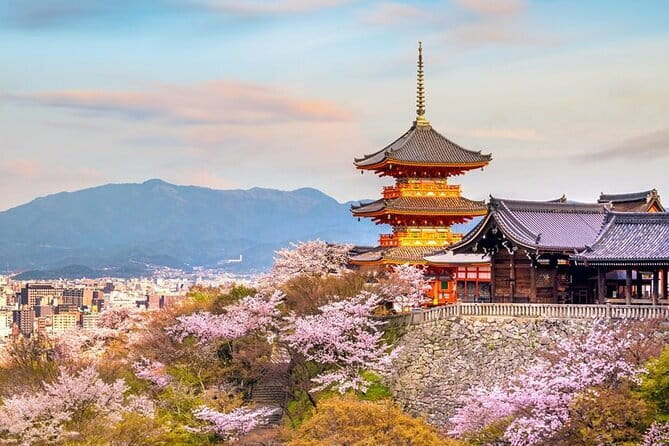
- Senbon Torii time counts: You get about 70 minutes at Fushimi Inari to explore at your own pace, with admission included.
- Higashiyama streets with a temple stop: Kiyomizu-dera is paired with Nineizaka, Sannenzaka, Ishibei-koji, and Hanamikoji for a classic Kyoto feel.
- Nara Park is free-time focused: About 1.5 hours to enjoy the deer and the park atmosphere.
- Todaiji is short and sweet: Only around 20 minutes there, so go in with a game plan.
- You end in Shinsaibashi, not Kyoto: This affects return plans, especially if you started from Kyoto.
- Guides vary by personality: Some guides shine with clear explanations; others keep things light—so having your own notes helps.
A value-packed day trip from Osaka to Kyoto and Nara
For $54, this is a “see a lot, think less” kind of day. And that’s not an insult—it’s the point. You’re bundling major Kyoto and Nara icons into one organized route, with transportation and an English-speaking guide baked in.
What’s included matters for your budget. You’re paying for the vehicle costs (including fuel and highway tolls), plus the driver, plus a tour guide. What’s not included is food and drinks, and some temple admissions (more on that below). So if you usually spend big on guided full-day trips, this one often feels like a bargain because you’re not separately ticketing transport or paying for every entryway.
The other value piece is time management. The day runs about 9 hours 20 minutes, but not because it’s padded with museum stops. It’s structured around travel time and lunch time, then mostly shrine-and-temple walking.
You can also read our reviews of more tours and experiences in Osaka.

Getting to the bus: meeting point, mobile ticket, and what the email tells you
The tour starts at 1-chōme-3-6 Nipponbashi, Chuo Ward, Osaka (542-0073). The group meets there at pickup time, and you also end at that same Osaka address in the baseline plan. But there’s an important twist: if you board from Kyoto (or choose the “pickup and drop-off combo” mentioned), you’ll be dropped in the Shinsaibashi area after the tour ends.
The night before, you should receive a departure reminder email. It includes:
- a vehicle registration number
- the guide’s contact information
- your pickup time
The guide doesn’t initiate contact with guests, so don’t count on a text or phone call to find you. Be at the listed spot and be ready to go.
One more practical note: the tour runs with a maximum of 45 travelers, and the pace is shared by everyone in the group. That means you’ll have moments where you’ll follow along in a cluster, then suddenly you’re off on your own for free time.
The 9.5-hour pace: how much time you really get at each place
This trip is not a slow cultural walk. It’s a highlights sampler with real walking involved.
Here’s the time shape you’re working with:
- Kiyomizu-dera: about 2.5 hours total (including lunch time)
- Fushimi Inari: about 70 minutes (free time)
- Nara Park: about 1.5 hours (free time)
- Todaiji Temple: about 20 minutes
- Shinsaibashi: about 1 hour
Also expect schedule flexibility. Weather and road conditions can adjust timing. And traffic jams can happen on weekends and red days.
If you’re the type who wants to linger, you’ll need to prioritize what you care about most. The tour can’t give everyone a long “deep dive” at every stop. It gives you smart hits and then lets you wander briefly at each one.
Stop 1: Kiyomizu-dera and the Higashiyama street loop

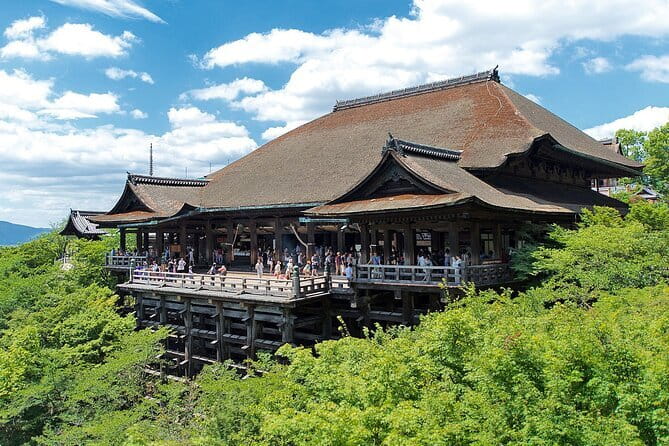
Kiyomizu-dera is the big centerpiece here, and you get enough time to do it justice without feeling rushed off a map.
The plan pairs the temple with the famous walking streets around it: Nineizaka, Sanneizaka, Ishibei-koji Alley, and Hanamikoji Street, plus Yasaka Shrine. This is a classic Kyoto combo because it mixes architecture and atmosphere—temple views plus the old-street feel.
Admission for Kiyomizu-dera is not included, so budget for that entry. Since lunch time is part of the Kiyomizu-dera block, you can take care of food right in the Higashiyama area rather than treating this as a “starving until dinner” kind of tour. Food and drinks aren’t included, so plan to buy as you go.
What to watch: Kiyomizu-dera and these streets can get packed. Go slow on the stairs and slick stone edges if the weather is damp. Also, bring patience. Even when the schedule is tight, the crowd flow is the real boss of the day.
Stop 2: Fushimi Inari and the Senbon Torii walk
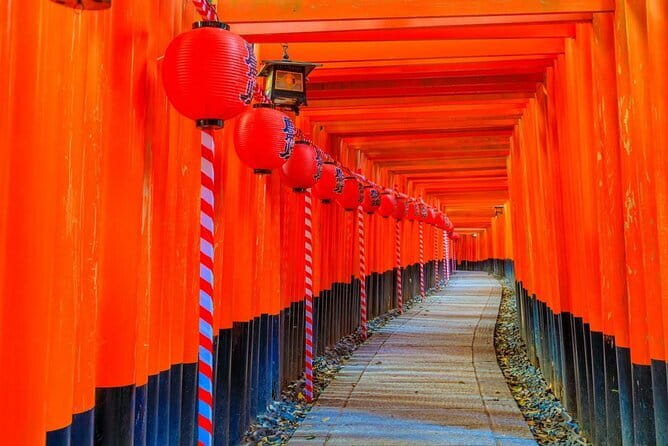
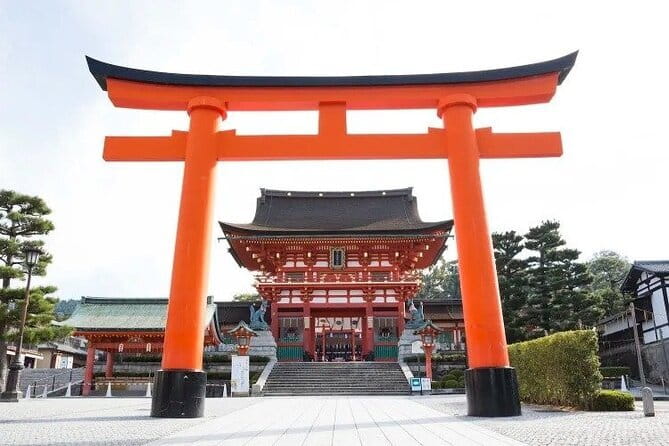
Fushimi Inari-taisha is the shrine most people picture when they think of Kyoto tourism. The headline feature is the Senbon Torii: the rows of torii gates that climb into the hills.
You’ll get about 70 minutes there, with free time to wander and decide how far you want to go. Admission is included here, which is a nice break on your wallet compared with the other temple stops.
The best way to enjoy this stop is to treat it like a photo-and-walking route rather than a single “stand and stare” moment. If you want wide views, plan to move steadily uphill. If you just want the gates and atmosphere, you can still have a great visit without pushing far into the longer trail sections.
Since it’s free time, your guide’s role becomes more about getting you started smoothly: where to head first, what to notice, and how to manage your walking time.

Stop 3: Nara Park, deer time, and the fun-factor zone
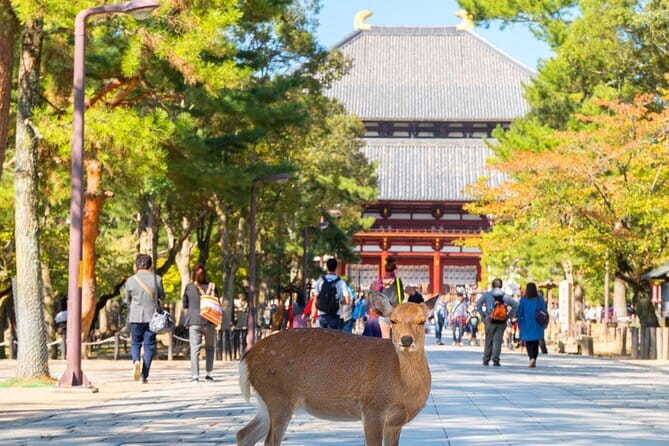
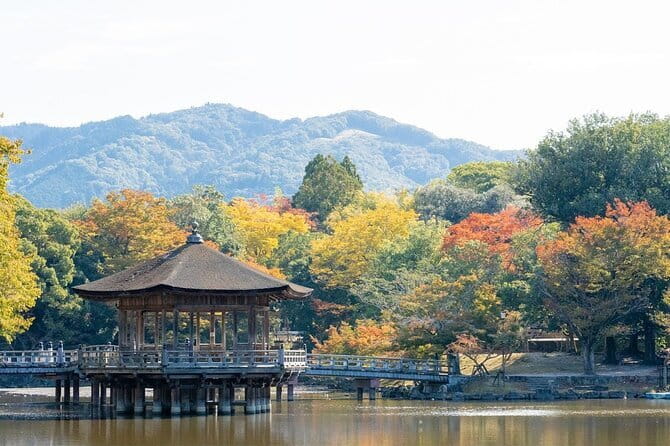
Nara Park is one of those places where the mood changes the second you arrive. The main draw is the deer—friendly, curious, and very confident about being part of your day.
You get around 1.5 hours of free time here. That’s enough to enjoy the park setting, spot deer from multiple angles, and still not feel like you’re trapped for half a day.
A real tip from the nature of the experience: if you want to feed the deer, don’t assume everything will be handed to you. Some guides manage the details smoothly; others may not have a clear answer on where deer snacks are sold. If feeding matters to you, ask early and confirm on the ground.
The park is also a good place to re-center your energy. This is where you can slow down, drink water, and let your legs reset before the short final temple stop.
Stop 4: Todaiji Temple’s Great Buddha—short visit, big impression
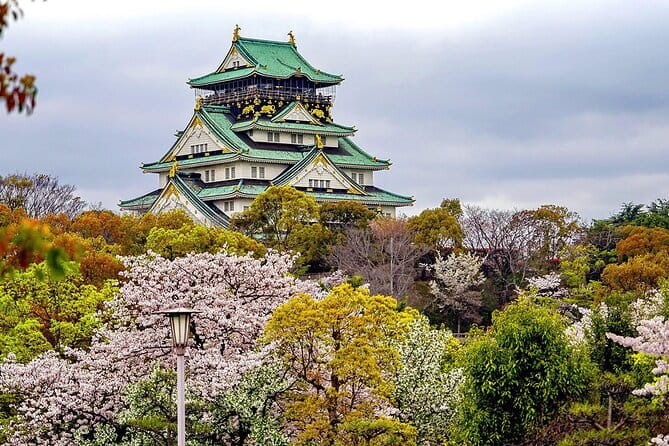
Todaiji Temple (home to the Great Buddha) is the star here, but the time is tight. You’ll have only about 20 minutes, and admission is not included.
So treat it like a “see the main things” stop:
- Get oriented fast once you arrive
- Focus on the principal hall and the Great Buddha area
- Enjoy the scale without expecting a leisurely stroll and long detour time
If you want to read every sign and wander all side corridors, this is probably not the tour for that kind of day. If you want to check Todaiji off your list and spend your energy elsewhere, this timing works.
Stop 5: Shinsaibashi for shopping energy and a clean end point

After the temple and park rush, the tour ends with about 1 hour in Shinsaibashi—a lively Osaka shopping district.
If you started in Kyoto, the tour may drop you directly in the Shinsaibashi area (Namba / Osaka Nihonbashi Exit 2 is mentioned). This matters because it changes how you travel next. Some people expected to be brought back to Kyoto; you generally won’t be. Your Osaka-based finish is great if you want shopping, casual dining, and an easy place to regroup. It’s less great if your plan depends on returning to Kyoto the same night without extra thinking.
Optional kimono: adding culture without losing your schedule
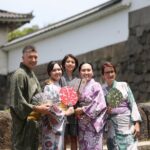
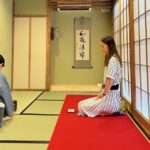
There’s an optional kimono experience available if you reserve in advance. The practical win here is simple: kimono photos in Kyoto look better when you plan for them instead of trying to wing it mid-day.
The risk is also practical. If you choose kimono, it can add time pressure. This tour already runs on defined blocks, so if you add an extra activity, be sure it’s reserved for a way that fits the day.
If the kimono is your main goal, you might consider how much of your time you want to spend walking in traditional footwear and how weather could affect comfort.
What’s included in the price—and what you’ll still pay for
Your $54 goes toward:
- the vehicle service charges, fuel, and highway tolls
- driver and guide service fees
- a tour guide
You will still likely pay for:
- Food and drinks
- Temple admissions that are excluded, including Kiyomizu-dera and Todaiji Temple
- Anything personal you decide to buy
Fushimi Inari admission is included, and Nara Park is free to enter (as the tour describes it). That mixed model is common for multi-stop highlight days, and it means your total cost will swing based on how many paid sites you hit and how you eat.
My budgeting advice: carry a credit card and some cash, plan for temple entries, and treat meals as flexible. You’ll be surrounded by snack and meal options near Kiyomizu-dera and around Nara.
Guides can make (or break) the day: what to expect from the human touch
This tour has a local driver and a guide, and the guide experience varies by day and person. In the feedback, guides like Kou Ran (Kosa) and Anna are praised for making people feel informed and ready for the route. Others like Yang, Lou, Amy Ono, Jason, and Eigai show up in good comments for being clear with time and helpful with historical context.
Here’s what that means for you: you should expect some explanation, but don’t assume it will be equally detailed at every stop. If you want deeper stories, do a little prep before you go—just enough to know what you’re looking at when you arrive.
If you prefer minimal talk and maximum wandering, you’ll probably still be happy, since there’s plenty of free time at Fushimi Inari and Nara Park.
Common snags to plan for: walking, meeting confusion, and bus comfort
Even a well-run day can hit friction. The main issues that show up in real-world experiences are:
- Meeting point confusion: Osaka pickup points can be hard to spot if GPS points you somewhere nearby rather than the actual bus-waiting spot. Give yourself buffer time and use the listed address, not just a wandering map pin.
- Short stop feel: Todaiji is only about 20 minutes. That can feel abrupt if you’re expecting more of a guided walk-through.
- Leaving in Osaka, not Kyoto: If your plan includes a same-day Kyoto return, you’ll need to handle that travel yourself after the Shinsaibashi stop.
- Bus comfort: One comment mentions weak air conditioning in warm weather. If you’re traveling in summer, dress in layers you can manage, and bring something light for comfort.
The simple fix is mindset: this is an efficient route. You’ll spend more time walking than sitting, and you’ll have to manage your own comfort and timing during free time blocks.
Who should book this tour, and who should skip it
This is a great fit if you:
- want to hit Kiyomizu-dera, Fushimi Inari, and Nara deer in one day
- like getting out early and then having structured breaks
- don’t need a long guided essay at every stop
- prefer a single English-speaking organizer handling transportation
It might not be ideal if you:
- want to spend hours inside each major site
- want to return to Kyoto at the end of the day without extra travel
- hate walking and stairs without a longer buffer
- expect very deep commentary during every stop
If you’re a first-timer, this can be a solid “outline of the region.” Then you can come back later for slower, more focused days.
Should you book? My call on this Osaka–Kyoto–Nara highlights tour
I’d book this if your goal is highlights, not scholarly depth. The timing is tight, but you do get a classic mix: Higashiyama streets and Kiyomizu-dera, the Senbon Torii experience, Nara’s deer energy, and a quick Todaiji stop—then you finish in Shinsaibashi where you can still enjoy Osaka.
Skip it (or at least be cautious) if you’re counting on long temple time or you need to end back in Kyoto. The route ends in Osaka, and the short stops mean you’ll have to choose what to focus on.
My practical strategy: pick your top priority before you go. Want the gates? Put your energy into Fushimi Inari. Want the vibe and views? Spend your best moments in Higashiyama. Want the full-scale Todaiji moment? Be ready to move quickly once you arrive.
If that sounds like your style, this one is good value for a memorable first pass through the region.
FAQ
How long is the tour?
It runs about 9 hours and 20 minutes (approx.), with the schedule covering travel time plus lunch time and fixed time blocks at the main stops.
What are the main stops during the day?
You visit Kiyomizu-dera Temple, Fushimi Inari-taisha Shrine, Nara Park, Todaiji Temple, and Shinsaibashi in Osaka.
Is admission included for all temples?
No. Kiyomizu-dera and Todaiji Temple admissions are excluded, while Fushimi Inari-taisha admission is included. Nara Park is described as free.
Does the tour return you to Kyoto?
No. The tour group ends in Osaka (with drop-off in the Shinsaibashi area for some pickup combos). It does not return to Kyoto.
Is food included?
No. Food and drinks are not included in the price.
Is a kimono experience included?
An optional kimono experience is available, but you need to reserve it in advance. The standard tour includes the sightseeing stops, not the kimono by default.
Do I get a ticket on my phone?
Yes. The tour uses a mobile ticket.
How big is the group?
This activity has a maximum of 45 travelers. It’s designed for daily departures as well, with at least one traveler required to depart.