REVIEW · OSAKA
Calligraphy Workshop in Namba, Dotonbori
Book on Viator →Operated by Calligraphy Workshop · Bookable on Viator
Brush and ink in downtown Osaka.
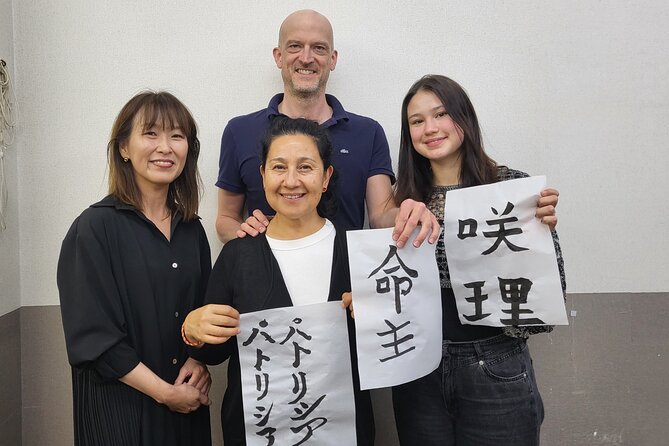
This calligraphy workshop in Namba turns a busy area like Dotonbori into a calm, hands-on class where you write Japanese characters with a brush and ink, even if you’re starting from zero. You’ll also get a keepsake at the end by writing your name on colored paper or a name tag.
I especially like that instruction is broken down step by step for beginners, with the instructor guiding your strokes so you don’t feel lost. I also like the cultural context: you’re not just copying shapes—you learn what calligraphy (shodo) means in Japanese culture and how the process connects to focus and discipline.
One possible drawback to plan for: the meeting spot is on the 3rd floor of a specific building in Nanbanaka, so give yourself a little extra time to find the room and elevator area, especially if signage feels unclear.
In This Review
- Key things to know before you go
- Getting Oriented in Namba: Your Workshop Start in Nanbanaka
- Two Hours of Shodo: What You Actually Learn and Practice
- Writing Your Name in Kanji or Katakana for a Take-Home Keepsake
- Meet the Teachers: Nao, Stephan/Stephen, Shaun, and Sensai Coaching Style
- Keeping It Flexible: How Namba Lets You Pair This With Dotonbori and Kuromon
- Price and Logistics: Is $49.54 Worth It for 2 Hours?
- Who This Shodo Class Fits Best (and Who Might Want Another Option)
- Should You Book This Calligraphy Workshop in Namba?
- FAQ
- How long is the calligraphy workshop in Namba?
- What will I make or take home?
- Can beginners join even if they have never written Japanese calligraphy before?
- Where is the meeting point?
- How big is the class group?
- Is there translation or English support?
- How do I get the ticket?
- Is the location easy to reach with public transportation?
- What is the cancellation policy?
Key things to know before you go
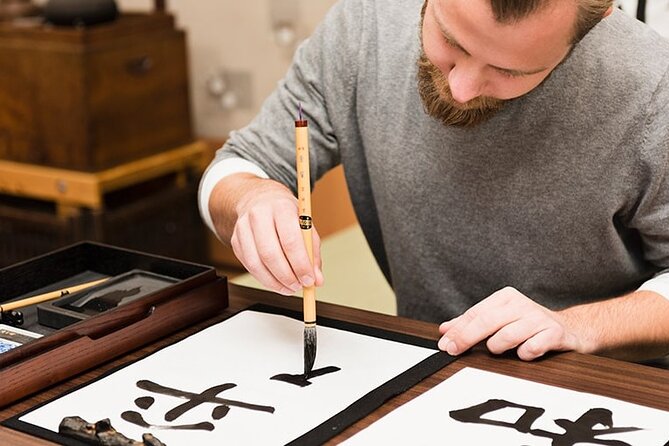
- Beginner-friendly shodo with step-by-step guidance
- Small group size (maximum 6 people), so you get attention
- You write your name in kanji or katakana to take home
- Brush-and-ink practice in a short, doable 2-hour format
- Teachers include clear English support, such as Stephan/Stephen and instructor Nao
- Great add-on location for Dotonbori, Nihonbashi, and Kuromon Market the same day
Getting Oriented in Namba: Your Workshop Start in Nanbanaka
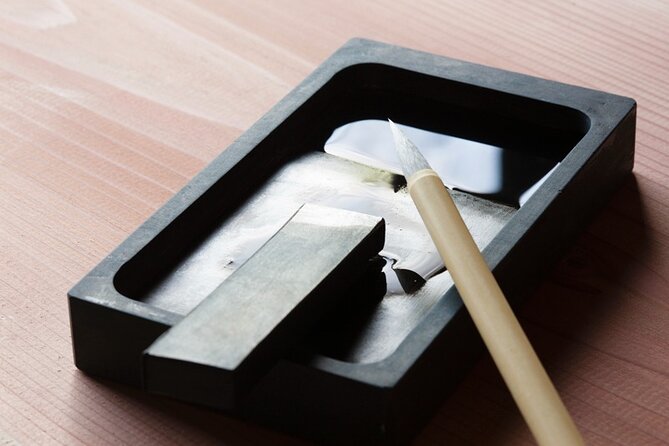
Your day begins in central Osaka’s Namba area, specifically around Nanbanaka in Naniwa Ward. The meeting point is at イスク英語学院Japan, 556-0011 Osaka, Naniwa Ward, Nanbanaka, 1-chōme61 タケダビル 3F. The workshop ends back at the same place, so you can plan your next stop without worrying about getting stranded across town.
The address matters here because the workshop is not in a giant tourist complex. It’s in a building with a specific floor, and that makes timing important. I recommend arriving a few minutes early, not because the class runs long, but because you want your energy for the ink and brush part, not for sprinting up stairs.
Good news: the area is described as near public transportation, so you can stitch this into a broader Osaka day. And since it’s Namba, you’re already close to the classic sights like Dotonbori and the food streets near Kuromon Market.
You can also read our reviews of more tours and experiences in Osaka


Two Hours of Shodo: What You Actually Learn and Practice
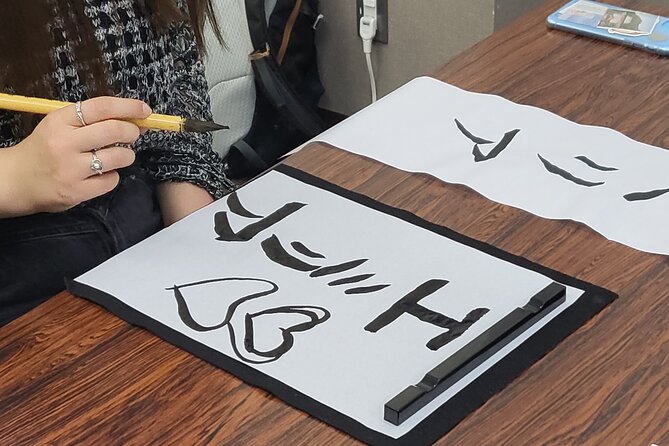
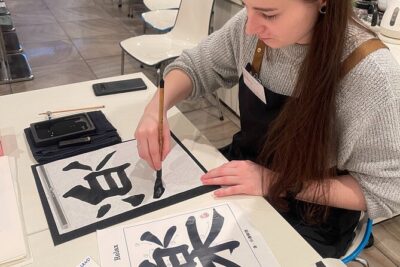
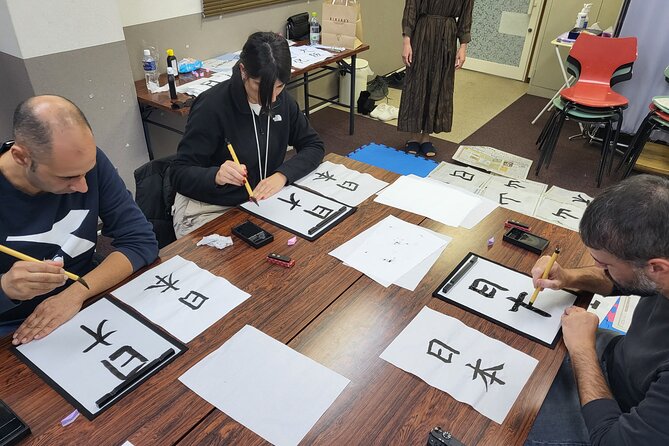
This is a 2-hour calligraphy workshop designed for short attention spans and real beginners. You’ll learn how to write Japanese characters using a brush and ink, and you’ll do it step by step. That doesn’t mean it’s watered down. It means you get a roadmap for how to hold the brush, how strokes flow, and how to think about the character you’re making.
A big part of the value is that you’re taught how to approach the writing, not just what it looks like on paper. You’ll learn some of what makes Japanese calligraphy distinctive, including the concept of shodo and how people view the act of writing as a mindful process.
Inside the 2 hours, expect the workshop to move through a loop:
- explanation and modeling by the instructor
- guided practice on your characters
- refinement until your name looks like something you’d actually want to keep
That rhythm is why this works even for people who think they have no artistic talent. Calligraphy isn’t about being naturally “good at drawing.” It’s about following instruction, taking your time, and learning the logic of strokes.
Writing Your Name in Kanji or Katakana for a Take-Home Keepsake
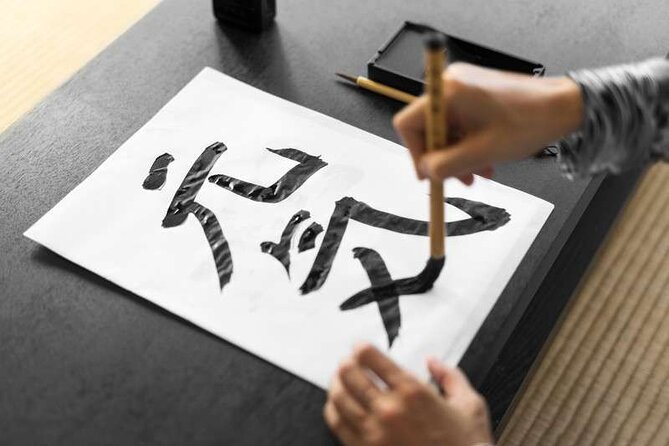
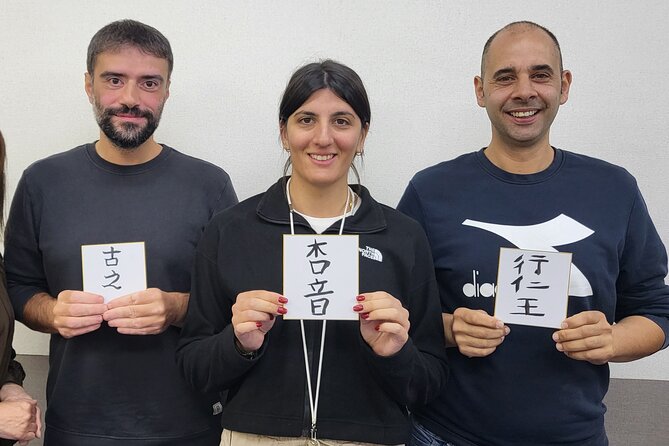
The centerpiece of the class is simple: you write your own name in Japanese, in kanji or katakana. You’ll start with the core character-writing practice and then finish by creating a one-of-a-kind souvenir.
What makes this memorable is the format of the final piece:
- you write your name on colored paper, or
- you write your name on a name tag
That last step turns the workshop from a “cool thing I did” into something that sits on your shelf, on your wall, or on your bag. And it’s not just a random craft. It’s your actual name in Japanese scripts, made through brush-and-ink work, which is exactly the kind of takeaway that feels personal.
Also, you’ll likely feel a difference by the end. Calligraphy has a way of slowing people down. The strokes force you to concentrate. Several class experiences describe it as peaceful—especially in the middle of a busy city. That’s the best part: you get a calm pocket of time in the middle of Osaka noise.
Meet the Teachers: Nao, Stephan/Stephen, Shaun, and Sensai Coaching Style
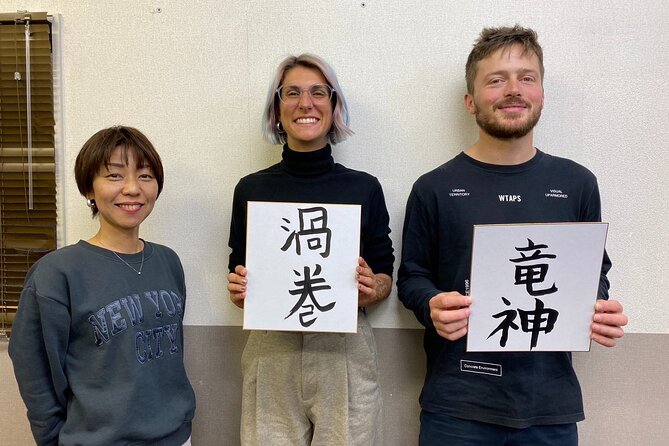
The teaching approach here is part of why people rate this so highly. The instruction is described as clear, patient, and supportive, and you’ll often have an interpreter helping you understand what the instructor is saying.
Names that come up include:
- Nao (calligraphy teacher)
- Stephan/Stephen (English translator support)
- Shaun and Sensai (also noted as leading the workshop)
What I like about this setup is that the “why” and the “how” both get covered. You learn the meaning and history behind the word shodo and how to think about what you’re doing. Then you get hands-on coaching. That combination stops calligraphy from feeling intimidating.
If you’re doing this with kids or a mixed group, the instruction style also matters. Reviews mention patient guidance and a calm atmosphere, and kids around age 9 to 11 have had a great time. For families, that’s huge. It means you can bring kids without worrying the class will be too technical or too rigid.
And if you’re traveling solo, the small group format helps you feel less rushed. A class with up to 6 people tends to give you time for questions and corrections.
Keeping It Flexible: How Namba Lets You Pair This With Dotonbori and Kuromon
One of the smartest reasons to book this in Namba is location. The workshop area is close to Dotonbori, Nihonbashi, and Kuromon Market, so you can build a full day around it.
Here’s a practical way to structure your timing:
- If you want food and lights first: head to Dotonbori before class, then treat the workshop as your reset button.
- If you want a slower pace: visit Kuromon Market and Nihonbashi after class while you still have momentum.
Because the class is only 2 hours, it won’t hijack your whole schedule. You can do this as:
- a cultural break in the middle of a sightseeing day, or
- an earlier-day activity that leaves you free for evening street food
If you’re the type who likes “one meaningful thing” and then wandering, this fits that style well. Osaka can be loud and crowded, but this workshop gives you a quieter experience that still feels authentically Japanese.


Price and Logistics: Is $49.54 Worth It for 2 Hours?
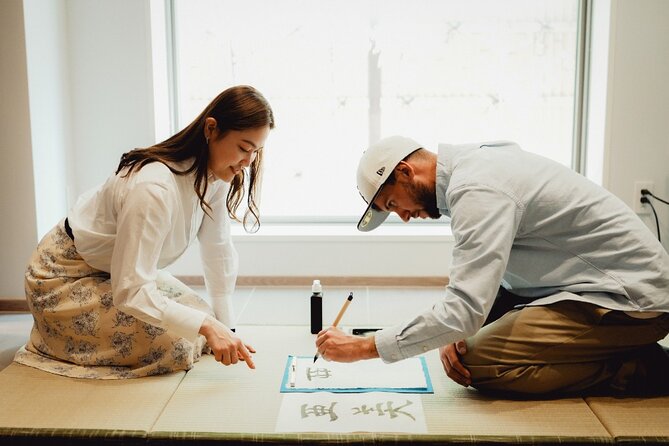
At about $49.54 per person for roughly 2 hours, you’re paying for more than desk practice. You’re paying for a teacher-led experience with brush-and-ink coaching, plus the chance to take home a finished handwritten souvenir.
Is it expensive? For Osaka, it’s not a bargain-basement workshop. But it’s also not a tourist-trap “watch someone write while you color.” You’re actively writing your name. You also get cultural context and English translation support during the class.
Two other value signals show up in the details:
- Small group size (maximum 6) means you aren’t sharing attention with a crowd
- Beginner-friendly step-by-step instruction reduces the risk of leaving disappointed
One logistics consideration you should keep in mind: the meeting point is in a building with a specific floor (3F). That’s minor, but it can be annoying if you show up stressed. Plan a bit of buffer so the first thing you do isn’t hunting for the right hallway.
Also, the workshop uses a mobile ticket. That’s convenient, but you’ll want to make sure your phone battery is healthy. In Japan, it’s easy to spend a whole day with battery drain from maps, photos, and messaging.
Who This Shodo Class Fits Best (and Who Might Want Another Option)
This workshop is built for beginners. That matters because calligraphy often scares people off. Here, the instruction is designed so you can participate even if you’ve never held a brush before.
I think this is a great match if you:
- want a hands-on cultural activity in a short time
- like take-home souvenirs that feel personal
- are traveling as a family and want something calmer than street food marathons
- want English support while learning a traditionally hands-on skill
It may be less ideal if you’re expecting a heavy museum-style lecture. This is practical. You’ll learn the meaning and context, but the main action is writing. The upside is you don’t leave empty-handed—your name in kanji/katakana is the payoff.
If you’re on a tight schedule in Namba, it’s still workable. Two hours is enough for a real skill moment without cutting into everything else you want to do.
Should You Book This Calligraphy Workshop in Namba?
If you want one activity in Osaka that feels both authentic and satisfying, I’d book it. The class checks a lot of boxes: beginner step-by-step guidance, hands-on brush-and-ink practice, and a take-home name souvenir in kanji or katakana. Plus, you’re right where you can turn around and hit Dotonbori, Nihonbashi, or Kuromon Market afterward.
Book it especially if you’ve been thinking about shodo but worried you’d feel out of place. The format is designed to make writing your name doable, even for first-timers.
On the other hand, if you hate structured activities or you’re hunting for a giant sightseeing payoff, this might feel too quiet. But if you enjoy focused, small-group cultural practice, this is a strong choice.
FAQ
How long is the calligraphy workshop in Namba?
The workshop runs for about 2 hours.
What will I make or take home?
You’ll create a handwritten souvenir by writing your name in Japanese. It’s done on colored paper or on a name tag.
Can beginners join even if they have never written Japanese calligraphy before?
Yes. The class is designed for beginners, with the instructor giving detailed, step-by-step guidance.
Where is the meeting point?
You meet at イスク英語学院Japan, 556-0011 Osaka, Naniwa Ward, Nanbanaka, 1-chōme61 タケダビル 3F.
How big is the class group?
The workshop has a maximum of 6 travelers.
Is there translation or English support?
The class includes translators, with English support mentioned in experiences you can read about, such as Stephan/Stephen.
How do I get the ticket?
You receive a mobile ticket.
Is the location easy to reach with public transportation?
Yes, the meeting point is described as near public transportation.
What is the cancellation policy?
You can cancel for a full refund if you cancel at least 24 hours before the experience’s start time. If you cancel less than 24 hours before, the amount paid is not refunded.