REVIEW · OSAKA
Osaka Dotonbori: Sushi Making Experience
Book on GetYourGuide →Operated by 株式会社SALTE · Bookable on GetYourGuide
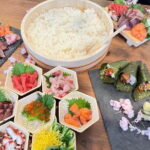
Sushi making in Osaka turns dinner into a hands-on skill. In Dotonbori, you’ll follow a simple, guided flow to make sushi rice, shape it, add neta (toppings), and finish your own pieces with help from English-speaking sushi masters like Mako and Saki. I love the mix of technique plus fun, and I especially like the promise of 12 pieces you’ll eat right after.
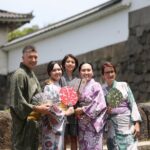
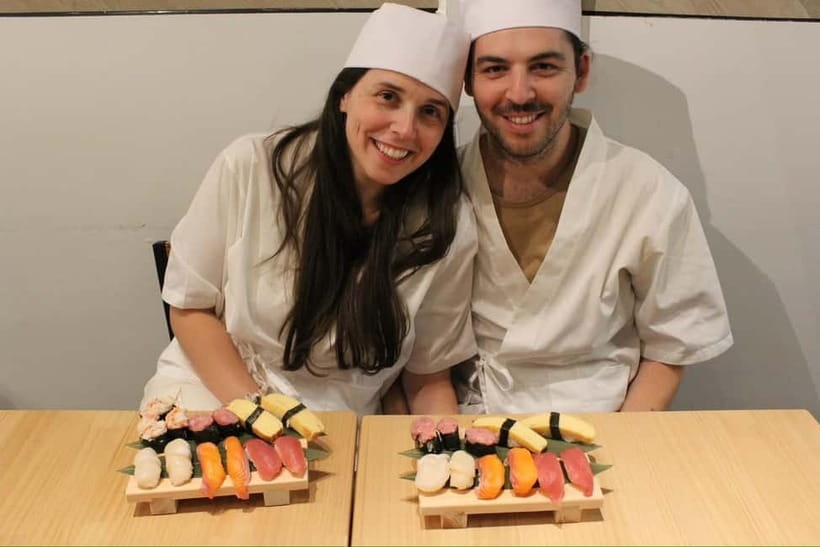
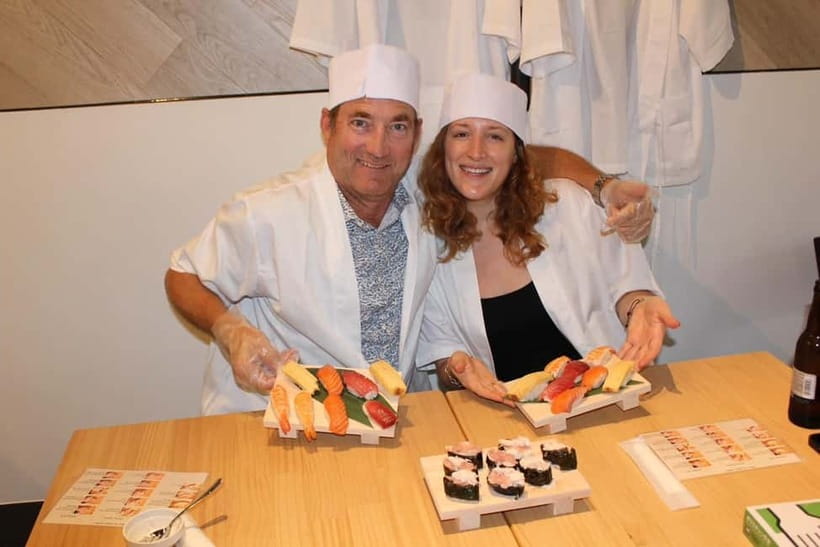
I also like how the class builds in Japanese culture in a playful way, not a lecture: Japanese sake with your sushi, plus sushi-cosplay and a photo moment. Depending on your session, hosts such as Mika, Yui, Yumiko, or Anri may run your table, and the tone stays light without getting sloppy.
One thing to consider: Dotonbori is busy, and it can be a little tricky to find the exact spot. If your directions are off (or you’re arriving at peak foot traffic), give yourself extra time so you don’t start the class stressed.
In This Review
- Key Points You’ll Care About
- Dotonbori Sushi Class: Why This One Works
- The 90-Minute Timeline: From Shari to Your Finished Pieces
- 1) Making the shari (sushi rice)
- 2) Shaping the rice ball
- 3) Adding neta (toppings) with wasabi
- 4) Final shaping with your fingers
- What You’ll Actually Learn (Beyond Just “How to Fold”)
- Sake, Sushi Cosplay, and the Fun Parts That Don’t Feel Forced
- Price and Value: Is $45 Worth It in Osaka?
- Dietary Options: Vegan and Halal Without the Headache
- Who This Class Suits (and Who Might Want a Different Plan)
- Practical Tips So You Enjoy It From Minute One
- Should You Book This Sushi Making Experience?
- FAQ
- FAQ
- What is the duration of the Osaka Dotonbori sushi making class?
- How much does it cost per person?
- How many pieces of sushi will I make?
- Is Japanese sake included?
- Will the class be taught in English?
- Are vegan or halal options available?
- What’s included besides the sushi ingredients?
- Is there a cancellation policy?
- Is the activity wheelchair accessible?
Key Points You’ll Care About
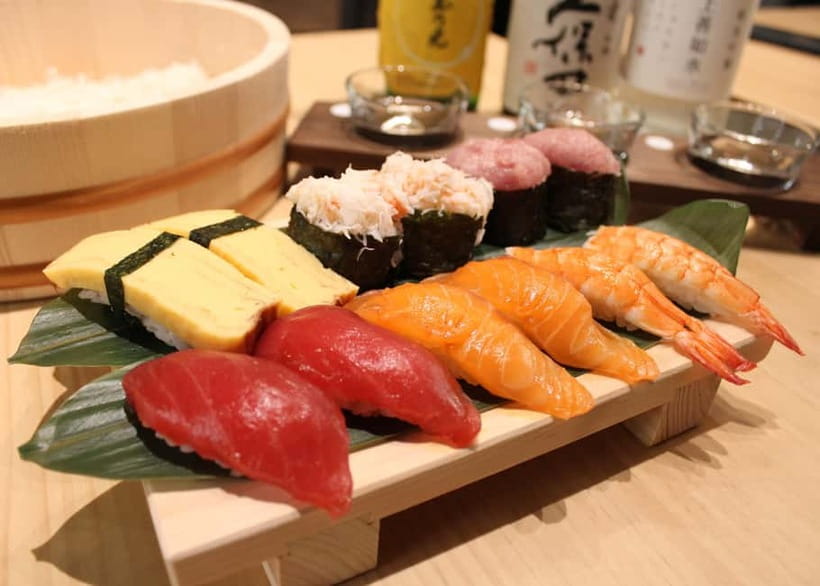
- 12 pieces of sushi made by you, not just watched
- Step-by-step shari to shaping to neta assembly, taught in English
- Sake tasting paired with what you make
- Sushi-cosplay and photos, plus a small special gift at the end
- Vegan and halal sushi options are available
- You get a certificate of sushi master after class
Dotonbori Sushi Class: Why This One Works
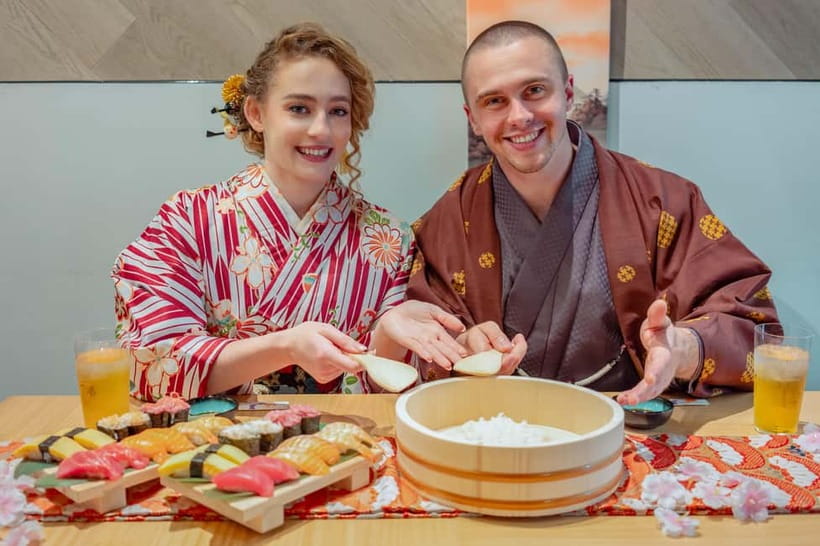
Osaka’s Dotonbori area is known for lights, crowds, and food you can smell from blocks away. What makes this sushi experience worth your time is that it slows everything down. Instead of only eating, you learn how sushi is built—rice first, then neta, then the final shaping—so you leave with skill you can reuse later.
I also like that it’s designed for real beginners. The process is broken into clear stages: rice vinegar, forming, topping, and final assembly. That structure matters because sushi can feel intimidating until you learn the logic behind it.
With a 4.9 overall rating from 122 bookings, the pattern is consistent: people come for fun, but they leave feeling like they actually learned something. The class is 90 minutes, so it’s long enough to feel productive and short enough to fit naturally between sightseeing in Osaka.
You can also read our reviews of more tours and experiences in Osaka.



The 90-Minute Timeline: From Shari to Your Finished Pieces
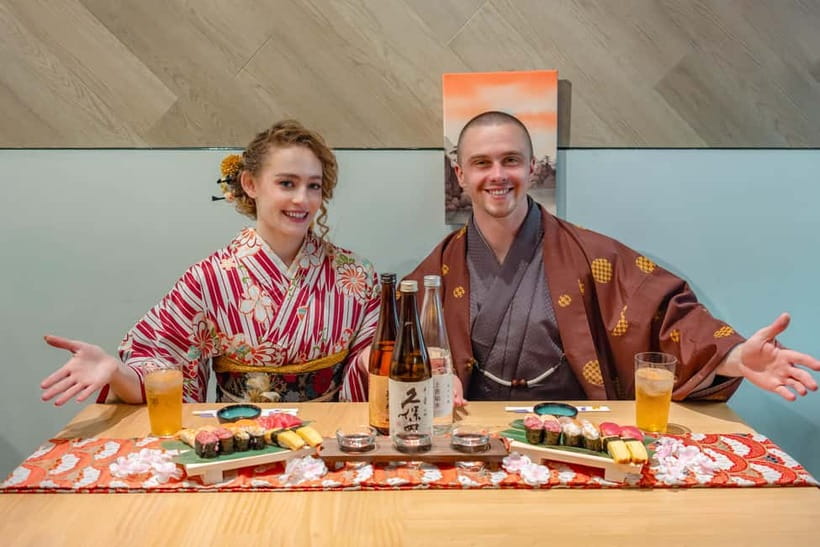
Here’s the rhythm you’ll follow during the class. It’s hands-on throughout, so you’re not just standing there watching someone else cook.
1) Making the shari (sushi rice)
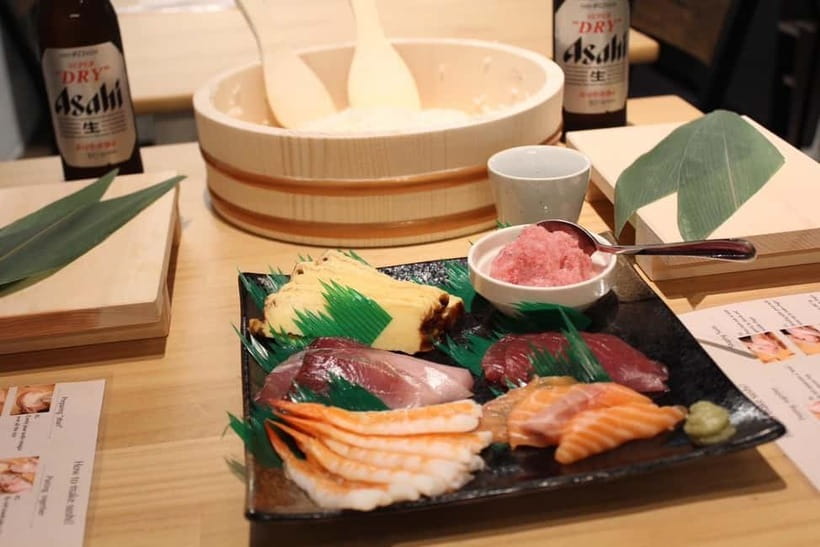
You’ll start with sushi rice and add sushi vinegar. Expect guidance on how to spread it evenly so the rice tastes right and holds together. This is the stage where most beginners get nervous, because the rice can seem both delicate and stubborn.
The staff teaches what you’re looking for: how the rice should feel and behave after seasoning. When that clicks, everything after it gets easier.
2) Shaping the rice ball
Next comes the rice shaping step. You’ll form a rice ball (or the base for your sushi pieces) and learn the right handling. The goal isn’t fancy. The goal is consistent size and a shape that supports the topping without falling apart.
This is also where you learn the small technique cues that matter—things like not overpacking and how to keep the rice from sticking too aggressively.
3) Adding neta (toppings) with wasabi
Then you move to neta (the topping) assembly. You’ll put wasabi on the topping and connect it to the shari. This part is simple, but it’s also where balance shows up: too much, and it overpowers; too little, and you lose the flavor contrast.
You’ll get instruction on how the toppings are positioned and how the pieces should come together cleanly.

4) Final shaping with your fingers
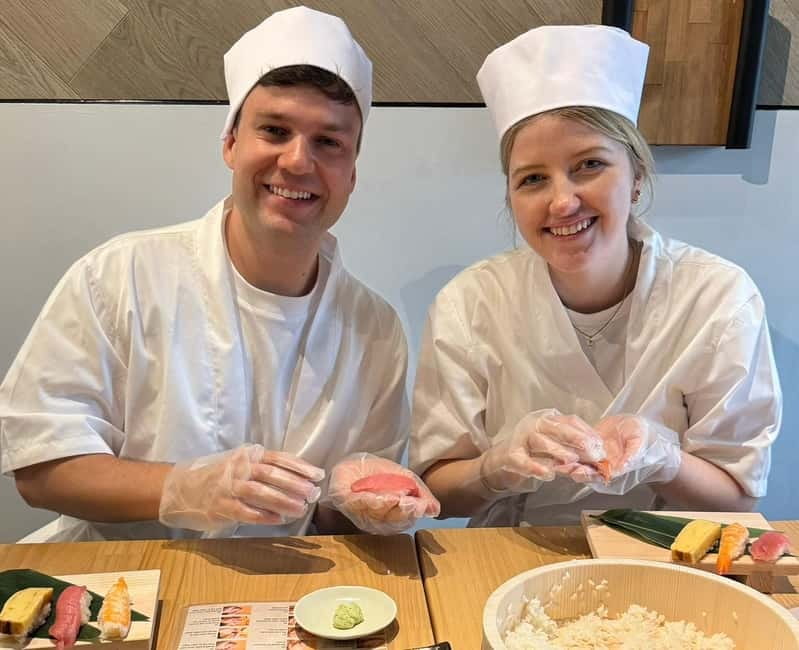
The last step is shaping the sushi so it looks correct and eats well. You’ll use your fingers to form the finished pieces, with the instructor watching and guiding you through the technique.
At the end, you don’t just get to try one piece. You get 12 pieces of sushi that you made, plus the chance to enjoy them as your class wraps.
What You’ll Actually Learn (Beyond Just “How to Fold”)
A sushi class can be one of two things: a fun photo-op, or a real skill lesson. This one leans real—without turning into a strict cooking boot camp.
From the way the class is taught, you’re picking up three practical ideas:
First, sushi starts with rice. If the shari is off, the whole bite is off. That’s why the vinegar step and the shaping step get time and attention.
Second, sushi is assembly, not chaos. You’re building in stages—shari, then neta—so each bite has a repeatable structure.
Third, small adjustments change flavor. Wasabi placement, topping alignment, and final shaping aren’t “details” in sushi. They’re the difference between a piece that tastes balanced and one that tastes like separate parts.
If you care about eating in Japan with more understanding, this is a solid shortcut. You’ll see sushi menus differently after you’ve made the basics yourself.
Sake, Sushi Cosplay, and the Fun Parts That Don’t Feel Forced
One reason people enjoy this class is that it doesn’t treat culture like homework. Yes, you learn. But you also get playful extras.
You’ll enjoy Japanese sake alongside the sushi you make. It’s the kind of pairing that makes the meal feel like a real moment, not just a snack at the end of a workshop.
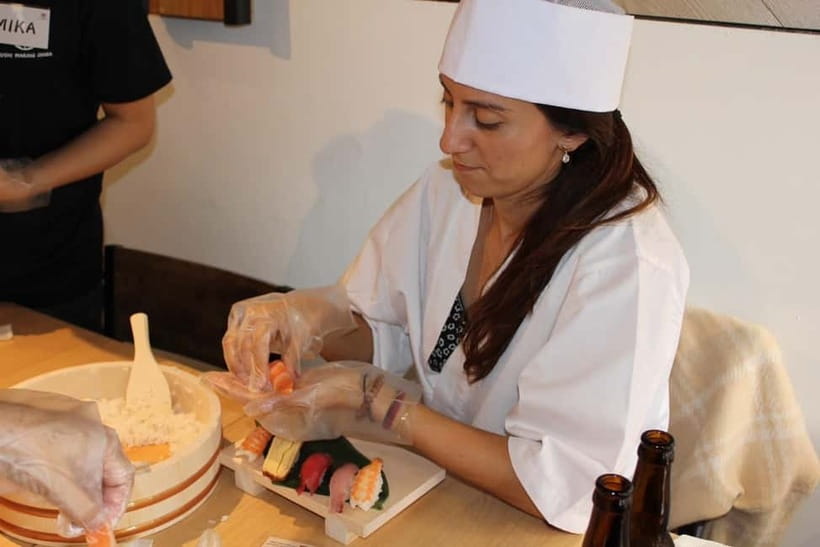
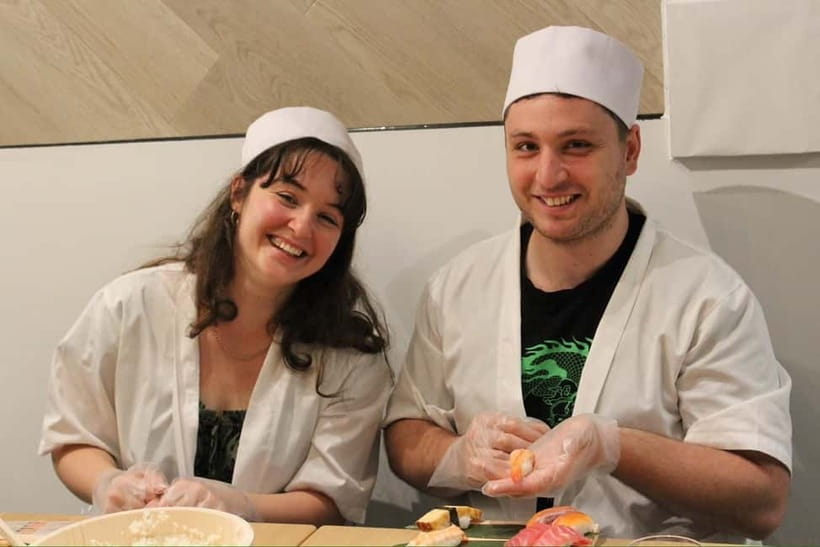
Then there’s the sushi cosplay and photo session. You’ll get a chance to dress up for fun, take pictures, and lean into the “make it yours” vibe. It’s not required to enjoy the class, but it’s a nice release valve after hands-on rice work.
Finally, there’s a special gift at the end, plus a certificate of sushi master. The certificate is a bit theatrical—but in a good way. It gives you something to remember the day and a reason to tell friends back home that you didn’t just eat sushi; you learned to make it.
Price and Value: Is $45 Worth It in Osaka?
At $45 per person for 90 minutes, you’re paying for more than food. You’re paying for guided instruction, ingredients for 12 pieces, sake, and the added entertainment elements (cosplay, photos, and a gift).
Here’s why it can feel like good value:
- You’re getting a full activity, not only a meal.
- Ingredient costs are wrapped into the price, so you don’t have to figure out what you need to replicate it later.
- You leave with a skill. Even basic sushi shaping is useful knowledge.
- You’re in English, which matters if your food vocabulary in Japanese isn’t strong yet.
The only way it wouldn’t feel worth it is if you’re already a confident sushi maker and you want advanced techniques. This class is built for learning fundamentals with support, not for chef-level knife and fish craft.
Still, for most people, the “hands-on + eat what you make + certificate” bundle makes the price easier to swallow.
Dietary Options: Vegan and Halal Without the Headache
If you’re vegan or halal, this matters: the class offers vegan and halal sushi options.
That reduces the risk of turning your “must-do Osaka experience” into a compromise. You’ll still participate in the core workflow—rice, shaping, assembly—just with toppings aligned to your needs.
If you have allergies, the data you provided doesn’t list a full allergy policy beyond what’s shown. So if you’re dealing with something specific, you’ll want to confirm details when you book.
Who This Class Suits (and Who Might Want a Different Plan)
This is a great fit if you want:
- A fun, beginner-friendly food activity in Osaka Dotonbori
- A structured lesson that stays English-accessible
- A reason to slow down and learn how sushi is built
- A class that ends with a real meal (your 12 pieces)
It’s also family-friendly based on the variety of groups reported in the provided info, including people attending with teens.
A different option might fit better if you:
- Want a purely restaurant-style tasting with lots of variety
- Prefer advanced, technical instruction with heavy seafood handling
- Are extremely picky about ingredient freshness and expect restaurant-grade fish quality every time
Most people, though, are happier in this workshop format than they expect—especially if you like interactive experiences.
Practical Tips So You Enjoy It From Minute One
Dotonbori can be hectic. Your best friend is prep.
Plan your arrival time. Give yourself a cushion for finding the exact spot. One note in the provided info points out navigation can be tricky, so arrive early enough to find the meeting place calmly.
Go in with a simple goal. Don’t try to master every step perfectly on the first try. Your real win is learning the sequence: rice vinegar → shaping → neta assembly → final form.
Use the instruction time. If an instructor is at your side, ask for one specific correction rather than general advice. Sushi shaping improves fastest when you focus on one fix at a time.
Take the photos, then eat. The cosplay/photo moment is fun, but don’t forget you’re there for the sushi too. Aim to eat your pieces while warm and fresh from your work.
Should You Book This Sushi Making Experience?
If you want a hands-on Osaka activity where you learn a real food skill and eat the result, I’d book it. Sushi master certification, 12 pieces, sake, and the cosplay/photo extras turn it into a full experience, not a quick stop.
It’s especially worth booking when:
- You’re a sushi beginner and want a clear step-by-step flow
- You want an English-led class in central Dotonbori
- You need vegan or halal support without dropping the experience
If you hate finding your way through crowded neighborhoods, go early and build in extra time. Aside from that one practical concern, the class is built around what most visitors want: learn, laugh, make, eat, and leave with something to remember.
FAQ
FAQ
What is the duration of the Osaka Dotonbori sushi making class?
The class lasts 90 minutes.
How much does it cost per person?
The price is $45 per person.
How many pieces of sushi will I make?
You make 12 pieces of sushi.
Is Japanese sake included?
Yes. You can enjoy Japanese sake with your sushi.
Will the class be taught in English?
Yes. The instructor is English speaking.
Are vegan or halal options available?
Yes. Vegan and Halal sushi are available.
What’s included besides the sushi ingredients?
You’ll get sushi cosplay, and you’ll receive a certification of sushi master. A special gift is also part of the experience.
Is there a cancellation policy?
Yes. You can cancel up to 24 hours in advance for a full refund.
Is the activity wheelchair accessible?
Yes. The activity is wheelchair accessible.