REVIEW · NAMBA
Osaka 8hr Private Tour with Government-Licensed Guide
Book on Viator →Operated by Japan Guide Agency · Bookable on Viator
Osaka in one day, on foot. This private 8-hour tour is built around a simple idea: you get a licensed local guide who helps you hit the big Osaka hits and the smart add-ons, without wasting time figuring things out. You can focus on food streets, temple-and-castle history, shopping lanes, and even a skyline view.
I really like the government-licensed English-speaking guide setup, because it makes the day feel organized instead of just wandering. I also like that the itinerary is customizable (3 to 4 sites), so you can tailor it toward what you care about most, from Dotonbori snacks to markets and gardens.
The main thing to consider is that it’s a walking tour with some major sights not included in price (like Osaka Castle, Shitennō-ji, and Umeda Sky Building). Also, one past group noted their guide could use more confidence with certain details of the route and history, so if you want very deep lectures, you’ll want to ask questions early and often.
In This Review
- Key highlights you’ll feel in your day
- How the private format makes Osaka easier
- Value check: what you pay for, and what you still need to cover
- Your day, stop by stop: the Osaka mix that actually works
- Dotonbori District: the food street energy you’ll remember
- Osaka Castle: the landmark with the most “wow-per-effort”
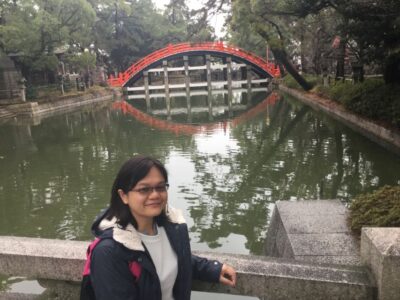
- Sumiyoshi Taisha Shrine: older Osaka, calmer mood
- Shitennō-ji: temple history that adds depth to the day
- Shinsekai: Tsutenkaku nostalgia and a short reality check
- Umeda Sky Building: a view to reorient your mental map
- Kuromon Market: short visit, high payoff
- National Museum of Art, Osaka: an option for when you want a change of pace
- Sennichimae Doguyasuji: kitchen tools and practical shopping
- Shinsaibashi-suji: the shopping arcade that does the job
- Keitakuen Garden: a short garden breather
- What makes the guide matter: Nori as an example
- Logistics that affect your comfort (and your photos)
- Food strategy: how to eat like you planned it
- Who this tour fits best
- Should you book this Osaka 8-hour private tour?
- FAQ
- How long is the Osaka private tour?
- Is this a private tour or a group tour?
- Can I choose which places to visit?
- Are entrance fees included in the tour price?
- Do you pick me up at my hotel?
- What about food like takoyaki and okonomiyaki?
- Does the tour include transportation?
- How long do we spend at each stop?
- Can I cancel for a full refund?
Key highlights you’ll feel in your day
- Government-licensed, English-speaking guide: you get real human help, not a generic script.
- Choose 3–4 sites from a menu of 11: you control the balance of food, views, shopping, and heritage.
- Dotonbori food streets are a focal point: takoyaki and okonomiyaki are front-and-center.
- Osaka Castle plus older shrines and temples: you get more than street photos.
- Markets and kitchen-tool shopping: Kuromon Market and Doguyasuji give you a practical Osaka flavor.
- A skyline stop is an option: Umeda Sky Building lets you reset your bearings.
How the private format makes Osaka easier
Osaka works best when someone helps you “thread the needle.” The city is full of neighborhoods that feel separate, and a self-guided day can turn into a lot of cross-city transit and second-guessing. This tour stays simple: you meet up near public transportation, then walk.
Since it’s private, your guide can pace things based on your group. That matters when you’re mixing big sights (like Osaka Castle) with shorter, photo-friendly stops (like Shinsekai’s Tsutenkaku area). You also get a say in the order, because the route can be planned around what you want most.
Price is listed per person at $198.72 for about 8 hours, and the value depends on whether you’d otherwise pay for private help plus taxis plus entrance tickets. The guide itself is included, and you’re customizing which sights you choose from the provided list.
You can also read our reviews of more guided tours in Namba

Value check: what you pay for, and what you still need to cover
Here’s the honest math: this tour price covers a licensed local English guide and a custom itinerary based on 3–4 selected stops. It does not include transportation fees, most entrance fees, lunch, or personal spending.
That doesn’t make it bad value. It just means you should plan like this is a guided day, not an all-inclusive package. If you know you’ll pay for an Osaka Castle visit and a view from Umeda Sky Building anyway, the paid guide time can make a lot of sense.
If you’re trying to keep costs tight, your best lever is what you choose from the list. Several stops have free admission tickets, including Dotonbori, Sumiyoshi Taisha, Shinsekai, Kuromon Market, Sennichimae Doguyasuji, and Shinsaibashi-suji shopping street. Pair those with one or two paid entries to fit your budget.
Your day, stop by stop: the Osaka mix that actually works
Your guide reaches out after booking to help plan a personalized route. If you don’t know what to pick, ask for their recommended itinerary based on your interests. That’s the part that often turns a good day into a great one, because Osaka has so many “best-of” places that you don’t want to cherry-pick blindly.
Below is how each stop tends to fit into a smart Osaka day, including what to watch for and what’s worth your time.
Dotonbori District: the food street energy you’ll remember
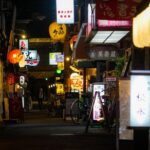
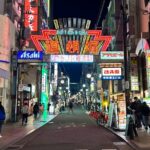
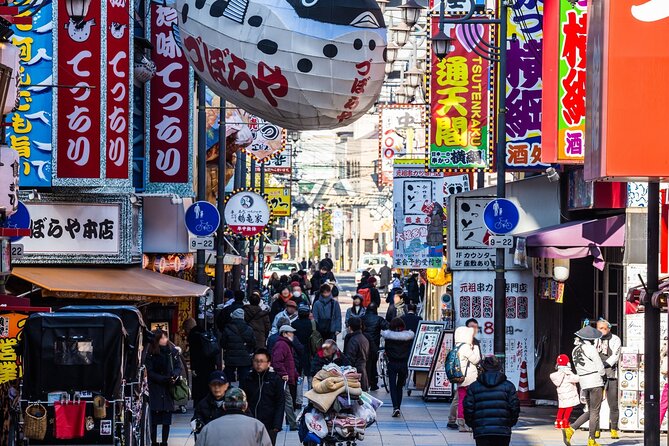
Dotonbori is the easiest place to start, because it gives you instant Osaka flavor. You’ll walk Dotonbori street for about an hour, surrounded by massive billboards, packed restaurant fronts, and food stalls selling classics like takoyaki and okonomiyaki.
This is where you should slow down and actually look. It’s not just about one snack. If you plan to eat lunch later, use this time to taste one thing early and save your appetite for a more complete meal closer to the end of the day.
One drawback: Dotonbori can be crowded, and your walking pace may slow. A private guide helps here because they can help you navigate the flow without you doing mental math on every corner.
Osaka Castle: the landmark with the most “wow-per-effort”
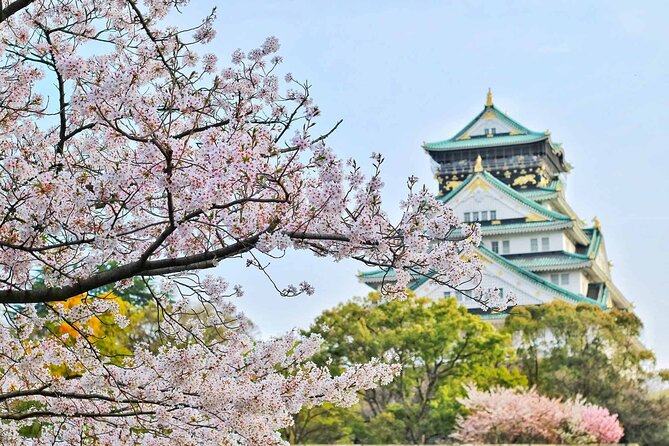
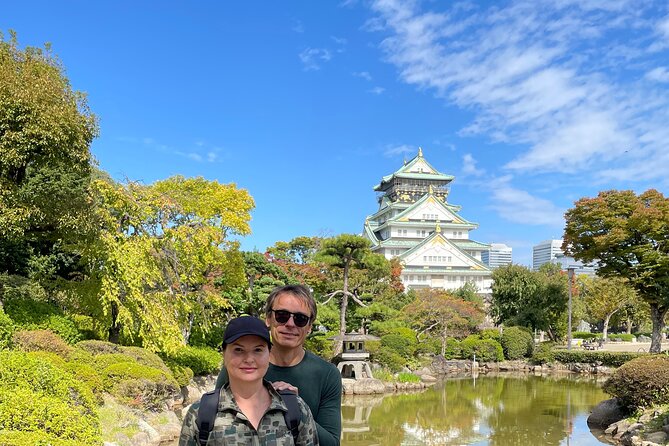
Osaka Castle is one of Japan’s best-known sights for a reason. You get about an hour here, and it’s a five-story structure tied to nearly 450 years of history, even though what you see today reflects later reconstruction.
Plan for the admission fee as not included, and build in a little extra time for photo stops and moving through the site. The castle grounds also work as a natural break in the day: you go from street-food intensity to an open, historical setting.
If your group dislikes long queue time, tell your guide early. A good guide will try to help you avoid the slowest moments by adjusting the order of stops.
You can also read our reviews of more private tours in Namba



Sumiyoshi Taisha Shrine: older Osaka, calmer mood
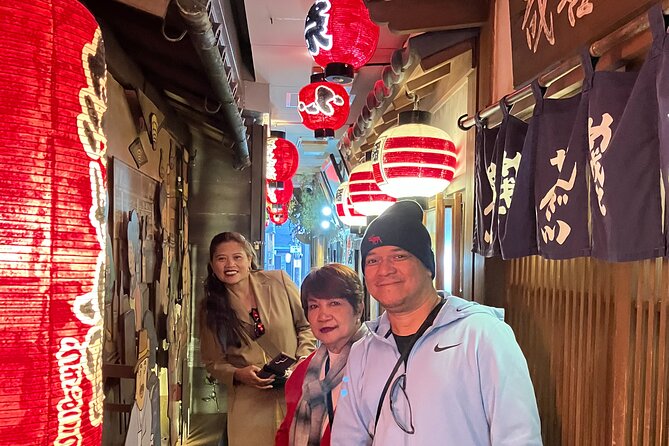
Sumiyoshi Taisha is a classic “different side of Osaka” stop. It’s free admission and takes about an hour, and the shrine’s roots go back to the 3rd century before Buddhism arrived in Japan.
What I like about including this kind of site is contrast. You get a reset from crowds and shopping lanes, plus a chance to see a shrine style that’s distinct in architecture and atmosphere. This stop is also a nice way to break up a day that might otherwise lean too heavily toward food and neon.
Drawback to keep in mind: shrines can feel similar if you’re rushing. If you want more meaning, ask your guide for what to pay attention to here—design details, why the place matters, and what the layout is trying to communicate.
Shitennō-ji: temple history that adds depth to the day
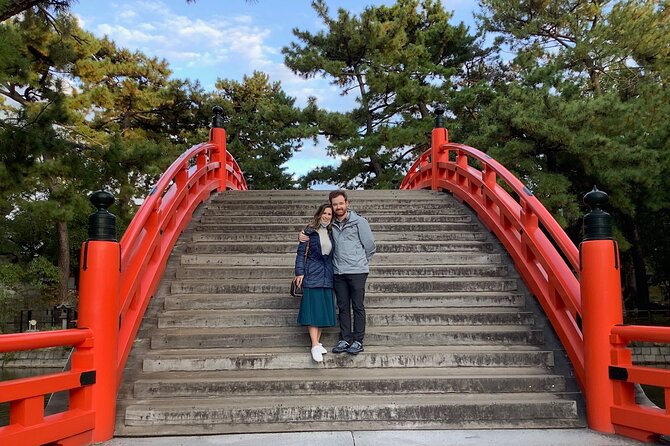
Shitennō-ji is one of Japan’s oldest temples and is tied to Prince Shōtoku’s role in supporting Buddhism in Japan. It’s about an hour, admission is not included, and it can be a strong anchor if you want cultural context beyond street-level Osaka.
This stop pairs well after Osaka Castle, because you’re still on a “big historical Osaka” theme. If you care about context, ask your guide to explain the timeline in plain terms rather than trying to read everything yourself.
Possible consideration: one past group felt the history could be more in-depth at certain points. The fix is easy—ask specific questions at the start of the day, and check in if you want more background while you’re walking.
Shinsekai: Tsutenkaku nostalgia and a short reality check
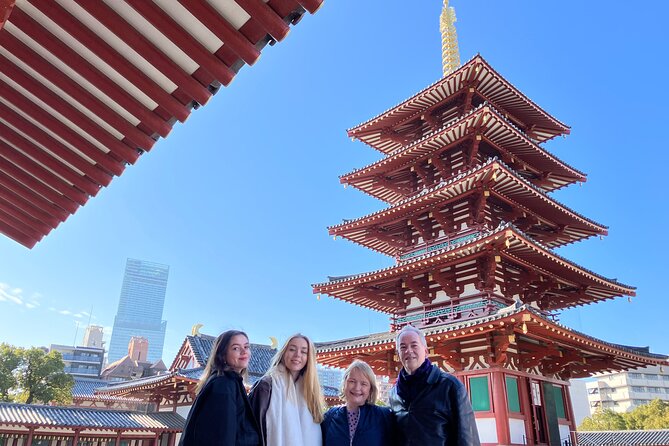
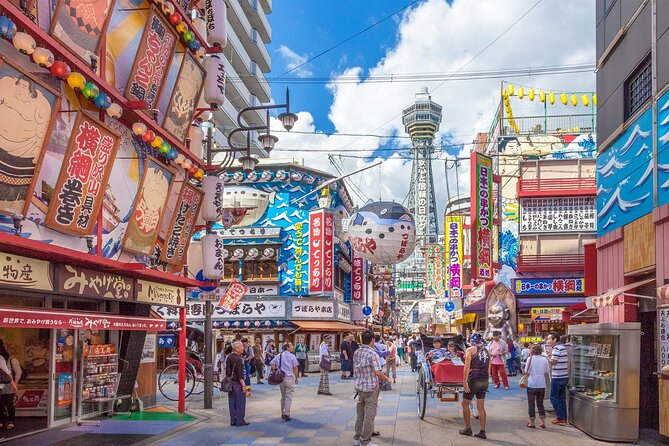
Shinsekai is about 30 minutes and free admission. It’s an older entertainment district area that was developed before the war and then fell quiet for decades, with Tsutenkaku Tower at the center.
This stop works best as a quick slice, not a long commitment. You’ll get the retro mood, the landmark photos, and a sense of Osaka’s layered identity. If your energy is fading, this is a good “keep it short and sweet” stop.
Umeda Sky Building: a view to reorient your mental map
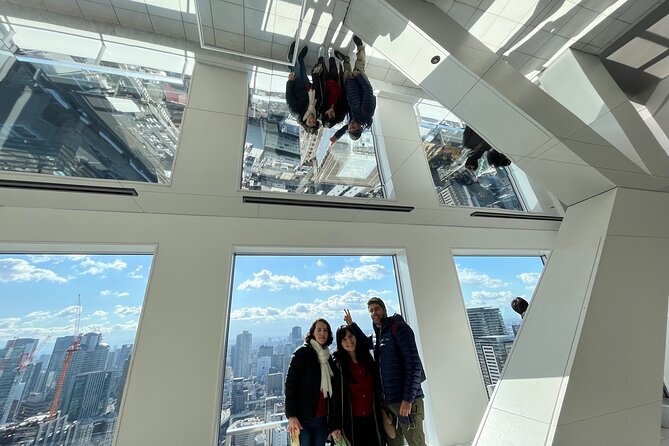
If you want a skyline reset, Umeda Sky Building is the option. It’s about 30 minutes, with admission not included, and it’s known for a tall 173-meter viewpoint experience.
I like this stop near the middle or end of the day. When you’ve been walking through streets and districts, being above it all helps you understand how Osaka connects. Your guide can also point out what you’re looking at from above, as long as you ask.
Consideration: if you’re not into viewpoints, you might skip it and use that time for markets or shopping lanes instead.
Kuromon Market: short visit, high payoff
Kuromon Market is a covered public market that stretches about 600 meters, with around 150 shops. You’ll spend about 30 minutes here, free admission, and it’s a great place for quick bites and browsing.
This is also where your guide’s taste can matter. If you want local specialties, tell them what you like—seafood, grilled items, sweet snacks—and they’ll usually steer you toward places that fit. Lunch is not included on the tour, so treat this as a place to sample or pick something you’ll eat later.
National Museum of Art, Osaka: an option for when you want a change of pace
You can add the National Museum of Art, Osaka for about 30 minutes. It’s free to enter the outdoor market area, but museum admission is not included, and it’s an underground museum on Nakanoshima.
This stop is a good choice if your day needs a breather from food and streets. It’s also a smart option if you’re traveling with people who don’t want nonstop shopping or snack hunting.
Sennichimae Doguyasuji: kitchen tools and practical shopping
Sennichimae Doguyasuji shopping street is a 150-meter stretch focused on specialty stores for cooking utensils and kitchen items. It’s free admission and lasts about 30 minutes.
Even if you don’t plan to buy anything, walking through this street feels like Osaka’s work-life in miniature. You’ll see the mindset: food, tools, and craft. If you enjoy practical souvenirs, this is where you’ll find useful items rather than only mass-market trinkets.
Tip: bring a plan for carrying purchases. If you buy heavy tools, you’ll want to have a place to store them.
Shinsaibashi-suji: the shopping arcade that does the job
Shinsaibashi-suji is about 600 meters of shopping arcade with cosmetics, apparel, and restaurants. It’s free admission and about 30 minutes on this tour.
This stop is where you go for variety. It’s also a good place to pick up something quick if you didn’t shop earlier in the day. If you’re shopping-focused, you can also prioritize it in your 3–4 site selection.
Keitakuen Garden: a short garden breather
Keitakuen Garden is inside Tennoji Park and takes about 10 minutes on this itinerary. Admission is not included here, so treat it like a quick pause rather than the main event.
This works well as a “reset” stop when your legs are tired or when the day needs calm between busy streets. Don’t expect it to replace a full garden visit elsewhere in Japan, but it can be a pleasant add-on.
What makes the guide matter: Nori as an example
One highlight from the experience is the energy and friendliness of guides. A guide named Nori (Norifumi Kamon) was described as extremely friendly, energetic, and well-informed, with a great day plan that helped groups see places they likely wouldn’t have found on their own.
At the same time, another group pointed out that the guide seemed less confident navigating some points and that the history could have gone deeper. That tells me something important for you: treat the guide like a tool you can sharpen. Ask questions early, and if you want more context at a shrine or temple, ask for it while you’re there.
With the customizable structure, you can often fix this by choosing stops that match what you want explained.
Logistics that affect your comfort (and your photos)
This is a walking tour, and pickup is on foot in a designated area. The tour is near public transportation, so you should be able to get there without a headache, but you still want to arrive with a little buffer.
Most travelers can participate, but “walking tour” is the key phrase. You’ll want comfortable shoes, and you’ll probably end up doing more steps than you expected if you keep stopping for photos.
Bring some flexibility too. If the route lands in a crowded area, your timing can shift. A good private guide helps manage that without turning your day into a sprint.
Food strategy: how to eat like you planned it
The tour is set up so you can explore Osaka’s food culture, especially through Dotonbori. The tour specifically highlights takoyaki and okonomiyaki, and the guide helps you find good places to eat okonomiyaki.
Since lunch is not included, I’d suggest a simple plan. Eat one snack in Dotonbori to get the atmosphere, then use Kuromon Market for sampling or a light meal, and save your main meal for when you have time to sit.
If your group has dietary limits, tell the guide immediately. Even with a short list of food-focused stops, a licensed local can usually steer you toward safer choices without making the day feel like a chore.
Who this tour fits best
This tour is ideal if you want structure without losing personal choice. It fits couples, friends, and families who can handle walking and want a guide to translate Osaka’s districts into a readable day.
It’s also great for first-time Osaka visitors who want both the big names (Osaka Castle, Dotonbori) and the “in-between” stops like Kuromon Market and Doguyasuji kitchen streets. If you’re already an Osaka repeat visitor, you might enjoy it less unless you have a specific goal, like shopping for kitchen tools or adding a temple-and-shrine day to balance past trips.
Should you book this Osaka 8-hour private tour?
Book it if you want an easy-to-manage, guide-led day that covers landmark Osaka, food streets, and a few smart add-ons like markets and shopping arcs. The private format and customizable 3–4 stop choice are the real wins.
Skip or modify your expectations if you’re strict about included costs, since entrances, transportation, and lunch are not included. If you want deep historical explanations, ask your guide for more detail early, and pick stops accordingly.
If you’re deciding at the last minute, I’d still book ahead. The experience is often reserved about 125 days in advance on average, which is a hint that popular dates fill up.
FAQ
How long is the Osaka private tour?
It runs for about 8 hours.
Is this a private tour or a group tour?
It’s a private tour, meaning only your group participates.
Can I choose which places to visit?
Yes. After you book, you’ll work with the guide to choose 3 to 4 sites from the tour’s options.
Are entrance fees included in the tour price?
Some stops have free admission tickets, and others do not. Osaka Castle, Shitennō-ji, Umeda Sky Building, the National Museum of Art, Osaka, and Keitakuen Garden are listed as not included, while stops like Dotonbori, Sumiyoshi Taisha, Shinsekai, Kuromon Market, Doguyasuji, and Shinsaibashi-suji are listed as free.
Do you pick me up at my hotel?
Pickup is offered, but it’s a walking tour where you meet on foot within a designated area.
What about food like takoyaki and okonomiyaki?
The itinerary includes Dotonbori District, which is known for takoyaki and okonomiyaki. The guide can also help you find good places to eat okonomiyaki.
Does the tour include transportation?
No. Transportation fees are not included.
How long do we spend at each stop?
The scheduled time varies by stop, such as about 1 hour at Dotonbori District, Osaka Castle, Sumiyoshi Taisha, and Shitennō-ji; about 30 minutes at several others; and about 10 minutes for Keitakuen Garden.
Can I cancel for a full refund?
Yes. You can cancel up to 24 hours in advance for a full refund.