REVIEW · NAMBA
Osaka 4hr Private Tour with Government-Licensed Guide
Book on Viator →Operated by Japan Guide Agency · Bookable on Viator
Osaka rewards a good half-day plan. This private 4-hour walking tour strings together neon street life, old religious sites, and big skyline moments, with a licensed English guide who meets you near your hotel. You can choose what matters most to you, and still cover a lot without getting lost in Osaka’s busy grid.
I love how flexible this feels: you’re not locked into a rigid script, and your guide can steer the day toward the sights you care about. I also like the value of having someone handle flow and context, from Dotonbori food street vibes to the meaning behind temples like Shitennoji.
One consideration: it’s a walking tour, and the biggest ticket items plus food are extra, so you’ll want to budget for entrances and meals if your 2–3 chosen highlights include places like Osaka Castle or Umeda’s sky views.
In This Review
- Key Highlights You’ll Feel Fast
- A Realistic Take on 4 Hours in Osaka
- Meeting Your Guide Near Your Hotel (On Foot)
- Dotonbori and the Shopping Street That Sucks You In
- Kuromon Market: Food Without the Guesswork
- Sumiyoshi Taisha: Osaka’s Old Roots
- Shitennoji Temple: A State-Founded Landmark
- Umeda Sky Building for Skyline Views
- Osaka Castle: The Icon You Can Actually Understand
- The National Museum of Art, Osaka: Art in the Underground
- Shinsekai and Tsutenkaku: Osaka’s Old-School Fun
- Keitakuen Garden for a Quiet Finish
- How the Private Guide Changes the Value
- Who This Tour Suits Best (And Who Might Want a Different Plan)
- Should You Book This Private Osaka Walking Tour?
- FAQ
- How long is the Osaka private tour?
- Is this tour walking only?
- What’s included in the price?
- What costs are not included?
- Can I customize which places we visit?
- Do we get pickup?
- Are service animals allowed?
Key Highlights You’ll Feel Fast
- 2–3 main stops chosen your way while the rest of the day still hits classic areas
- Meet your guide on foot near your hotel so you don’t have to hunt anyone down
- Food + shopping in one loop, from Dotonbori to Kuromon Market and major arcades
- Old Osaka alongside modern Osaka, with Sumiyoshi Taisha and Shitennoji in the mix
- Big skyline moments at Umeda Sky Building and the iconic Osaka Castle area
- A different vibe at night, with Shinsekai’s Tsutenkaku and casual street dining
A Realistic Take on 4 Hours in Osaka
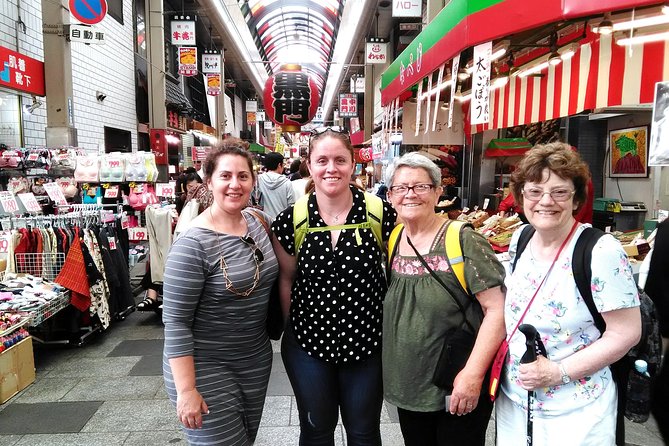
This tour is built for active travelers who want maximum Osaka per hour. Four hours is short enough that you won’t get bored, but long enough to bounce between very different neighborhoods: neon and street food in the south, shopping arcades in the center, and landmark sites like shrines and Osaka Castle.
What makes this work is the way the guide structures time. You’re not just checking boxes. You’re getting a walk that makes sense geographically, with context so the places connect instead of feeling random.
Just know the trade-offs. Entrance fees, meals, and transportation are not included. So if you want a smooth day with minimal add-ons, plan your choices carefully. A common pattern is to combine free stops (shopping streets and market areas) with one or two paid highlights.
You can also read our reviews of more guided tours in Namba

Meeting Your Guide Near Your Hotel (On Foot)
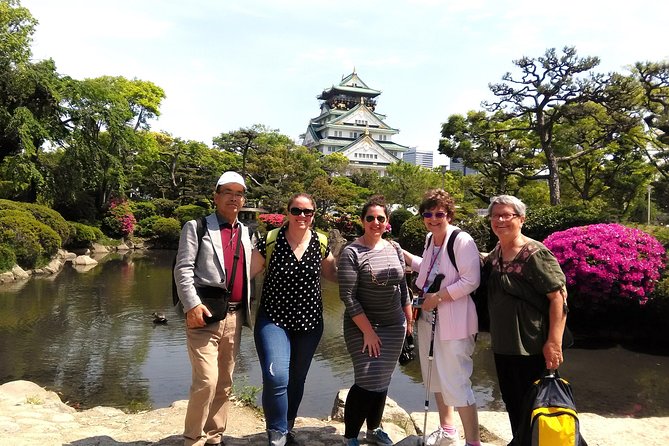
The meeting setup is low-stress. Your guide meets you on foot within a designated Osaka area, and the goal is simple: you don’t spend your first hour searching for your person.
This matters more than it sounds. Osaka transit is efficient, but it’s still easy to burn time figuring out exits, escalators, and which side of a street you’re on. Having a guide start you in the right place helps you use the tour time for seeing, not troubleshooting.
If you’re arriving from another city, keep some buffer. A late start can throw off a walking schedule quickly, especially if your day includes stair-heavy spots.
Dotonbori and the Shopping Street That Sucks You In
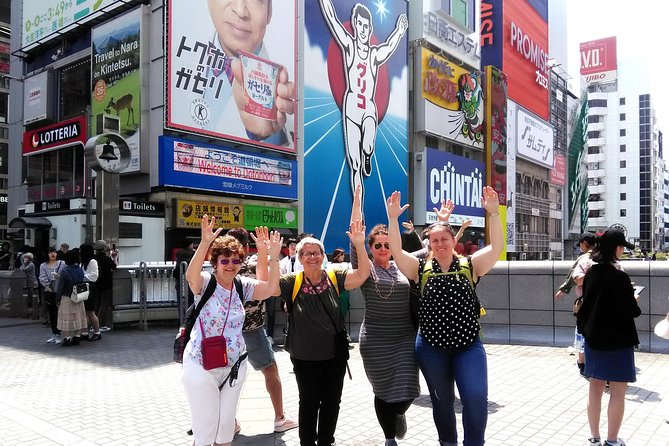
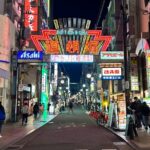
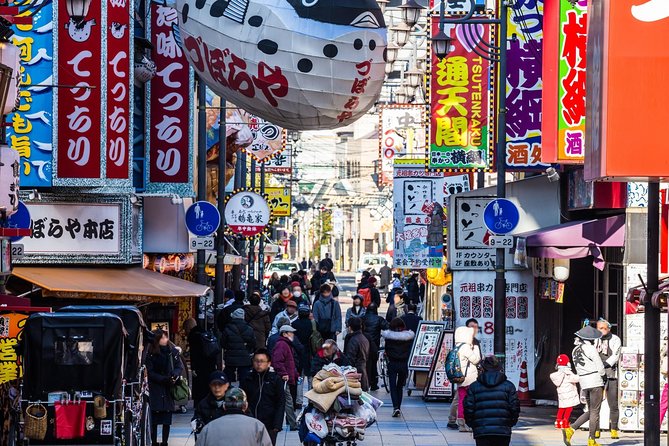
Your day often begins in the Dotonbori area, where Osaka’s personality is loud and clear. You’ll walk along Dotonbori street with huge billboards and a dense mix of restaurants and food stalls.
This is where you can let your nose lead you. The area is famous for local comfort food like takoyaki and okonomiyaki. Even if you don’t stop for a full meal, it’s worth pausing just to watch how the street food culture works: quick ordering, constant movement, and a lot of food theater.
From there, you head into the shopping arcade world. The tour may include Sennichimae Doguyasuji, a short specialty stretch (about 150 meters) lined with cooking utensils and kitchen items. It’s not just shopping for tourists. If you like food culture, it’s a fun place to understand what locals buy when they’re serious about cooking.
Then you may move through Shinsaibashi-suji, a long shopping arcade (around 600 meters) filled with cosmetics, apparel, and restaurants. This is a good place to take photos, people-watch, and grab snacks if you’re planning a light lunch.
How to make this part better: wear shoes you trust. These streets are easy to walk, but you’ll likely do a lot of small stops and starts. If you have a pace preference, tell your guide early so the day doesn’t feel rushed later.
Kuromon Market: Food Without the Guesswork

Kuromon Market is the kind of place where you can eat your way through a culture lesson. You’ll get a lively view of seafood stalls and specialty shops in a roofed market area.
One useful detail here is seasonal seafood. The market is known for conger pike in summer and fugu in winter. If you’re traveling in one of those seasons, your guide can point out what to look for and where.
Also, the market has a reputation for fugu and hamo (especially with many seafood shops specializing in those). Even if you don’t plan to eat fugu, watching what’s on display helps you understand why Kuromon is such a draw.
Practical tip: decide your budget before you arrive. The market is tempting, and prices can vary by stall and by what’s being offered that day.
Sumiyoshi Taisha: Osaka’s Old Roots
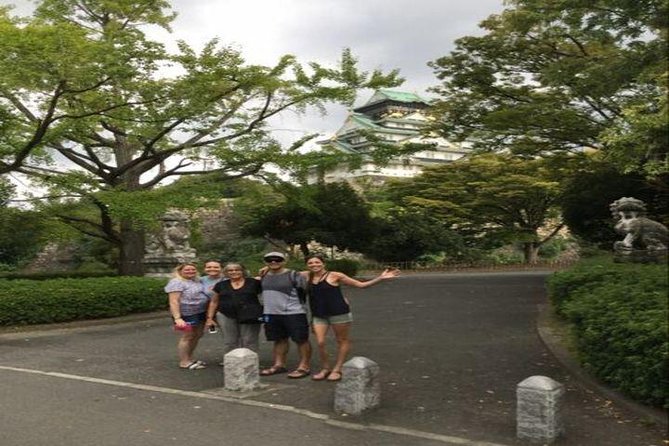
After the neon and shopping, the day slows down in a very good way at Sumiyoshi Taisha. This shrine is described as one of Osaka’s oldest, founded in the 3rd century before Buddhism arrived in Japan.
You’ll see a shrine setting with an architectural style that’s distinct from what many first-timers expect. It’s a change of pace, and that’s the point. It gives your legs a break while your brain catches up on what Osaka was before it was the city of signs and street food.
If you’re the type who likes small, meaningful details, ask your guide what to notice here. Even a short stop can feel deeper when you know what you’re looking at.
Entrance fees are not listed as included for this stop, but the tour describes Sumiyoshi Taisha as admission ticket free on the schedule. Still, always follow your guide’s instruction on what’s paid on the day.
You can also read our reviews of more private tours in Namba




Shitennoji Temple: A State-Founded Landmark

Next comes Shitennoji, one of Japan’s oldest temples and the first ever to be built by the state. The temple is linked to Prince Shotoku, who supported the introduction of Buddhism into Japan, with a founding date of 593.
This stop is ideal if you want Osaka’s story to go beyond the modern skyline. It also gives you something the earlier neighborhoods didn’t: a sense of time. You’re stepping into a site that’s been part of Japan’s religious and cultural timeline for a long time.
The schedule notes an admission ticket is not included here, so if you want to go inside fully, factor that into your spending. If you’d rather keep costs down, your guide can still show you what matters from outside while respecting your goals.
Umeda Sky Building for Skyline Views
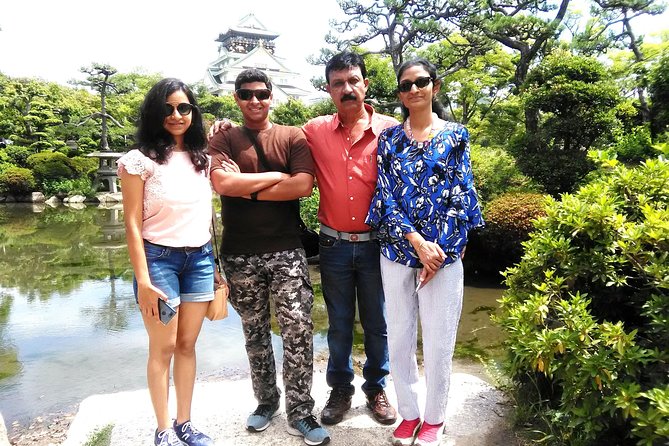
Umeda Sky Building is a major modern contrast point, and it’s easy to see why it’s popular. The building is about 173 meters tall and sits in the Kita district near Osaka Station and Umeda Station.
This is where you get a different Osaka angle. Instead of walking through neighborhoods, you’re viewing them as parts of one huge system: districts with their own rhythms, street grids, and the way the city fans out.
This stop has a paid admission component not included on the schedule. If the sky view is a priority, pick it as one of your main highlights so it doesn’t get squeezed by other choices.
Osaka Castle: The Icon You Can Actually Understand
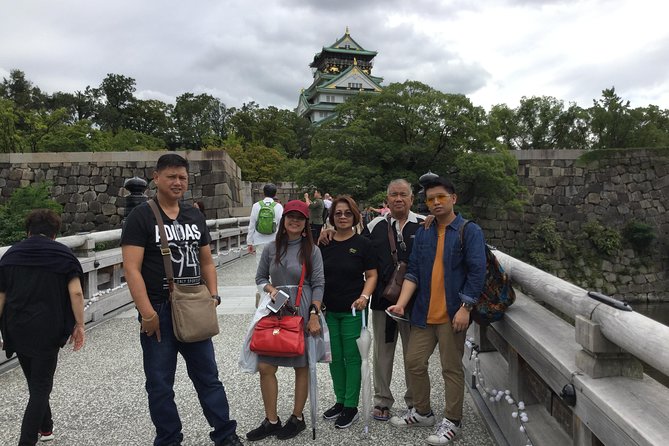
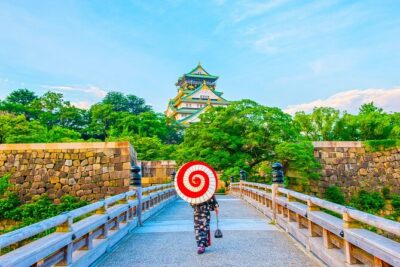
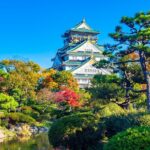
Osaka Castle is the headline for many first-timers, and it earns that status. It’s described as a five-story castle with history dating back almost 450 years.
A good guide helps you connect the castle to Osaka’s identity instead of just letting you take a few pictures and move on. The layout and symbolism become easier to grasp once you understand why the site matters.
Time here on the schedule is short, and admission isn’t included, so treat this as a must-plan moment. If you only pick one big-ticket landmark, Osaka Castle is a solid choice.
The National Museum of Art, Osaka: Art in the Underground
If you want something calmer and more reflective, the National Museum of Art, Osaka (NMAO) is a smart pivot after castle crowds. This museum is described as underground on Nakanoshima island and focused on a major art collection.
This stop is not just a break from walking. It’s also a break from the usual Osaka pattern. The schedule lists admission as not included, so treat it like a bonus for art lovers who want to balance out the day.
Even if you’re not a heavy museum person, it can be a refreshing way to end a tour segment with lower noise and more slow looking.
Shinsekai and Tsutenkaku: Osaka’s Old-School Fun
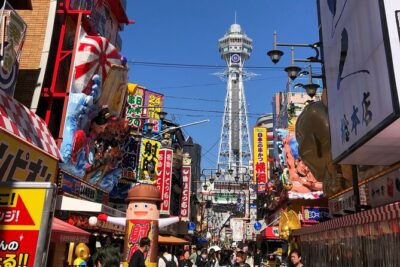
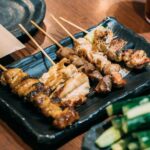
Shinsekai, the New World area, brings back the street-energy in a different style. You’ll see Tsutenkaku, often called the Osaka Eiffel tower, plus the neighborhood vibe tied to kushikatsu and a famous character called Billiken.
The schedule also notes Spa World, a large bath complex, which helps explain why Shinsekai feels like it has its own world inside it. This is one of those neighborhoods where you can snack, take photos, and feel Osaka as daily life rather than just sightseeing.
This stop is listed as admission ticket free on the schedule, which makes it easier to include without ballooning costs.
Keitakuen Garden for a Quiet Finish
To round out the day, you may visit Keitaku-en Garden, a traditional Japanese landscape garden located in Tennoji Park. It’s designed in the early 20th century and features a central pond with carefully arranged rocks.
Even in a short time, this kind of stop helps your brain switch gears. You go from street noise to stillness, from quick bites to slow noticing.
Admission isn’t listed as included here, so if you want to fully experience it, keep that in mind when choosing your paid main stops.
How the Private Guide Changes the Value
At $109.43 per person for a 4-hour private tour, this isn’t the cheapest option. But the value is in what private guide time buys you: less wasted movement, smoother routing, and the ability to adjust what you see so it matches your energy and interests.
That’s not theory. I’ve seen this kind of difference play out with guides who help you fine-tune the day. For example, guides like Yuri have been praised for making Osaka Castle history interesting. Sachiko has helped guests tailor the route and find the right balance between tourist sites and calmer moments. Yuji has been noted for detailed explanations and keeping people engaged.
I also like that the tour is private only for your group. You’re not stuck with a pace you didn’t choose, and you can ask practical questions without worrying about holding up strangers.
Who This Tour Suits Best (And Who Might Want a Different Plan)
This is a strong fit if you:
- want an efficient first-time Osaka overview
- like mixing food streets, shopping arcades, and landmark sites
- enjoy learning what you’re looking at, not just taking photos
- prefer private pacing, even if it means accepting a lot of walking
It’s less ideal if:
- you need a low-step day or minimal walking
- you don’t want to pay extra for major attractions and meals
- you want long museum time or long sit-down meals built into the tour
Should You Book This Private Osaka Walking Tour?
If you’re doing Osaka as a priority stop and you want your first day to feel organized, I think this is worth booking. The mix of Dotonbori food street energy, Kuromon Market, ancient sites like Sumiyoshi Taisha and Shitennoji, and icons like Osaka Castle gives you a complete Osaka taste without taking a full day.
Book it if you’ll pick your 2–3 main paid highlights thoughtfully. If you’re the type who loves one big destination (like Osaka Castle) plus a food market (like Kuromon), you’ll get the most out of your time.
Skip it if your plan is mostly about relaxing and you want fewer steps and fewer extra payments. This tour’s strength is motion and variety.
FAQ
How long is the Osaka private tour?
It runs for about 4 hours.
Is this tour walking only?
Yes, it’s a walking tour, and most travelers can participate, but it’s best for active visitors.
What’s included in the price?
A licensed local English-speaking guide is included, along with a customizable tour based on choosing 2–3 sites from the provided options. The guide also meets you on foot within a designated Osaka area.
What costs are not included?
Entrance fees, lunch, transportation fees, and other personal expenses are not included. Entrance fees for certain listed sights are also noted as not included.
Can I customize which places we visit?
Yes. The tour is customizable so you can choose your 2–3 sites from the options included in what to expect.
Do we get pickup?
Pickup is offered, and in the tour details it’s described as meeting the guide on foot near your area so you don’t have to find them yourself.
Are service animals allowed?
Yes, service animals are allowed.