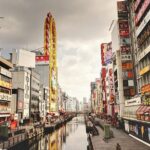
Sunsets in Osaka hit different from above.
I like this tour because it’s built for panoramic sightseeing in a short time, and the multilingual audio guide keeps you oriented as the city slides by. In about 45 minutes to an hour, you get sweeping views of big-name highlights like Osaka Castle, Umeda’s skyline, Namba, and Dotonbori’s famous neon. One thing to consider: this is mostly a ride-and-look experience, not a hop-off, explore-on-your-own kind of tour.
The big upside is comfort for the ride: WiFi on board, plus rain gear if the forecast turns ugly. Still, you should go in with realistic expectations about the photo experience—bus windows matter, and anything from smudges to weather covers can affect how sharp your pictures come out.
In This Review
- Key points worth knowing before you ride
- Osaka Sky Vista: a fast, breezy way to get your bearings
- Meeting at Osaka Station: where the ride starts (and where you should show up early)
- Seats, audio, and small comfort wins on the double-decker
- The route in one hour: Osaka Castle, Umeda, Namba, and Dotonbori from the window
- Osaka Castle area: the heritage anchor
- Umeda and the skyline near Umeda Sky Building
- Namba streets: street-level Osaka energy
- Dotonbori neon: photos you’ll actually want to keep
- The big rule: you mostly stay on board, with one exception
- Weather reality: open-air dreams vs rain gear and covered comfort
- Price and value: $24.98 for a ride with transfers, WiFi, and audio
- Who this tour fits best (and who should be careful)
- Should you book the Osaka Sky Vista bus tour?
- FAQ
- FAQ
- How long is the Osaka Sky Vista Double-Decker Open-Top Bus Tour?
- Where is the meeting point for the tour?
- Does the tour end at the same place it starts?
- Is WiFi provided on the bus?
- Is there an audio guide, and what languages are available?
- Can I get off the bus to visit the sights?
- What weather gear is included?
- Are umbrellas or parasols allowed?
- Is there a restroom on the bus?
- What happens if the bus service is suspended?
Key points worth knowing before you ride
- Open-top, double-decker views for big photos with minimal effort
- English plus Mandarin, Cantonese, and Korean audio so you’re not guessing what you’re seeing
- WiFi on board for maps, messaging, and quick check-ins mid-ride
- Raincoat and summer cooling gel sheets help you stay comfortable when conditions change
- No restroom on the bus, so plan timing and water accordingly
- Max 20 people with automatic seat assignment, so don’t assume you’ll sit together
Osaka Sky Vista: a fast, breezy way to get your bearings
If you only have a day (or just a few hours) and you want your first Osaka impressions to be simple, this kind of city bus tour makes sense. The layout is basically made for wide angles: a double-decker height advantage, open-air if conditions allow, and a route that strings together several of the most photographed areas.
I like that the focus stays on seeing rather than rushing. You don’t need to line up trains, read station exits, or translate signage for every single stop. You just show up, get on, and let the ride do the work.
Your trade-off is that you’re watching from the bus window. You can’t treat it like a hop-on hop-off sightseeing day where you jump off, wander, and jump back on repeatedly. That’s not a dealbreaker, but it changes who this tour fits best.
You can also read our reviews of more tours and experiences in Osaka.

Meeting at Osaka Station: where the ride starts (and where you should show up early)
This tour’s starting point is at Osaka Station, JR Express Bus Terminal, Terminal 3, Chome-1, Umeda. You’ll come back to that same meeting point at the end, so it’s a tight loop designed for convenience.
Because your time is short, I suggest you build in extra buffer before departure. One review described the meeting point as a bit stressful, and it’s easy to understand why: station areas are busy, signage can be confusing in any language, and you don’t want to arrive when boarding is already moving.
Tip: take a quick moment before the bus arrives to locate the exact check-in spot and confirm your departure time on your voucher. Seats are assigned automatically, so you also want to be ready to find your section fast once you board.
Seats, audio, and small comfort wins on the double-decker
The experience includes several practical touches that make the ride easier than you’d expect for the price. You get WiFi on board, a multilingual audio guide in English, Mandarin, Cantonese, and Korean, and a rain coat if rain is forecast. In summer, you’ll also get cooling gel sheets.
Two comfort details matter a lot in Osaka’s weather swings: shade/airflow and wet-weather gear. If it rains, umbrellas are not allowed for safety, and a raincoat is provided. That means you’re not stuck carrying rain gear you don’t want, and you won’t be dealing with an umbrella blocking someone else’s view.
Audio tip: the bus is moving, so pay attention to your headset volume right away. The best moments to listen are when the bus slows near major landmarks, because you’ll get clearer narration during those transitions.
One other detail that can affect your comfort: there are no restrooms on the bus. If you’re sensitive to timing, use nearby facilities before you board and plan to hold off until you’re back near Osaka Station.
The route in one hour: Osaka Castle, Umeda, Namba, and Dotonbori from the window
The tour’s main thrill is the sequence of iconic Osaka sights you get to see without doing any navigation. The route is designed around big visuals: heritage on one end, modern skyline views on the other, and then energy and neon near the city’s nightlife zones.
Here’s what you can expect to see as the bus rolls through Osaka:
Osaka Castle area: the heritage anchor
Osaka Castle is the kind of landmark that helps you “lock in” Osaka’s identity fast. From the bus, you’re not stepping into the grounds, but you’re getting a strong sense of scale and setting. If this is your first time in the city, seeing the castle early helps you understand why the rest of the route feels like a contrast—old meets modern within the same urban sprawl.
What to do with your eyes: look for the changing angles as the bus curves. A double-decker bus can make straight-on photo attempts harder, but side views often look best.

Umeda and the skyline near Umeda Sky Building
The route also includes views toward the Umeda area and the Umeda Sky Building. This is your “modern Osaka” moment. From above and from a moving platform, the skyline reads differently than it does from ground level—more like a map of the city’s layers.
Practical note: if the roof is covered because of weather, you may lose some of the open-air advantage. That’s not the end of the world, but it can make photos less crisp through windows.
Namba streets: street-level Osaka energy
Next up is Namba, where the vibe shifts toward neighborhoods packed with shops and signs. From the bus, you won’t get the same sensory overload you’d feel walking, but you’ll get clear, quick context for where people gather and where the action clusters.
If your goal is just orientation—finding where you might want to wander later—this part is useful.
Dotonbori neon: photos you’ll actually want to keep
Dotonbori is where the city really goes loud visually. Even when you’re just watching from the window, the neon signage is built for cameras, and the bus ride gives you multiple brief looks that you can turn into a photo set.
One reality check: windows matter. If the bus windows are smudged or dirty, neon lights can blur and smear in photos. Even so, you can still use the ride to decide which street you want to return to later on foot.
The big rule: you mostly stay on board, with one exception
This tour is set up as a viewing experience, not a guided walk. You cannot get off the bus to visit the sights you’re passing. You’ll primarily view everything from the bus window.
The one notable exception is the parking area of Abeno Harukas, where guests can leave the tour if they wish. That’s a key detail for planning: if you want to turn the bus into a partial outing, that’s where you might be able to branch off.
So ask yourself what you’re looking for today:
- If you want quick sightlines and easy structure, staying onboard fits perfectly.
- If you want to spend time inside places or do long stop-and-stroll stretches, you’ll likely feel limited.
Weather reality: open-air dreams vs rain gear and covered comfort
Osaka weather can flip fast, so it’s smart to go in expecting change. If rain is forecast, you’ll receive a free raincoat, and you cannot use an umbrella. Parasol is prohibited for safety reasons too.
One review flagged a comfort issue when rain forced changes to the open-air setup, noting a lack of cooling after the roof was closed. That matches what you should plan for: summer heat plus weather coverings can feel stuffy, even if the bus tries to help with cooling gel sheets (which are provided only in summer).
My practical approach:
- In warm months, go light and expect the cooling gel sheets to help more than you think.
- In shoulder season or cooler months, wear a layer. Rain gear keeps you dry, but it doesn’t always make you comfortable.
Also: since you’re dealing with rain protection and windows, keep your camera lens cloth handy. You’ll get better shots even if the window isn’t perfect.
Price and value: $24.98 for a ride with transfers, WiFi, and audio
At $24.98 per person, this tour competes well when you price it as time-saved city orientation. You’re not just paying for “a bus.” You’re getting round-trip transfers to and from the meeting point, WiFi on board, and a multilingual audio guide in four languages. Add rain protection and, in summer, cooling gel sheets, and the base ticket starts to look like a tidy package.
Is it cheap? Not in the way a casual local transit ticket is. But it can be good value if:
- you’re short on time,
- you want a low-effort first look at major neighborhoods,
- you’d rather spend your energy later walking the places you care about.
Where the value can feel weaker is when your expectations are for frequent stops or hands-on exploration. If you want to hop out repeatedly and spend time at each highlight, this ride doesn’t do that for you. You’ll still be able to use the bus for planning your next moves, but you won’t get a full “see and do” day from it alone.
Who this tour fits best (and who should be careful)
This works best for:
- first-time visitors who want quick orientation,
- families who want a calmer way to connect several districts in one hour,
- travelers who prefer a relaxed ride and photo angles over transit planning.
Be more cautious if:
- you’re hoping for lots of walking time at each landmark,
- you’re very photo picky and need perfectly clear window shooting conditions,
- you dislike weather-related coverings and want maximum open-air time.
Also keep group logistics in mind. Seats are assigned automatically by the system. If you book more than one person, you may not sit next to each other. If sitting together matters (families, couples, close friends), assume you’ll want to manage expectations ahead of time.
Should you book the Osaka Sky Vista bus tour?
Yes, I’d book it if you want a simple way to see the city’s biggest “postcard Osaka” moments in under an hour. It’s especially worth it as a first-day or half-day activity, because the route gives you a visual map of where you’ll want to return later on foot.
I’d pause and rethink if your ideal day is about getting off the bus and exploring every stop in depth. This isn’t that. It’s a viewing ride with strong landmark coverage, plus useful audio and comfort features—just don’t expect it to replace a walking plan.
If weather looks shaky, bring a “plan B” mindset too. The tour can be weather-dependent, and even with rain gear, conditions can affect the comfort level and photo sharpness. If you’re okay with that trade, this is a practical, good-value way to get your bearings quickly.
FAQ
FAQ
How long is the Osaka Sky Vista Double-Decker Open-Top Bus Tour?
The duration is approximately 45 minutes to 1 hour.
Where is the meeting point for the tour?
The tour starts at Osaka Station JR Express Bus Terminal, Terminal 3 Chome-1 Umeda, Kita Ward, Osaka 530-0001, Japan.
Does the tour end at the same place it starts?
Yes. The activity ends back at the meeting point.
Is WiFi provided on the bus?
Yes, WiFi is included on board.
Is there an audio guide, and what languages are available?
Yes. There is an English, Mandarin, Cantonese, and Korean audio guide.
Can I get off the bus to visit the sights?
No. You generally stay on the bus and view sights from the window. The exception is at the parking area of Abeno Harukas, where guests may leave if they wish.
What weather gear is included?
If rain is forecast, you’ll receive a free raincoat. Cooling gel sheets are included only in summer.
Are umbrellas or parasols allowed?
No umbrellas are allowed for safety reasons, and parasol is prohibited.
Is there a restroom on the bus?
No, there are no restrooms on the bus.
What happens if the bus service is suspended?
If the bus service is suspended, you’ll be informed using the contact number you provided at booking, and the fare will be refunded.