Osaka at night gets real quick. This small-group tour pairs Yukaku red light district stories with two izakaya stops, so you get history and food in one smooth evening. I like that the walk stays respectful and practical, with an English guide ready to handle the details. The food is also picked for people who want to try stuff they would not order on their own.
The one thing to consider: this is not a casual night out for everyone. You’ll walk and stand for about 3.5 hours, and the topic includes adult themes tied to the district’s history, so you need an open mind.
In This Review
- Key things that make Hidden Osaka different
- Osaka’s Yukaku Red Light District: What the Tour Teaches and Why It Matters
- Meeting at Doubutsuen-mae: The 210-Minute Pace and What to Wear
- Shinsekai and Luna Park: Retro Osaka Without the Theme Park Feel
- Izakaya Hopping in Two Stops: What You’ll Eat, Drink, and Budget
- Respect Rules in a Real District: How the Tour Keeps It Comfortable
- Your Guide’s Style: Why People Keep Mentioning the Personality
- Price and Value: Is $45 Worth It When Food Is Extra?
- Who This Tour Fits Best in Your Osaka Plan
- Should You Book Hidden Osaka? A Practical Decision Guide
- FAQ
- How long is the Hidden Osaka tour?
- Where do we meet for the tour?
- What does the $45 price include?
- Are food and drinks included in the price?
- How much should I expect to spend at the izakaya?
- Is the tour suitable for vegans?
- What language is the tour guide in?
- How big is the group?
- Is the tour family-friendly?
- Is the tour refundable if I cancel?
Key things that make Hidden Osaka different
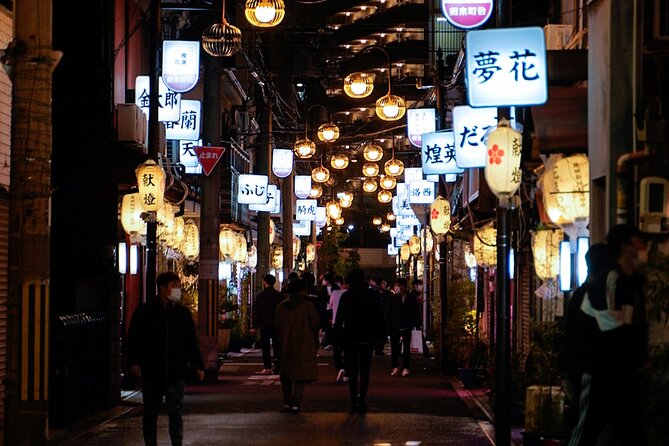
- Yukaku street stories with etiquette so you understand what you’re seeing and how to behave
- Shinsekai + Luna Park energy in a neighborhood that feels more local hangout than tourist show
- Two izakaya restaurants, no language stress thanks to your guide doing the ordering
- Bold, adventurous food choices paired with drinks, not just safe tourist plates
- Small group size (max 7) for a more personal pace and more time for questions
Osaka’s Yukaku Red Light District: What the Tour Teaches and Why It Matters
The tour’s center of gravity is Tobita Yukaku, one of the best-known red light districts in Japan—and often described as the last of its kind in the country. That line matters, because it frames the evening as more than nightlife watching. You’ll get the why: how the district formed, what it became, and why it still exists in a modern Osaka.
I like that your guide focuses on context and behavior, not shock value. You’re taught the right way to move through the area—how to look without staring, how to respect the residents and the spaces they live with. The goal is simple: learn the story, then watch it with better eyes.
There’s also a tone shift you should expect. The conversation can include sexual themes because the subject is sexual commerce and its culture. That’s not a “maybe” part. It’s part of understanding the district’s purpose and history. If that topic will make you uncomfortable, skip this one.
Finally, you’re not left to wander alone. Small-group pacing helps a lot here. It’s easier to follow instructions, easier to ask questions, and easier to keep your feet under you when you’re working through a maze of narrow lanes.
You can also read our reviews of more tours and experiences in Osaka.
Meeting at Doubutsuen-mae: The 210-Minute Pace and What to Wear
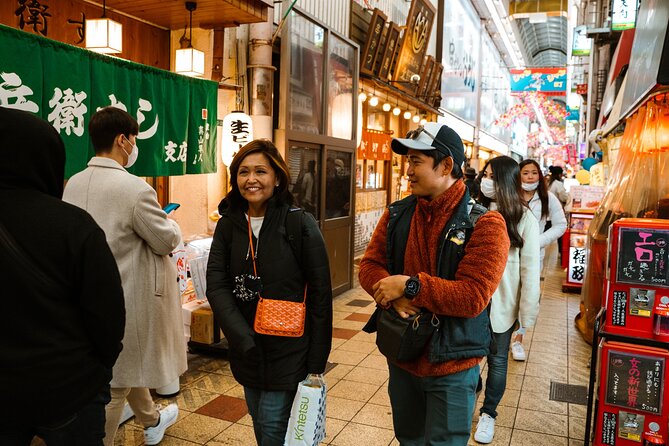
You meet at Doubutsuen-mae Station Exit 2 on the Osaka Metro line, or at a nearby spot called Cafe Causerie. From there, the evening is built around walking, observing, and eating in sequence, not sitting in one place.
Plan on about 210 minutes total—roughly 3.5 hours. Multiple guides and guide styles show up in the experience, but the walking load stays the same. You should be ready to walk and stand for most of the tour, including time inside and around restaurants.
Dress smart for Osaka nights. Bring comfortable shoes first—this is the kind of itinerary where your calves will vote for shoes, not fashion. If you’re the type who likes photos, also expect you’ll be doing a lot of looking and moving rather than posing for long stops.
Group size is capped at 7 participants. That small number changes the feel. You get a more human pace, and it’s easier for your guide to check in with everyone—especially if you have questions about what you’re seeing.
Shinsekai and Luna Park: Retro Osaka Without the Theme Park Feel
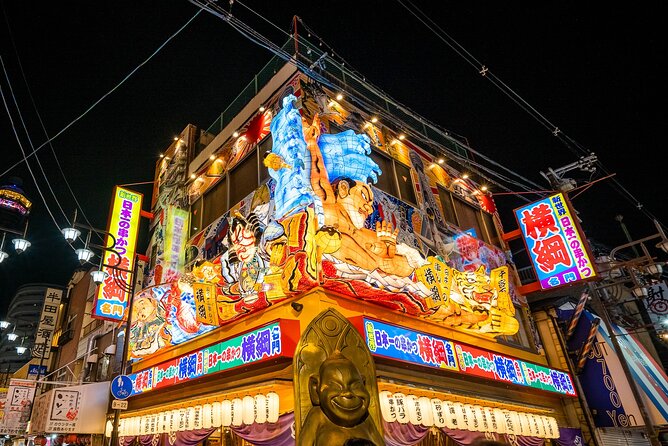
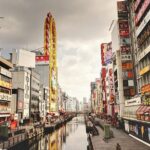
After Yukaku, you shift gears to Shinsekai, an area famous for its retro vibe and its late-night energy. This is where the tour stops feeling like a lesson and starts feeling like a neighborhood walk with a story attached.
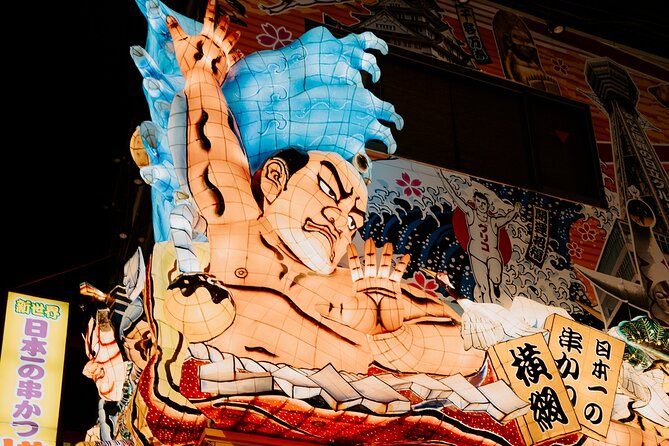
Shinsekai includes Luna Park, and the name alone sets up expectations—old amusement-park imagery mixed with the reality of what people actually do here now. On this tour, that contrast becomes a point of interest. You’re not just passing famous angles. You’re learning how the place transformed from an entertainment concept into a local hangout district.
This part is valuable for a simple reason: it shows Osaka beyond the standard postcard route. If all you do is hit the biggest sights, you miss how Osaka keeps changing its identity block by block. Shinsekai is a strong example of that.
Also, the walk here tends to feel lighter than Yukaku. You’re still moving, but the tone is more playful, so you can reset mentally before the food portion.
Izakaya Hopping in Two Stops: What You’ll Eat, Drink, and Budget
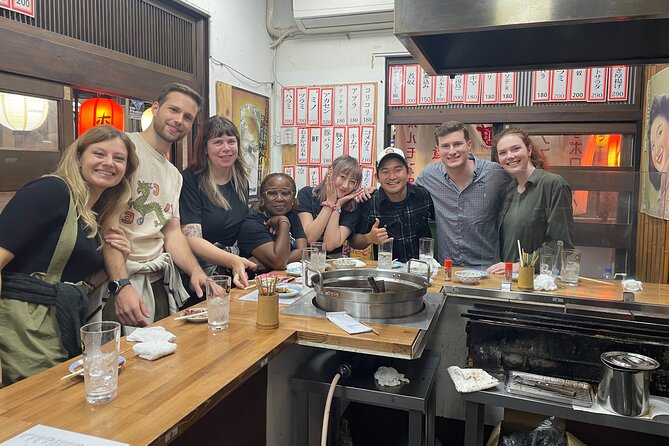
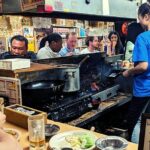
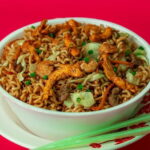
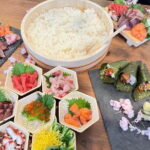
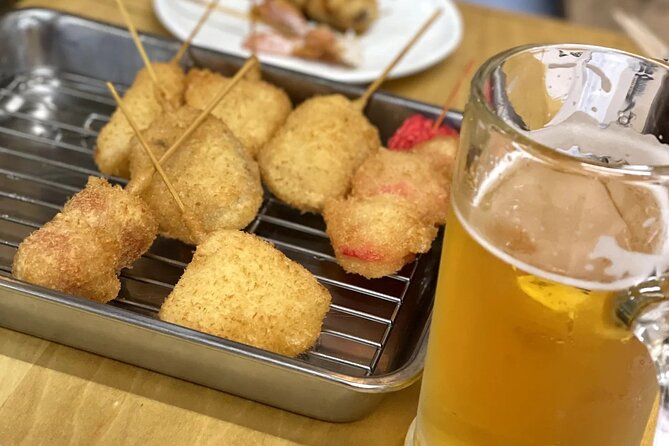
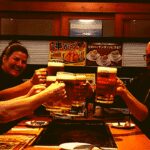
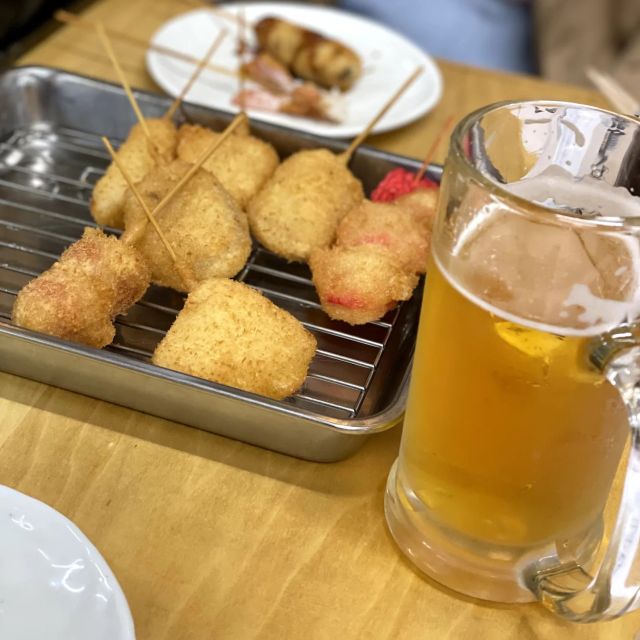
The second half is the part most people remember long after the photos. The tour includes a local food tour in 2 izakaya restaurants, with dishes and a drink pairing at each stop. It’s explicitly designed as an “in the moment” food experience, not a lecture with snacks.
Important: the $45 price does not cover the food and drink bill. That cost is split among guests. The average izakaya spending given is around ¥4000. You’ll want to budget for that on top of the tour price if you want to eat at a comfortable pace.
Also plan your appetite. The tour is about 50% food, and the advice is to not eat before coming. Your guide is bringing you to specific places for a reason. If you show up full, you’ll miss the point.
The food choices are meant for bold and adventurous eaters. You may be trying items you’ve never had, and your guide does the hard work of steering you toward dishes that make sense together with the drinks. If you have dietary restrictions, tell the operator ahead of time. The tour is not suitable for vegans, so if vegan is your hard line, you’ll need a different plan.
No language hassles is a big deal in Osaka. Even if you can read some Japanese, izakaya menus and ordering rhythms can feel like a game show when you’re on your own. Here, your guide handles communication and helps keep the experience smooth.
Respect Rules in a Real District: How the Tour Keeps It Comfortable
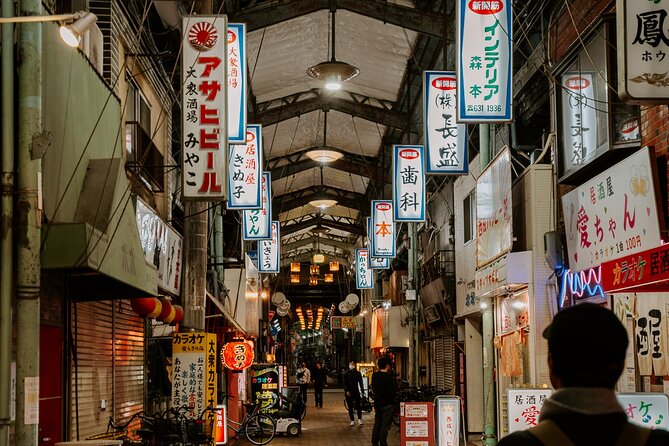
This kind of tour only works if it treats the area as real life, not a spectacle. That’s why etiquette is such a focus. Your group is expected to follow the guide’s instructions, and non-compliant behavior can lead to removal from the group.
That sounds strict, but it’s actually part of why the experience can feel safe and welcoming. In the stories shared by people who went, the guide role is described as warm, interactive, and careful about tone. The best version of this tour doesn’t just say respect; it trains you how to practice it with your eyes and your body.
So what should you do? Keep your volume down, walk where your guide directs, and treat storefronts like homes and workplaces, not backdrops. If you’re the kind of person who likes to ask questions, this is the place to do it—your guide is there to explain what you’re seeing and why.
Safety is never something you can promise from a distance, but the structure helps. Small group, clear instructions, and a guide who can manage the flow means you’re not wandering unpredictably in a sensitive area.
Your Guide’s Style: Why People Keep Mentioning the Personality
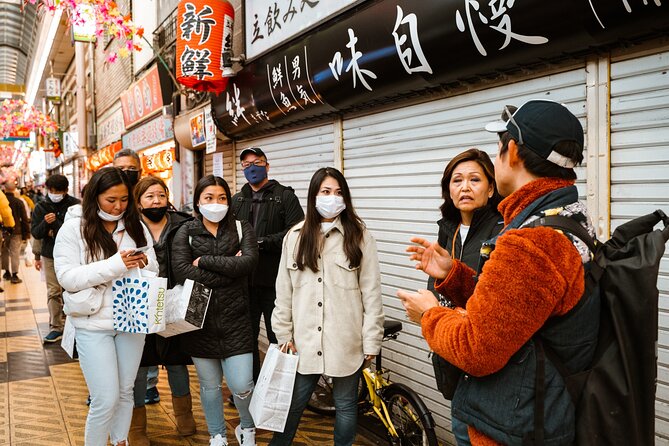
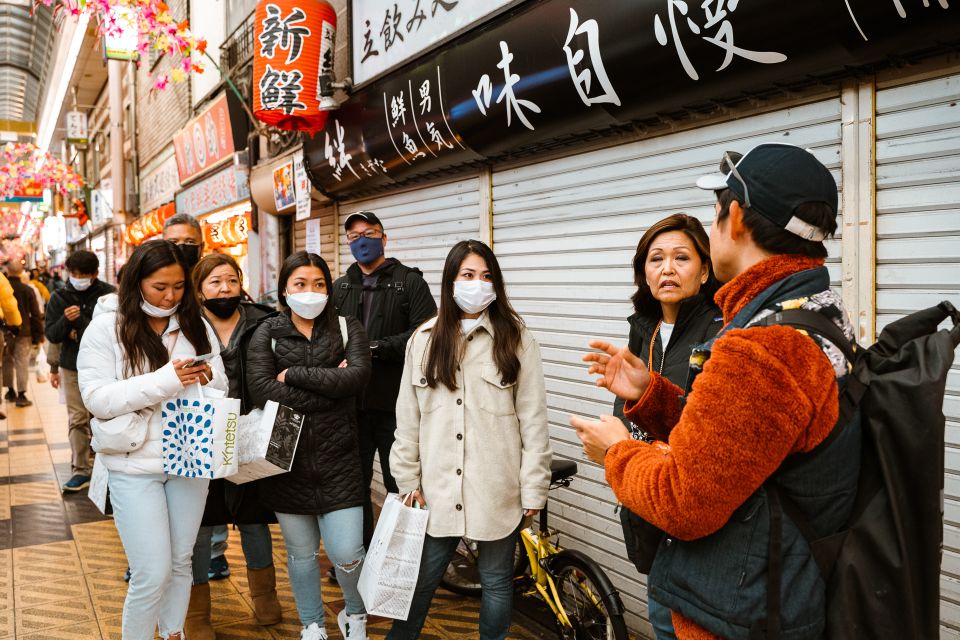
One pattern shows up again and again: the guides make the evening feel like a night out, not a chore. You might meet guides like Haruki, Leo, Rui, Riumi, or others from the team. Different personalities, same approach—storytelling, humor, and a respectful tone.
A few standout traits people mention:
- Quick rapport: guides are described as friendly, energetic, and easy to talk to
- Answers that connect Osaka to Japan: questions about daily life and culture come up a lot
- Humor used to soften heavy topics: adult themes are handled with care, not crudeness
- Food guidance that pushes you without forcing you: you get choices that match the tour’s mood
It helps that the team is described as fluent across languages, even though the tour itself runs in English. That matters for comfort and clarity when you’re ordering, asking for explanations, or clarifying dietary limits.
If you want an evening where you can talk and still enjoy the sights, this is the kind of guide-led format that works well.
Price and Value: Is $45 Worth It When Food Is Extra?
Let’s do the honest math. $45 per person buys you the walking tour with a live English guide plus exploration time in Tobita Yukaku and Shinsekai, along with the structure of a two-izakaya food stop.
Food and drinks are extra, split among guests, and the average spend for izakaya is given as ¥4000. So your total cost depends on how much you drink and what you order at each stop—but you’re going in with a plan.
Here’s why the value can still be strong:
- You’re paying for local navigation and context in two neighborhoods that are not easy to read on your own
- You’re paying for ordering help so you can eat without stress
- You’re getting a small group experience, not a large cattle-call walk
- You’re getting a guided evening that mixes nightlife culture with cultural understanding
If you were planning to spend the night anyway, this can convert a random stroll into a guided story plus a satisfying meal route.
If you only want the sights and you already know you’ll skip food and drinks, then the extra izakaya spend means you may not feel the value as much.
Who This Tour Fits Best in Your Osaka Plan
This tour is a great match if you want:
- A late-night Osaka look beyond the usual big attractions
- A guided walk that includes history, etiquette, and practical context
- An izakaya night where you try multiple dishes instead of ordering the same safe thing
- A group format where you can ask questions and keep moving
It’s a poor match if:
- You’re not comfortable with adult themes connected to the district’s purpose and history
- You want a fully vegetarian or vegan menu (it’s not suitable for vegans)
- Your plan is mostly sitting, because you will be walking and standing for about 3.5 hours
- You prefer to keep nightlife strictly family-friendly
For solo travelers, it can also be a solid way to avoid eating alone. People mention feeling comfortable and included when the group dynamic stays respectful and the guide sets the tone.
Should You Book Hidden Osaka? A Practical Decision Guide
Book this tour if you’re the type who enjoys a city at street level: the small signs, the local rhythms, and the stories behind places that outsiders usually skip. I’d especially lean toward booking if you want Osaka with a guide because it makes the night easier to understand and easier to enjoy—plus it saves you from the “what do I order” problem at izakayas.
Skip it if you’re expecting a clean, PG nightlife photo walk. This is a real district with real history, and the topic includes adult material. If that’s not your lane, you’ll be happier elsewhere.
If you do book, set yourself up for success: wear comfortable shoes, come hungry enough to enjoy the izakaya stops, and keep a respectful attitude. Do those three things and you’ll get the best version of the evening.
FAQ
How long is the Hidden Osaka tour?
The tour runs for 210 minutes (about 3.5 hours).
Where do we meet for the tour?
You’ll meet at Doubutsuen-mae Station Exit 2 (Osaka Metro Line) or at Cafe Causerie.
What does the $45 price include?
It includes exploration of the Tobita Yukaku red light district, Shinsekai exploration, and a local food tour at 2 izakaya restaurants.
Are food and drinks included in the price?
No. The food and drink bill is split among guests, and it’s separate from the $45 tour price.
How much should I expect to spend at the izakaya?
The average spending for izakaya is about ¥4000.
Is the tour suitable for vegans?
No. The tour is not suitable for vegans.
What language is the tour guide in?
The tour is offered with an English live tour guide.
How big is the group?
The group is limited to 7 participants.
Is the tour family-friendly?
The experience includes adult themes related to the red light district, so it’s not a good fit if you want to avoid sexualized topics.
Is the tour refundable if I cancel?
Yes. Free cancellation is available up to 24 hours in advance for a full refund.