REVIEW · OSAKA
3.5h Osaka Night guided Local Bar Hopping, Sake & Karaoke
Book on GetYourGuide →Operated by BITE ME OSAKA · Bookable on GetYourGuide
Osaka at night has a way of pulling you in fast. This 3.5-hour local bar-hopping walk from Namba mixes izakaya food and sake tasting with a quick cultural stop at Hōzenji Temple, then ends in karaoke where you sing alongside local customers. It’s the kind of plan that saves you from wandering in the dark hoping you picked the right bars.
I like that the guide keeps the vibe relaxed but still teaches the rules that make Japanese nightlife feel comfortable. I also love the way the night flows from sights near Dotonbori (including photos at the Glico sign and Kuidaore Taro) to shared meals, then to sake flights that actually help you taste differences instead of just ordering whatever looks good.
One thing to consider: food and drinks are not included in the tour price. You’ll be sharing the bill at several stops, and some spots allow smoking, so if smoke bothers you, plan ahead and pace yourself.
In This Review
- Key things I’d highlight before you go
- Namba meets Hozenji: the rhythm of an Osaka night
- Finding your guide at FamilyMart (and why it’s smart)
- Dotonbori and the walk that sets the tone
- The first izakaya stop: shared food, manners, and ordering confidence
- Sake tasting: learning flavor differences, not just labels
- Hōzenji Temple: a short cultural break that changes the mood
- The final karaoke bar: the part you’ll talk about later
- Price and value: what you’re really paying for
- What this tour does well (based on how it’s described)
- Practical tips for a smoother night in Namba
- Who should book this Osaka night bar-hopping tour
- Should you book it?
- FAQ
- Where do I meet the guide?
- How long is the tour?
- What’s the total cost besides the tour price?
- What’s included in the tour price?
- Are there language options for the guide?
- Is it suitable for anyone under 20?
Key things I’d highlight before you go
- Meet right by Namba Station Exit 14 so you’re not fighting transit right before dinner drinks
- Small group (max 10) keeps questions easy, especially when you’re learning izakaya manners
- Sake tasting + food pairings so you’re tasting flavors, not just buying “a sake”
- Hozenji Temple prayer lesson adds real context to the Osaka nightlife theme
- Karaoke snack bar with all-you-can-drink turns the night into a memory-maker
- Guide handles photos and gives you a printed photo souvenir to take home something tangible
Namba meets Hozenji: the rhythm of an Osaka night
This tour is built like a good evening out: a quick warm-up walk, a couple of guided eating and drinking stops, a culture break, then the fun finale. The timing matters because Osaka nightlife moves quickly after 7 pm, and having a plan keeps you from wasting the best hours figuring out where to go.
The overall tone is local-friendly rather than strict “tour mode.” You’re not just looking at places; you’re learning small habits—like how people order, how plates get shared, and how you’re expected to treat food and dipping sauces. That’s usually what makes the difference between a night that feels foreign and one that feels normal.
And then there’s the contrast: you start in neon Namba, pause at Hōzenji Temple to learn a traditional way of praying, and only after that you head back into the louder, more social part of Osaka. It feels intentional, like someone actually understands how Osaka nightlife connects to everyday culture.
You can also read our reviews of more food & drink experiences in Osaka
Finding your guide at FamilyMart (and why it’s smart)
You meet at 7:00 PM in front of FamilyMart 難波一丁目店 right outside Namba Station Exit 14. Your guide will be holding a BITEMEOSAKA sign. That small detail matters more than you’d think: in Osaka, even “close by” can still mean a few minutes of confusing street crossing, and you don’t want to lose energy right at the start.
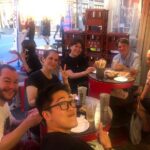
Because the group is limited to 10 participants, it’s easy to stay together even if the streets get busy. The guide is English and Japanese speaking, which helps if you’re curious and want to ask follow-up questions instead of just nodding along.
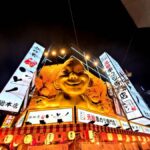
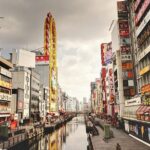
Before the first izakaya, you take a short walk through Namba’s streets and landmarks. You’ll get photo time at the famous Glico sign and Kuidaore Taro, and you’ll learn quick culture context while you’re actually looking at the scenery. It’s a practical way to get your bearings fast.
Dotonbori and the walk that sets the tone
The Dotonbori portion is only about 30 minutes, so it’s not trying to replace a full sightseeing day. It’s a starter course. You get street energy, you learn what you’re looking at, and you get the photos early enough that you’re not rushing later with phones in one hand and menus in the other.
In a city like Osaka, signage and street characters are part of the personality. Seeing Glico and Kuidaore Taro with a guide who can explain what they represent makes the area feel less like random decoration and more like local humor and identity.
If you’re the kind of person who likes snapping photos but also hates long intro lectures, this section is a good balance. It keeps the momentum, and it gets you to the first drink without dragging.
The first izakaya stop: shared food, manners, and ordering confidence
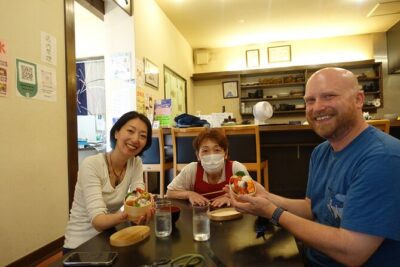
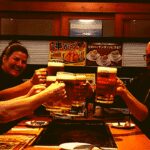
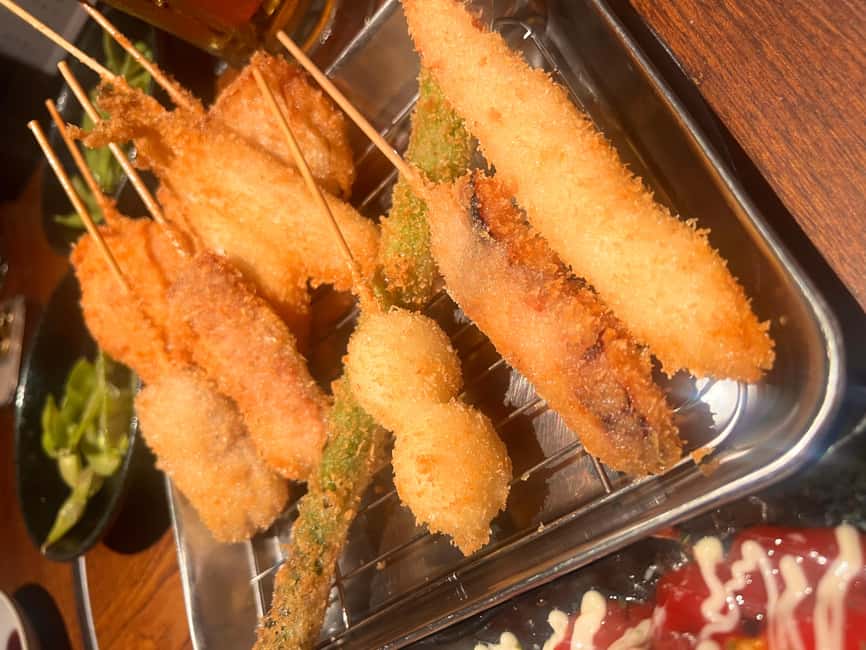
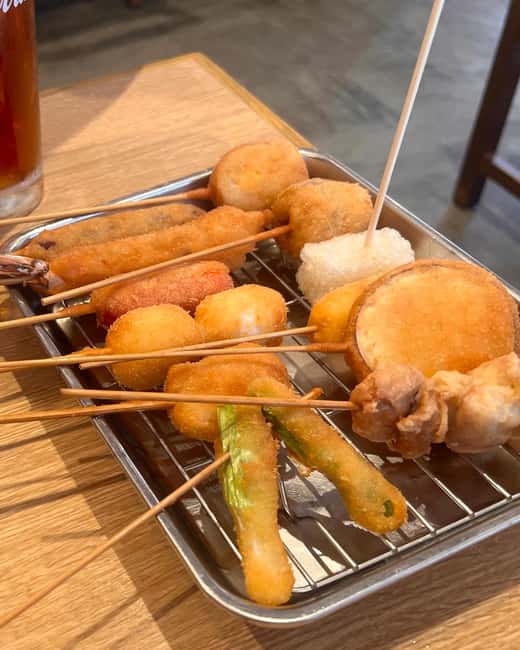
Your first real stop is a local izakaya where you start with a welcome drink. Then you share a spread of Japanese dishes with the group while the guide explains common izakaya customs and etiquette.
This is one of the most valuable parts of the night because the “rules” turn awkward moments into easy laughs. You might learn practical habits such as the no double-dipping style approach people use with shared items. (If you’ve never visited an izakaya, you’ll appreciate learning these before you accidentally do the one thing that makes someone cringe.)
The food here is designed to pair with what you’re drinking. That means you’re not just eating to fill up; you’re learning what tastes good with beer, spirits, or whatever the night’s menu brings. You’re also moving through multiple venues, so you get variety without feeling like you have to make a decision at each place.
One drawback to note: since the food and drinks are shared among participants (and the bill is extra), you’ll want to be comfortable with the group pace. If you hate communal ordering or you’re very particular about dietary needs, this tour may feel less flexible than doing it on your own.
Sake tasting: learning flavor differences, not just labels
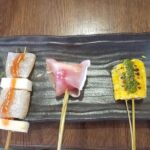
After the first restaurant, you go to a cozy sake-focused spot for a dedicated tasting session. This part is about 45 minutes, and it’s set up so you try several recommended sake varieties alongside snacks made to complement the flavors.
This is where the tour earns its keep. Many “sake experiences” end up being show-and-tell with little guidance. Here, the tasting is paired with food and explained in a way that helps you notice differences, like how each sake tastes before you decide which style you’d want later on your own.
You can think of it like this: instead of buying one drink you can’t describe, you learn what you liked and why. Then if you later stumble into a bar and see a sake you remember, ordering becomes easier.
If you’re a beginner, don’t worry. The whole point is that you get recommendations and comparisons during the tasting rather than being thrown into a menu with zero context.
You can also read our reviews of more guided tours in Osaka


Hōzenji Temple: a short cultural break that changes the mood
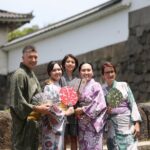
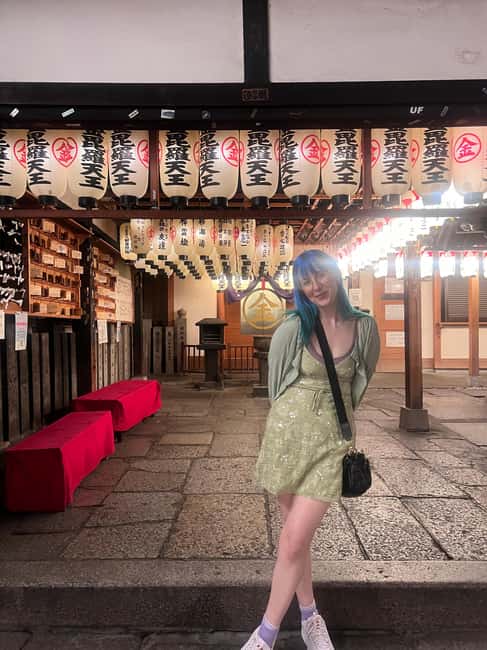
Then comes the tonal shift. You take a walk to Hōzenji Temple for a brief guided moment (around 15 minutes). Your guide explains the traditional way of praying, so you’re not just taking photos in front of a temple and moving on.
This stop works because it’s short. You get context without losing your night. It also gives your body a reset—fewer loud voices, less smoke-filled air, and a calmer pace before the final party section.
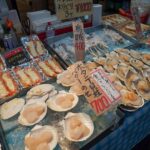
On the way, you might also grab street snacks like sweets or takoyaki if you feel like it. That keeps the night feeling flexible and street-authentic rather than purely scheduled.
The real win here is perspective. Osaka nightlife can feel like only neon and drinks—this adds a layer of meaning so your night feels like more than just partying.
The final karaoke bar: the part you’ll talk about later
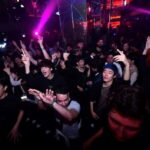
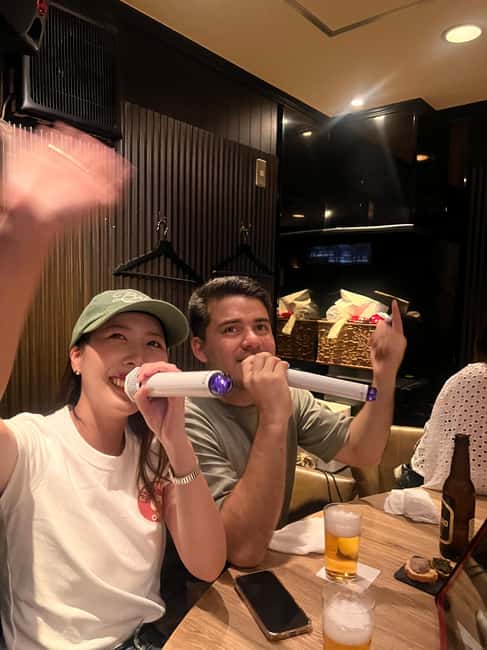
The last stop is a super-local karaoke snack bar, and it’s where the night turns into a shared story. You’ll sing along with Japanese customers, and the experience includes all-you-can-drink beverages.
This is also why the guide’s presence matters. Karaoke bars can be intimidating if you don’t know what to do or how the system works. Having a guide who can help you jump in turns karaoke from a “maybe later” activity into an actual memory.
The tone here is social. You’re not just performing into the void. You’re joining the atmosphere, and English songs may pop up alongside local favorites, depending on what the bar and group are choosing.
Small caution: this is the most energy-intensive part of the schedule. If you’re trying to be fresh for the next day, pace your drinks earlier in the night. You want to enjoy karaoke, not just survive it.
Price and value: what you’re really paying for
The tour price is $40 per person for 210 minutes (about 3.5 hours). The guide fee is included, along with a Japanese souvenir. What’s not included is the shared cost of food and drinks at the venues.
Plan on roughly JPY 7,000–10,000 per person for shared meals and drinks across the stops. The guide’s drinks are also covered by participants, so the shared cost isn’t only your personal orders. In other words, it’s a group dining budget baked into the experience.
So is it worth it?
If you’re doing Osaka at night solo, the hard part isn’t finding a bar—it’s finding the right kind of bar where you feel comfortable ordering, learning etiquette, and actually getting a structured experience instead of hopping randomly. The value here is the combination: guided walking + cultural stop + sake tasting + karaoke finale with a small group and a guide who can connect the dots.
Also, the tour includes a souvenir and the guide helps with photos along the way. Some nights feel like you spent money on drinks. This one has built-in “extras” that help you remember the night beyond just receipts.
What this tour does well (based on how it’s described)
A few themes show up again and again in how people describe the experience:
- The guide is friendly, young, and local in a way that makes you feel at ease fast.
- The itinerary isn’t just a list of venues; it teaches small Osaka habits that keep you from feeling lost.
- Sake tasting is treated like a learning moment, with variety and pairing, not just one pour and go.
- The karaoke stop is the payoff—locals singing along, English songs included, and an overall welcoming vibe.
- Photo attention is real. You get lots of photos and a printed photo souvenir at the end, which makes the night feel cared for.
It’s not flashy tourism. It’s a night you’re handed a structure for, and you just follow the lead.
Practical tips for a smoother night in Namba
A few things will make this night easier and more enjoyable:
- Wear shoes you can walk in. You’ll be moving between multiple spots around Namba.
- Go easy on smoking exposure if you’re sensitive. Some restaurants allow smoking, and you’ll be indoors for parts of the night.
- Be ready to share food and drinks. This is part of the format, including communal ordering styles.
- Keep your alcohol pace in mind. You’ve got multiple drink settings, then karaoke.
- Bring your phone for photos, but let the guide do the main picture work. The guide takes photos for you, and you’ll end with a printed souvenir anyway.
One more point: the tour isn’t listed as suitable for people under 20, so if you’re traveling as a family or with younger teens, you’ll want to look for different nightlife options.
Who should book this Osaka night bar-hopping tour
This fits best if you want:
- A first or second night in Osaka, when you still need help getting your bearings
- A guided plan that handles the etiquette and ordering anxiety
- A mix of nightlife + one real cultural stop (Hōzenji Temple)
- Sake curiosity, especially if you’ve only tried sake once or twice
- A fun end to the night that’s not just another bar
If your goal is purely quiet, private, or highly customized dining, you may prefer to design your own bar crawl. But if you want the “walk in with zero plans, leave with stories” style night, this one is built for that.
Should you book it?
If you like nightlife but want it to feel guided and friendly—not random—book this. The combination of Dotonbori landmarks, izakaya manners, a real sake tasting session, Hōzenji Temple context, and karaoke with local customers is a strong package for a 3.5-hour evening.
I’d say yes especially if you’re traveling with a partner, going solo, or just want a small-group experience where the guide keeps things moving and explains what you’re seeing and eating.
Just go in knowing the extra cost for shared food and drinks is real, and plan around smoke sensitivity. If that’s not a concern, this is one of those Osaka nights that feels like you joined local life instead of visiting it from behind glass.
FAQ
Where do I meet the guide?
You meet at 7:00 PM in front of FamilyMart 難波一丁目店, right outside Namba Station Exit 14. Your guide will be holding a BITEMEOSAKA sign.
How long is the tour?
The experience runs for 210 minutes (about 3.5 hours).
What’s the total cost besides the tour price?
Food and drinks are shared among participants and are not included in the tour fee. The shared cost is usually around JPY 7,000–10,000 per person.
What’s included in the tour price?
The included items are the guide fee (with explanations and photo taking) and a Japanese souvenir.
Are there language options for the guide?
Yes. The live guide speaks English and Japanese.
Is it suitable for anyone under 20?
No. The activity is not suitable for people under 20.