REVIEW · OSAKA
Tsumami Zaiku (Kanzashi) making Workshop in Abeno Osaka
Book on Viator →Operated by Moirai Arts · Bookable on Viator
Kanzashi turning cloth into wearable art. This Tsumami Zaiku (Kanzashi) workshop takes place in a 100-year-old traditional Japanese house in Abeno, and you get to choose between an easier Traditional design and a more challenging Sakura cherry-blossom version. It’s a hands-on craft with guided steps, plus a short tea break that keeps the whole experience from feeling rushed.
I love how the instructors, including Misa-sensei (with Jun and Ami also pitching in), keep things friendly and question-friendly while you build your kanzashi step by step. The only real consideration is practical: the house has a steep staircase, so you’ll want to plan ahead if stairs are an issue for you or anyone in your group.
In This Review
- Key highlights at a glance
- Abeno’s 100-year house setting: charm with one practical catch
- Picking your kanzashi: Traditional vs Sakura (and what that really changes)
- Your materials: premade cloth pieces, real assembly work
- Step-by-step instruction that stays relaxed (even if you’re unsure)
- The glue-drying break: matcha, sweets, and a needed reset
- Finishing time: leaving with your kanzashi in a box
- Value for the price: what $35.83 gets you in real terms
- Who this workshop fits best (and who should think twice)
- Getting there and keeping it easy: Nishitanabe Station start and pickup option
- Weather matters: a small detail with real impact
- Should you book this Tsumami Zaiku workshop?
- FAQ
- How long is the Tsumami Zaiku workshop in Abeno?
- How much does it cost per person?
- Where do I meet for the workshop?
- Is pickup available?
- What design options can I choose from?
- What’s included in the price?
- Is this workshop suitable for kids and people with mobility issues?
Key highlights at a glance
- Choose Traditional or Sakura: pick the style level that fits your comfort.
- All the prep is done for you: patterned cloth and accessories are provided, with petals being the only part you assemble.
- Small group feel: capped at 6 travelers, which means more personal attention.
- Matcha break included: tea and Japanese sweets happen while the glue dries.
- Take-home keepsake: you leave with your finished kanzashi, wrapped and packed in a box.
Abeno’s 100-year house setting: charm with one practical catch
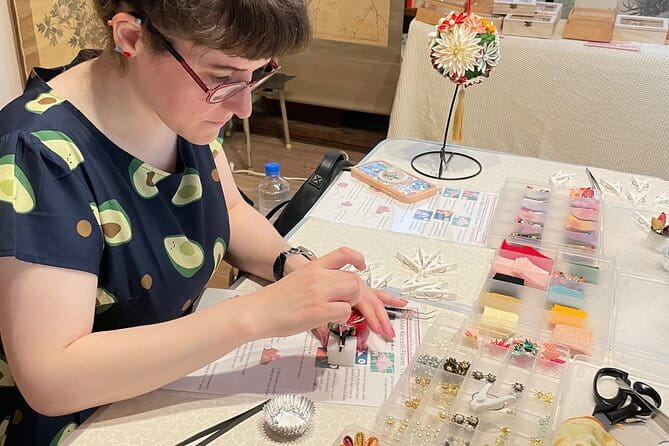
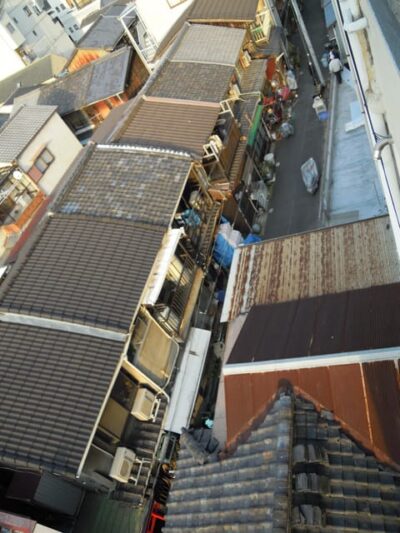
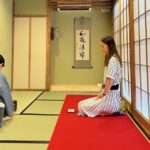
This workshop happens in a traditional Japanese house that’s about a century old, in Abeno (Osaka). Inside, you’ll find a mixed eastern-style layout, which makes the whole experience feel more like visiting a craft studio than doing a factory-style class. The location also puts you near public transportation, with your start point at Nishitanabe Station (you’ll meet there before walking to the house).
One thing I’d flag right away: there’s a steep staircase in the house. If you have mobility limits, take this seriously. It’s not just an inconvenience—your comfort and safety come first, and this activity may require more stairs than a typical street-level workshop.
You can also read our reviews of more tours and experiences in Osaka


Picking your kanzashi: Traditional vs Sakura (and what that really changes)

You start with a quick orientation, including a brief history of Tsumami-zaiku, then you choose between two workshop options:
- Traditional kanzashi: designed to feel more approachable.
- Sakura kanzashi: a bit more complex, and it may take longer than the Traditional version.
The key thing is that difficulty isn’t left to chance. After you choose, the instructor walks you through the steps. So even if you’re new to crafts, you’re not just handed materials and hoped-for luck.
Also, Sakura isn’t just “prettier.” It’s a different time rhythm. Expect to spend more time shaping and assembling the petals and getting the pieces together neatly, because the workshop is still built around guided assembly rather than quick craft hacks.
Your materials: premade cloth pieces, real assembly work
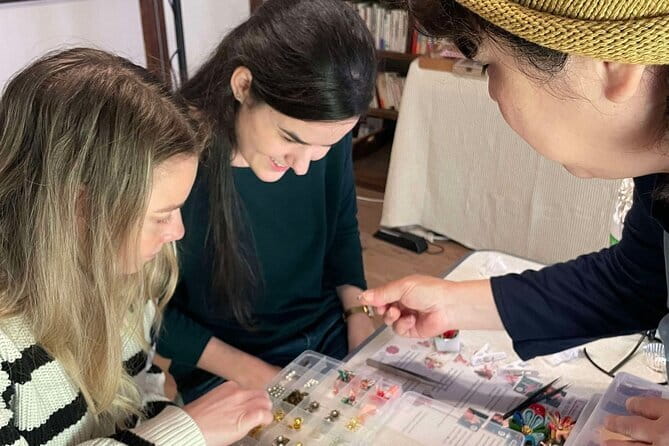
A big part of why this class works for beginners is how it handles preparation. You get all materials needed for a smoother experience. Cloths, pin sets, and accessories are provided, and most items are already precut and premade.
The part you’ll actually focus on is the kanzashi petals (the pieces you assemble). Everything else is set up so you can spend your energy on the satisfying part: making the design and getting it together cleanly.
That’s a smart balance. If you’ve ever done a craft class where you waste half the time cutting and tracing, this setup saves you. You still get the hands-on fun, but without the “did I cut this right?” stress.
Step-by-step instruction that stays relaxed (even if you’re unsure)
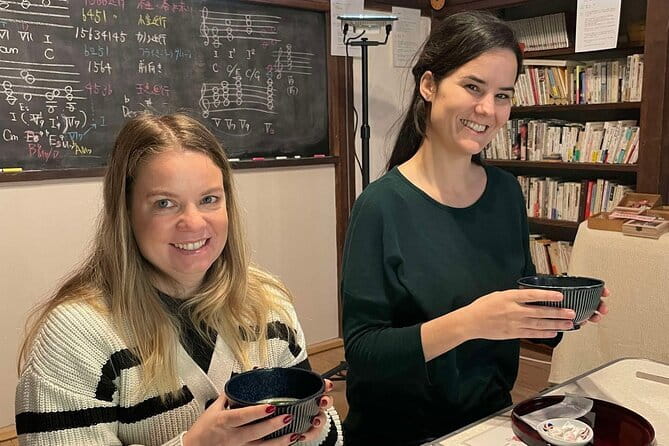
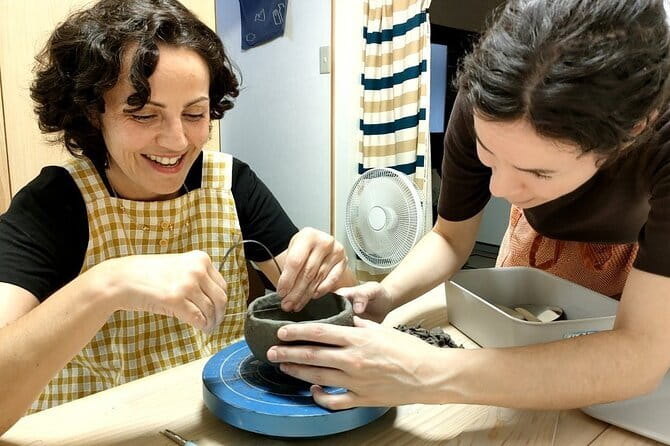
Once you choose your style, you’ll go through patterned cloth selection and then the build process step by step. The instructor shows how to use the different patterned cloths and accessories to design your own kanzashi.
What matters most for your enjoyment is the tone and pacing. The staff are friendly and accommodating, and they stay professional while you work. You can ask questions without worrying about making mistakes. That’s not a small thing. Good instruction turns a craft from fragile to doable.
And because the group is small—maximum of 6 travelers—you’re less likely to feel stuck waiting your turn. The class is built so you can keep moving at a comfortable pace.
The glue-drying break: matcha, sweets, and a needed reset
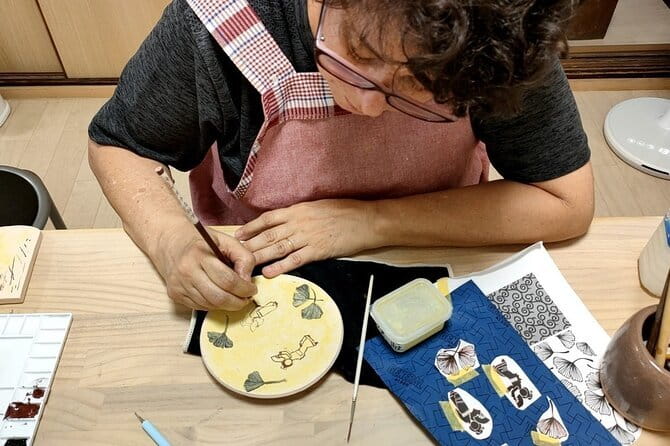
At some point during assembly, you’ll use glue to put the kanzashi together. Glue needs time to dry, so the workshop schedules a break right into the process.
During the break, you can enjoy matcha and Japanese sweets. There’s also time to look around at handmade kanzashi items available for purchase. This is one of those “quietly brilliant” workshop features: you’re not just waiting. You’re rewarded and you get a chance to see examples of what finished pieces can look like.
For your planning, treat this as part of the timeline, not a random pause. Since the workshop runs about 1 hour 30 minutes, the glue break helps keep the class moving while preventing that end-of-class panic.





Finishing time: leaving with your kanzashi in a box
After the break, the workflow shifts to completion. You’ll receive your finished kanzashi wrapped and packed, ready to take home. You also get a box as part of what’s included.
That take-home packaging matters more than you’d think. Kanzashi are made to be worn or stored carefully, and having a proper box reduces the risk of bending or messing up your finished piece on the walk back to your hotel.
And because you’re making something specifically designed to go into hair or accessory use, you’ll likely feel more satisfied than if you end up with a craft that only looks good on a table.
Value for the price: what $35.83 gets you in real terms

At $35.83 per person for an approximately 1 hour 30 minute workshop, this can feel like a “special activity” price. But it’s not just paying for time. You’re paying for:
- A small group setting (max 6)
- Guided step-by-step instruction
- All key materials provided, including the supplies and box
- A matcha and Japanese sweets break
- Two skill options (Traditional vs Sakura)
The value is strongest if you’re the type who likes crafts but doesn’t want to do the prep work yourself. Since cloth pieces and accessories are already handled for you, the class focuses on building skill and creating a finished item rather than dealing with the tedious start-up steps.
If you’re expecting a very long workshop or multiple finished pieces, this won’t be that. It’s a concentrated, well-structured class designed to finish within the allotted time.
Who this workshop fits best (and who should think twice)
I think this is a great match if you want a calm, creative break from Osaka sightseeing. It’s also ideal if you like small-group activities where you can ask questions and actually follow along without feeling rushed.
It’s suitable for most travelers, with a couple of important limits:
- Children must be 8 and above
- People with mobility difficulties should consider the steep staircase
- It’s not recommended if you have an infectious illness (flu, COVID, etc.)
If you’re traveling with kids, the workshop allows that you can bring them, but you’ll be responsible for their care during the workshop.
If you’re someone who gets easily frustrated by glue-and-assembly projects, remember the Traditional option exists for a reason. Choose Traditional if you want less complexity and a smoother pace.
Getting there and keeping it easy: Nishitanabe Station start and pickup option
The meeting point is Nishitanabe Station, located at 1-chōme-1-25 Nishitanabechō, Abeno Ward, Osaka. The activity ends back at the meeting point, so you’re not stuck managing an extra transfer afterward.
Pickup is offered, which is a big convenience if you don’t want to handle the last-mile timing on foot. You’ll also receive a mobile ticket, which tends to make check-in quicker when you’re bouncing between activities in Osaka.
Because the workshop is held in a specific house with a staircase, I’d suggest you give yourself a little buffer time on arrival, even if you’re confident with transit. You want to start the class unhurried.
Weather matters: a small detail with real impact
This experience requires good weather. If it gets canceled due to poor weather, you’ll be offered a different date or a full refund. That means it’s wise to book with enough flexibility in your schedule, especially if your Osaka plan is tightly packed.
Should you book this Tsumami Zaiku workshop?
If you want an authentic-feeling Osaka activity that’s creative, teachable, and actually ends with something you’ll use, I’d say yes. The guided format, the small group cap, and the matcha break make it a comfortable way to learn a traditional craft without turning it into a stress test.
I’d pass or rethink if stairs are a problem for you, or if you prefer activities with lots of sightseeing built in. This is a focused workshop—great for craft lovers, less for people who want to spend the whole time wandering around a neighborhood.
If that sounds like your style, book it. Then show up curious, pick the right level (Traditional or Sakura), and enjoy the moment where you realize your petals are actually coming together.
FAQ
How long is the Tsumami Zaiku workshop in Abeno?
It runs about 1 hour 30 minutes.
How much does it cost per person?
The price is $35.83 per person.
Where do I meet for the workshop?
You start at Nishitanabe Station (1-chōme-1-25 Nishitanabechō, Abeno Ward, Osaka, 545-0011, Japan).
Is pickup available?
Yes, pickup is offered.
What design options can I choose from?
You can choose between Traditional kanzashi (easier) or Sakura kanzashi (more difficult and may take longer).
What’s included in the price?
Included items are cloths, pin sets, accessories for the kanzashi and box, plus matcha and Japanese sweets.
Is this workshop suitable for kids and people with mobility issues?
Children must be age 8 or above. The house has a steep staircase, so people with mobility difficulties should take that into consideration.