REVIEW · OSAKA
Best of Kyoto and Nara Highlights Day Tour from Osaka (7~9 spots)
Book on Viator →Operated by TOURSTORY · Bookable on Viator
One bus, two icons of Japan. I like this day trip because it hits Kyoto and Nara with real structure, and you get two different route styles depending on the weekday. You’ll move between Shinto shrines, major temple halls, and the classic photo stops that make these cities famous.
I also like the practical side: it starts at 8:00 AM from Tsurutontan Soemoncho, you reach the first area around 9:00 AM, and you’re back by about 6:00 PM. Plus, the tour uses a mobile ticket, and you get an English & Korean speaking guide who helps you keep your bearings.
One possible drawback: it’s a long, packed 10-hour day, and some of the biggest sights come with optional admission fees once you’re there. If you want a slower, more flexible day, this may feel rushed.
In This Review
- Key highlights that make this tour worth your time
- Getting from Osaka to Kyoto and Nara: the 10-hour rhythm you should plan for
- Two route options: Fushimi Inari days vs Arashiyama days
- Mon/Wed/Fri: Kyoto & Nara + Fushimi Inari
- Tue/Thu/Sat: Kyoto & Nara + Arashiyama
- Cherry blossom season note
- Nara highlights: Kasuga Grand Shrine, deer park, and Todai-ji’s Great Buddha
- Stop 1: Kasuga Grand Shrine
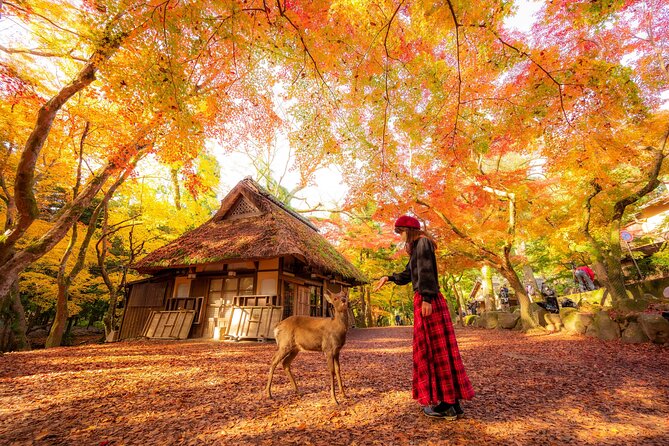
- Stop 2: Nara Park
- Stop 3: Todai-ji Temple (optional main hall admission)
- The “Arashiyama course” hill viewpoint
- Uji and Byodoin Phoenix Hall: a quieter, iconic Kyoto detour
- Stop 4: Byodoin Temple
- Stop 5: Byodoin Omotesando
- The practical mindset here
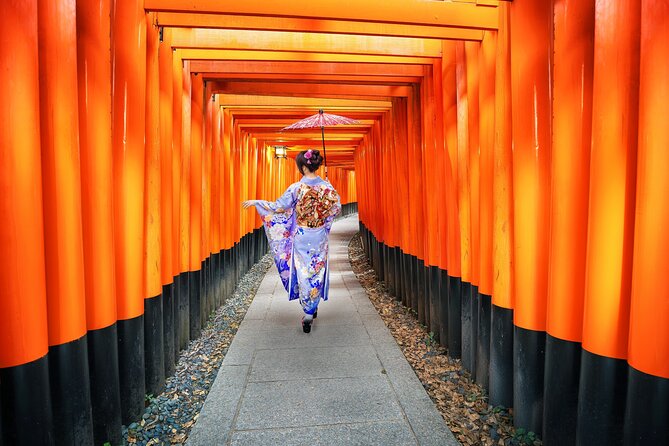
- Fushimi Inari’s torii gates: the shrine climb you can actually time
- Arashiyama Bamboo Forest and Togetsukyo Bridge: the calmer Kyoto side
- Stop 7: Arashiyama Bamboo Forest
- Stop 8: Nonomiya Shrine
- Stop 9: Togetsukyo Bridge
- Nishiki Market for snacks and browsing, then Kiyomizu-dera’s stage view
- Stop 10: Nishiki Market shopping district
- Stop 11: Kiyomizu-dera (optional main hall admission)
- Price and tickets: what your $55.17 actually buys you
- Group size and pacing: staying comfortable in a packed day
- Practical tips that keep your day from getting messy
- Should you book this Kyoto and Nara Highlights day tour from Osaka?
- FAQ
- What time does the tour start, and when do I return?
- What days run the Fushimi Inari route versus the Arashiyama route?
- Are entrance fees included for Todai-ji, Byodoin, and Kiyomizu-dera?
- Is lunch included?
- Do I need a printed ticket?
- How big is the group?
Key highlights that make this tour worth your time
- Two route options tied to weekdays: Mon/Wed/Fri do Kyoto & Nara + Fushimi Inari; Tue/Thu/Sat do Kyoto & Nara + Arashiyama.
- Free shrine and park time adds up fast: Kasuga Grand Shrine, Nara Park, key Arashiyama stops, and Fushimi Inari are free.
- Main temple halls are optional add-ons: Todai-ji, Byodoin, and Kiyomizu-dera offer paid entry if you want the main interiors.
- Nara feels complete in one sweep: Lanterns at Kasuga, deer at Nara Park, then the Great Buddha hall at Todai-ji.
- Kyoto’s best photo-and-street combo: Nishiki Market for food browsing, then Kiyomizu-dera for the stage-and-view moment.
- Guides who help with real details: Names like Yuri, Min, and Soae Lee are associated with patient explanations and practical help like taking photos for solo travelers.
Getting from Osaka to Kyoto and Nara: the 10-hour rhythm you should plan for
This is built for people who want to see a lot without wrestling train transfers all day. You leave from Tsurutontan Soemoncho at 8:00 AM, then you’re in the first sightseeing zone around 9:00 AM. The tour runs for about 10 hours, and it returns to the starting point around 6:00 PM.
Here’s what that means for your mindset. You won’t have the luxury of staying in one place for hours. Instead, you get short, focused time blocks at each stop (often 25 to 50 minutes). That format works great if you’re trying to hit the major hits efficiently—less great if you want quiet, lingering time at every temple.
The day can also flex. Traffic and weather can shift the order of stops, and seasonal conditions can change how long you stay at each location. And because Japanese vehicle rules limit driving time to 10 hours, the guide may adjust the schedule in real time. Translation: don’t build your evening plans too tightly around a super exact return time.
You can also read our reviews of more tours and experiences in Osaka.

Two route options: Fushimi Inari days vs Arashiyama days
The tour offers two distinct itineraries, and which one you get depends on the weekday. This is a big deal because it changes the mood of the whole day.
Mon/Wed/Fri: Kyoto & Nara + Fushimi Inari
This version layers in a classic shrine climb in Kyoto after you’ve done Nara. The Kyoto side includes:
- Byodoin Temple (Phoenix Hall and pond views)
- Byodoin Omotesando (tea-house street shopping and lunch time on your own)
- Fushimi Inari Taisha (the torii gate pathway)
Tue/Thu/Sat: Kyoto & Nara + Arashiyama
This version swaps Fushimi Inari for Arashiyama’s river-and-bamboo scenes. You’ll see:
- Arashiyama Bamboo Forest and Nonomiya Shrine
- Togetsukyo Bridge over the Katsura River
- Then back toward central Kyoto for shopping and Kiyomizu-dera
Cherry blossom season note
If you’re traveling in cherry blossom season, the Kyoto market stop changes on the Arashiyama route: Nishiki Market is replaced by Maruyama Park, and the order of stops adjusts. It’s still a Kyoto-feeling afternoon—just with a different focal point.

Nara highlights: Kasuga Grand Shrine, deer park, and Todai-ji’s Great Buddha

Nara is where this tour earns its name. Even with limited time, you get a clean storyline: Shinto atmosphere, playful nature, then one of Japan’s most famous temple interiors.
Stop 1: Kasuga Grand Shrine
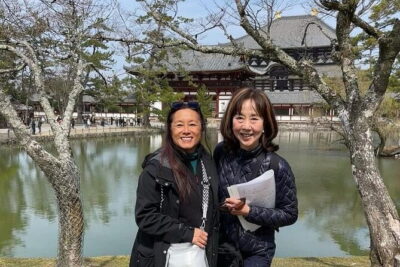
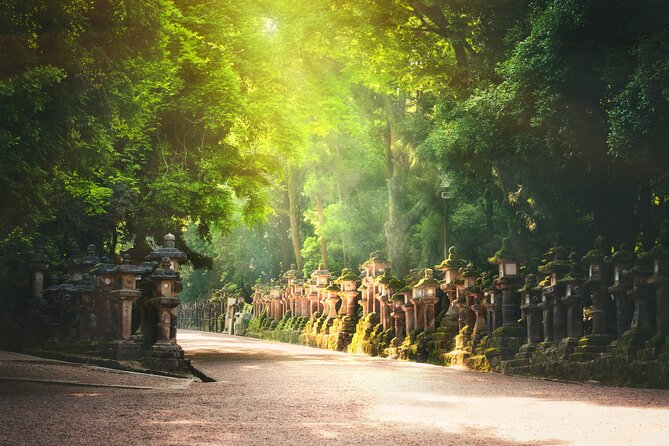
Kasuga Taisha (often called Kasuga Grand Shrine) is known for hundreds of stone and bronze lanterns. The vibe here is part sacred, part photo-friendly, and it’s a strong way to start because you’re not yet dealing with the crowds that often build later in the day.
You get about 30 minutes, and admission is free. That makes it an easy win if you like architecture and atmosphere more than long museum-style visits.
Stop 2: Nara Park
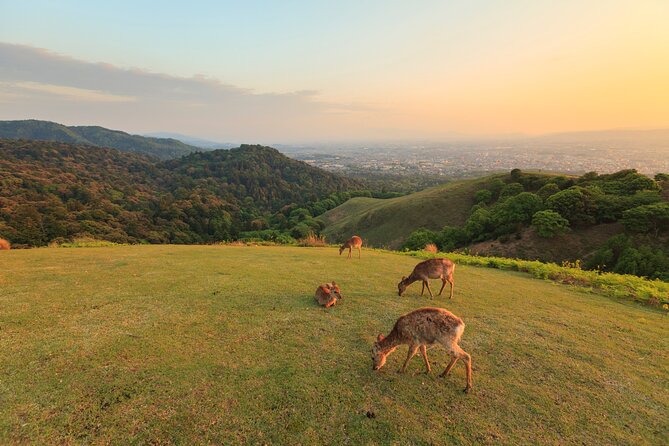
Next comes Nara Park, the famous stretch of green space where deer roam freely. You’ll have around 30 minutes here. Admission is free, but plan your time around actual deer sightings—sometimes the best moment is waiting five minutes longer than you think.
Stop 3: Todai-ji Temple (optional main hall admission)
Todai-ji is the centerpiece. You’re specifically looking at the hall that houses the Great Buddha, one of the largest bronze Buddha statues in Japan, inside a massive wooden structure.
You’re given about 30 minutes, and admission to the temple main area is not included. Optional entry is listed at 800 yen. If you’re the kind of traveler who wants the inside view of major temple halls, budget for it. If you prefer photos from the outside, you can skip the paid part and still enjoy the scale.
The “Arashiyama course” hill viewpoint
On the Arashiyama-style days, there’s also a short grassy hill stop with panoramic views of Nara, including a sight line toward Todai-ji’s large roof (Wakakusayama is part of that section). If you like viewpoints and light walking, it’s a pleasant reset between shrine and temple.
Uji and Byodoin Phoenix Hall: a quieter, iconic Kyoto detour
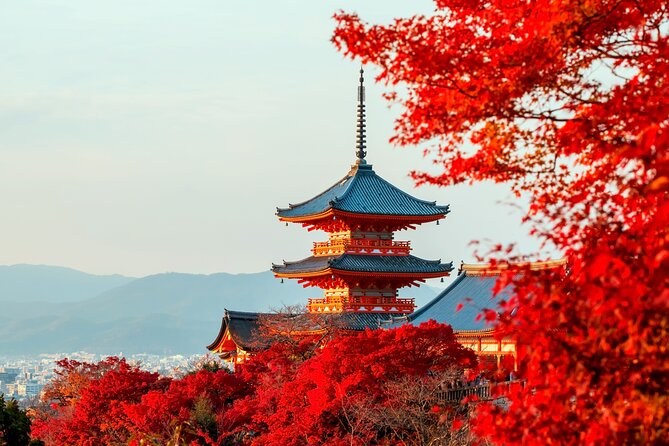
If you’re on the Fushimi Inari version (Mon/Wed/Fri), one of your best emotional breaks comes through Uji.
Stop 4: Byodoin Temple
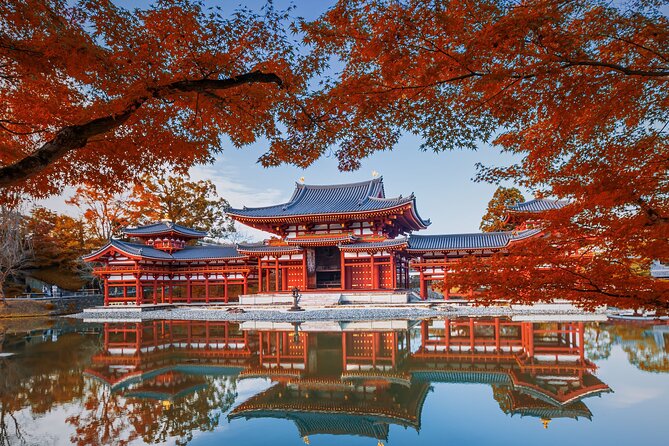
Byodoin is where you get the famous visual connection many travelers know from Japan’s 10-yen coin imagery: the Phoenix Hall and its reflections over the pond. You’ll have about 40 minutes, and the main admission is optional (listed at 700 yen).
This stop works well even for travelers who don’t consider themselves temple specialists, because the composition is so specific: architecture, water, and symmetry. You’ll also get enough time to step back from the crowd and take photos at a less frantic pace.
Stop 5: Byodoin Omotesando
Right after the temple, you walk through Byodoin Omotesando, a traditional street lined with tea-house style spots. This is your lunch window, and the tour notes that lunch is on your own expense. You’ll have about 50 minutes.
I like this kind of built-in break because it prevents that end-of-day scramble for food. You’re in a historic setting, but you’re also free to choose what fits your taste and budget.
The practical mindset here
Bring patience. Uji and Byodoin area time blocks are short by design, so aim for one or two priorities: either photos of the pond setting or shopping/food at Omotesando. Trying to do everything at once usually turns into stress.
Fushimi Inari’s torii gates: the shrine climb you can actually time
Then you move on to Fushimi Inari Taisha, famous for its thousands of red torii gates climbing up Mount Inari. You’ll have around 50 minutes for this.
The tour keeps this stop time-boxed, which is smart. Fushimi Inari can be deceptively huge. A fixed limit helps you see the main corridor of torii gates without losing your whole afternoon.
Admission here is free, so your only extra cost is optional. The better question is effort: you’ll likely be doing uphill walking through a dense shrine pathway. If you’re sensitive to stairs or steady climbs, consider taking your time and focusing on the most photogenic gate corridor rather than pushing to the very top areas.
Arashiyama Bamboo Forest and Togetsukyo Bridge: the calmer Kyoto side
On Tue/Thu/Sat, you swap the torii-gate climb for Arashiyama’s mix of nature and river architecture.
Stop 7: Arashiyama Bamboo Forest
You’ll have about 25 minutes in the bamboo grove. It’s short, but that’s the point with a day tour—enough time to enjoy the light filtering through bamboo without turning it into a waiting game.
If you hate crowds, go slow early in your window. The later moments can feel tighter as people rotate through.
Admission is free. The forest setting means it can be cooler and shaded, which is a nice break when the rest of the day is full sun.
Stop 8: Nonomiya Shrine
Near the bamboo area is Nonomiya Shrine, described as small but historically significant (over a thousand years). You’ll get about 30 minutes total across the bamboo-and-shrine section depending on how the day flows.
Stop 9: Togetsukyo Bridge
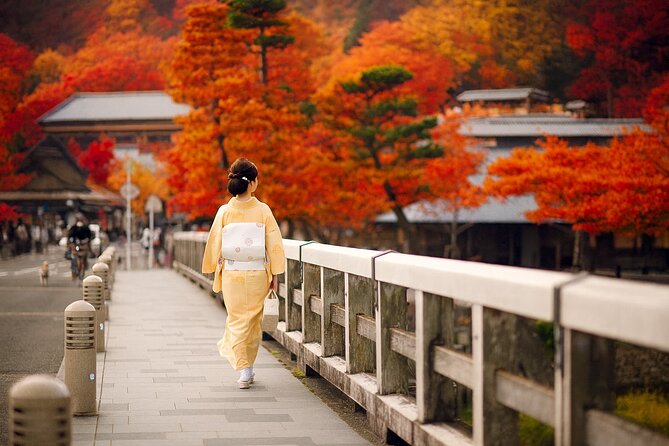
Then comes Togetsukyo Bridge spanning the Katsura River, originally built in the Heian period and later reconstructed. You’ll have about 25 minutes here.
This is where the day tour’s value shows: you’re not just seeing one postcard spot. You’re getting multiple settings—bamboo, shrine, then river views with bridge photography.
Nishiki Market for snacks and browsing, then Kiyomizu-dera’s stage view
By late morning-to-afternoon, you’ll be in Kyoto’s “do something now” zone: food street energy and classic temple scenery.
Stop 10: Nishiki Market shopping district
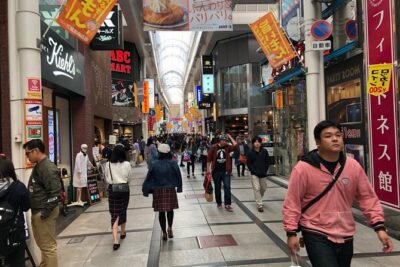
You get about 1 hour here, and it’s free to enter. Nishiki is known as Kyoto’s Kitchen, packed with stalls where you can snack on seafood and local Kyoto specialties.
I like that this time is long enough to actually choose. Short market stops often turn into standing and tasting nothing. This one gives you a real chance to walk, stop, and decide what you want.
Cherry blossom season exception (for the Arashiyama route): Nishiki Market is replaced by Maruyama Park and the stop order changes.
Stop 11: Kiyomizu-dera (optional main hall admission)
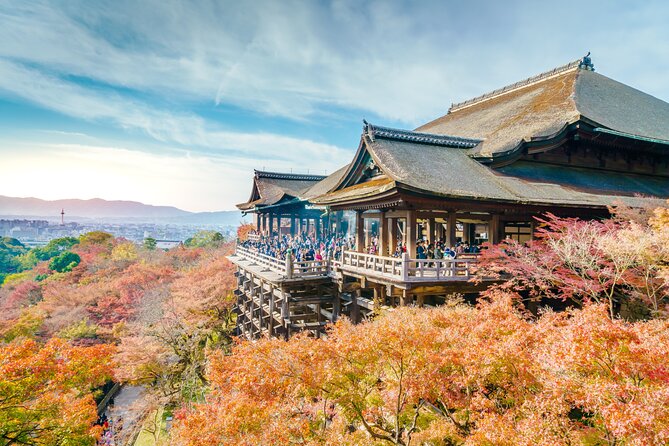
Your day ends with Kiyomizu-dera, a UNESCO World Heritage site with a grand wooden stage and panoramic Kyoto views. You’ll have about 1 hour 20 minutes. Admission to the main hall is not included, listed at 500 yen.
This is usually the stop that makes the whole day feel “worth it,” because you see the city spread out from the stage-like viewpoint. If you’re deciding whether to pay an optional fee, I’d treat Kiyomizu-dera as the one most likely to feel different from the outside-only look.
Price and tickets: what your $55.17 actually buys you
At $55.17 per person, the big value is not one attraction—it’s the whole day logistics:
- transportation
- an English & Korean speaking guide
- a schedule that strings major sights together without you planning every transfer
Most of the listed stops are free (Kasuga Grand Shrine, Nara Park, Fushimi Inari, Byodoin Omotesando, the Arashiyama trio, and Nishiki Market). Your main possible extra costs are the optional temple main admissions:
- Todai-ji main hall: 800 yen
- Byodoin Temple: 700 yen
- Kiyomizu-dera main hall: 500 yen
Meals are not included, so lunch and snacks are on you. That’s normal for Japan, but it matters for budgeting. If you plan to eat a proper lunch in Omotesando, decide in advance if you want a quick snack day or a sit-down meal.
The “smart budget” approach: pick one or two paid main halls based on what you most want to see inside. If you love temple interiors, pay for Todai-ji and Kiyomizu-dera. If you care more about pond reflections and the coin imagery, prioritize Byodoin.
Group size and pacing: staying comfortable in a packed day
The tour caps at 49 travelers, and it runs on a full-day bus format. That can sound big, but the schedule is designed so you’re not wandering aimlessly. Time at each stop is fixed, so you’re moving with the group rather than waiting for everyone to catch up.
In smaller group conditions, the day tends to feel less crowded and more manageable. The important part is that the guide keeps the flow tight, and that shows up in how the stops feel. Names like Yuri, Min, and Soae Lee are associated with patient explanations and practical help, including support for solo travelers who need photos.
Also remember: you’re walking through multiple different areas. Plan for shoes that work on uneven sidewalks and temple approaches. I’d bring a light layer, too—some sections are shaded while others are full sun.
Practical tips that keep your day from getting messy
A few small choices make a difference on a long, sightseeing-heavy day:
- Pick your route and your priorities before the day starts. If you’re chasing the torii gates, Mon/Wed/Fri make sense. If you want bamboo and river views, Tue/Thu/Sat are your match.
- Decide on paid temples early in your mental budget. Todai-ji, Byodoin, and Kiyomizu-dera are optional, and skipping one can free up energy to enjoy the rest.
- If you’re traveling with a baby stroller, tell the operator in advance. The tour asks you to inform them if you’ll bring one.
- Keep your evening plans flexible. The day is designed to return around 6:00 PM, but weather and traffic can affect timing.
Should you book this Kyoto and Nara Highlights day tour from Osaka?
Book it if you’re:
- short on time and want major Kyoto and Nara hits in one day
- happy with a structured schedule and short visits instead of long stays
- comfortable paying optional entrance fees for the big main halls you care about
Skip it (or choose a different style) if you:
- want a slow, deep temple day with lots of free time to wander
- hate uphill walking (especially if you’re doing Fushimi Inari)
- need a highly flexible itinerary with lots of unscheduled breaks
If you want an efficient day that still feels like Kyoto and Nara—shrines, deer park moments, big temple scale, and a view from Kiyomizu-dera—this is one of the more straightforward ways to do it.
FAQ
What time does the tour start, and when do I return?
The tour starts at 8:00 AM and returns to the meeting point at about 6:00 PM.
What days run the Fushimi Inari route versus the Arashiyama route?
Mon, Wed, and Fri run the Kyoto & Nara + Fushimi Inari route. Tue, Thu, and Sat run the Kyoto & Nara + Arashiyama route.
Are entrance fees included for Todai-ji, Byodoin, and Kiyomizu-dera?
No. Todai-ji (800 yen), Byodoin (700 yen), and Kiyomizu-dera (500 yen) are optional main hall admissions.
Is lunch included?
Lunch is not included. You’ll have your own expense lunch time during the Byodoin Omotesando stop.
Do I need a printed ticket?
No. The tour uses a mobile ticket.
How big is the group?
The tour has a maximum of 49 travelers.