REVIEW · OSAKA
Sharpen Japanese Knives in Osaka
Book on Viator →Operated by JLB Tours · Bookable on Viator
Sharpening a knife is oddly calming. This Osaka-area Sakai class mixes a short museum walk with hands-on practice using Japanese whetstones and traditional techniques. You’ll learn what makes different knives different, then get real coaching on how to sharpen and even fit a handle the old-school way.
I especially like the small-group feel and the chance to work one-on-one-ish with a guide who explains clearly. The workshop at Wada Store is also the part that feels most practical, because you’re not just watching—you’re using the stones, correcting your angle, and learning the process step-by-step. One consideration: it’s a quick, ~2-hour session focused on your knife, so come ready to concentrate rather than expect a long training day.
In This Review
- Key Points You’ll Care About
- Why Sakai Is Japan’s Knife Workshop City
- Price and What You Actually Get for $213
- Stop 1: Sakai Traditional Industrial Hall in 30 Minutes
- Stop 2 at Wada Store: Whetstones, Technique, and Handle Fitting
- Learning the sharpening mechanics (the part that changes everything)
- Fitting the handle the traditional way
- Coffee and small breaks
- The Workshop Rhythm: Meeting, Walking, and What to Bring
- Where to start
- How the day flows
- What you should bring
- Who This Osaka Knife Sharpening Class Is For (and Who Might Skip It)
- Value Check: Why a Guided Workshop Beats DIY
- 1) You get the right starting setup
- 2) You learn more than edge maintenance
- 3) Small group size keeps it practical
- Final Thoughts: Should You Book This Sakai Knife Sharpening Tour?
- FAQ
- FAQ
- How long is the knife sharpening tour in Sakai?
- Where is the meeting point for the tour?
- How many people are in the group?
- Do I need to bring my own knife?
- What’s included in the workshop?
- Is lunch or dinner included?
- What happens if the tour is canceled due to poor weather?
- Is the booking refundable if I cancel for my own reasons?
Key Points You’ll Care About
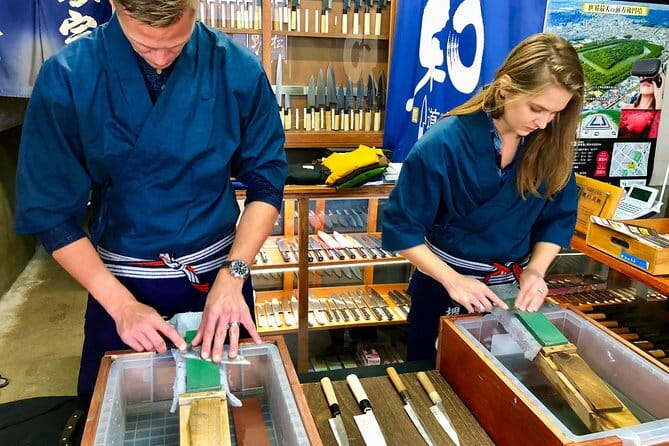
- Sakai knife culture in a real industrial neighborhood, not a touristy script
- Hands-on sharpening with whetstones, not just a demo
- Traditional handle fitting so your knife isn’t just sharp, it’s properly assembled
- Small group size (max 5) for better attention
- Apron, sharpening tools, and coffee/tea included, so you’re not juggling extras
Why Sakai Is Japan’s Knife Workshop City
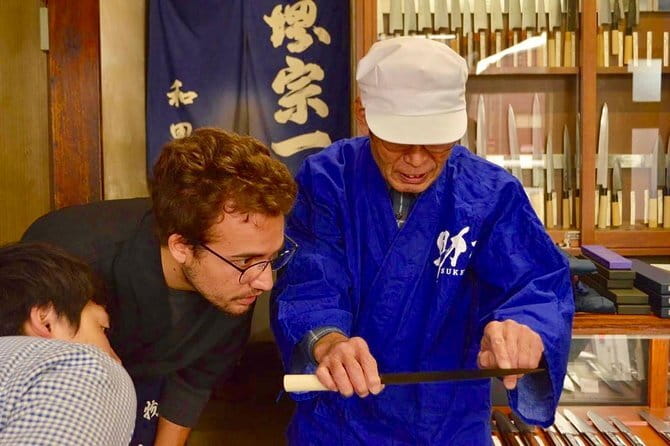
Osaka gets a lot of attention, but Sakai is where the story shifts to craft. This is the knife-making area often associated with traditions going back centuries, and it’s still practiced today. The idea behind this tour is simple: you’ll connect the cultural background to the physical skills you’re learning at the stones.
I like how the experience doesn’t start with cutting tricks. It starts with context—what kinds of knives exist, what they’re for, and how makers approach the work by hand. That matters, because knife sharpening isn’t one single answer. A sharpening method is also a matching game: knife type, intended use, and what edge geometry your blade needs.
You’ll also notice the tone is practical and grounded. Even the museum time is short and focused, as if the goal is to set you up to do the workshop right after. If you like hands-on learning in a real neighborhood, this approach is exactly the right rhythm.
You can also read our reviews of more tours and experiences in Osaka.



Price and What You Actually Get for $213
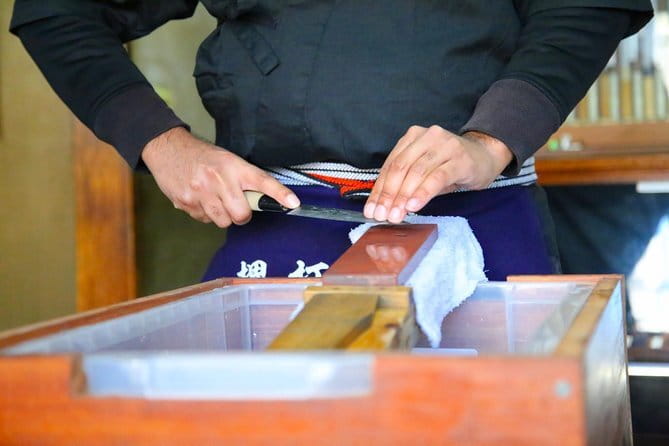
For $213, you’re paying for a guided, small-format experience that includes instruction, materials, and a couple of built-in comforts. The biggest value is that you’re not just paying for an hour with tools—you’re paying for coaching that helps you sharpen your own knife correctly.
Here’s what you get that reduces the usual hidden costs:
- An included workshop with sharpening tools and the sharpening lesson itself
- An apron for the session
- Coffee and/or tea during the class
- You bring your own knife, and the class is set up around that
The first stop, the Sakai Traditional Industrial Hall, is listed as free admission for that portion. The longer, skill-focused time is at Wada Store and is where the price earns its keep. At the end of two hours, you’re not just walking away with facts—you should leave with a repeatable sharpening process you can use again at home.
One more practical note: the price includes the structured itinerary, but lunch and snacks are not included. If you’re planning this after sightseeing, I suggest you sort out your meal timing so you’re not hungry during the workshop.
Stop 1: Sakai Traditional Industrial Hall in 30 Minutes
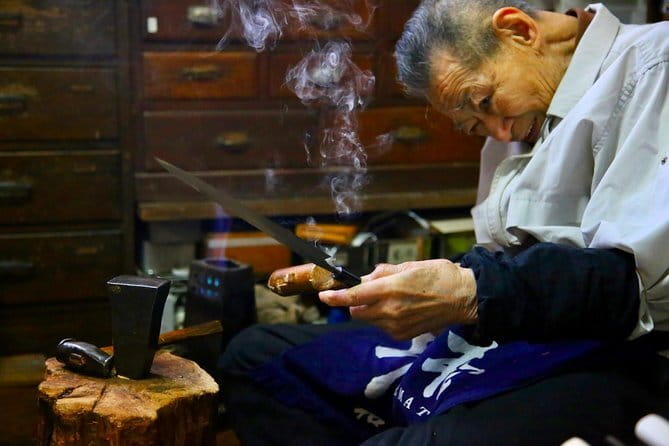
The first stop is a quick orientation at the Sakai Traditional Industrial Hall. This is the pre-game. You’ll look at how many knife types exist for different purposes and how knives are made by hand.
Even with just 30 minutes, the value is in shifting your mindset. Before you pick up a whetstone, it helps to understand that:
- different blades are built for different jobs
- the maker’s choices affect how the knife wears and how it should be sharpened
- metalwork isn’t just the edge; it’s the full object and its design
What I like about this stop is the pacing. It doesn’t overload you with technical history. It gives enough direction that the sharpening lesson at Wada Store lands better. If you usually skip museums because they feel slow, this one is short enough to keep your attention.
Potential drawback: because the hall time is brief, you won’t have hours to linger at every display. If you’re a deep museum person, you might want to plan extra time on your own in the neighborhood afterward.
Stop 2 at Wada Store: Whetstones, Technique, and Handle Fitting

This is the main event: 1 hour 30 minutes at Wada Store for your sharpening lesson with whetstones and traditional handle fitting. This is the part that most directly turns into real-world benefit.
Learning the sharpening mechanics (the part that changes everything)
Sharpening sounds like a single action, but what you actually need is consistent technique: the right angle, steady pressure, and repetition. The workshop is structured around working with a sharpener using whetstones, so you’re practicing on the tools that matter.
If you’ve ever watched sharpening videos and thought, I can’t tell if I’m doing it right, this is the reason a guided workshop helps. A guide can help you correct your approach while you’re still in learning mode, not after you’ve practiced the same wrong angle for months.

Fitting the handle the traditional way
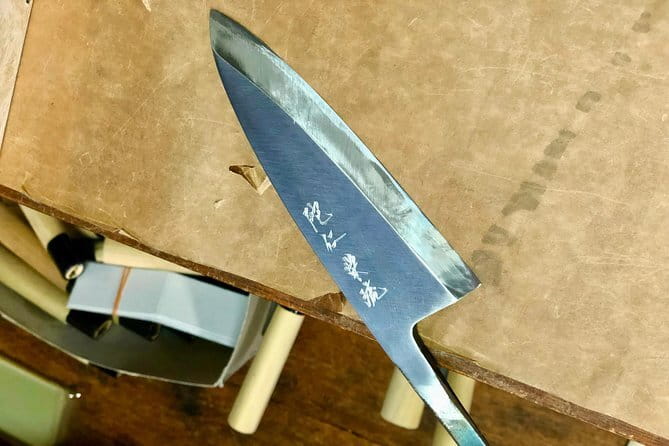
One of the standout parts here is that you’ll also learn how to fit the handles into the blades traditionally. That’s not the kind of skill most knife classes include. It connects the craft side—how tools are assembled and maintained—with the sharpening side—how edges stay usable.
For practical travelers, that connection matters. Many people focus only on getting the edge sharp, then forget the knife is a system: the handle affects grip, comfort, and how safely you work. Learning traditional handle fitting makes the experience feel more complete than a basic sharpening tutorial.
Coffee and small breaks
The class includes coffee and/or tea. That might sound minor, but in a hands-on session, a little pause helps you reset your attention so you can keep practicing with care.
The Workshop Rhythm: Meeting, Walking, and What to Bring

The tour uses a mobile ticket, and it operates with a small max group size of 5. That small size is a big deal for this kind of lesson, because you’re more likely to get time when questions pop up or when your technique needs correction.
Where to start
You’ll meet at Wada Store at:
1-chōme-1-1 Shinmeichōhigashi, Sakai Ward, Sakai, Osaka 590-0935, Japan
The activity ends back at the meeting point. It’s designed to keep the day simple—one neighborhood arc, no major transit juggling.
How the day flows
- Stop 1 is about 30 minutes at the Sakai Traditional Industrial Hall.
- Stop 2 is about 1 hour 30 minutes at Wada Store.
- Total time is approximately 2 hours.
The flow matters because you’ll go from observation to action quickly. That’s usually when learning sticks: see the concepts, then apply them while everything is still fresh.
What you should bring
- Your own knife (this is explicitly part of the experience)
- Plan to bring comfortable clothes for manual work (you’ll have an apron, but you’ll still be standing and moving while sharpening)
The class provides the tools for sharpening knives, and you’ll use whetstones during instruction. Since lunch isn’t included, I also suggest you eat before you go, or at least arrive ready for coffee/tea but not expecting a full meal.
Who This Osaka Knife Sharpening Class Is For (and Who Might Skip It)
This experience is a great match if you want:
- a hands-on Japanese skill you can repeat at home
- a short class that fits into a day visiting Osaka and its outskirts
- authentic craft focus in Sakai, rather than a generic “souvenir workshop”
It also fits well if you like small groups and clear English explanations. The guide Yuji is named in the experience feedback, and he’s described as meeting people on time and explaining the museum displays and workshop with strong English. That kind of language comfort can make a big difference when you’re learning fine motor technique.
Who might not love it: if you’re expecting a long, deep, multi-day training program, the short ~2-hour format may feel limited. You’ll likely focus on one knife and learn core technique rather than fully restoring every issue on your blade.
Another consideration is weather. The experience requires good weather, and if it’s canceled due to poor conditions, you’ll be offered a different date or a full refund. If you’re in Osaka for a tight schedule, build in flexibility.
Value Check: Why a Guided Workshop Beats DIY

You could try sharpening on your own with a book or video, of course. But this tour adds two practical advantages.
1) You get the right starting setup
Knife sharpening isn’t only about rubbing metal. It’s about doing it consistently. A guided session helps you set your technique early—so you don’t accidentally lock in bad habits.
2) You learn more than edge maintenance
That handle fitting piece is a big value add. Many basic sharpening sessions focus only on the edge, but traditional maintenance includes the whole knife. Even if you don’t plan to assemble a knife from scratch at home, understanding how handles are fitted helps you appreciate why proper grip and construction matter.
3) Small group size keeps it practical
With a maximum of 5 travelers, it’s easier to get questions answered and stay on task. In a larger class, you can end up waiting while others rotate through the tools.
Final Thoughts: Should You Book This Sakai Knife Sharpening Tour?
If you want a real Sakai craft experience in a tight time window, I think this is a strong choice. The blend of a short museum primer plus a hands-on whetstone workshop is exactly the kind of structure that helps you leave with something useful, not just pictures.
Book it if you:
- have a favorite knife you’re willing to practice on
- want guidance on technique rather than trial-and-error
- appreciate traditional craft details like handle fitting
Consider skipping or adjusting expectations if:
- you’re looking for hours of practice and advanced teardown-level instruction
- your schedule is fragile and you can’t handle a weather-based reschedule
FAQ
FAQ
How long is the knife sharpening tour in Sakai?
The tour lasts about 2 hours.
Where is the meeting point for the tour?
You’ll meet at Wada Store, 1-chōme-1-1 Shinmeichōhigashi, Sakai Ward, Sakai, Osaka 590-0935, Japan.
How many people are in the group?
The tour has a maximum of 5 travelers.
Do I need to bring my own knife?
Yes. Your knife is included as part of the experience, so you should bring the knife you want to sharpen.
What’s included in the workshop?
The experience includes an apron, tools for sharpening knives, your knife, and coffee and/or tea.
Is lunch or dinner included?
No. Lunch, dinner, and snacks are not included.
What happens if the tour is canceled due to poor weather?
This experience requires good weather. If it’s canceled due to poor weather, you’ll be offered a different date or a full refund.
Is the booking refundable if I cancel for my own reasons?
No. The experience is non-refundable and cannot be changed for any reason. If you cancel or ask for an amendment, the amount you paid will not be refunded.