REVIEW · OSAKA
Traditional Calligraphy Experience near Dotonbori
Book on Viator →Operated by MIYABI Culture Salon · Bookable on Viator
Osaka has a lot going on, but this calligraphy class gives your hands and mind an easy reset. You’ll learn traditional techniques from instructor Fumi (teaching in English), then write a kanji of your choice on a hanging scroll you can take home.
What I like most is the practical guidance on holding the brush and forming characters correctly, not just making a pretty souvenir. I also love that the class ends with you stamping and signing your work, so it feels personal. The only real consideration is the time: it’s about an hour, so first-timers should expect to focus on one selected kanji plus the final scroll finishing step.
In This Review
- Key Highlights You’ll Actually Care About
- Traditional Calligraphy Near Dotonbori: The Real Point of This Class
- Where You’ll Meet and How to Get There
- A 1-Hour Schedule That Doesn’t Pretend You Can Master Kanji Overnight
- 1) Background and orientation
- 2) Learning the tools (and how not to fight them)
- 3) Guided practice with your chosen kanji
- 4) Writing the kanji on the hanging scroll
- English Instruction and a Patient Teacher: What Makes the Class Feel Easy
- Choosing Your Kanji: Personal, Not Random
- Tools, Brush Technique, and the Small Details That Make a Big Difference
- The Take-Home Hanging Scroll: Your Finished Souvenir With Meaning
- Group Size, Timing, and How to Make It Fit Your Trip
- Price and Value: Why $45.52 Feels Fair Here
- Who This Calligraphy Class Is Best For
- Practical Tips Before You Go
- FAQ
- FAQ
- How long does the traditional calligraphy experience last?
- Is instruction available in English?
- Can I sit during the class?
- Do I choose what I write?
- What do I take home at the end?
- How big is the group?
- Where is the meeting point?
- Are service animals allowed?
- What is the cancellation policy?
- Should you book this calligraphy class near Dotonbori?
Key Highlights You’ll Actually Care About
- English instruction makes the techniques easy to follow without guessing
- Chair-friendly setup means you can focus on brush control instead of posture stress
- Pick your own kanji from prepared samples and learn by imitation
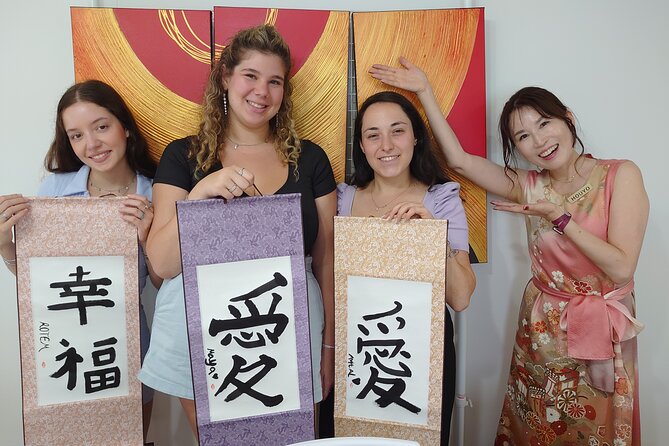
- You’ll leave with a hanging scroll (kanji, your name, and a stamp)
- Small group size (max 8) helps you get attention when you need it
- A short teaching moment on calligraphy’s background sets the right tone for the practice
Traditional Calligraphy Near Dotonbori: The Real Point of This Class
Calligraphy in Japan isn’t only about handwriting. It’s one of the traditional ways that people used for years to slow down, train discipline, and build focus. In this class near Nishishinsaibashi, you get that same idea in a format that works for visitors: guided steps, friendly instruction, and time to practice without feeling rushed.
The location matters too. You’re in Osaka (Nishishinsaibashi, Chuo Ward), close to the Dotonbori area vibe many visitors come for. That means it can slot neatly into a day of exploring—without needing you to travel far across town.
And you’re not expected to be good at this at the start. You’ll choose a kanji from examples the instructor provides and learn by copying the correct form. That’s important because calligraphy has rules, but those rules become less scary once you see how they work in motion.
You can also read our reviews of more tours and experiences in Osaka.



Where You’ll Meet and How to Get There
You’ll meet at 1-chōme-5-12 Nishishinsaibashi, Chuo Ward, Osaka, 542-0086, Japan, and the experience ends back at the meeting point. It’s designed for convenience with near public transportation, so you shouldn’t be hunting for the classroom all day.
Why that matters: calligraphy can make your hands tired and your brain calm. You don’t want the rest of your day to feel like a maze right after you leave with a scroll to carry carefully.
If you’re pairing this with sightseeing near Dotonbori, plan around the time it takes to reach the address calmly. Osaka stations and street crossings can be quick to navigate when you’re prepared, but they can also steal energy if you’re wandering at the last minute.
A 1-Hour Schedule That Doesn’t Pretend You Can Master Kanji Overnight
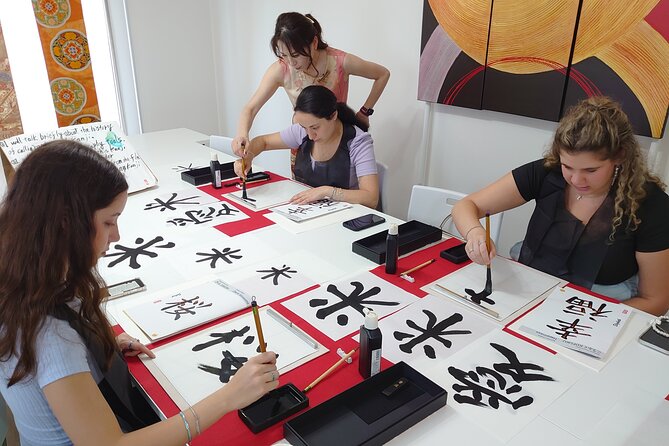
The session is about 1 hour, so the flow is intentionally focused. You’re not going to spend the afternoon on calligraphy drills. Instead, you’ll go through the key steps in a visitor-friendly way: explanation, tool setup, guided practice, and a finished souvenir at the end.
Here’s what that looks like, in practical terms:
1) Background and orientation
The instructor starts with a lecture about calligraphy’s background. This isn’t a long history lecture; it’s more like setting the rules of the road for what you’re about to do. It helps you understand why the stroke order and brush pressure aren’t random.
For you, this step is valuable because it changes how you practice. When you know what the instruction is trying to achieve—clarity, balance, and control—you stop thinking of mistakes as failures and start thinking of them as corrections.
2) Learning the tools (and how not to fight them)
Next comes instruction on using the traditional tools. Calligraphy tools look simple, but they can behave differently depending on how you hold them and how you move.
This is where the class stays useful for beginners. You’ll get guidance you can apply immediately, instead of leaving you to figure things out alone.

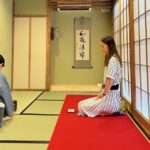
3) Guided practice with your chosen kanji
If you’re new, there’s good news: you’ll choose a kanji you like from sample options. Then you’ll practice imitating it.
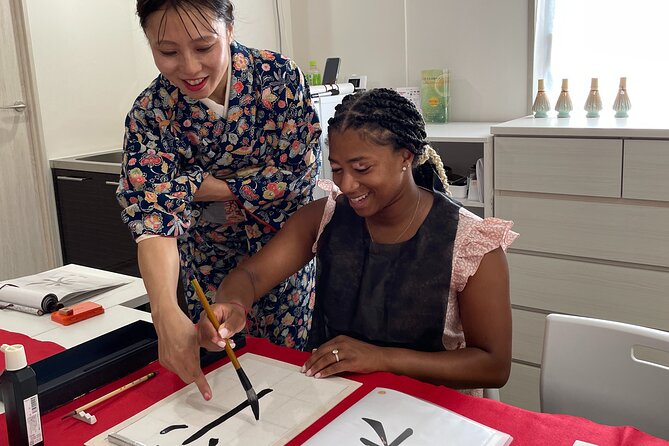
The main idea is repetition with correction. A patient instructor can help you adjust your brush angle and stroke shape as you go, so the character starts to look like the model instead of something made by pure hope.
4) Writing the kanji on the hanging scroll
Finally, you’ll write your chosen kanji on a beautiful hanging scroll. After that, you’ll write your name and stamp it to finish.
That finishing step is more than decoration. It turns the work from a practice sheet into something you’ll actually hang or keep.
English Instruction and a Patient Teacher: What Makes the Class Feel Easy
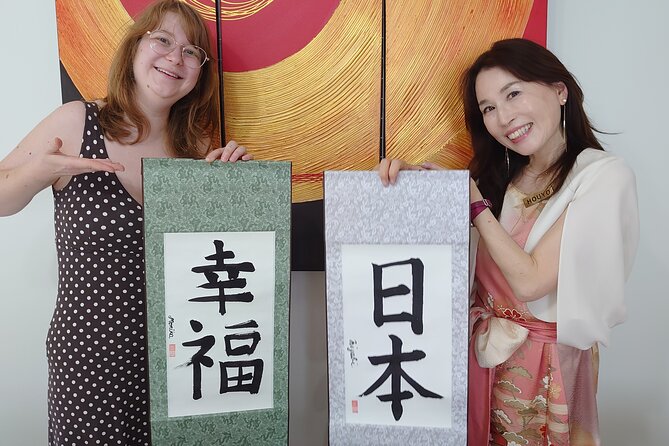
One of the biggest wins here is that instruction is in English. That matters because calligraphy isn’t only about the motion of the brush. It’s also about corrections—what to change and why.
In the class format, instructors like Fumi are praised for being patient and making sure you succeed. That kind of teaching style is huge for first-timers. You don’t just get told what to do; you get coached until the strokes make sense.
And there’s a practical comfort point: you can do the class sitting on a chair. Calligraphy often gets taught in a way that assumes perfect posture. Here, the goal is brush control and calm focus, not torturing your legs into stillness.
So if you’ve ever had trouble with long standing activities on vacation, this setup is a big deal.
Choosing Your Kanji: Personal, Not Random
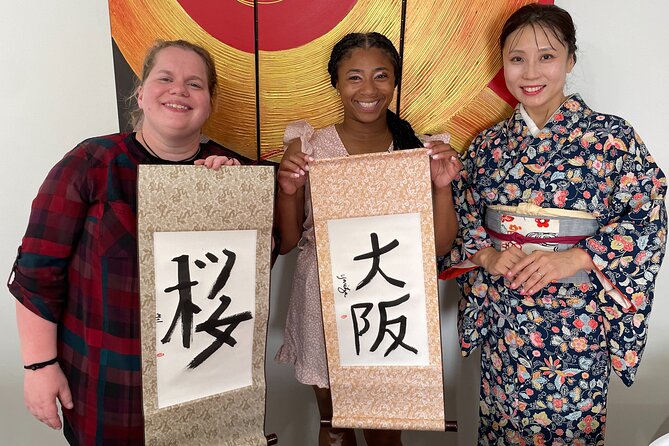
You get to choose your favorite kanji from samples prepared by the instructor. That turns the class into a souvenir you actually care about, because the character has meaning to you.
It also improves the learning experience. If you pick a kanji you connect with, you’ll pay more attention to the stroke details instead of rushing through because the character is unfamiliar or boring.
Practical tip: take a few seconds before you commit. Look for a kanji that matches what you want to keep—simple enough to execute within the time, but meaningful enough that you’ll enjoy living with it after the trip.
Tools, Brush Technique, and the Small Details That Make a Big Difference
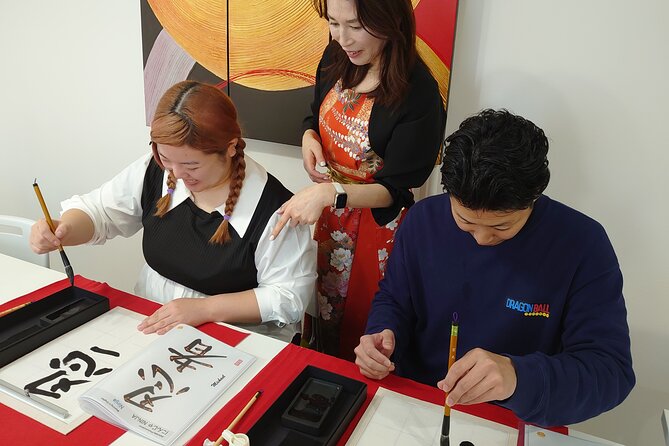
The class focuses on traditional techniques, including how to hold the brush and how important posture is while writing. In other words: even though you sit, there’s still form and control involved.
Here’s what you should expect to learn in a practical way:
- Brush handling: grip and angle so the stroke looks intentional
- Stroke shape: how to vary thickness and timing to form a clean character
- Posture cues: adjustments so you’re steady rather than twisting at awkward angles
If you’ve never written kanji before, don’t worry about getting everything right immediately. The learning style here is based on imitation and correction. That’s why the instructor gives you samples and guides you step-by-step.
And if you’re worried you’ll mess up the scroll: the class is set up as a guided experience with the tools and process explained upfront. Your job is to follow instruction, practice the selected character, and then apply that practice to the final scroll.
The Take-Home Hanging Scroll: Your Finished Souvenir With Meaning
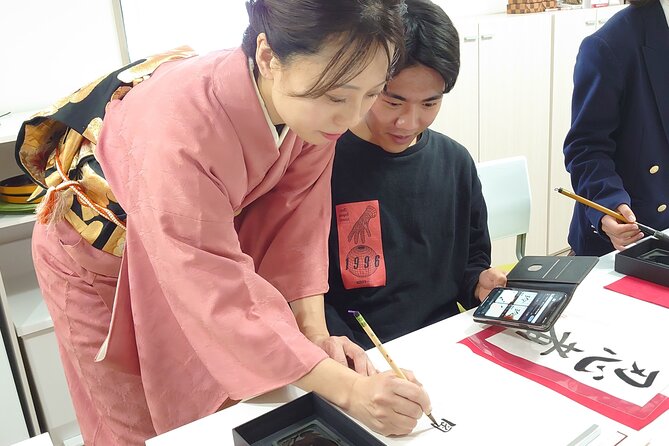
The best part of most calligraphy classes isn’t the demonstration. It’s the moment you create something you can keep.
At the end, you’ll write your chosen kanji on a hanging scroll. Then you add your name and stamp it to finish. That makes the final result feel more like you made it—because you did.
From a visitor-value standpoint, this matters because it’s not a tiny postcard-sized craft. It’s a display-worthy piece of Japanese tradition that can live at home and remind you of the time you took to slow down and focus.
Also, because you stamp and sign, it’s not just a random character you happened to copy. It becomes a personal artifact tied to your time in Osaka.
Group Size, Timing, and How to Make It Fit Your Trip
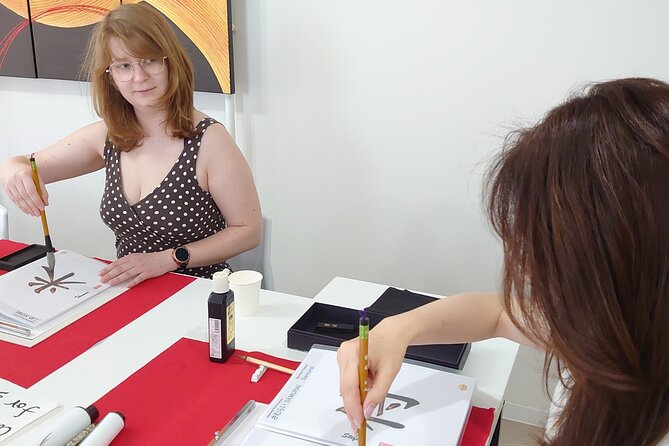
The group size is capped at 8 travelers, which is exactly the kind of class size where you can still get attention. In a small group, instructors can notice when your brush angle is off or when your stroke is drifting from the model.
Duration is about 1 hour, which is short enough to fit into a day trip schedule without stealing your whole afternoon. But you should still treat it like a focused block. If you show up frazzled, calligraphy won’t magically fix that. It works best when you arrive with a calm mindset.
Booking tends to be popular—on average it’s reserved about 23 days in advance—so if your trip dates are fixed, it’s smart to lock this in sooner rather than later.
Price and Value: Why $45.52 Feels Fair Here
This experience costs $45.52 per person for about an hour of instruction, materials guidance, and a take-home hanging scroll finished with your kanji plus name and stamp.
Is it expensive? Not compared to how many visitor activities charge for a class that doesn’t include a meaningful souvenir. Here, the price supports:
- English instruction
- hands-on coaching with traditional tools
- a finished scroll you can keep
If you’re already planning to buy a small craft souvenir, think of this as spending similar money for something bigger and more personal. You’re not just purchasing an object. You’re getting the process—and the final result—tied to your own choices.
Also, with chair-based setup and English guidance, you’re not paying for the difficulty. You’re paying for the help.
Who This Calligraphy Class Is Best For
This is a strong match if:
- you want a calm, hands-on activity in Osaka instead of another walking tour
- you’re curious about kanji but worried you’ll feel lost
- you like structured guidance that still lets you make choices
- you want a souvenir with meaning, not just a photo
It’s also a good option for families, based on the class vibe described. The process is beginner-friendly and the final outcome is something kids and adults can feel proud of.
If you’re the type who hates sitting still, you might find the 1-hour practice part a little slow. But because you’re sitting comfortably in a chair and guided through steps, it doesn’t have to feel like an endurance test.
Practical Tips Before You Go
- Wear clothes you don’t mind getting slightly stained in the unlikely event of paint or ink splatter.
- Bring your energy down a notch when you arrive. Calligraphy rewards calm, steady attention.
- If you’re choosing kanji, decide what mood you want: something simple to write well, or something meaningful even if it takes patience.
- Plan a little buffer time before and after. You’ll want time to reach the meeting point without stress and time to handle your scroll carefully afterward.
And one more thing: if you enjoy learning by doing, this class will click fast. The step-by-step flow is built for that.
FAQ
FAQ
How long does the traditional calligraphy experience last?
It’s about 1 hour.
Is instruction available in English?
Yes. Experienced Japanese instructors teach calligraphy techniques in English.
Can I sit during the class?
Yes. You’ll be able to participate while sitting on a chair.
Do I choose what I write?
Yes. You can pick your favorite kanji from samples prepared by the instructor.
What do I take home at the end?
You’ll take home a hanging scroll with your chosen kanji, plus your name and stamp.
How big is the group?
The experience has a maximum of 8 travelers.
Where is the meeting point?
The meeting point is at 1-chōme-5-12 Nishishinsaibashi, Chuo Ward, Osaka, 542-0086, Japan, and you return there at the end.
Are service animals allowed?
Yes, service animals are allowed.
What is the cancellation policy?
Free cancellation is available. You can cancel up to 24 hours in advance for a full refund.
Should you book this calligraphy class near Dotonbori?
If you want something meaningful in Osaka that’s not just walking and shopping, I’d book it. The English instruction, chair-friendly setup, small group size, and the fact that you leave with a finished hanging scroll make the $45.52 price feel practical.
Book it if you enjoy hands-on activities and want a souvenir with your own name and stamp. Skip it only if you know you want a fast, high-energy activity and you dislike guided practice where your attention has to slow down.