REVIEW · OSAKA
Making Soba noodles at Temple
Book on Viator →Operated by 善-zen- · Bookable on Viator
Soba making turns quiet temple time into food. In Osaka, this private class lets you learn traditional soba in a calm historic temple, with hands-on noodle making and a stop to see the Buddha statue. One consideration: buckwheat is the base ingredient, so people with buckwheat allergies can’t join.
I like that it stays relaxed and personal, run by a small team so you’re not stuck in a loud group. You’ll also get to sample what you make, and the guide (Hiro) is known for taking photos and air-dropping them at the end.
In This Review
- Key highlights to look for
- Why Osaka temple soba feels different from a food tour
- The 2-hour flow: making buckwheat noodles step by step
- Temple viewing: main hall and Buddha statue time
- A private class with guide Hiro and a calm group size
- Price of $68.29: what you get and how to judge value
- Practical tips before you go: weather, mobile ticket, and buckwheat
- Who should book this soba-at-a-temple class
- Should you book Making Soba Noodles at Temple?
- FAQ
- How long is the soba-making experience?
- What is the price per person?
- Where do we meet for the activity?
- Is the experience private?
- What will we do during the experience?
- What’s included in the price?
- What is not included?
- Do I get a ticket on my phone?
- Is it near public transportation?
- Is there any food restriction or allergy warning?
Key highlights to look for
- Temple calm, not a production line: you’re learning in a quiet setting where conversation feels natural
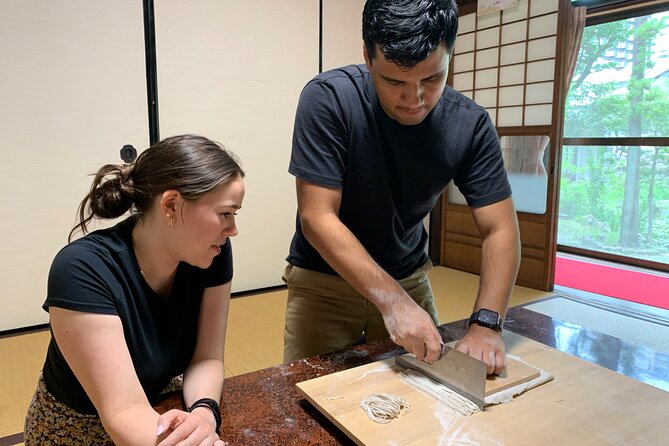
- You make the soba: you’ll form the noodles and then sample your own
- Temple viewing time: you’ll also see the main hall and a Buddha statue
- Small-team, private experience: only your group participates, which changes the whole vibe
- Guide Hiro’s friendly help: photos and air-drop at the end are a nice extra
- Buckwheat allergy note: important for anyone who needs to avoid buckwheat
Why Osaka temple soba feels different from a food tour
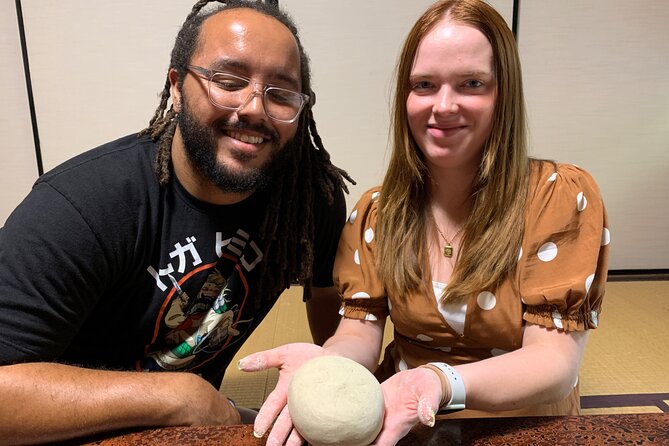
Osaka has plenty of places to eat. This experience is different because it gives you the skill behind the bowl. You’re not just tasting soba—you’re making buckwheat noodles in a calm temple setting, learning technique in a way that feels more like being taught than being processed.
What makes it especially worth your time is the atmosphere. The lesson happens in a serene environment, and you’re given space to focus. In practice, that means the experience tends to feel patient and unhurried, which is rare in typical “eat and run” sightseeing.
The other thing I really like is that it’s still a proper tour, not only a kitchen workshop. You also get time at the temple’s main hall and see the Buddha statue, so you leave with both food skills and a sense of place.
You can also read our reviews of more tours and experiences in Osaka.
The 2-hour flow: making buckwheat noodles step by step
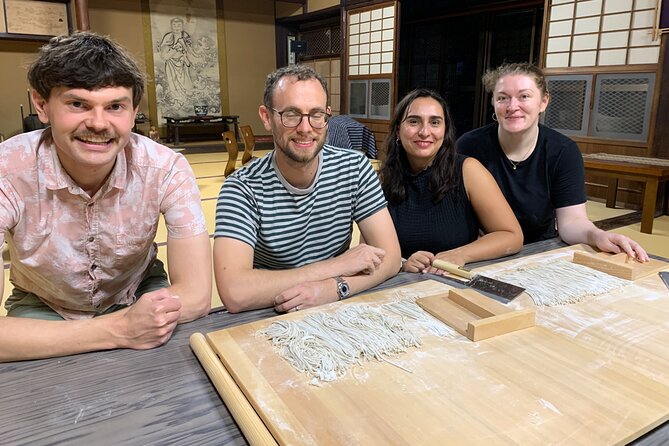
This is a roughly 2-hour activity, and it’s designed around learning the basics of soba making, not speed. The core idea is simple: you’ll make soba noodles from buckwheat flour, then you’ll eat what you made. That food-at-the-end moment matters, because you can connect technique to taste right away.
You can also expect an easy, guided pace. The class runs with a small team, so you’re not getting rushed or lost in the shuffle. And because it’s private to your group, you’re more likely to get direct help when your hands get floury or your dough needs a little adjustment.
One practical note for planning: buckwheat is the key ingredient, and the experience specifically warns that some people may not be able to eat it due to allergies. If you’re unsure, double-check before booking. If buckwheat is off-limits for you, don’t assume a substitution will be available.
Temple viewing: main hall and Buddha statue time
This part turns the class into something more meaningful than a cooking demo. In addition to noodle making, you’ll also have time to visit the temple’s main hall and the Buddha statue.
Even without turning it into a museum stop, those viewpoints help you understand why soba can feel like more than food here. The experience is framed as traditional culture in a calm setting, and seeing the temple areas firsthand gives that context weight.
The main drawback with temple visits is straightforward: you’ll want to respect the setting. Expect a quieter tone and plan to move gently and follow instructions. If you’re looking for a high-energy, selfie-everywhere experience, this may feel more still than you expect—in a good way for most people.
A private class with guide Hiro and a calm group size
This is run as a private tour/activity, meaning only your group participates. That’s a big deal for comfort. You can ask questions without worrying about holding up strangers, and you can actually pay attention to what your hands are doing instead of watching everyone else.
The vibe also seems to benefit from the guide’s style. One highlight that keeps coming up is Hiro, described as an amazing teacher who gives friendly, steady help. It’s not just about technique. It’s the overall tone—calm, warm, and focused—that makes the lesson feel memorable.
There’s also a small personal touch: Hiro is known for taking photos of the group and sending them by air-drop at the end. That means you don’t need to turn the whole lesson into phone time. You get documentation without doing constant photo stops.
Price of $68.29: what you get and how to judge value
The price is $68.29 per person, and the duration is about 2 hours. At face value, it’s not a bargain like a street snack. But for what you receive, it can feel like good value.
Here’s what’s included:
- Snacks soba noodles (you’ll eat what you make)
- Guided experience in a historic temple environment
- Time at the temple’s main hall and Buddha statue
- Private format for your group
What’s not included:
- Private transportation
That inclusion list matters. You’re paying for instruction, a guided temple experience, and the full “make then eat” cycle. If you’ve already spent days eating in Osaka, this is the kind of activity that adds a skill and a story, which is often what justifies cooking classes while the cheaper options stay forgettable.
Also, consider timing. On average, this gets booked about 47 days in advance, so if you’re traveling in a busy window, I’d reserve early rather than waiting for a last-minute opening.
Practical tips before you go: weather, mobile ticket, and buckwheat
The experience uses a mobile ticket, so have your phone ready for check-in. The meeting point is listed at 1-chōme-3-68 Shitaderamachi, Tennoji Ward, Osaka 543-0076. The activity also ends back at the meeting point, so you’re not looking at a long transfer at the end.
Transportation-wise, the tour notes that it’s near public transportation, but private transportation isn’t included. That’s typical for Osaka, but it still affects your plan: map out the closest station stop so you arrive relaxed.
Weather matters here. The experience requires good weather, and if it’s canceled due to poor weather, you’ll either be offered a different date or get a full refund. If your schedule is tight, check the forecast and keep your backup date in mind.
Finally, the buckwheat warning isn’t small. Because the noodles are made from buckwheat flour, anyone with a buckwheat allergy should not book. If you’re only sensitive rather than allergic, you should still take the warning seriously and clarify what’s possible—don’t gamble with food restrictions.
Who should book this soba-at-a-temple class
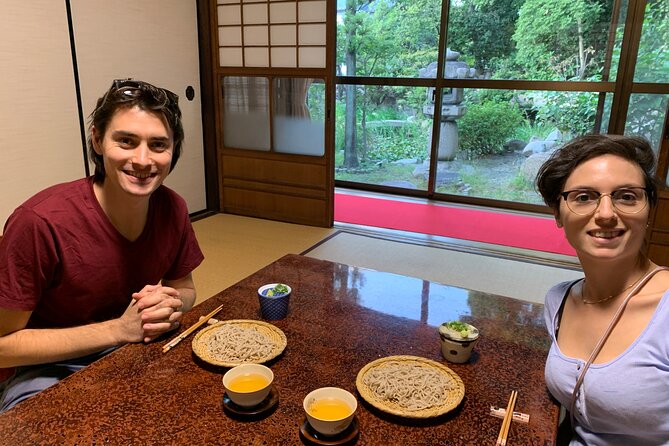
This is a great match if you want something hands-on and calm. If you like food experiences that teach a real skill, you’ll appreciate that you make the noodles yourself and then taste them right away.
It also fits families and small groups looking for a break from crowded sightseeing. Because it’s private, you can keep the pace comfortable, and the setting supports that.
It may be less suitable if:
- Buckwheat allergies apply
- You want lots of action, nightlife energy, or an urban wander type of tour
Should you book Making Soba Noodles at Temple?
I’d book it if your Osaka trip includes time to slow down and you enjoy cultural food experiences. The combination of private instruction, making the soba yourself, and temple visits to the main hall and Buddha statue is exactly the kind of day that sticks.
Before you click confirm, do two quick checks:
- Make sure buckwheat is safe for you (or your group).
- Plan your arrival around the meeting point near public transportation, since no private transportation is included.
If you’re aiming for a tranquil, traditional Osaka moment that ends with something you actually made and ate, this is a strong choice.
FAQ
How long is the soba-making experience?
It lasts about 2 hours.
What is the price per person?
The price is $68.29 per person.
Where do we meet for the activity?
The meeting point is 1-chōme-3-68 Shitaderamachi, Tennoji Ward, Osaka, 543-0076, Japan.
Is the experience private?
Yes. It’s a private tour/activity, and only your group participates.
What will we do during the experience?
You’ll make traditional Japanese soba at a historic temple, sample the soba you made, and also visit the main hall and the Buddha statue.
What’s included in the price?
Snacks soba noodles are included.
What is not included?
Private transportation is not included.
Do I get a ticket on my phone?
Yes. The experience uses a mobile ticket.
Is it near public transportation?
Yes, it’s near public transportation.
Is there any food restriction or allergy warning?
Yes. The experience uses buckwheat flour, and people with buckwheat allergies may not be able to eat the soba.