REVIEW · OSAKA
Learn Zen in a class of making Matcha tea near Osaka Castle
Book on GetYourGuide →Operated by 株式会社武士の誉れ · Bookable on GetYourGuide
Tea, but make it samurai style. I love the way the tea room treats everyone as equal once you step through the nijiriguchi, and I love how wagashi ties into wabi-sabi and the four seasons. One thing to plan for: there’s no pickup, so you’ll need to get yourself to the Samurai Honor meeting point.
Near Osaka Castle, this is a tight, 1-hour class (with an extra 30 minutes to change and get instructions). You’ll switch into traditional clothes—men in hakama and dogi as samurai, women in kimono as Yamato Nadeshiko—then learn manners, gestures, and the spirit behind matcha.
In This Review
- Key things I’d circle before you book
- Stepping through the tea room at Samurai Honor, Osaka
- Your costume switch: hakama-dressed samurai or kimono Yamato Nadeshiko
- The host’s flow: hospitality isn’t one-way
- Matcha making in a 1-hour class: what you’ll actually learn
- Wagashi and the seasons: wabi-sabi through sweets
- Photos, kimono details, and getting the moment right
- Where to go: finding the Samurai Honor meeting point in Osaka
- Price and value: $40 for matcha, wagashi, kimono, and a guide
- Who this class suits best
- Who should skip (or ask first)
- Should you book Learn Zen in Osaka Castle?
- FAQ
- How long is the Learn Zen matcha class?
- Is transportation or pickup included?
- What’s included in the $40 price?
- What language is the class taught in?
- What should I bring?
- Do I get photos from the ceremony?
- Who is this experience not suitable for?
Key things I’d circle before you book
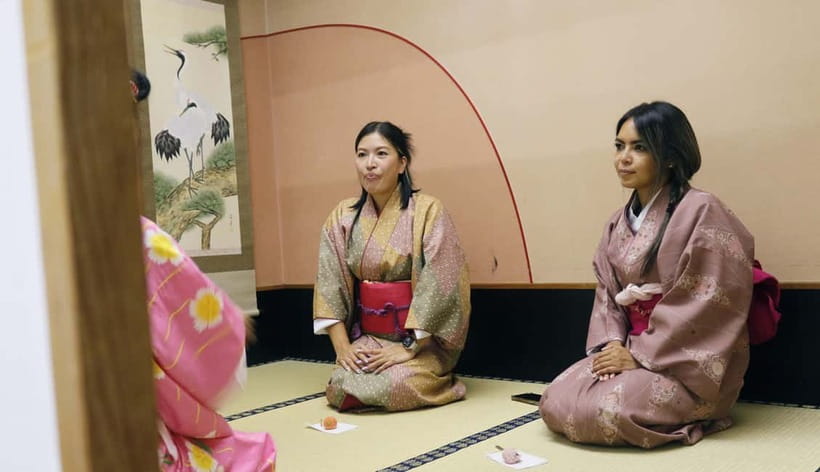
- Nijiriguchi equality: nationality, status, and background don’t matter once you enter the tea space.
- Wagashi with meaning: you don’t just eat sweets; you learn how wabi-sabi and the seasons shape them.
- Tea etiquette you practice: bowing, serving, sitting, and walking are taught as physical manners, not just rules.
- Matcha served with the proper flow: the master handles hospitality, and you respond as part of the atmosphere.
- Small group (up to 6): enough time for individual attention without a crowded room vibe.
- Included photo shooting: you’ll get a photo package sent to your email after the session.
Stepping through the tea room at Samurai Honor, Osaka
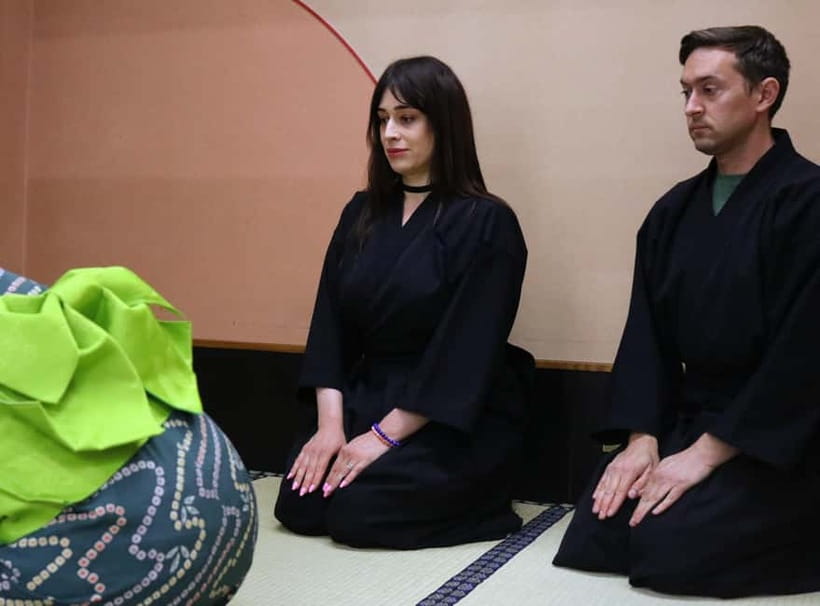
This experience is set up like a mini reset from regular sightseeing. You’re not just watching a tea ceremony—you’re invited into the room as a participant, with clear guidance on how to move, sit, and respond. That matters, because the tea ceremony is built on rhythm: attention first, then action, then hospitality.
The biggest moment is entering the tea room through the nijiriguchi, the low doorway that signals a change in mindset. The idea is simple and powerful: once you pass through, everyone is treated equally. No matter who you are outside the room, inside you follow the same etiquette and learn the same gestures.
If you’re the type who likes meaning behind what you’re doing, this will click. The class doesn’t treat matcha like a gimmick; it treats it like a practice built on manners and awareness.
You can also read our reviews of more tours and experiences in Osaka


Your costume switch: hakama-dressed samurai or kimono Yamato Nadeshiko
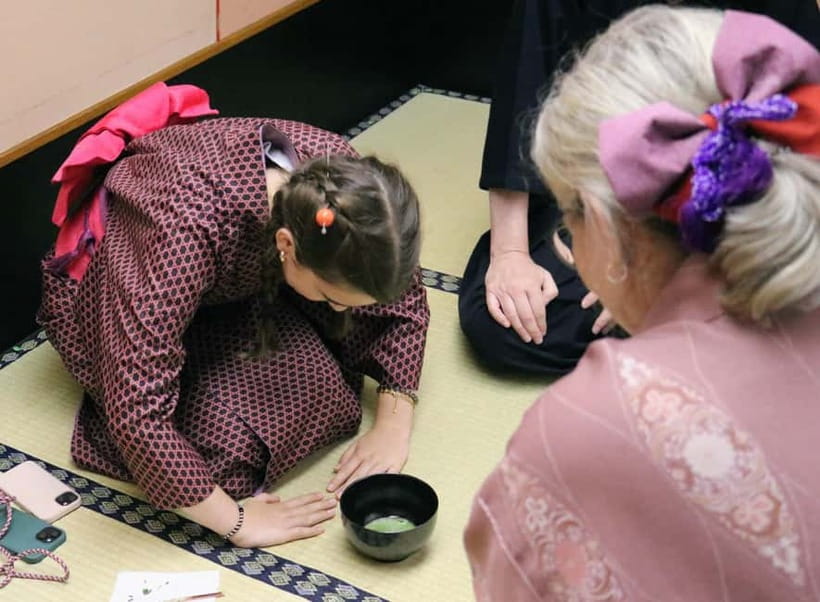
Plan for costume time, because it shapes the whole experience. You’re asked to arrive 30 minutes early for instructions and changing clothes, so your session doesn’t feel rushed once you’re in the tea room.
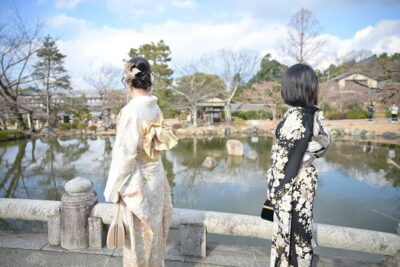
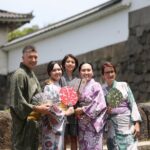
Men wear hakama (traditional male skirt-like trousers) and dogi (a robe) and are treated as samurai for the ceremony. Women wear kimono and are styled as Yamato Nadeshiko, a classic ideal of graceful, refined Japanese womanhood. You’ll also hear how the hostess approaches the guests using traditional manners, so the costume isn’t only for photos—it’s part of learning how the space expects you to behave.
One small consideration: the extra hair set called wagami (collected hair plus kanzashi) is listed as not included. The kimono clothing is included, and the experience includes traditional styling support, but if you want the full look with kanzashi-style hair, you may need an add-on. If you care about that detail, check when you confirm your reservation.
The host’s flow: hospitality isn’t one-way
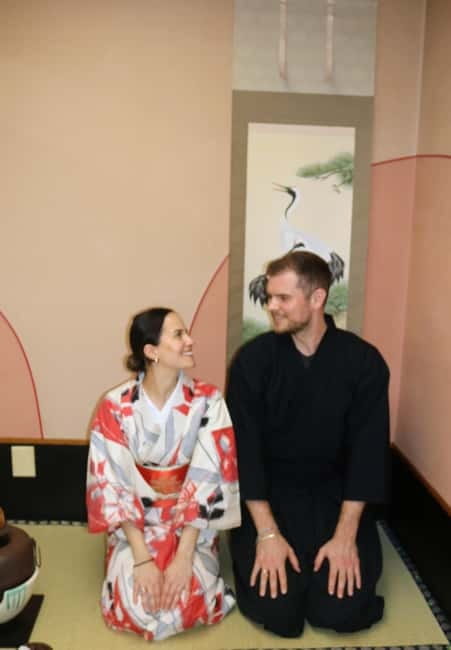
Tea ceremony etiquette can sound stiff on paper, but the way this class is framed makes it feel human. The master of the tea ceremony serves matcha to the guests, but the atmosphere is meant to happen between host and guest—not just be performed at you.
You’ll learn the etiquette as a sequence of small actions: how to serve tea, how to sit, how to bow, how to stand, how to walk. The point isn’t perfection. The point is understanding what each gesture communicates—respect, calm, and attentiveness.
You also get a focus on hospitality as a two-way mindset. In other words, you’re not only receiving; you’re participating. That means you’ll respond in the moment the way the ceremony expects, which is a big part of why the nijiriguchi equality matters so much.
This is also where the English interpreter staff becomes valuable. The class is offered in English (and Japanese too), with English as the default for interpreters. If you want the tea ceremony to make sense beyond hand movements, translation helps you connect the why, not only the what.
Matcha making in a 1-hour class: what you’ll actually learn
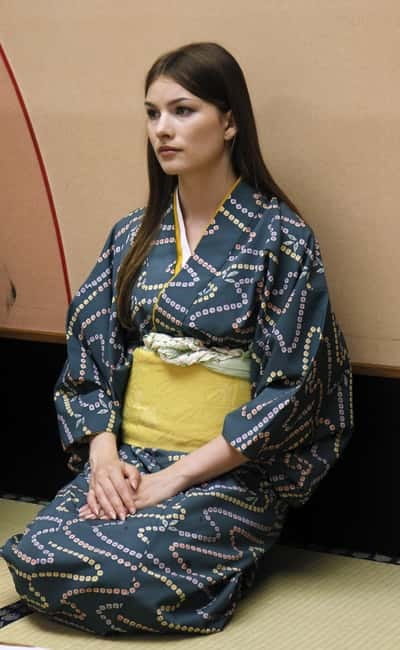
Let’s keep expectations grounded: it’s a 1-hour experience. That’s long enough to learn the core manners and make matcha, but it’s not meant to be a full training program you master for life.
Here’s what you can expect in practice:
- You’ll be guided through how the tea is prepared and served.
- You’ll learn the main etiquette rules for the ceremony setting.
- You’ll practice the movements—sitting, bowing, serving—so you’re not only watching.
When the master serves the matcha, you’ll experience the ceremony as a guest. Then, you’ll learn how the host and guest relationship creates the mood of chanoyu, the tea ceremony. This balance is the heart of the session: the master entertains, and the guests respond, forming a shared atmosphere.
Also, you’re not left on your own with a bowl and whisk. The class includes a certified professional instructor, so you’ll get feedback and pacing rather than guesswork.
Wagashi and the seasons: wabi-sabi through sweets
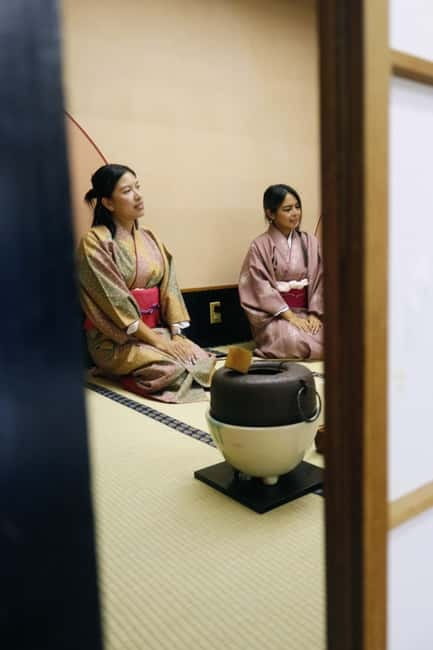
One of the best parts of Japanese tea culture is that it treats sweets as part of the same philosophy as the tea. In this class, wagashi is more than a snack before matcha. You learn how wagashi reflects the Japanese sense of beauty tied to wabi-sabi and the four seasons.
Wabi-sabi is often described as finding beauty in imperfection and quiet texture—things that feel natural, restrained, and lived-in. In tea rooms, that mindset shows up in materials, gestures, and even the seasonal choice of sweets.
The class explains the role of the seasons too. Wagashi cherishes spring, summer, fall, and winter, expressed through three elements. That means you’re encouraged to look at designs and flavors through a seasonal lens, not just as pretty food.
There’s also a historical thread. Wagashi developed along with tea ceremony culture in the Kamakura period, and it’s often described as uniquely Japanese. If you like context—especially context you can connect to what’s on your plate—this portion will be satisfying.
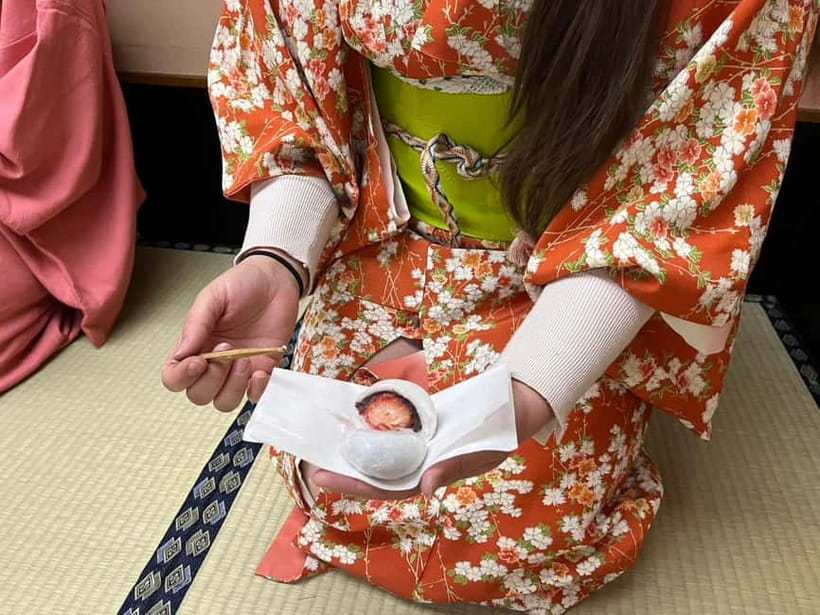
And yes, wagashi is beautiful enough that it can feel almost rude to eat. The designs are handmade and intentionally seasonal, which is part of the point: you appreciate before you consume.





Photos, kimono details, and getting the moment right
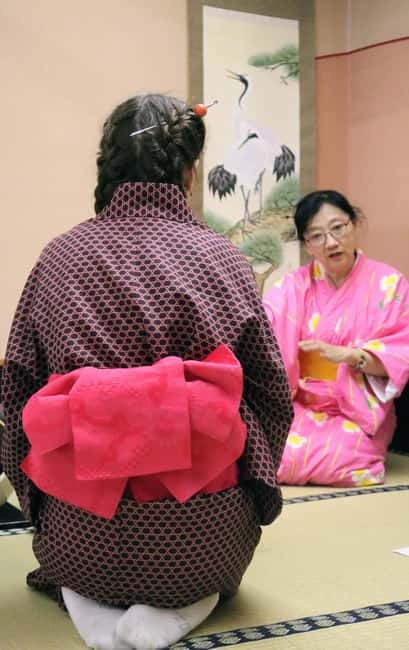
This experience includes photo shooting, with the photo data sent to a designated email address. For many people, the kimono look is the star attraction, and the format helps you get those shots without turning the class into a random photo session.
What I like about this setup is that photos happen inside the flow of the ceremony rather than replacing it. Traditional styling is part of the experience, and the ceremony actions give the photos real purpose.
There are also optional add-ons mentioned for more advanced styling and photo formats (like options tied to wagami and outdoor photo shoots, plus movie shooting as a paid option). If you want a more cinematic set, that’s where you might spend extra. If your goal is simply to try matcha with the right atmosphere, you can keep it simple and stick to what’s included.
One practical tip: wear a comfortable t-shirt for the pre-change routine. It’s listed as what you should bring, and it’ll make the costume switch smoother.
Where to go: finding the Samurai Honor meeting point in Osaka
The activity takes place at Samurai Honor (Bushi no Homare). The address is listed as Excellence Takayama 1F, 2-3-19 Shiginonishi, Joto-ku, Osaka-shi, Osaka 536-0014.
One detail that can save you time: the Apple Maps address is listed as incorrect, so use Google Maps. When you arrive, look for a wooden sign that reads Honor of the Samurai. It’s described as a rack with Samurai Honor activity pamphlets in front of the store, and there may be kimonos and hakama hanging out to dry, which can make the place easier to spot.
Also plan to arrive early. You’re told to show up 30 minutes before your reserved time for instructions and changing clothes. If you’re late, you’ll miss the part that makes the ceremony feel calm instead of chaotic.
Price and value: $40 for matcha, wagashi, kimono, and a guide
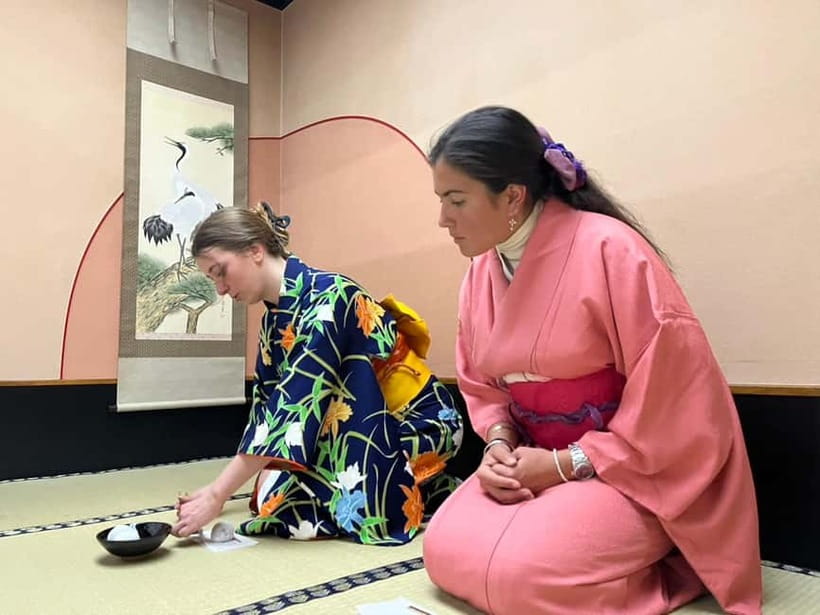
At $40 per person for a 1-hour experience, this is priced like a cultural activity where most of the value comes from hands-on coaching and the costume component—not just from drinking tea.
Here’s what you get included:
- Kimono clothing
- English interpreter guide staff (default language English)
- Matcha and wagashi
- Certified professional instructor
- Tax and tips
- Photo shooting (photo data sent by email)
Not included is just as important:
- No pickup or drop-off
- No transportation (you’ll handle getting there)
- Wagami is not included (collected hair + kanzashi)
- Outdoor photo shoot and movie shooting are paid options
When I think about value, the deciding factor is time and support. If you’re paying $40 and you end up just watching, that wouldn’t be great. But this class is set up for participation: etiquette is taught, matcha is included, and you get English help plus photos. For a short stay in Osaka, that combination is a good way to get a real feel for tea culture without needing hours of planning.
Who this class suits best
This is a strong fit if you:
- Want an authentic-feeling cultural activity near Osaka Castle
- Like learning etiquette and cultural meaning, not only taking photos
- Prefer small groups (it’s limited to 6 participants)
- Want an English-supported experience so you can follow the story behind matcha, wagashi, and the ceremony flow
It’s also a great family-style memory-maker in the sense that the experience is designed around shared participation. The highlights specifically mention sharing experiences and memories together with your children.
It may be less suitable if you:
- Need stroller-friendly or very accessible logistics (the class has specific age limits and is designed for the ceremony setting)
- Are sensitive to the kind of guided movement and sitting involved in etiquette practice
Who should skip (or ask first)
There are clear limits on suitability:
- Not suitable for children under 10
- Not suitable for people with altitude sickness
- Not suitable for people over 95
Also, note the general rules:
- No pets
- No alcohol and drugs
- No nudity
Those items are worth taking seriously, because the experience is built around respectful ceremony space.
If you’re unsure about wagami or hair styling expectations, it’s worth asking before you arrive. The listed options suggest that more elaborate hair setups and certain photo styles can be added separately.
Should you book Learn Zen in Osaka Castle?
If you want a short, structured matcha experience that includes kimono, wagashi, etiquette practice, and English support, I’d book it. It’s not long, but it’s built to give you the key moments: costume change, teacher guidance, nijiriguchi equality, matcha flow, and wagashi meaning tied to wabi-sabi and seasonal beauty.
I’d hesitate only if you strongly depend on hotel/train pickup. Since transportation isn’t included, you’ll need to navigate to the Samurai Honor meeting point near the Excellence Takayama area and arrive early for changing. If you can handle that, this is a thoughtful way to spend an hour in Osaka that feels more like participating than spectating.
FAQ
How long is the Learn Zen matcha class?
The experience lasts 1 hour. You should arrive 30 minutes early for instructions and changing clothes.
Is transportation or pickup included?
No. Pick up and drop off at the train station or hotel are not included, and transportation is not included.
What’s included in the $40 price?
Kimono clothing, English interpreter guide staff (English is the default), matcha, wagashi, a certified professional instructor, tax, tips, and photo shooting with the photo data sent to a designated email address.
What language is the class taught in?
The class offers English and Japanese. The default interpreter language is English, and other languages may depend on staff schedules.
What should I bring?
Bring a t-shirt. That’s listed as the item to bring for the experience.
Do I get photos from the ceremony?
Yes. Photo shooting is included, and the photo data is sent to your designated email address.
Who is this experience not suitable for?
It’s not suitable for children under 10, people with altitude sickness, and people over 95 years old.