REVIEW · OSAKA
A Tour to Explore the Symbol of Osaka: Osaka Castle
Book on Viator →Operated by OTOMO Travel Guide · Bookable on Viator
Osaka Castle tells stories fast. This private tour strings together the right places at the right pace, from the Osaka Museum of History to the castle grounds, with a guide giving you the why behind what you see. If you like history that feels practical instead of textbook, this is a strong way to spend half a day in Osaka.
I especially like the private guide time—you’re not stuck listening through a headset while your group moves on. Guides such as Fuji and Masa have a reputation for clear communication, and others like Ito-san and Michi show up as helpful with the small on-the-ground details that matter in Japan (finding the meeting spot, choosing an efficient route, keeping things moving on a hot day).
One thing to consider: you’ll likely pay at least one admission fee (Osaka Museum of History is ¥1,000) and some stops may not take credit cards, so bring cash. Also, you’re walking, so comfortable clothes help.
In This Review
- Key highlights worth your attention
- Osaka Castle with a guide: why it feels different
- Meeting at Osaka Museum of History: a smart warm-up
- Ōte-mon Gate: the first landmark that sets the tone
- Hokoku Shrine: Toyotomi Hideyoshi in a focused 10 minutes
- MIRAIZA Osaka-Jo: your break zone by the tower
- Inside Osaka Castle: reconstructed rooms and the tea ceremony set
- Price and value: what you’re paying for, and what you’re not
- Guides vary. Here’s how to get the best day anyway
- Logistics that can save you time at Osaka Castle
- Who this Osaka Castle private tour suits best
- Should you book this private Osaka Castle tour?
- FAQ
- What is the duration of the Osaka Castle private tour?
- Where does the tour start and end?
- Is the Osaka Museum of History admission included?
- Are there other admission fees for the other stops?
- Do I need cash?
- Is this tour private?
- How do mobile tickets work for this experience?
- Can the route change if the weather is bad?
Key highlights worth your attention
- Private guide, undivided attention: Ask questions and get real-time fixes for what to see first.
- Museum context before the castle: Osaka Museum of History helps you understand the world Osaka Castle came from.
- Ōte-mon Gate and Hokoku Shrine stops that pack meaning fast: Short stops, big symbolism.
- MIRAIZA Osaka-Jo for a break near the tower: Shops and restaurants in a reused historic building.
- Reconstructed castle interiors: Exhibitions plus a reproduced golden tea ceremony room.
Osaka Castle with a guide: why it feels different
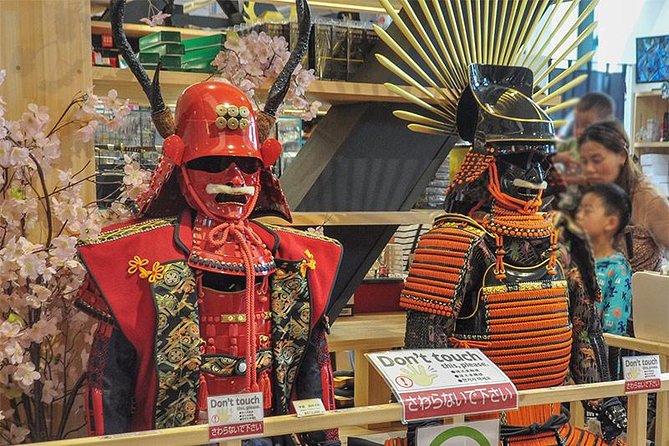
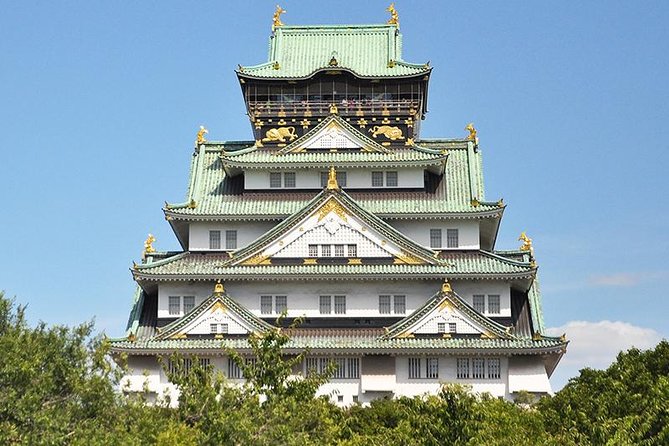
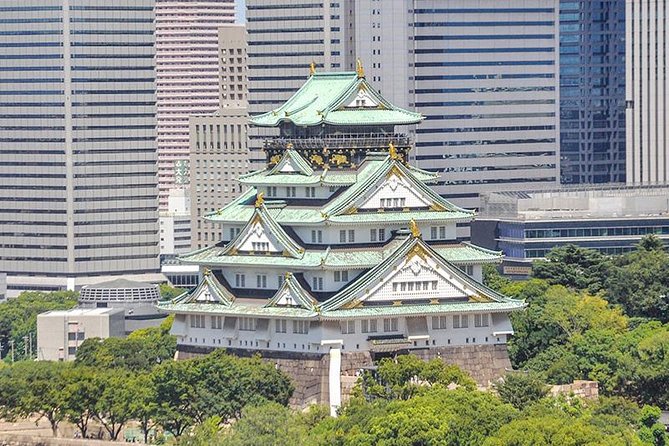
Osaka Castle can be a wow moment even from the outside. But the guided part is what turns those walls into a timeline you can follow. When you walk the grounds with someone who can explain what you’re looking at, you start noticing the small contrasts—what was rebuilt, what represents power, and how the castle’s role changed as the city grew.
This tour is also built for focus. It runs about 4 hours, and it’s private, meaning your group sets the pace. That matters at Osaka Castle, where you’ll otherwise spend energy doing logistics: figuring out where to go, what’s worth your time, and how to avoid wasted wandering.
You can also read our reviews of more tours and experiences in Osaka.


Meeting at Osaka Museum of History: a smart warm-up
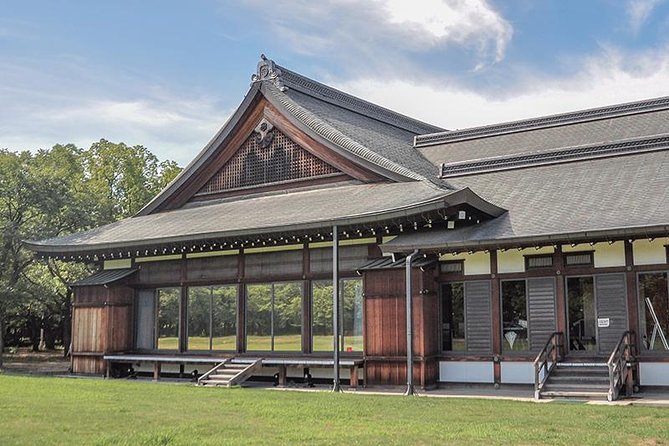
You start at the Osaka Museum of History (4-chōme-1-32 Ōtemae, Chuo Ward). The museum isn’t just a prelude; it helps you read the castle like a story instead of a postcard.
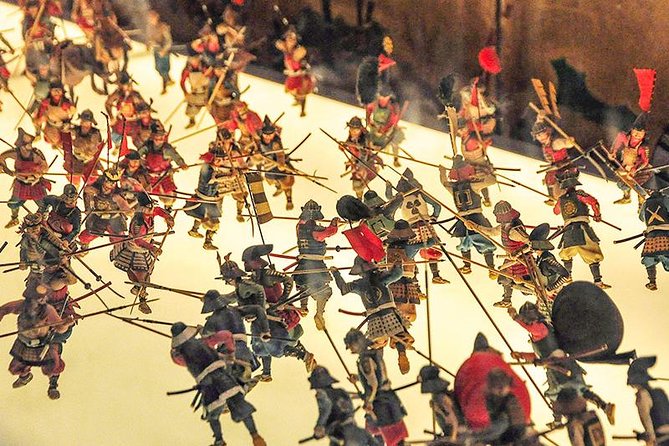
Plan for about 1 hour at this first stop, and note the important cost detail: the museum admission fee is ¥1,000 per person and is not included in the tour price. It’s still worth it. The museum’s floor reproducing the great council hall of Naniwanomiya palace is the kind of exhibit that makes you feel like history isn’t only behind glass.
What I like about beginning here is pacing. Before you hit the castle grounds, you’re primed to recognize names and power shifts that shaped Osaka. That means when you later see gates and shrines tied to Toyotomi Hideyoshi, it lands with context rather than confusion.
Practical tip: since credit cards aren’t guaranteed at every stop, you’ll feel better if you carry enough cash for the museum ticket and any snack breaks.
Ōte-mon Gate: the first landmark that sets the tone
After the museum, you head to Ōte-mon Gate, the main gate of Osaka Castle. This is a quick stop—about 10 minutes—and it’s also free to visit.
This gate is the kind of place where details matter. Your guide points out the stonework and the sheer scale of the fortifications. You’ll also get a sense of how the castle functioned as a defensive structure and a statement of authority, not just an impressive backdrop for photos.
Even though it’s short, this stop helps you understand the castle’s logic. Once you’ve got that mental model, the rest of the grounds feel more connected.
Hokoku Shrine: Toyotomi Hideyoshi in a focused 10 minutes
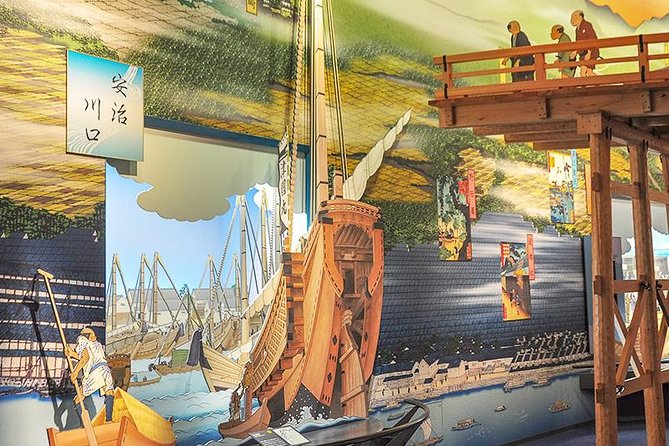
Next up is Hokoku Shrine (about 10 minutes, also free). The shrine is enshrined to Toyotomi Hideyoshi, one of the most famous military commanders in Japanese history—the unifier who used Osaka Castle as a key base.
This stop works well even if you’re not a big shrine person, because it’s tied to a clear name and a clear reason. You’re not spending time guessing what you’re looking at. A good guide will connect it to the castle’s role in Hideyoshi’s era and help you connect symbolism to history.
Keep expectations realistic: it’s brief. If you want long, slow shrine time, you may add extra wandering after the tour ends—but as a guided sampler, it hits the right note.
MIRAIZA Osaka-Jo: your break zone by the tower
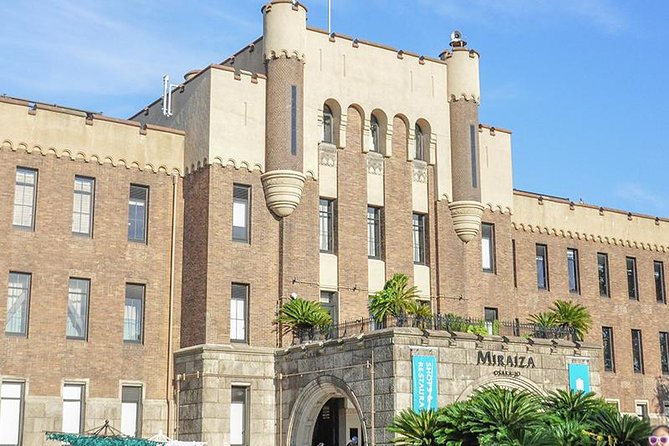
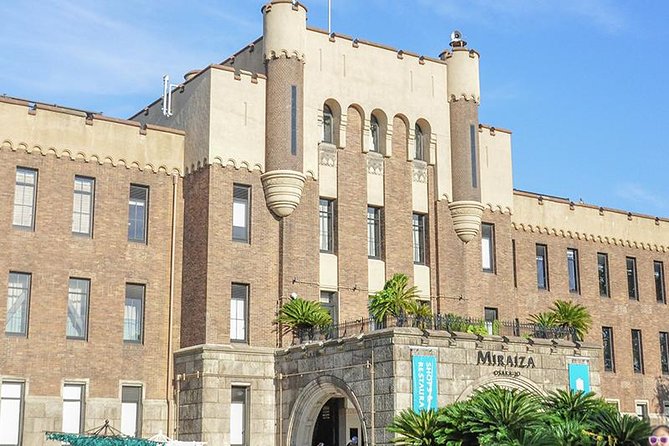
Then you move to MIRAIZA Osaka-Jo, a facility in front of the castle tower. It was reopened in 2017 and originally built in 1931, and it’s become a place for restaurants and shops.
This is about 15 minutes. That time is enough for a quick rest, a drink, or a look around without turning your tour into a shopping trip. It’s also a practical buffer. Osaka Castle weather can shift your day fast—hot sun, sudden showers, or just the fatigue of walking. Having a planned pause nearby makes the whole itinerary feel calmer.
If you’re traveling with anyone who needs breaks, this stop can keep the energy up. And if you’re hungry, you’ll be close to options before you head into the main castle exhibits.

Inside Osaka Castle: reconstructed rooms and the tea ceremony set
The main event is Osaka Castle itself. Your time here is about 1 hour 10 minutes, and the tour lists admission as free for this stop.
Inside, there’s an exhibition in the reconstructed castle, plus you can look at a reproduced golden traditional tea ceremony room. That combination is surprisingly effective. You get both the story (the castle as a place of political power) and the atmosphere (how culture and ceremony sat inside that world).
A private guide helps you avoid the common mistake: walking in, taking a few photos, then losing track. Instead, you’ll likely know what to look for, what connects to Hideyoshi and the castle’s past role, and which parts are worth your time if you’re short on energy.
Photo note: because your guide is with you directly, you can ask for the best angles without stopping your whole group.
Price and value: what you’re paying for, and what you’re not
The tour price is $83.56 per person, offered as a private guided experience for about 4 hours. It’s also listed with features like group discounts and mobile tickets.
Here’s where the value math gets interesting. You’re paying mostly for:
- the private guide and their on-the-ground attention
- the ability to see the sequence of sites without wasting time figuring out the order
You’re not paying for all admissions. The clear extra cost in the provided details is Osaka Museum of History: ¥1,000 per person. Also, the tour notes that all transportation costs, entrance fees, and food costs at visited spots are generally borne by the customer. That doesn’t mean you’ll spend big at every stop—but it does mean you should expect some out-of-pocket costs.
Is it still good value? For many people, yes—especially if you’re:
- short on time and want a guided hit-list
- visiting for the first time and want the meaning behind the monuments
- traveling with a smaller group where sharing a guide feels less efficient than hiring one
One more practical point: this experience is often booked about 55 days in advance on average. If you have fixed dates (or you’re avoiding crowds by going on a specific weekday), book earlier rather than later.
Guides vary. Here’s how to get the best day anyway
Because this is private, the guide matters a lot. The strongest experiences seem to come from guides who can both explain and help you function during the day.
You’ll see examples of guides like Fuji being praised for strong communication, Ito-san for helpful kindness, and Kate for practical assistance with where to buy tickets and how to see the museum best during a hot day. Others such as Masa and Michi show up in positive feedback for sharing clear historical context and staying flexible when meeting up gets tricky.
At the same time, you should plan for reality:
- If your group’s English needs are high, and your guide’s pace isn’t a fit, you might not catch everything.
- Meeting up matters. There are cases where travelers struggled to find the guide, so arrive early and have your confirmation details handy.
- If you’re expecting the guide to be mainly a ticket-collector, adjust your expectations. The value here is the explanation and routing through the sites.
My suggestion: before you meet, decide what you want most—castle architecture, Toyotomi Hideyoshi connections, or the museum context. Then ask early. A private guide can steer the day to what you care about, but you have to set that direction.
Logistics that can save you time at Osaka Castle
This tour asks for comfortable clothing because you’ll be walking. That seems obvious, but it’s the difference between enjoying the day and feeling trapped by tired legs.
Also, be ready for small friction points:
- Cash helps. Some spots do not accept credit cards.
- The tour starts and ends in different locations. It ends at Temmabashi Station. If you want a different end point, ask your guide.
- Bad weather can change routes and destinations. That’s not unusual around big outdoor sites; just keep your plan flexible.
- Stops can be swapped if something is closed. You’ll still get the guided experience, but the exact locations might shift.
If you use public transportation, give yourself extra time to reach the meeting point at Osaka Museum of History. Arriving late can reduce your experience time.
Who this Osaka Castle private tour suits best
This is a good fit for you if:
- you want a guided route without the pressure of coordinating a group
- you like historical context and want it explained in plain language
- you’re visiting Osaka Castle and want more than photos—you want meaning
It may not be the best fit if:
- you’re hoping for a hands-off visit where the guide does almost nothing besides walking beside you
- your group hates walking or expects minimal movement (this tour involves several stops across the area)
- you have a tight schedule and can’t absorb minor adjustments due to weather or closures
Still, the overall structure is traveler-friendly: the visits are short at Ōte-mon Gate and Hokoku Shrine, then you get longer, more substantive time at the museum and inside the castle.
Should you book this private Osaka Castle tour?
Yes, if you want Osaka Castle to make sense. Starting with the Osaka Museum of History and then moving through Ōte-mon Gate, Hokoku Shrine, and the castle interiors is a smart way to connect the dots in a limited time window.
For the best outcome, I’d book this when you:
- can pay the extra ¥1,000 museum fee
- will bring cash just in case
- arrive early at the meeting point so you start smoothly
If you want a memorable Osaka Castle visit with real guidance—not just standing in front of walls—this is a solid choice.
FAQ
What is the duration of the Osaka Castle private tour?
It lasts about 4 hours.
Where does the tour start and end?
It starts at Osaka Museum of History and ends at Temmabashi Station.
Is the Osaka Museum of History admission included?
No. The museum admission fee is ¥1,000 per person and is not included.
Are there other admission fees for the other stops?
The tour details list free admissions for the other listed stops (Ōte-mon Gate, Hokoku Shrine, MIRAIZA Osaka-Jo, and Osaka Castle). You should still be prepared for any costs not marked as included.
Do I need cash?
Yes, because some spots do not accept credit cards, so it’s smart to bring cash.
Is this tour private?
Yes. Only your group will participate.
How do mobile tickets work for this experience?
The tour includes mobile ticket support as a feature, and confirmation is received at booking.
Can the route change if the weather is bad?
Yes. If weather is bad, there is a possibility of changes to transportation, destinations, and routes. Stops can also be swapped if there is temporary closure.