REVIEW · OSAKA
Let’s Dance Bon Odori Japanese folk Dance near Tsutenkaku
Book on Viator →Operated by Ebisu-za · Bookable on Viator
Dancing under Japanese festival energy is easier than you think. This Bon Odori class at Ebisuza near Tsutenkaku turns a cultural tradition into a hands-on, follow-the-instructor experience, with a simple structure and a feel-good circle vibe.
What I like most is how quickly the basics click—easy-to-follow steps and a samba-like rhythm that makes it hard not to move. I also love the included cultural extras, like live shamisen and taiko music, plus a drink to help you relax.
One consideration: you do need to be willing to dance for about 1 hour 30 minutes, so if your knees or mobility are an issue, go a little slower and follow the pace that feels safe.
In This Review
- Key highlights worth your attention
- Bon Odori at Ebisuza: Osaka dancing that’s friendly to beginners
- How the 90 minutes works: from basics to freer dancing
- The music: shamisen and taiko that make the room feel like a festival
- Choose your drink: coffee, tea, water, or canned alcohol
- Stops around Tsutenkaku and Isshinji Temple
- Tsutenkaku: start with a classic Osaka landmark
- Isshinji Temple: a peaceful pause in the same area
- Food nearby: what to do with your time
- Who should take this Bon Odori class near Tsutenkaku
- Price and value: what $19.60 gets you
- Scheduling, meeting point, and how to keep it low-stress
- Practical tips to enjoy the dance more (and worry less)
- Should you book Let’s Dance Bon Odori near Tsutenkaku?
- FAQ
- How long is the Bon Odori experience?
- Where do I meet for the class?
- What drink options are included?
- Are there multiple class times?
- How big is the group?
- Is free cancellation available?
Key highlights worth your attention
- Ebisuza location near Tsutenkaku makes pre-dance sightseeing and food stops easy
- A 90-minute lesson format starts with basic steps, then shifts to more free dancing
- Live shamisen and taiko add energy and make the class feel like a mini festival
- Choose your drink: coffee, tea, water, or a canned alcoholic beverage
- Small group size (max 15) helps you learn without getting lost in the crowd
Bon Odori at Ebisuza: Osaka dancing that’s friendly to beginners
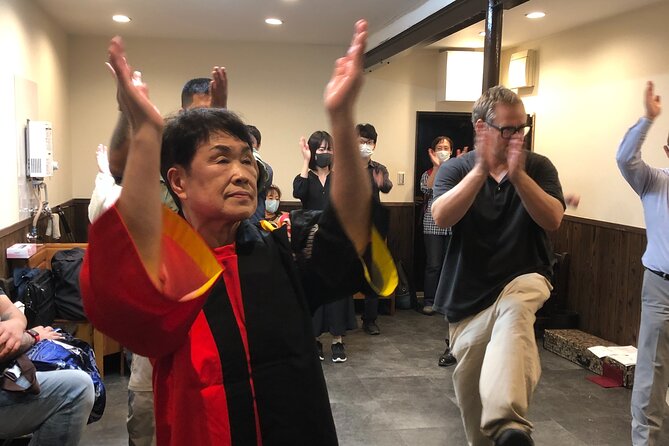
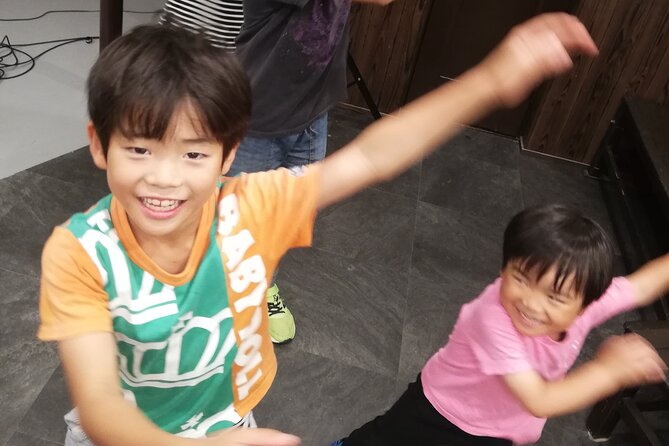
Bon Odori is one of those Japanese traditions you usually watch from the outside—then suddenly you’re inside the circle, following the rhythm, and realizing it’s made for regular people. At Ebisuza, the whole session is built around that mindset. You’re taught by an instructor, you practice, and then you’re encouraged to enjoy yourself once you get the pattern.
The best part is the location. You’re in central Osaka near a major landmark area—Tsutenkaku—so it’s not an isolated activity. Before or after your class, you can keep the day moving with sightseeing and food around the Ebisuza area. That matters because the class itself is only about 1.5 hours, so you’ll want something nearby that keeps your schedule smooth.
This isn’t a performance where you just stand and clap. It’s a dance lesson with structure. You’ll start with demonstrations and basic steps, then you’ll get more freedom for the fun section.
You can also read our reviews of more tours and experiences in Osaka.


How the 90 minutes works: from basics to freer dancing
The class runs about 1 hour 30 minutes and follows a clear rhythm. First, the instructor demonstrates the Bon Odori steps so you can see the timing. After that, you try the basic moves together, which is the smart way to learn: you’re not guessing counts on your own.
Here’s what I think makes this format work so well. Bon Odori is described as having few rules, which is a big deal for first-timers. In practice, that means there’s room for natural movement. You’re not being judged on exact choreography; you’re learning how the dance flows, how the circle moves, and how the rhythm guides you.
Then, in the second half, the class opens up. You’re able to dance more freely and focus on the joy of doing it together—exactly the part that turns a lesson into a memory. The vibe is also helped by the music. Reviews note live instruments like shamisen and taiko drums, and that kind of sound changes the whole experience. It’s one thing to follow a beat; it’s another to feel the rhythm bouncing off real percussion.
Practical note: since you’ll be moving, wear comfortable clothes and shoes you can pivot in easily. You don’t need dancewear, but you do need to feel steady on your feet.
The music: shamisen and taiko that make the room feel like a festival
In many cultural classes, the music is recorded or background-level. Here, the sound is part of the show. Reviews highlight live shamisen and taiko drum performances during the experience, and even note times when participants could touch percussion instruments. That’s a big upgrade in value because it turns you from spectator to participant in the atmosphere.
If you’ve never heard shamisen up close, this is a good place to get a feel for how it drives the energy. If you know taiko only from recordings, the live impact is more physical than you expect. With Bon Odori, the music isn’t just decoration—it’s the steering wheel.
And because the class is small (up to 15 people), the live sound lands better. You’re not lost in a huge hall. You’re in the same space as the musicians and the instructor, so the experience feels personal even while you’re dancing in a group circle.
Choose your drink: coffee, tea, water, or canned alcohol
One of the nicest practical touches is the included drink. You can pick coffee, tea, water, or a canned alcoholic beverage. That’s not just a perk—it’s useful. It helps you stay comfortable during a warm, active activity, and it gives you something to look forward to at the end of the lesson.
For some people, a canned alcoholic drink is exactly the kind of festival cue that loosens the shoulders and makes the dancing feel more natural. For others, coffee or tea is perfect and still fits the vibe. The key is that you get a choice, so you can match the drink to your day and your comfort level.
Also, the class description mentions dancing and unwinding. In plain terms: the drink is there to take the edge off, not to make things complicated. If you’d rather skip alcohol, you have non-alcohol options.
Stops around Tsutenkaku and Isshinji Temple
This experience pairs the dance class with sightseeing stops. You start near the landmark area and then work in two named points: Tsutenkaku and Isshinji Temple.


Tsutenkaku: start with a classic Osaka landmark
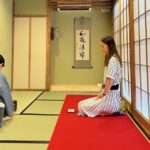
Tsutenkaku is one of those Osaka names that shows up on postcards for a reason. Since Ebisuza is located in the center area near Tsutenkaku, you’re in easy walking-and-exploring territory. That’s a win for your timing: you don’t have to squeeze in extra transport to do a quick look before dancing.
The downside? Because Tsutenkaku is popular, it can be busy depending on the time of day. If you’re sensitive to crowds, give yourself a little buffer so you’re not rushing to arrive at your class.
Isshinji Temple: a peaceful pause in the same area
The second stop is Isshinji Temple. Even though you might not spend a long stretch there, it’s a helpful contrast to the dance energy. It gives you a sense that this part of Osaka isn’t only food and neon. It also makes the overall outing feel like more than a single ticket experience.
One thing to keep in mind: the session is still mainly about the dance class. So your time at each stop is best treated as a look-and-photo moment rather than an all-day temple visit.
Food nearby: what to do with your time
Ebisuza’s area is full of meal options. Around there, you can find things like takoyaki, okonomiyaki, and kushikatsu. This is great planning fuel. If you pick an early afternoon session, you can eat lunch nearby without turning your day into a logistical puzzle. If you choose an evening session, dinner plans become simple too.
Who should take this Bon Odori class near Tsutenkaku
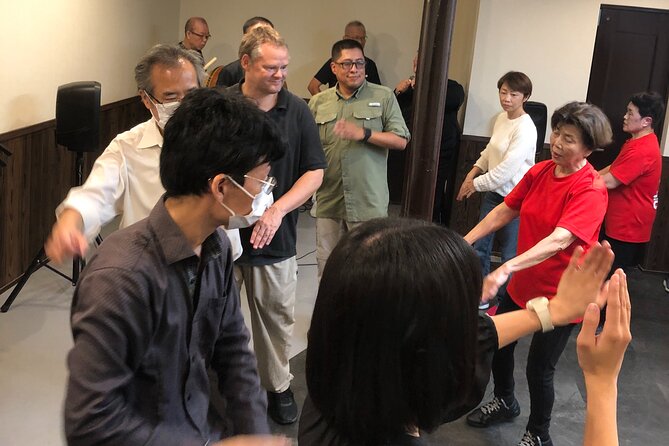
This is designed for people who are curious and open. Most people can participate, and the steps are described as easy to learn—especially because the instructor demonstrates first, then guides you through basics.
I think it’s especially good for:
- People who want a hands-on cultural activity rather than just photos
- First-timers who feel awkward dancing alone (a circle with an instructor removes that pressure)
- Anyone who likes live music—shamisen and taiko add a lot
What about people with physical limitations? There’s no need to pretend you’re fearless. One review mentions dancing even with knee pain, which tells me the class can be forgiving if you move within your limits. Still, since you will be dancing for most of the 1.5 hours, you should take it slow and listen to your body. If you’re worried, think about choosing a drink option that matches your comfort and pacing.
Price and value: what $19.60 gets you

At $19.60 per person for about 1 hour 30 minutes, this can be good value if you compare it to what you’d pay for a cultural class plus a separate activity. You’re not only learning steps. You’re also getting:
- Live shamisen and taiko atmosphere
- An included drink choice (coffee, tea, water, or canned alcohol)
- A professional instructor guiding you through basics
- A small group setting (max 15), which usually means better guidance and less confusion
Also, the class timing options help value. You can choose an early afternoon or evening session, so you’re more likely to fit it into your itinerary without skipping other plans. The “mobile ticket” detail is a small but real convenience too: less paperwork stress when you’re trying to enjoy Osaka.
One more value angle: the location near Tsutenkaku means you’re not paying time-and-money just to reach a remote spot. Being central helps you turn this into a complete outing.
Scheduling, meeting point, and how to keep it low-stress
The studio is centrally located in Osaka, and the area is near public transportation. That’s the big practical win. When an activity like this is on a short clock (1.5 hours), you don’t want uncertainty around transit.
Your meeting point is listed as:
1-chōme-3-13 Ebisuhigashi, Naniwa Ward, Osaka, 556-0002, Japan
The activity ends back at the meeting point, so you don’t have to plan an immediate detour for getting oriented afterward.
Timing-wise, you’ll want to check whether your session is the early afternoon or the evening option. Since the class is popular, it’s also wise to book sooner rather than later. The listing data shows an average booking window of about 27 days in advance, which is a gentle hint that you should lock in your preferred time if your schedule is tight.
Two small notes that can matter:
- Service animals are allowed.
- Most people can participate, so don’t overthink whether you can “do it right.” You’ll be taught step-by-step.
Practical tips to enjoy the dance more (and worry less)
Based on how these classes typically feel—and consistent with reviews about easy steps and friendly guidance—your best strategy is simple: arrive ready to laugh, not arrive ready to perform.
A few things that help:
- Wear shoes that won’t slip if you turn in a circle.
- Keep your expectations realistic. You’ll learn basics first, then loosen up later.
- If you plan to have the canned alcoholic beverage, consider how it fits your comfort level and how steady you feel.
- Bring a relaxed attitude. Bon Odori is designed for group joy, and the instructor-led format gives you structure when you need it.
Also, don’t underestimate the benefit of the live instruments. When shamisen and taiko are in the room, the rhythm becomes clearer, and you stop counting so much in your head.
Should you book Let’s Dance Bon Odori near Tsutenkaku?
Yes—if you want a memorable, active cultural experience that’s beginner-friendly, close to major Osaka sights, and heavy on real atmosphere. For $19.60, the mix of an instructor-led lesson, live shamisen and taiko, and an included drink choice makes it feel like more than a simple class.
I’d think twice only if you’re not able to do light-to-moderate dancing for about 90 minutes. In that case, you might still enjoy watching, but the format here is built around participating. If your knees are touchy, take it slowly and follow your own safe pace.
If you’re choosing one “do something” activity in Osaka that isn’t just wandering, this is a strong pick—especially because you’re in the Tsutenkaku area where you can easily keep the day going before or after.
FAQ
How long is the Bon Odori experience?
It lasts about 1 hour 30 minutes.
Where do I meet for the class?
The meeting point is 1-chōme-3-13 Ebisuhigashi, Naniwa Ward, Osaka, 556-0002, Japan, and the experience ends back at the meeting point.
What drink options are included?
You can choose coffee, tea, water, or a canned alcoholic beverage.
Are there multiple class times?
Yes. You can choose from sessions in the early afternoon and evening.
How big is the group?
The maximum group size is 15 travelers.
Is free cancellation available?
Yes. You can cancel for a full refund up to 24 hours in advance of the experience start time.