REVIEW · OSAKA PREFECTURE
3 Days Private Osaka Kyoto and Nara Tour With English Driver
Book on Viator →Operated by Milkyway Tours · Bookable on Viator
Three cities, one easy plan. This private tour connects Osaka, Nara, and Kyoto with an English-speaking driver, so you spend less energy on transfers and more on actually seeing places. You also get structured time for big-name sights plus room to slow down in neighborhoods that feel local.
I like the private transportation with pickup and drop-off, because it turns a three-city trip into a smooth door-to-door flow. I also like the mix of stops: classic temples and shrines, scenic viewpoints, a hands-on food stop at the Cup Noodles Museum, and a true reset in a hot spring facility in Osaka.
One thing to think about: the tour price covers the vehicle and driver, but many entrance fees are not included, and a few listed attractions carry higher ticket costs. If you’re traveling on a tight budget, you’ll want to budget for those admissions and plan meals on your own.
In This Review
- Key things that make this tour feel worth it
- How a private English driver keeps Osaka–Nara–Kyoto stress low
- Day 1 in Osaka: Osaka Castle, shrine stops, Cup Noodles, and an onsen reset
- Day 2 in Nara: Todai-ji plus historic lanes and garden calm
- Day 3 in Kyoto: Arashiyama, Kinkaku-ji, Fushimi Inari, and Gion night energy
- Price and what it really covers for a 3-day private ride
- Pacing that actually works across three cities
- A closer look at the “private” part (and why it matters)
- Who this tour fits best
- Should you book this Osaka–Kyoto–Nara private 3-day tour?
- FAQ
- What’s the tour price and group size?
- How long is the tour?
- Is pickup and drop-off included?
- Do I get an English-speaking driver?
- Are attraction and temple entrance fees included?
- Is there a mobile ticket?
- Can I cancel for free?
- What cities does the tour cover?
Key things that make this tour feel worth it
- English-speaking driver + private vehicle: fewer “how do we get there?” moments across three cities
- Door-to-door pickup and drop-off: saves time versus hopping between transit systems
- Osaka food-and-history stop: Cup Noodles Museum is included and hands-on
- Onsen break in Osaka Bay Tower: a proper rest stop instead of another temple sprint
- Major Nara temples plus gardens: you get both the big icons and calmer walking time
- Kyoto classics in a smart order: Arashiyama, Kinkaku-ji, Fushimi Inari, and more
How a private English driver keeps Osaka–Nara–Kyoto stress low
If you’ve ever planned a multi-city Japan trip, you already know the pain point: trains work well, until you add luggage, time limits, and language gaps. A private vehicle with an English-speaking driver means your day moves on a human schedule, not a frantic scramble between connections.
I also like that your stops include both ticket sites and places where you can simply stroll—so you don’t feel forced into constant admissions. That matters on a 3-day trip, because the goal is to see Japan without burning your whole day on lines and logistics.
You can also read our reviews of more private tours in Osaka Prefecture

Day 1 in Osaka: Osaka Castle, shrine stops, Cup Noodles, and an onsen reset

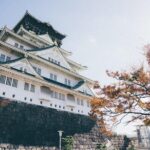
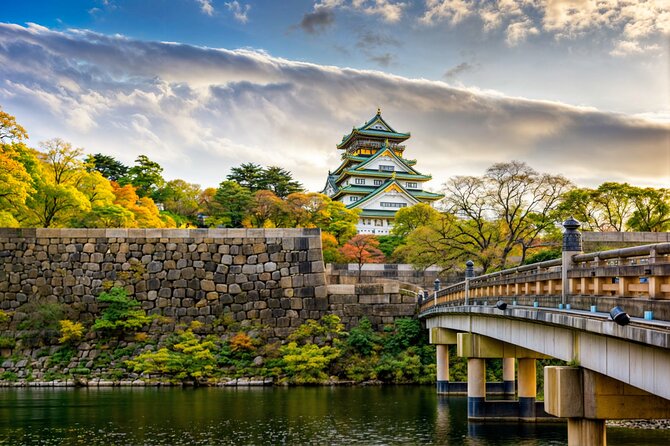
Osaka starts with Osaka Castle, timed at about 40 minutes. Even if you’re not chasing every museum detail, the scale and fortress feel are the point, and it’s a strong “welcome to Osaka” anchor for day one. Entrance is not included, so it’s something you’ll pay separately if you want to go inside.
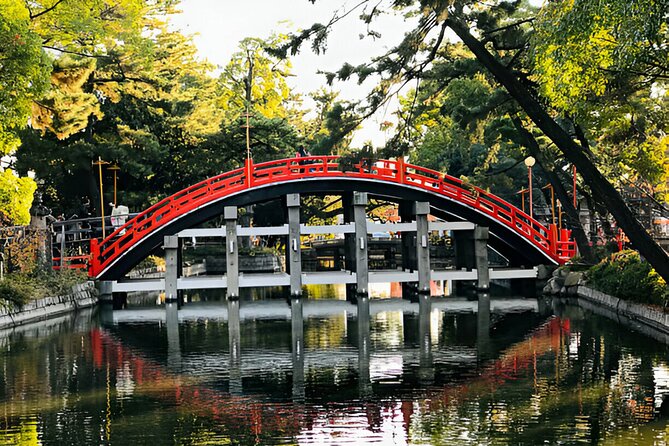
Next, you head to shrine country for a more local pace. Shinsekai Inari Shrine takes about 45 minutes, then you continue to Sumiyoshi Shrine for roughly 40 minutes. Sumiyoshi Shrine is listed as free, so it’s a good spot to break up paid attractions without feeling like you’re skipping the important stuff.
From there, you get a city-view moment at the Sakai City Hall Observatory (free). At about 50 minutes, it’s a nice contrast after temple and shrine walking—just enough elevation to help you understand where Osaka sits in relation to the bay area and surrounding districts.
One of the most practical highlights is the CUP NOODLES MUSEUM OSAKA IKEDA (included and free). It’s hands-on by design: you’re not just looking at photos, you’re working through the story of instant ramen and its impact on daily food culture. If you have kids—or if you just like quirky Japan museums—this stop is likely to land well because it’s interactive and easy to enjoy even if you don’t speak Japanese.
After that, the tour gives you a real pause: Solaniwa Onsen Osaka Bay Tower (included as a stop, but admission is not included). With about 45 minutes, it functions like a reset button. This is especially useful if your trip timing lines up with heat or long walking days, because relaxing your body changes how you experience the rest of the itinerary.
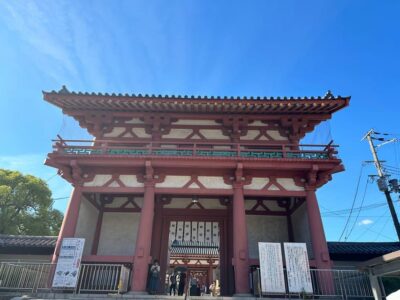
Finally, you finish the day with two very Osaka-feeling blocks: Shinsaibashi-suji Shopping Street (about 1 hour, free to access) and Shitennoji (about 50 minutes; admission not included). Shinsaibashi-suji is where you can wander for snacks, souvenirs, and casual people-watching. Shitennoji adds a long-time-world temple perspective, and it’s a fitting close for a day that already mixed big sights with smaller spiritual stops.
Practical note: Osaka day includes a lot of “walk-and-look” time. If you’re sensitive to crowds, go slowly in the shopping street section and keep your plans flexible around photo stops.
Day 2 in Nara: Todai-ji plus historic lanes and garden calm
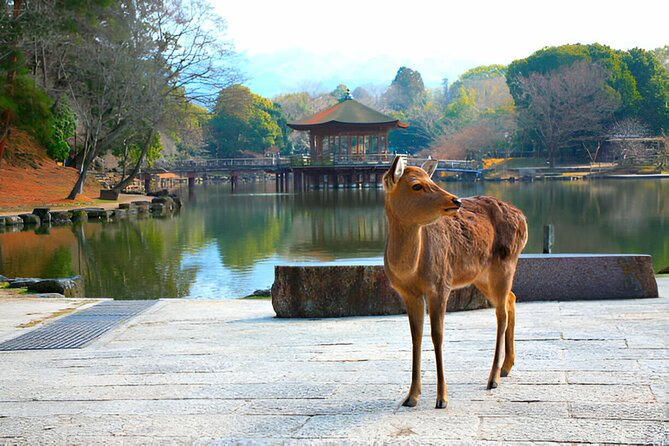
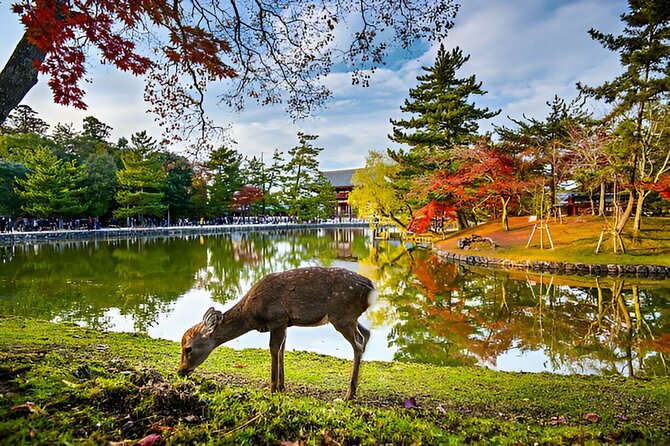
Nara’s day starts at Nara Park (about 1 hour 30 minutes). The key draw is the park setting and the easy deer presence that’s tied to the area’s identity. It’s also your buffer between Osaka’s city energy and Nara’s more relaxed atmosphere.
Then comes the big icon: Todai-ji Temple, about 50 minutes, with admission not included. Todai-ji is listed as housing the Great Buddha (Daibutsuden), and that’s exactly what you’ll remember here. This is the day-two “main character” sight—the place that makes Nara feel like Nara.
After that, the pace shifts to something more focused and cultural at Kasuga Taisha Museum (about 50 minutes; admission not included). It complements shrine visiting by adding context, which is helpful if you like understanding what you’re seeing instead of only photographing it.
You also get a very walkable old-town feel in Naramachi (about 40 minutes, free). The tour describes it as narrow lanes with traditional machiya townhouses, which is the kind of scenery that makes Kyoto feel real—and Nara worth slowing down for.
For more temple weight, you’ll visit Kofuku-ji Temple (about 40 minutes; admission not included). Listed as UNESCO and one of the oldest Buddhist temples in Japan, it gives you variety after Todai-ji without feeling repetitive.
If you prefer indoor learning breaks, Nara National Museum is included as a stop (about 50 minutes; admission not included). Museums are also a lifesaver when weather turns, and having that built into the plan keeps you from improvising.
The day also includes Nara Palace Site Historical Park (about 40 minutes, free). This is for people who enjoy context: you’re looking at remnants of the Heijo Palace area, and it helps connect the temples back to Nara’s role as an imperial center in the past.
To finish, the itinerary leans into calm with garden time. Isuien Garden (about 40 minutes; admission not included) is described as an Edo-period garden with two sections. You also have another garden stop at Yoshikien Garden (listed under Nara Prefecture, about 40 minutes; admission not included). Between the pond garden, moss garden, and tea ceremony garden references, this is where Nara shifts from sacred monuments to quiet walking.
One consideration for Nara day: you’ll likely be doing a mix of outdoor and indoor walking. If you’re traveling in hot months, build in water breaks and keep your footwear comfortable.
Day 3 in Kyoto: Arashiyama, Kinkaku-ji, Fushimi Inari, and Gion night energy
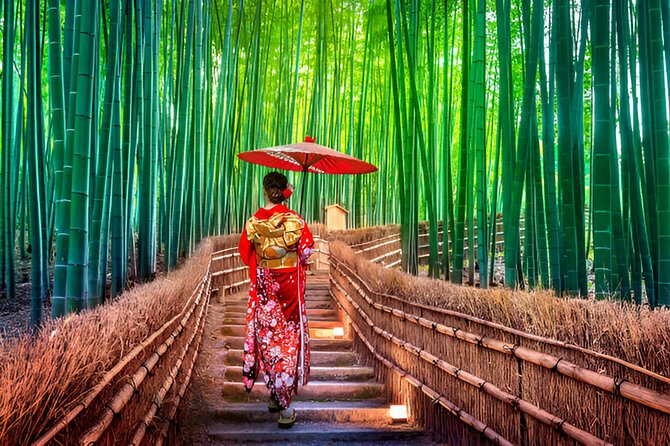
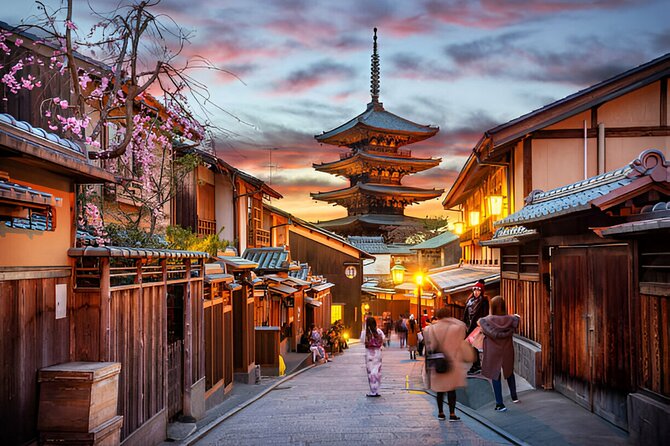
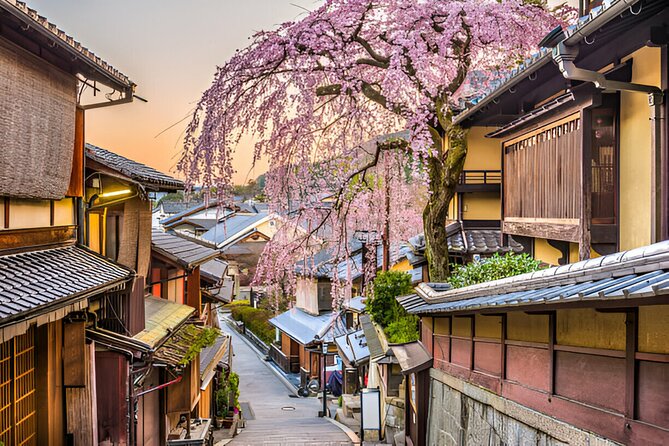
Kyoto day starts with Arashiyama (about 1 hour, free). The tour frames it as a scenic district with traditional charm and landmark areas. Even with a limited time window, Arashiyama can give you that Kyoto “I get it now” feeling because it’s shaped by nature and old streets, not just temples.
Next you get the poster-famous temple: Kinkaku-ji Temple (Golden Pavilion), about 40 minutes; admission not included. You’ll see why people travel for this one—gold-leaf visual impact and the classic reflective look depending on the viewing angle.
From there it’s to Fushimi Inari-taisha Shrine (about 40 minutes, free). The tour highlights its thousands of vermilion torii gates lining hiking trails. This is a good spot when you want a shrine experience that feels like a journey even in a shorter time frame. You can focus on the gate lines and photo viewpoints without needing a full hike.
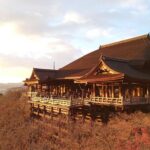
Then you move to a UNESCO temple stop: Kiyomizu-dera Temple (about 40 minutes; admission not included). The emphasis is on the hillside setting and the meaning behind its name. It’s also a great “Kyoto identity” stop because it feels both historic and dramatically placed.
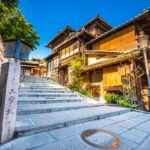
After temples, the plan pivots to neighborhood Kyoto at Gion (about 1 hour; admission not included). The tour description ties Gion to geisha culture and samurai tales, and even just walking the streets can help you understand why this district is so famous. Note: the entrance fee listed for Gion is very high, so double-check your budget expectations before you lock it in.
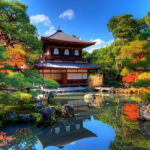
The day continues with two statue-heavy and Zen-style temples. Sanjusangendo Temple (about 40 minutes; admission not included) is described as famous for one thousand life-sized statues of Kannon. Then comes Ginkakuji Temple (about 40 minutes; admission not included), known as the Silver Pavilion even though it isn’t adorned in silver like the Golden Pavilion.
If you want something practical and food-friendly, Nishiki Market Shopping District is included for about 1 hour 30 minutes (free). This is where the tour becomes easy to personalize: you can snack, browse traditional goods, and treat the market like your flexible lunch or late afternoon stop.
Finally, you end at Kyoto Imperial Palace (about 40 minutes, free). It’s a quieter finish, and it gives you a shift from temple architecture to palace-era grounds—useful if you’ve been focused on religious sites for two straight days.
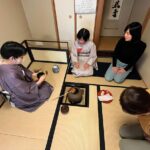
A small note that matters: the tour’s highlights mention a traditional tea ceremony experience. Even though it isn’t listed as its own stop in the day breakdown details, it’s part of the tour’s promise, so it’s worth keeping on your radar when you compare this option to other Kyoto add-ons.
Price and what it really covers for a 3-day private ride
The headline price is $1,646.41 per group (up to 5) for about 3 days, with an English driver and private transportation. That’s how this tour stays “value-competitive”: you’re paying for your own vehicle and a guide/driver who handles timing and movement across cities.
To understand value, look at how the cost per person changes with group size:
- If you use the full 5 people, you’re around $329 per person for the private ride and driver (before entrance fees).
- If you’re only 2 people, the private component per person rises a lot, so entrance fees and optional add-ons can become more noticeable.
Now the part you must plan for: entrance fees are not included for a long list of stops. Based on the listed ticket prices, the total admissions add up to 14,754 yen per person across paid sites. That includes big-ticket items like Solaniwa Onsen and the listed Gion entrance fee.
You should also remember that meals and accommodation are not included, so your true trip budget is the tour price plus admissions plus food. If you like structure, this is still often cheaper than paying for separate guides in each city and constantly rebooking transit.



Pacing that actually works across three cities
Three cities in three days sounds intense. The reason this tour can work anyway is the stop timing: many sights are built as 40–60 minute blocks. That’s short enough to avoid exhaustion, but long enough to see something meaningful instead of “photo stop and rush.”
It also helps that the day plans aren’t only about temples. Osaka includes shopping and a ramen museum. Nara includes both big icons and quieter garden time. Kyoto includes a market district and a palace grounds finish. That variety matters because it keeps each city from feeling like a repeat of the last.
A closer look at the “private” part (and why it matters)
This is a private tour, meaning only your group participates. That affects everything: your comfort pace, your ability to pause for bathrooms, and your freedom to spend extra time where you care most.
It also includes pickup and drop-off and a mobile ticket. A mobile ticket sounds small until you’re tired at the end of a day and just want to show something simple to get in. Having that reduces friction when you’re moving between multiple locations.
One more human detail: an account of a summer trip credited the driver named Vicky for being patient and for buying beverages to help with heat. That kind of care may sound minor, but it changes how “hard” the day feels when temperatures are high.
Who this tour fits best
I’d point you toward this tour if you want:
- A first-time Japan multi-city plan without learning rail math the hard way
- A private schedule with an English driver to keep your day readable and manageable
- A good balance of major sights (Osaka Castle, Todai-ji, Kinkaku-ji, Fushimi Inari) and add-on variety (Cup Noodles Museum, gardens, Nishiki Market)
- Less stress if you prefer not to coordinate multiple tickets and transit transfers on your own
It may be less ideal if your priority is low-cost sightseeing or if you strongly dislike paying separate entrance fees for many sites. In that case, you might prefer a do-it-yourself transit plan with only the top 1–2 paid attractions per day.
Should you book this Osaka–Kyoto–Nara private 3-day tour?
Book it if you want comfort, structure, and time efficiency, especially if you’re traveling as a small group (up to 5) and you’re okay budgeting for entrance fees. The Cup Noodles Museum stop plus the Osaka onsen break give the schedule variety you don’t always get on temple-heavy tours.
I’d also book sooner rather than later: it’s commonly reserved about 51 days in advance on average, which suggests demand for this exact route and format.
Skip or compare first if your budget can’t absorb the listed admissions total, or if you don’t want the plan to include higher-cost sites like the onsen stop and the listed Gion admission. If you’re cost-sensitive, ask yourself honestly how many paid stops you truly want.
FAQ
What’s the tour price and group size?
The price is $1,646.41 per group, and the group size is up to 5 people.
How long is the tour?
It’s a 3-day private tour (approx.).
Is pickup and drop-off included?
Yes, pickup and drop-off are included.
Do I get an English-speaking driver?
Yes, the tour includes an English-speaking driver.
Are attraction and temple entrance fees included?
No. The tour lists many entrance fees as not included, including several major temples and museums, plus the onsen and other paid sites.
Is there a mobile ticket?
Yes, the tour includes a mobile ticket.
Can I cancel for free?
Yes. There is free cancellation, and you can cancel up to 24 hours in advance for a full refund. If you cancel less than 24 hours before the start time, the amount paid is not refunded.
What cities does the tour cover?
It covers Osaka, Nara, and Kyoto.