REVIEW · OSAKA
Osaka: Dotonbori’s Bridges 20-Minute Cruise
Book on GetYourGuide →Operated by Top river cruise Ltd. · Bookable on GetYourGuide
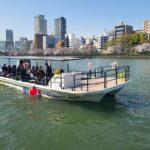
Osaka looks different from the water. This short Dotonbori River cruise turns the city’s most crowded strip into a calm, breezy ride. You glide past major landmarks and nine bridges from angles you just can’t get on foot.
I especially like the way you see Osaka’s “photo icons” from river height. The route takes you by Nippon-bashi Bridge and the famous Glico billboards, then keeps rolling along to more bridge views like Ebisu-bashi and Dotonbori-bashi.
One thing to consider: this is mainly a ride. Even though it’s described with Japanese and English, some departures feel like a water-only trip with little or no narration, so don’t plan on a detailed, guided tour.
In This Review
- Key points at a glance
- Dotonbori on the water: why 20 minutes feels like a reset
- Where the cruise starts by Don Quijote pier
- The bridges and landmarks you’ll see (and what each view is good for)
- Nippon-bashi Bridge and the Glico moment
- Ebisu-bashi Bridge and Dotonbori-bashi Bridge
- The turn near Ukiniwa-bashi Bridge
- What about the rest of the nine bridges?
- Music, narration, and the guide reality
- Comfort on board: roof protection, heat, and the seated-only rule
- Price and value: is $12 worth 20 minutes?
- When this cruise is best (and who should skip it)
- Should you book the Osaka Dotonbori Bridges cruise?
- FAQ
- How long is the Osaka Dotonbori bridges cruise?
- What does the ticket cost?
- Where does the cruise start?
- What major sights and bridges will I see?
- Is food or drinks included?
- Is there an English-speaking guide?
- Can I stand up or move around on the boat?
- Is the boat covered in the rain?
- Where do I meet the staff, and what do I show?
- Does the cruise end back at the starting point?
Key points at a glance
- 20 minutes on the river: short enough to fit between meals and shopping fatigue
- Iconic Osaka from unusual angles: bridges and signage you’ll miss from street level
- Clear plastic roof: helpful if rain pops up
- Music can set the mood: upbeat soundtrack in some rides
- Seated-only for safety: no standing or roaming during the cruise
- Meeting spot is easy to find: in front of Don Quijote near the Ebisu/Tazaemon area
Dotonbori on the water: why 20 minutes feels like a reset
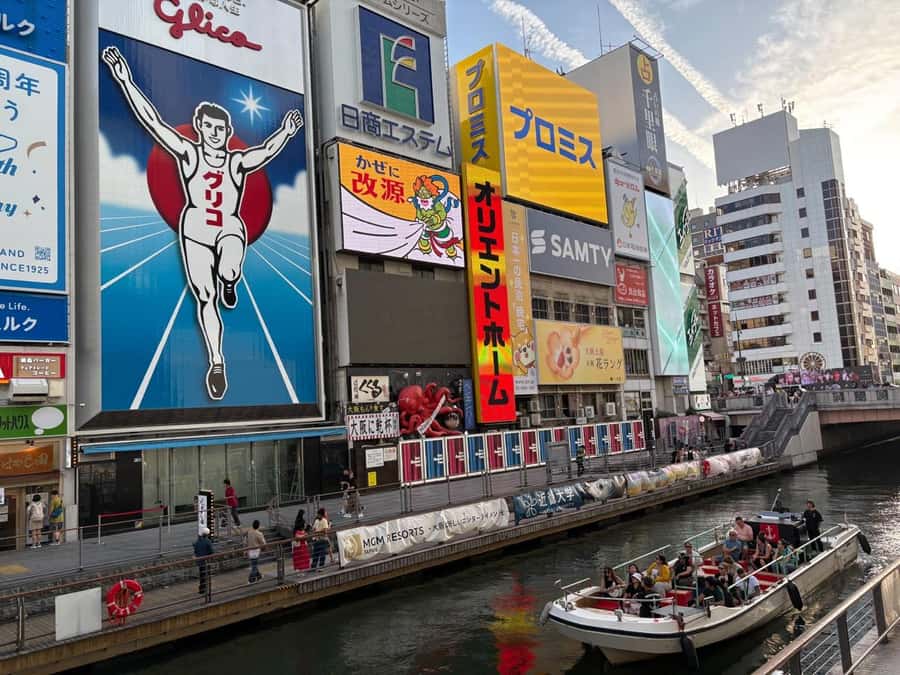
Dotonbori is fun, but it’s also intense. After an hour of crowds, neon, and shoulder-to-shoulder walking, your brain can feel like it’s stuck in “fast mode.” This cruise is the opposite: you step on, the city slides by, and suddenly you’re breathing again.
The best part is how quickly it changes your perspective. At street level you see Osaka’s famous buildings head-on. On the water, you see their edges, their reflections, and the way everything lines up along the river corridor. You also cover multiple bridge moments in one smooth stretch, so it feels efficient even though you’re just floating.
And because it’s only 20 minutes, it works even if you’re on a tight schedule or you’re tired of long sightseeing days. You don’t have to commit to a big day tour. You just get the payoff and move on.
You can also read our reviews of more boat tours in Osaka
Where the cruise starts by Don Quijote pier
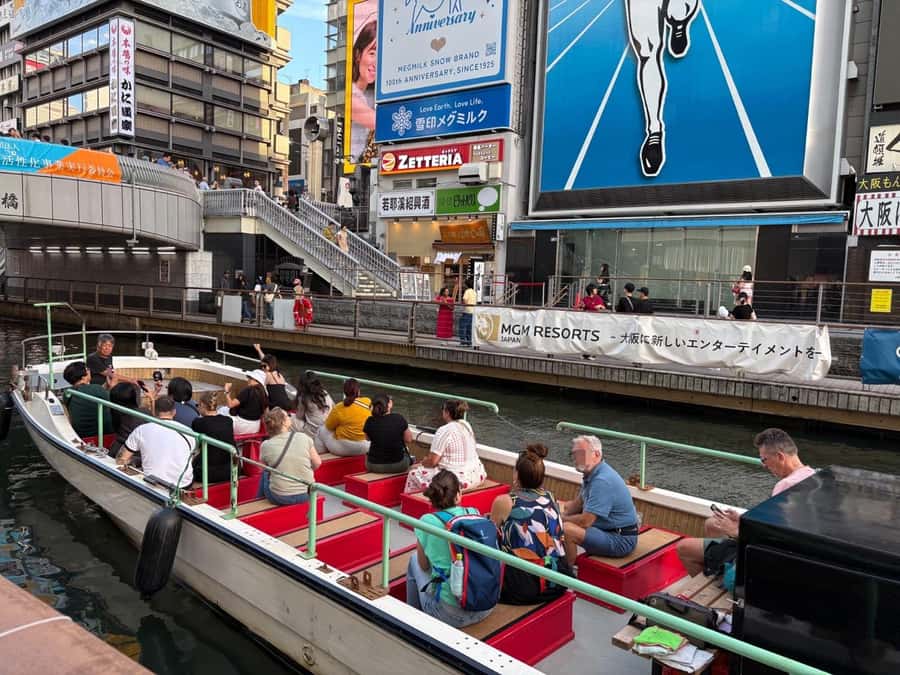
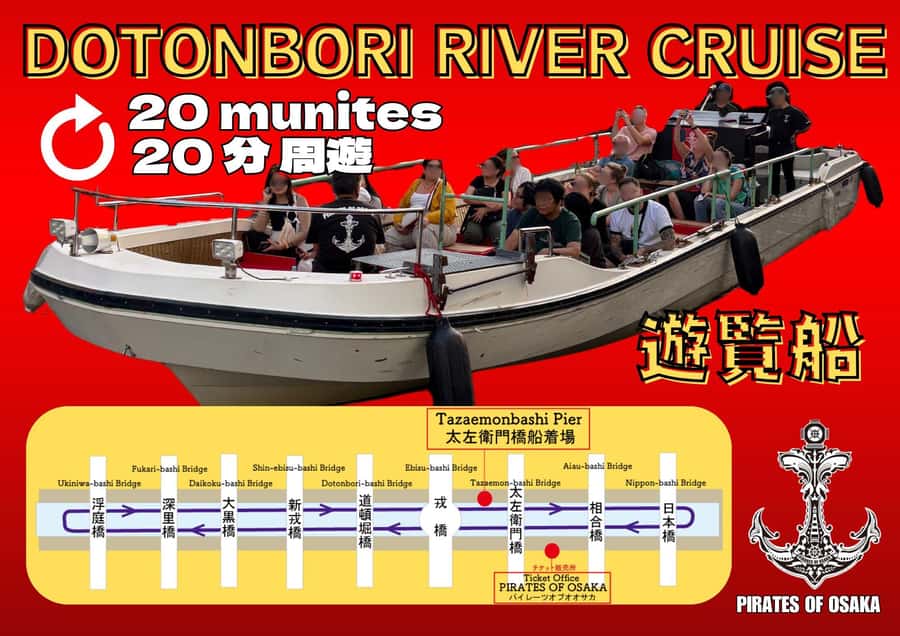
Plan to arrive early and keep it simple. The boat departs from a pier in front of Don Quijote, between Tazaemon Bridge and Ebisu Bridge. You should come to the pier 5–10 minutes before departure, and the boat arrives about 10 minutes before so there’s not a huge waiting marathon.
When you’re there, you’ll show your voucher to the staff at PIRATES OF OSAKA. The good news: the meeting point is concrete. You’re not searching obscure side streets while your phone battery begs for mercy.
Since the cruise ends back at the same meeting point, it’s also easy to slot in without getting stuck halfway across the city. You can hop back to Dotonbori right after, or walk off toward nearby sights while you still have momentum.
The bridges and landmarks you’ll see (and what each view is good for)
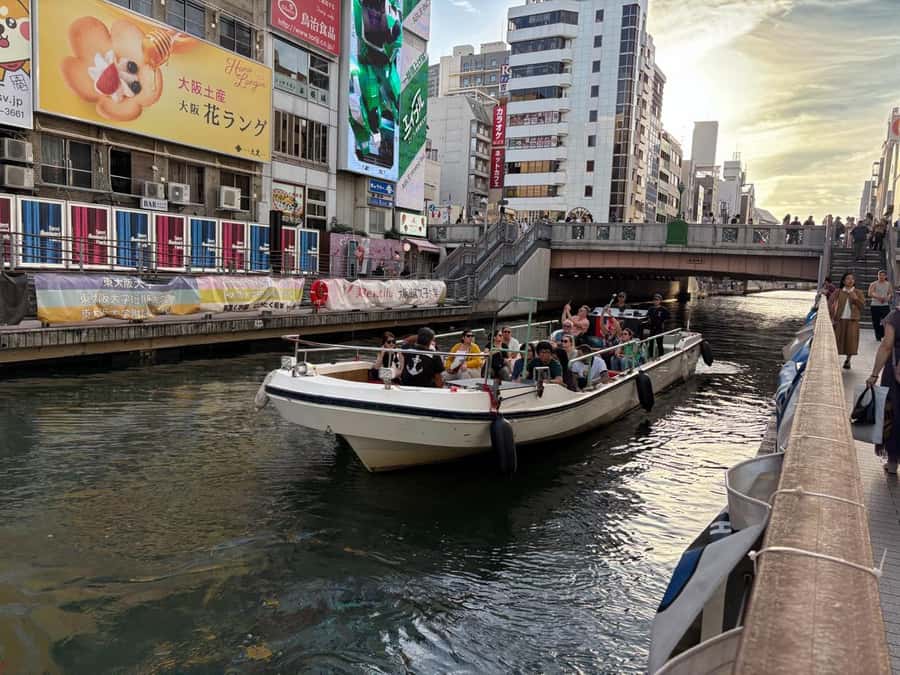
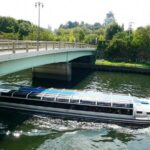
This is a “ride-through” route rather than a stop-and-explore plan. You won’t get off the boat. Instead, you’ll watch the river unfold, with the captain turning the boat after a key bridge and then returning the way you came.
You’ll pass a total of nine bridges, and the most memorable pieces are the ones Osaka is already famous for:
Nippon-bashi Bridge and the Glico moment
Early on, you’ll come by Nippon-bashi Bridge. This is one of those places where street photography is easy, but river photography is more interesting—because you catch the bridge structure together with the river’s line of sight.
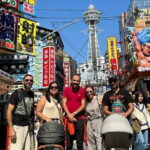
Right in the same zone, you’ll see the Glico advertisements. From the sidewalk, the billboard can feel flat and distant. From the boat, it sits in your frame with the river as the foreground layer, so photos tend to look more “built,” not just pasted.
Ebisu-bashi Bridge and Dotonbori-bashi Bridge
As you continue along, you’ll also see Ebisu-bashi Bridge and Dotonbori-bashi Bridge. What I like about these moments is the variety of angles. Bridges look different when the camera distance changes and when you’re traveling along the river instead of crossing it.
If you’re the kind of person who likes architectural details, the bridge railings and the way the buildings meet the waterfront can be more satisfying from the water. You get to compare versions of the same theme as the boat moves.

The turn near Ukiniwa-bashi Bridge
At some point, the cruise makes a turn after Ukiniwa-bashi Bridge. This matters for your experience because you see the same general river corridor from a slightly different approach angle.
That turn often becomes the “second wave” of good views. If you missed a shot the first time around, you may get another clean chance as the boat pivots and slides back toward the departure area.
What about the rest of the nine bridges?
The route includes additional bridges beyond the ones named above. The key point for you is that the cruise is designed to keep bridge views coming back-to-back. Instead of seeing one bridge three different ways, you’ll get a chain of them, which makes the full 20 minutes feel like more than just a casual float.
Music, narration, and the guide reality
Here’s the honest take: the cruise experience can vary by departure. Some rides feel more like a guided explanation, while others are more like a straightforward river ride with music and minimal talk.
The positive side shows up in several reviews. People praised the staff and mentioned guide moments with names like Stephanie, and others liked the captain being nice. Music also seems to play a role on some boats, adding an upbeat atmosphere that makes the short trip feel lighter.
At the same time, there’s a clear caution sign: some departures run with no guide speaking over the audio. In that case, you’ll rely on your own eyes for photos and timing. Even if you don’t get narration, the route still works because the bridges and signage are the main event.
So decide your expectation accordingly:
- If you want a structured, stop-by-stop tour with lots of explanation, you might be disappointed.
- If you want fast, efficient views with a fun vibe, it can feel like a perfect fit.
Comfort on board: roof protection, heat, and the seated-only rule
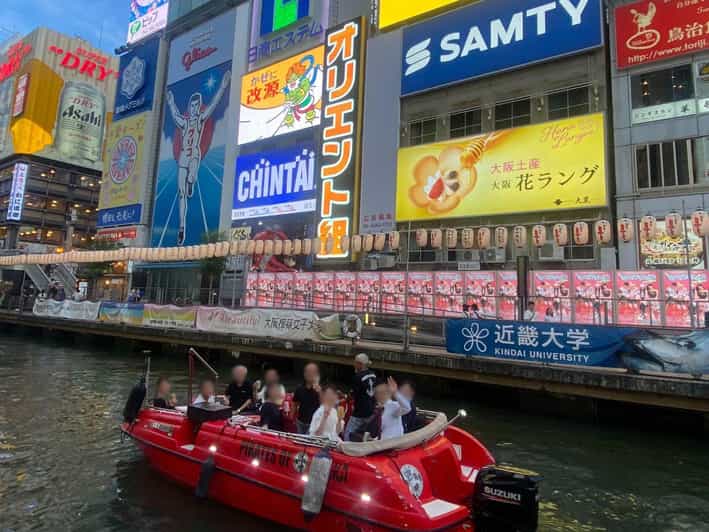
A few practical comfort notes matter here, especially in Osaka’s summer heat and in unpredictable weather.
On the upside, some rides have a clear plastic roof and plenty of room on board. That can help if rain shows up while you’re in the middle of a sightseeing day. It also means you’re not stuck completely indoors with zero skyline.
On the downside, one review pointed out there can be heat issues and no mention of strong cooling like air conditioning. If you’re going on a hot day, dress for sun and heat, and expect that the breeze may be your main relief.
Also take the seated-only rule seriously. One review noted you’re not allowed to stand or move around during the cruise for safety reasons. That affects both comfort and photo strategy. You’ll want to plan your best shot while seated, and be ready for your view to change as the boat passes each bridge.
Price and value: is $12 worth 20 minutes?
At $12 per person for a 20-minute cruise, this is clearly priced as a short, budget-friendly add-on. It’s not trying to replace a full sightseeing day. Instead, it buys you something specific: river-level views of Dotonbori’s icons and bridges in a way that walking can’t match.
I think it’s good value if you hit the sweet spot:
- You’ve already done a chunk of Dotonbori walking and feel worn down.
- You want photos that show the river setting, not just street facades.
- You’re traveling on limited time and want a quick “yes, that was worth it” moment.
If you’re the type of traveler who needs a deep guided narrative and long explanations, then the short duration can feel too brief. But if you treat it like a photo-focused break with a fun soundtrack and a clear route, the price-to-time ratio is strong.
Also, the cruise includes just the ride—no food or drinks. That keeps the ticket simpler and lower cost, but it means you shouldn’t treat it like a meal plan. Eat before or after, then use the cruise as the in-between reset.
When this cruise is best (and who should skip it)
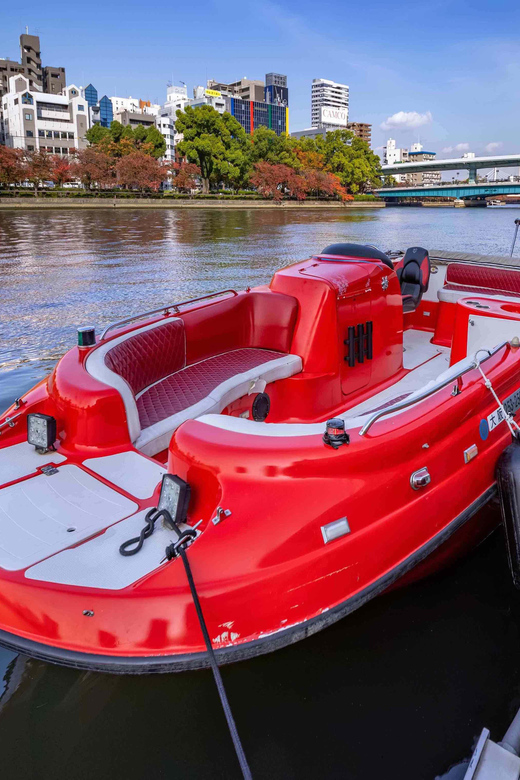
This is a smart pick for several traveler styles.
You’ll likely enjoy it if you:
- want a quick break from Dotonbori’s crowds
- like skyline and bridge photography from water level
- prefer a low-effort activity that doesn’t require much planning beyond arriving on time
- want something that still feels fun even in busy afternoon hours (a review specifically mentioned busy periods and lots to see)
You might skip it if:
- you’re expecting a constant, detailed English-language narration for the whole ride
- you’re sensitive to heat and want strong cooling
- you need lots of movement and viewing from different positions (since standing and roaming aren’t allowed)
In other words, treat it as a short ride with big visual payoff. Not a long guided lecture.
Should you book the Osaka Dotonbori Bridges cruise?
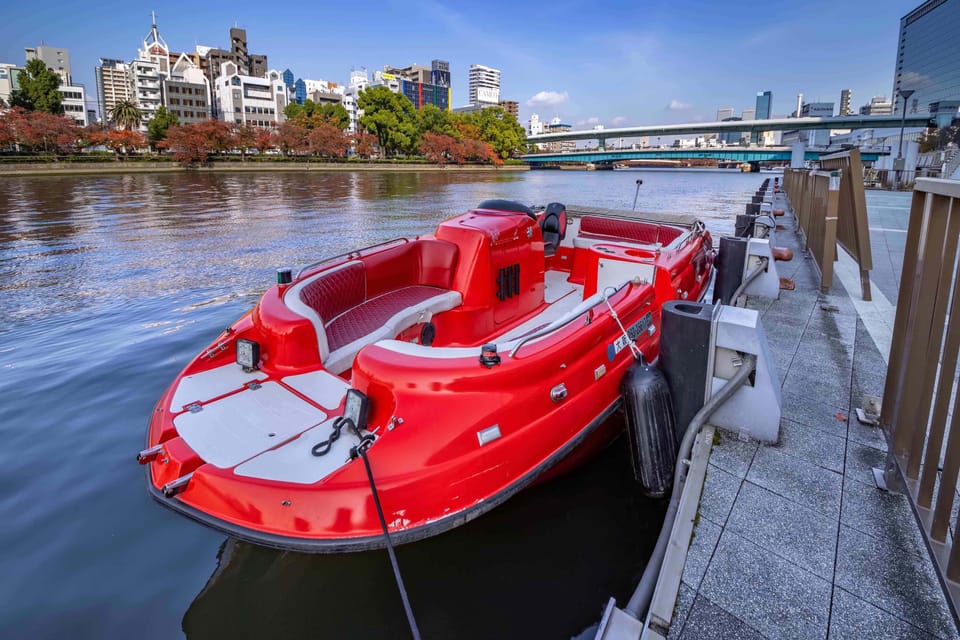
Book it if you want a fast, affordable way to see Osaka’s Dotonbori highlights from the river, especially if you’ve been walking and need a breather. It’s simple: get to the Don Quijote pier area, enjoy the 20-minute bridge-and-sign ride, then step back into the neighborhood with fresh energy.
Think twice if you want nonstop commentary. Since some departures are more “ride first” than “guide first,” you’ll get the most value when you’re there for the views, not a scripted explanation.
If you’re unsure, lean this way: buy the ticket as a visual experience. Then you’ll be happy whether you get a chatty guide moment or a mostly silent, music-forward cruise.
FAQ
How long is the Osaka Dotonbori bridges cruise?
It’s a 20-minute river cruise.
What does the ticket cost?
The price is listed as $12 per person.
Where does the cruise start?
The cruise starts at the pier in front of Don Quijote, between Tazaemon Bridge and Ebisu Bridge.
What major sights and bridges will I see?
The route includes views of Nippon-bashi Bridge, Ebisu-bashi Bridge, Dotonbori-bashi Bridge, and you’ll also see the Glico advertisements. The boat turns after Ukiniwa-bashi Bridge.
Is food or drinks included?
No. Food and drinks are not included.
Is there an English-speaking guide?
Japanese and English are listed. However, some rides may feel like a mostly water-only cruise with little or no narration, so don’t plan on constant guided explanation.
Can I stand up or move around on the boat?
No. For safety reasons, you are not allowed to stand and move around during the tour.
Is the boat covered in the rain?
Some reviews mention a clear plastic roof, which can help if it rains.
Where do I meet the staff, and what do I show?
Come directly to the pier 5–10 minutes before departure. Show your voucher to PIRATES OF OSAKA’s staff.
Does the cruise end back at the starting point?
Yes. The activity ends back at the meeting point.