REVIEW · OSAKA
From Osaka: Nara Deer & Kyoto Kiyomizudera Sightseeing Tour
Book on GetYourGuide →Operated by QingHe Travel · Bookable on GetYourGuide
One day can cover a lot. This Osaka to Nara and Kyoto tour hits the big-name sights with time-managed stops, so you don’t spend your day chasing directions.
I especially like two things: the chance to watch hundreds of free-roaming deer in Nara, and the deep-feel UNESCO visit at Kiyomizudera with several hours on-site. The pace is efficient, and the driver keeps things moving even when traffic gets ugly.
The main catch is exactly what kind of guidance you’ll get. This is a driver-guided share tour with basic English/Chinese introductions, so if you want heavy history, you may need to use on-site licensed guides.
Key things I’d plan around
- WhatsApp coordination for meeting your vehicle (and staying on schedule)
- Nara Park deer time with feeding and photo chances inside the 80-minute window
- A long 3.5-hour Kiyomizudera block, which is rare on day trips
- Fushimi Inari’s Senbon Torii experience built into a timed stop
- Short Kyoto street walks like Sannenzaka/Ninenzaka and a photo-and-stroll loop through Gion/Yasaka
- Roundtrip air-conditioned transport from Osaka with tolls and parking covered
In This Review
- Driver-Guided Day Trip: What You’re Really Buying for $69
- Meeting, Pickup, and Staying With the Group (So the Day Doesn’t Drift)
- Nara Park Deer Time: Make the 80 Minutes Count
- Tōdai-ji Temple: A 1-Hour Reset Between Big Names
- Fushimi Inari Taisha’s Senbon Torii: Walk Smart in One Hour
- Kiyomizudera UNESCO Visit: Why the 3.5 Hours Matters
- Sannenzaka, Ninenzaka, Hanamikoji, and Gion: Short Stops, Good Photos
- Returning Toward Osaka and Shinsaibashi-suji’s Shopping Street
- What the Driver Actually Does: A Realistic Expectation
- Price and Value: Is $69 a Smart Deal?
- Who Should Book This and Who Might Prefer Another Plan
- Should You Book This Osaka to Nara and Kyoto Day Trip?
- FAQ
- How long is the tour?
- How much does it cost?
- Where do I meet the guide in Osaka?
- Is pickup from my hotel available?
- What languages are available?
- Is lunch included?
- Do I need to pay temple tickets separately?
- What’s included in the price?
- What should I bring?
- Is there anything I can’t bring on the bus?
- How should I coordinate with the driver the day before?
Driver-Guided Day Trip: What You’re Really Buying for $69
This tour is built for one goal: seeing a stack of must-dos without doing the logistics yourself. You’ll ride in an air-conditioned vehicle with a multilingual driver, plus basic attraction introductions in English/Chinese and time management during the day.
That “driver-guided” label matters. You’re not getting a full museum-style lecture from the vehicle. The tour description is clear: for deeper historical insights, you’ll want to hire licensed guides on-site. In real life, that means you’ll get enough orientation to enjoy the sights, but you may have to ask questions if you want specifics.
What you are buying is convenience value. Roundtrip transport from Osaka, tolls, and parking fees are included, and the day runs for about 10 hours. You’ll also have a set rhythm: coach time, then timed windows at each place, then a return ride that gets you back across peak traffic.
One more thing: if your group is small, your experience may lean more on “driver help” and less on “spoken commentary while driving.” The key is to stay plugged in—your driver uses WhatsApp to keep contact, and the tour rules are strict about meeting on time.
Meeting, Pickup, and Staying With the Group (So the Day Doesn’t Drift)
Your starting point is specific. The meeting location is Nipponbashi Exit 2 at 1-chome-3-6 Nipponbashi, Chuo Ward, Osaka (542-0073). Your driver keeps in touch via WhatsApp, and you’re emailed the contact details and vehicle info the day before.
The tour also offers optional pickup depending on your selected option and whether your hotel sits inside the pickup area. If your hotel is outside the pickup zone, the policy states you may need to meet your guide at Tokyo Station with a partially refunded adjustment. That’s unusual for an Osaka departure, so if you’re in that situation, double-check with the operator before you book.
Here’s the practical takeaway: make sure your phone works. One of the concerns that comes up is that meeting points in Kyoto can be confusing if you’re dropped near a road and told you’ll be picked up elsewhere. In those moments, having a phone with a charged battery, data, and a map app makes everything easier.
Also, the bus leaves on time with no exceptions. Late arrivals or no-shows don’t get refunds, and you’re expected to stay with the group throughout the tour.
If you like structure, you’ll probably love this. If you like wandering independently for long stretches, this won’t feel flexible.
You can also read our reviews of more tours and experiences in Osaka.

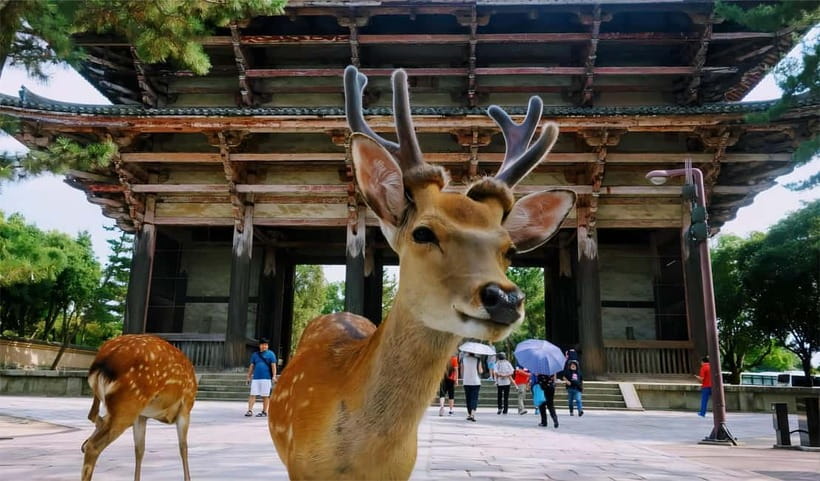
Nara Park Deer Time: Make the 80 Minutes Count
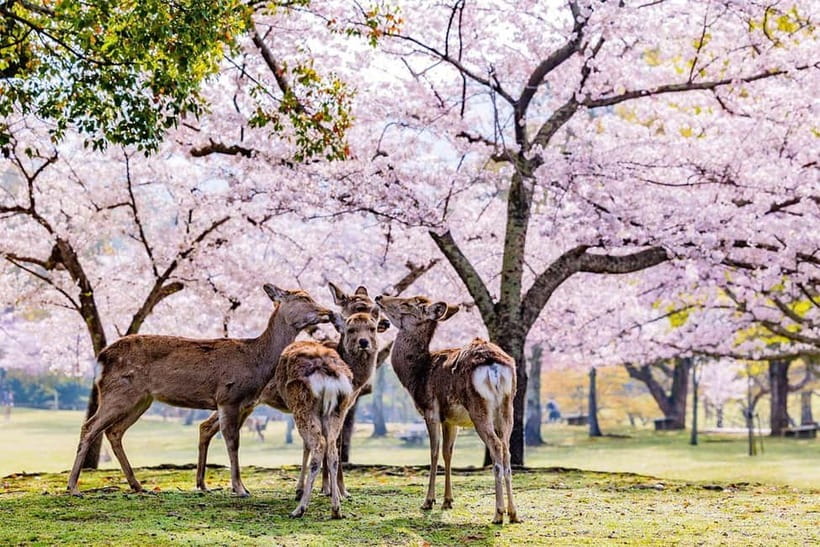
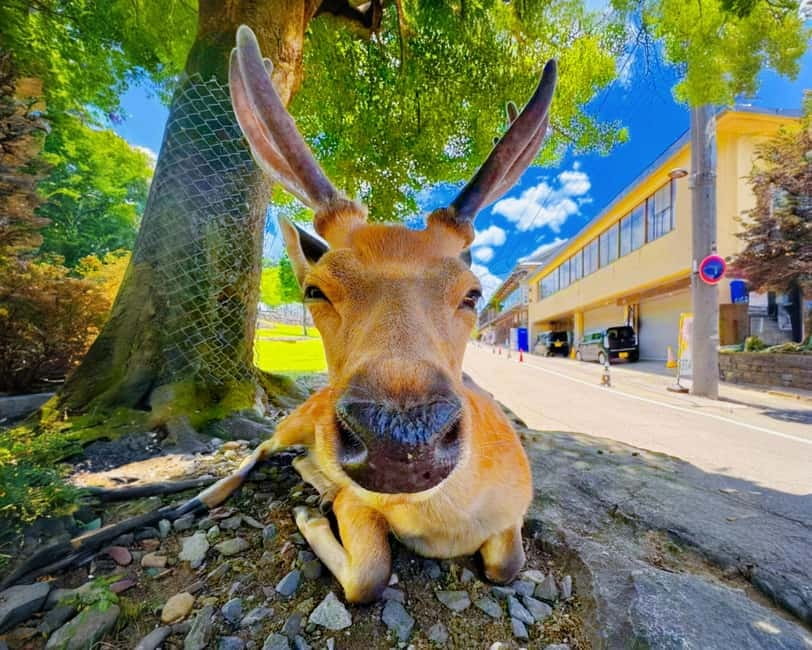
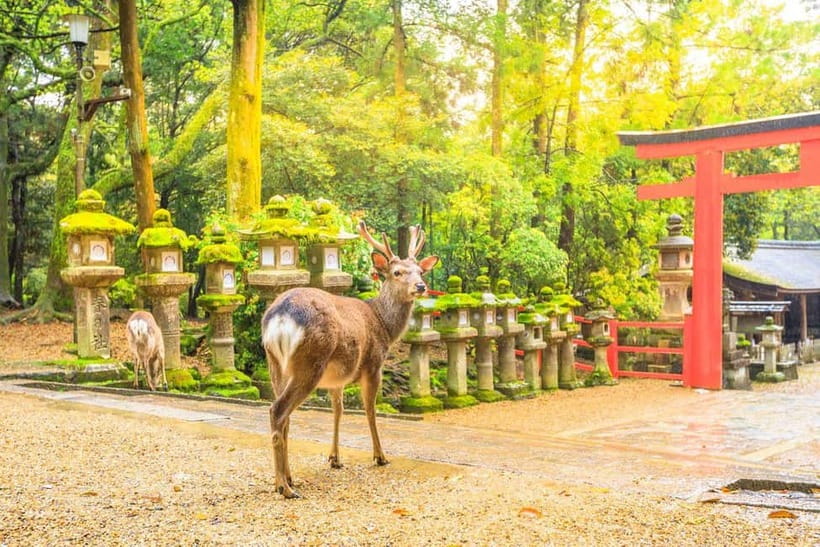
Nara Park is the emotional centerpiece of this day. You’ll get a scheduled block that includes break time, a photo stop, a visit, free time, and wildlife viewing—totaling about 80 minutes.
The standout here is simple: hundreds of free-roaming, wild shika deer. You can interact and feed them, and the park setting makes it feel less like a staged attraction and more like you’ve joined a living scene.
A practical way to enjoy this block is to treat it like a photo-and-walk loop, not one long pause. Arrive ready to move, keep an eye on where other people are standing, and use the free time to decide how close you want to get. With deer around, it’s easy to lose track of minutes while taking photos, and you don’t want to be rushed at the end.
If you’re coming with kids, this is the stop that usually gets the most smiles. One comment noted it’s a good fit for family travel because the time window is clear and the activity is immediate.
One note to keep your experience smooth: bring comfortable shoes. Nara Park is walking-heavy, and you’ll be on your feet while trying to find the best deer-photo angles.
Tōdai-ji Temple: A 1-Hour Reset Between Big Names
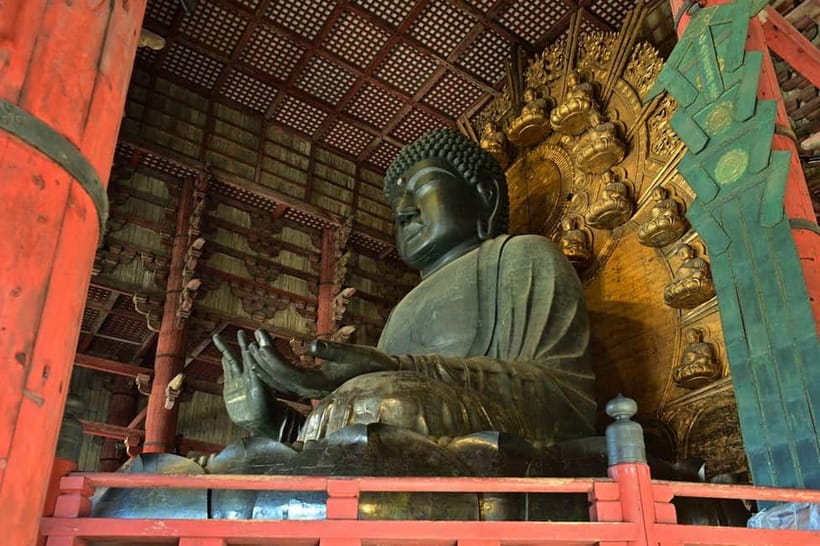
After Nara, you’ll move to Tōdai-ji for about 1 hour. Your time there is listed as a photo stop plus free time and sightseeing.
This is one of those stops where the value is less about trying to see everything and more about giving your day a calmer rhythm. You’re switching from the lively deer moment into a temple setting that’s described as a blend of spirituality and nature. Even if you don’t go deep on interpretation, the change of pace helps the day feel less like a checklist.
Because entrance tickets for Tōdai-ji aren’t included, you’ll want to budget extra. Adult tickets are listed at JY¥600, children at JP¥300.
Also, remember you’re still on a tight schedule. You’ll have a one-hour window, so plan to focus on the highlights you can reach quickly—then use the rest of the time to just slow down and look around.
Fushimi Inari Taisha’s Senbon Torii: Walk Smart in One Hour
Next comes Fushimi Inari Taisha, famous for its Senbon Torii—the iconic series of red torii gates. You’ll have about 1 hour total, including a photo stop, visit, free time, and sightseeing.
One hour can feel short here because the gates invite wandering. The smartest strategy is to go with a simple goal: get far enough into the torii path to feel the full effect, then turn around while you still have energy. Don’t wait until the last 15 minutes to realize you didn’t go far enough.
Also, this is a photo magnet. Expect lots of people and lots of movement. If you’re traveling with someone who gets slow over photo requests, agree on timing early: first photos, then walking, then a final photo burst before meeting up.
This is the point where you’ll be glad the tour is time-managed. Without that structure, Fushimi Inari can eat an entire half-day before you know it.
Kiyomizudera UNESCO Visit: Why the 3.5 Hours Matters
Kiyomizudera is the big architectural and cultural hit of the Kyoto portion. It’s listed as a UNESCO World Heritage site and described as a national treasure and the oldest Buddhist temple in Kyoto.
You’ll have about 3.5 hours here, which is the longest stop of the day after Nara’s activity block. That longer window is important because Kiyomizudera isn’t something you’re meant to rush. You need time to walk at a comfortable pace, pause for views and photos, and still have enough buffer if you hit crowds.
Tickets are not included. Adults are JP¥400, children JP¥200. That means your real cost will be a bit more than $69 once you add temple entry for the day.
This is also where a driver’s “basic introductions” can be enough to make the site click. If you want more, this is the ideal place to add extra interpretation on-site, since you’ve got time to do it. You won’t feel like you’re losing an entire chunk of the schedule just to understand what you’re seeing.

Sannenzaka, Ninenzaka, Hanamikoji, and Gion: Short Stops, Good Photos
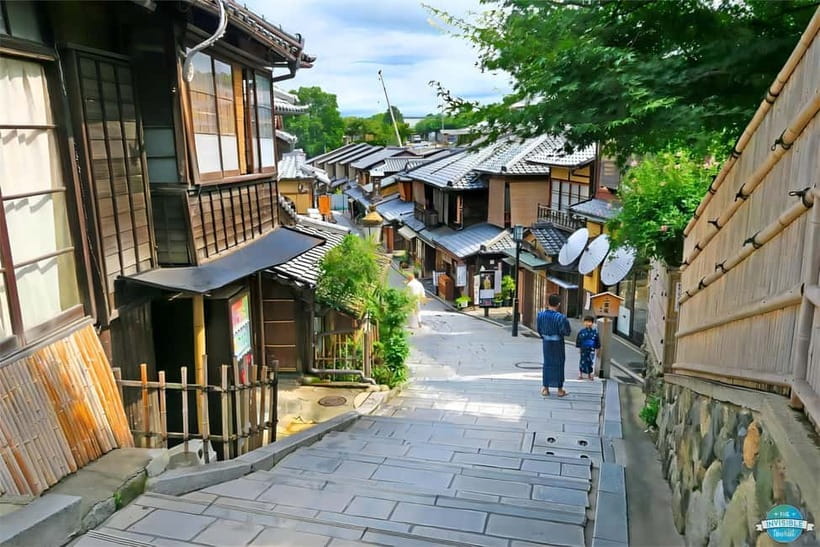
Between the heavy hitters, you’ll do a series of shorter Kyoto street moments:
- Sannenzaka: photo stop, visit, shopping for about 30 minutes
- Ninenzaka: photo stop, free time, shopping/sightseeing for about 30 minutes
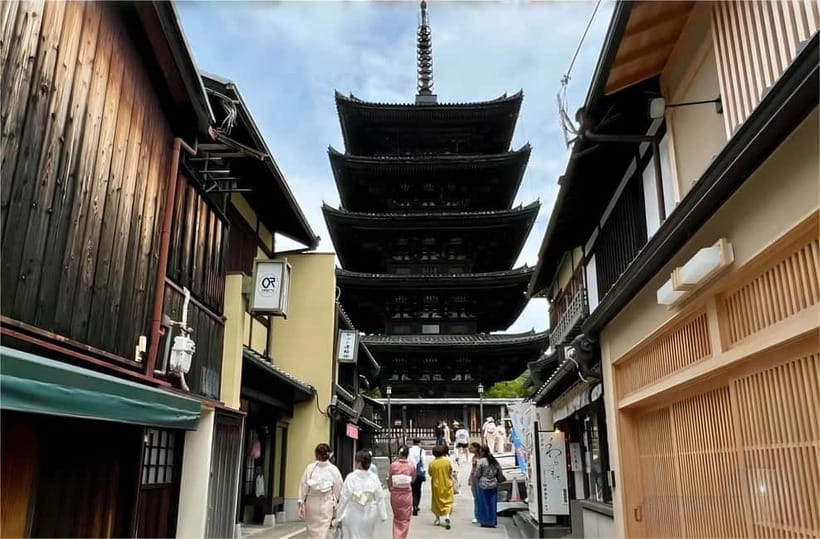
- Hanamikoji Street: break time, photo stop, sightseeing/walk for about 30 minutes
- Gion: photo stop, shopping for about 30 minutes
- Yasaka Shrine: photo stop, visit, free time, sightseeing for about 30 minutes
These blocks are short on purpose. They give you variety without destroying the day. If you try to stretch each street stop into a long, independent wander, you’ll run out of time before you reach the next pickup point.
The tradeoff is also clear: you won’t have hours to shop deeply or study every detail. But you will get a sense of the atmosphere, plus enough time to grab a few snacks or souvenirs where permitted—then move on.
Here’s a practical tip: wear layers and keep your bag light. The tour mentions limited luggage space on the vehicle, and there’s no mention of storing big bags at every stop. For street walking, you’ll appreciate traveling light more than you’d think.
Returning Toward Osaka and Shinsaibashi-suji’s Shopping Street
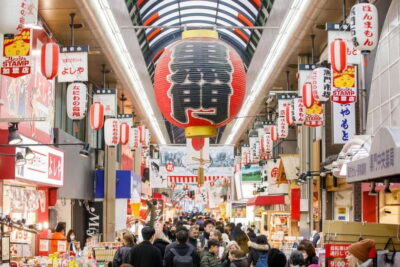
At the end, the tour returns to Osaka and includes time to stroll Shinsaibashi-suji Shopping Street in downtown Osaka. This is a deliberate contrast: you’ve spent the day moving through temple and shrine areas, so ending in a shopping street gives you a chance to switch gears.
One thing I like about this kind of finish is how it lets you spend the last part of your day on you—snacks, gifts, and a relaxed walk without needing to understand every landmark.
The return coach ride is listed at about 75 minutes, and the drop-off covers multiple Osaka wards (12 options). That wide drop-off net is useful if your hotel is not near Nipponbashi.
What the Driver Actually Does: A Realistic Expectation
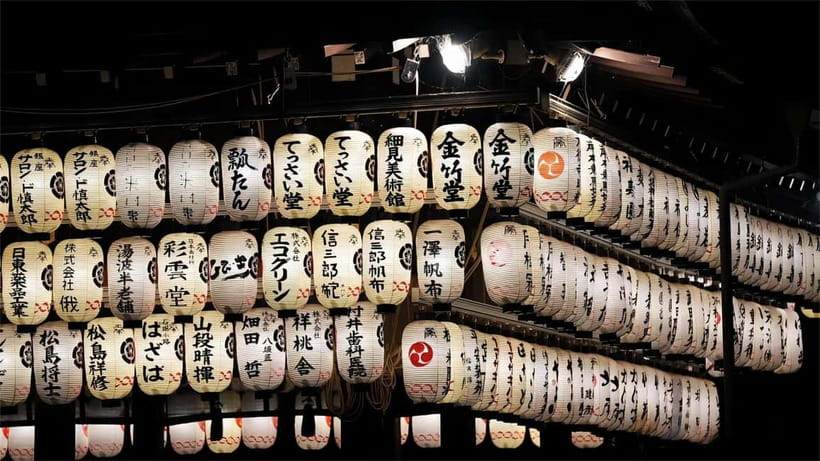
The driver role is clear: transport, basic attraction introductions (English/Chinese), and time management. You’ll be in charge of deeper self-exploration.
In peak travel days, a steady driver matters. One guide named Leo is mentioned in a top-rated experience: he arrived punctually, handled the day smoothly, drove safely back to Osaka during peak traffic, and helped keep things calm even when unexpected moments happened. The same experience described the day moving from Nara deer time to Kyoto sights until around 4pm, with a safe return across busy streets.
That same story is a reminder of the human side of these tours. When the day is crowded, people trip, and schedules tighten, a driver who’s attentive makes a difference.
On the other hand, language support can vary. One experience described a driver with very little English and no guide commentary, plus confusion about pickup in Kyoto that required WhatsApp coordination. If you don’t have phone navigation working, or if your group language needs don’t match the driver’s strength, you’ll need to compensate by communicating clearly and keeping close to the meeting process.
So the best expectation is this: the driver is your logistics anchor, not a full-time historian.
Price and Value: Is $69 a Smart Deal?
For $69 per person (10 hours), you’re getting a package: roundtrip Osaka transport, air-conditioned vehicle, multilingual driver help, and toll/parking fees. That’s a lot of “hidden” costs you’d otherwise pay in taxis or private cars.
But you also need to count extra items:
- Lunch is not included
- Entrance tickets are not included for Tōdai-ji (JY¥600 adult / JP¥300 child) and Kiyomizudera (JP¥400 adult / JP¥200 child)
If you’re the type who buys tickets anyway and eats at normal times, the “extra cost” is predictable. The real value question becomes how much you want to pay for someone to handle the long-distance hopping and keep you aligned across multiple stops.
If you’re short on time in Kansai and you want maximum sight coverage, this price-to-coverage ratio can feel fair. If you’d rather slow down, go deeper at fewer sites, or enjoy DIY transit, you might find better results with a slower plan.
This tour is essentially a “great hits” day.
Who Should Book This and Who Might Prefer Another Plan
This fits best if:
- You want to see Nara + multiple Kyoto highlights in one day without stress
- You like the biggest visual moments: deer in Nara, Senbon Torii, and Kiyomizudera
- You’re comfortable with short stop windows and staying with the group
- You value transport convenience enough to accept limited narration
You might hesitate if:
- You want in-depth historical commentary and storytelling from a licensed guide for every stop
- You’re very sensitive to meeting-point confusion and rely heavily on perfect English explanations
- You plan to spend a long time shopping at each street (the blocks are mostly 30 minutes)
Also, bring the basics: comfortable shoes and clothes. Food and drinks are not allowed in the vehicle, so plan to eat outside the bus stops.
Should You Book This Osaka to Nara and Kyoto Day Trip?
I’d book this if you want an efficient, well-structured day that mixes wildlife, UNESCO, shrine icons, and a shopping-street finale—without you coordinating trains, parking, and timing. The 3.5-hour Kiyomizudera window is a strong reason alone, and the Nara deer stop is the kind of memory that sticks.
I’d think twice if you need heavy history delivered in real time from a guide, or if you’re likely to struggle with meeting logistics. If you can handle WhatsApp coordination, keep your phone ready, and stay close to the group, you’ll probably enjoy how smoothly the day flows.
FAQ
How long is the tour?
The duration is listed as 10 hours.
How much does it cost?
The price is listed as $69 per person.
Where do I meet the guide in Osaka?
The meeting point is Nipponbashi Exit 2 at 1-chome-3-6 Nipponbashi, Chuo Ward, Osaka (542-0073). The driver keeps in touch via WhatsApp.
Is pickup from my hotel available?
Pickup is optional depending on your selected option. You’ll be contacted to confirm your hotel name and address to ensure it’s within the pickup area.
What languages are available?
The host/greeter and multilingual support are listed for Chinese, English, Japanese, and Traditional Chinese.
Is lunch included?
No. Lunch is not included.
Do I need to pay temple tickets separately?
Yes. Tickets for Tōdai-ji and Kiyomizudera are not included. Adult tickets are listed as JY¥600 for Tōdai-ji and JP¥400 for Kiyomizudera (with child prices listed as well).
What’s included in the price?
Included items are roundtrip transportation from Osaka, air-conditioned vehicle transport, multilingual driver, and toll and parking fees.
What should I bring?
Wear comfortable shoes and comfortable clothes.
Is there anything I can’t bring on the bus?
Food and drinks in the vehicle are not allowed.
How should I coordinate with the driver the day before?
You’ll receive the guide’s contact information and vehicle details by email one day before. The guide will also add you to a WhatsApp group, and the bus departs on time.