REVIEW · OSAKA
Osaka: Learn Bushido – Trial Slashing with Samurai Sword
Book on GetYourGuide →Operated by 株式会社武士の誉れ · Bookable on GetYourGuide
Turning technique into something you can feel.
This 1-hour Bushido-style sword session lets you practice basic stances and sword gestures, then try your own trial slashing with a real Japanese sword. I especially like how the lesson blends etiquette and movement (bows, manners, walking with the belt) with hands-on practice. The main drawback to plan around is that it’s focused and rules-based: there’s no stroller/food/alcohol, and you must arrive early to change.
I also like the small-group setup (max 4) and the fact that you get photos from the moment of cutting. You’ll get plenty of English support, and the staff can add other languages only when schedules allow. One more consideration: the actual on-site time can run longer than the posted 1 hour because of changing and instruction, so don’t book tight connections right after.
In This Review
- Key things you’ll notice right away
- Why this Osaka experience feels real (not just a photo-op)
- Getting to Samurai Honor near Osaka Castle (and not getting lost)
- The start: changing into samurai clothing and bowing at the shrine
- Sword manners, belt walking, and why it matters for beginners
- Iai practice basics: battou, chiburui, and nottou
- Learning stances: upper, lower, middle, and the eight-phase set
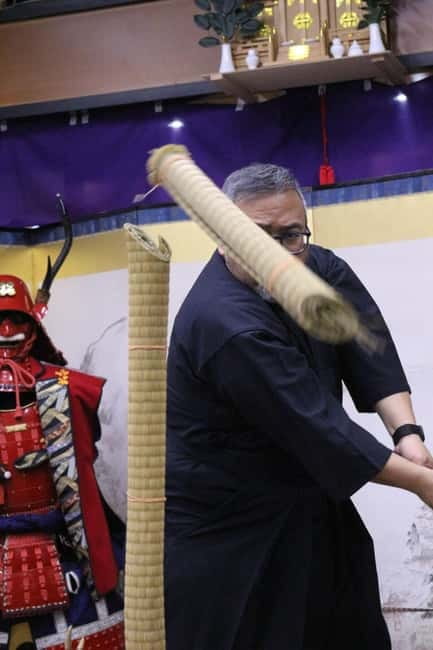
- The final trial slashing: what you actually cut
- Photo shooting included: capturing the exact cutting moment
- Small group setup and English support that actually helps
- Value and price: what $92 buys you in Osaka Castle area terms
- Practical things to bring (and rules that shape your experience)
- Who should book this bushido sword lesson (and who shouldn’t)
- Should you book Samurai Honor’s sword trial in Osaka?
- FAQ
- Where is the meeting point?
- What’s the address for Samurai Honor?
- How long is the experience?
- Is it a small group?
- What’s included in the price?
- Is pickup or transportation included?
- What should I bring?
- What languages are available?
- What can I cut during trial slashing?
- Is the activity canceled for weather or any reason?
Key things you’ll notice right away
- You start by dressing in samurai gear (dogi and hakama) before any sword work
- Training begins and ends with a bow at a shrine inside the dojo
- You learn the basics step-by-step using an iai practice sword before any cutting attempt
- Stances aren’t hand-waved: you’ll practice multiple named positions and controlled sword swings
- The final test cut uses a target such as rolled straw, with some classes using a tatami-mat style target that looks like bamboo
- Photos are included, with files sent by email after the session
Why this Osaka experience feels real (not just a photo-op)
This isn’t one of those quick “try a pose with a sword and leave” gimmicks. The point is practice: posture, timing, and the flow between movements. You’ll learn how samurai sword training connects technique with mindset, not just muscle.
The lesson is built around bushido values—discipline, courtesy, and moral sense—so you spend time on manners as much as blades. Then you move into controlled sword work: pulling (battou), cutting, the symbolic follow-through (chiburui), and returning to the sheath (nottou).
And yes, you do get the dramatic moment of a test cut. But the best part is that you earn it through repetition: you’ll be guided until your basics feel stable.
You can also read our reviews of more tours and experiences in Osaka.



Getting to Samurai Honor near Osaka Castle (and not getting lost)
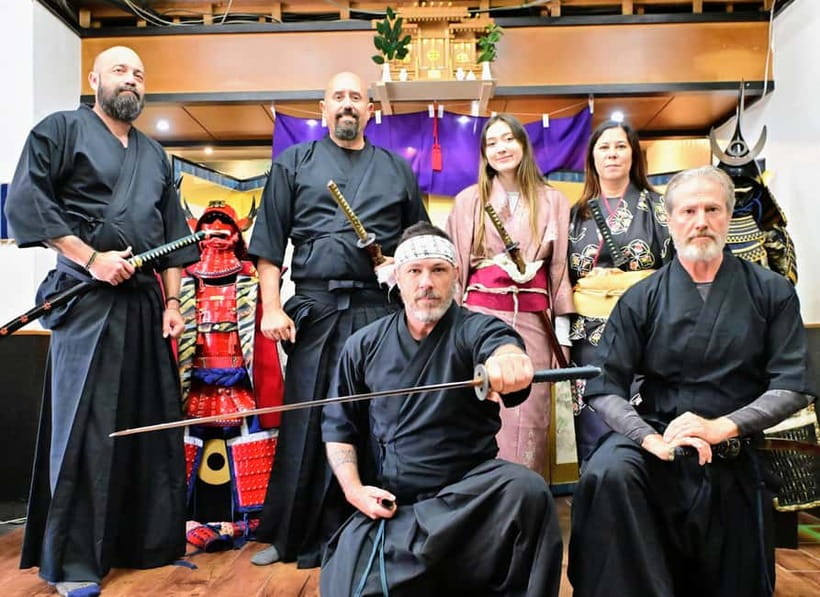
You’re going to Samurai Honor, called Bushi no Homare (Samurai Honor), in Osaka. The address is Excellence Takayama 1F, 2-3-19 Shiginonishi, Joto-ku, Osaka-shi, Osaka 536-0014.
Here’s a practical heads-up: the Apple Maps address is listed as incorrect, so use Google Maps for the cleanest route. For the meeting point, look for a wooden sign that reads Honor of the Samurai—it’s the landmark out front, in a rack with activity pamphlets. Kimonos and hakama may also be hanging up, so it can be easy to spot even from a short distance.
If you’re already in the Osaka Castle Park area, you may find it convenient to reach on foot or via nearby stations. One helpful detail from past participants: it’s described as easy to find from Osakajokoen station, just across the river.
The start: changing into samurai clothing and bowing at the shrine
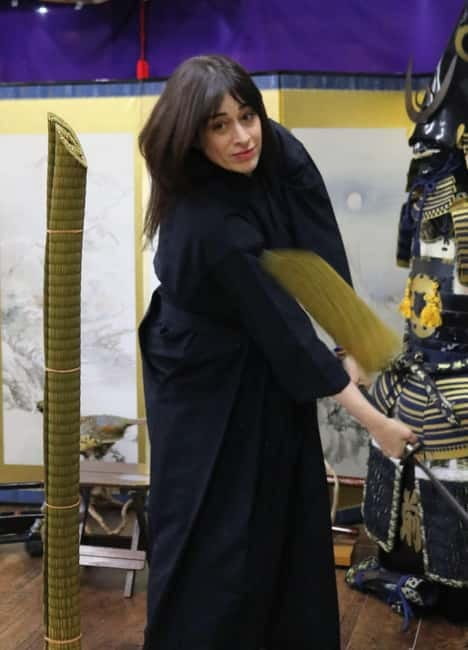
Plan to arrive 30 minutes before your reserved time. That buffer matters because you’ll change into the samurai outfit (dogi and hakama), then get briefed before training begins.
Once you’re in costume, the dojo routine sets the tone. Training starts and ends with a bow at a shrine enshrined in the practice space. It’s a small ritual, but it affects how the whole experience feels: less “activity” and more structured practice.
Then comes the etiquette and context. You’ll hear the relationship between the samurai and the Japanese sword—how it was treated as more than a tool. The lesson even touches the idea that the sword carries identity and responsibility, and that samurai life and sword life were inseparable—even in quiet times.
Sword manners, belt walking, and why it matters for beginners
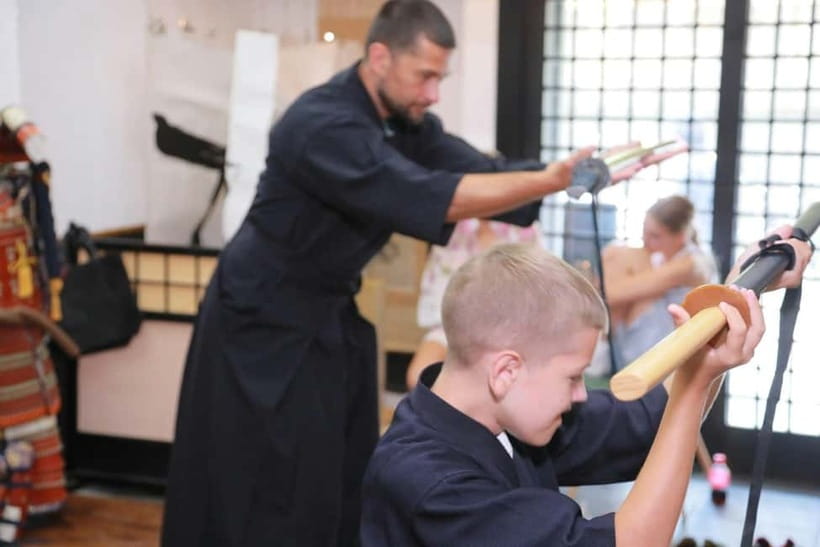
After the bow, you’ll practice movement basics that many sword demos skip. You’ll learn gestures connected to wearing and walking with the belt arrangement used for sword carry. This isn’t just theatrical. It helps you keep your posture aligned so your sword work doesn’t turn into arm-only swinging.
You’ll also get context on why sword training is treated as mind-and-body together. The lesson explains how samurai responsibility grows from youth—learning early and being trusted with the seriousness of sword ownership later on. You also hear the idea that the sword isn’t meant to be bought and sold lightly, because it represents status and duty.
If you’re new to any of this, you’ll appreciate that the instructor doesn’t jump straight to cutting. You build a base so the later test cut feels like the logical end of a sequence, not a surprise.
Iai practice basics: battou, chiburui, and nottou
Next you move into core iai practice using an iai practice sword. This stage matters because it teaches sequencing: the pull, the strike/cut, the follow-through behavior, and the return.
You’ll practice:
- Battou: pulling the sword from the scabbard to cut
- Chiburui: the symbolic removal of blood from the blade after a cut
- Nottou: returning the sword to the sheath afterward
Even if the names sound dramatic, the goal is simple for your body: control. You’ll be coached to use the correct flow so you’re not guessing your timing.
One thing that comes up during instruction is how you swing. You’ll be reminded to let the motion come from the structure and the sword’s weight—not from arm strength alone. If your movement is right, you may even hear a distinctive sound from the blade during the swing (described as a hi-nari sound in the lesson material).


Learning stances: upper, lower, middle, and the eight-phase set
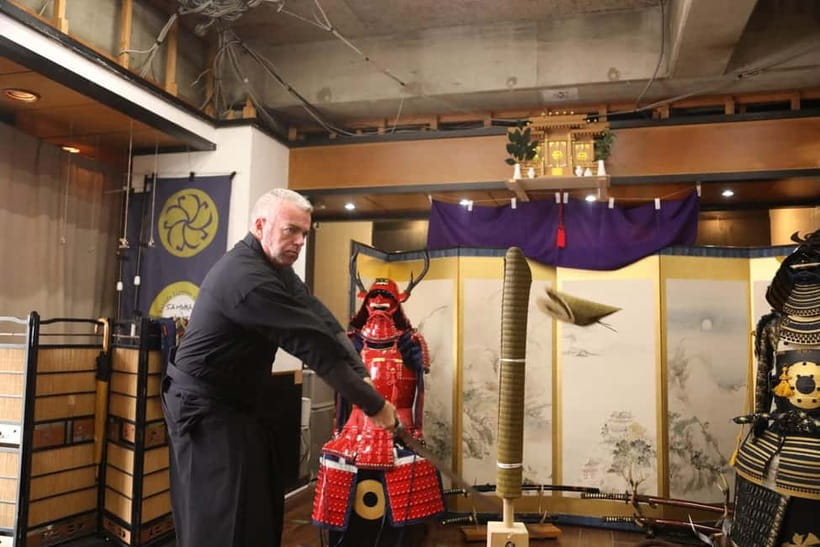
Once you’ve got the foundational pull and follow-through, the teacher guides you through basic kata-style elements. You’ll practice multiple named stances and sword positions, including:
- Middle stance
- Upper stance
- Lower stance
- Eight-phase stance
- Side stance
This is one of the most valuable parts for first-timers. Instead of only learning one motion, you’re learning a vocabulary of positions so your body understands how sword angles change with intent.
The experience also emphasizes controlled sword swings from those stances. You’ll likely repeat them in short segments until your form is consistent, then progress into more advanced movements.
If you’re the type who loves structure (and most people are, once they’re holding a real sword), you’ll enjoy this part. It gives you something to focus on besides excitement.
The final trial slashing: what you actually cut
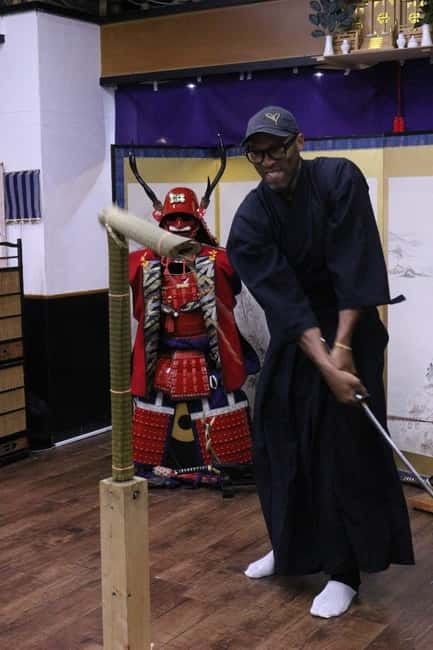
The highlight is the Trial Slashing portion—trying your own test cut under the supervision of a master swordsman. In the lesson description, you cut a rolled straw.
Some previous participants also mention a target that looks like bamboo but is actually a tatami-mat style surface. That suggests your final cutting target may vary by session, but the core idea stays the same: you do a controlled cut through a prepared, safe substitute for a real target.
What to watch for during your trial cut:
- Your stance and balance before the pull
- Your follow-through (not stopping early)
- Letting your swing be guided by technique, not panic strength
The experience is designed so you don’t just throw a wild swing. You get practiced instruction first, then you get one clean attempt when your movement is ready.
And then there’s the moment you’ll remember: you cut, the staff captures the action, and you leave with proof on your phone and/or with the emailed photo data.
Photo shooting included: capturing the exact cutting moment
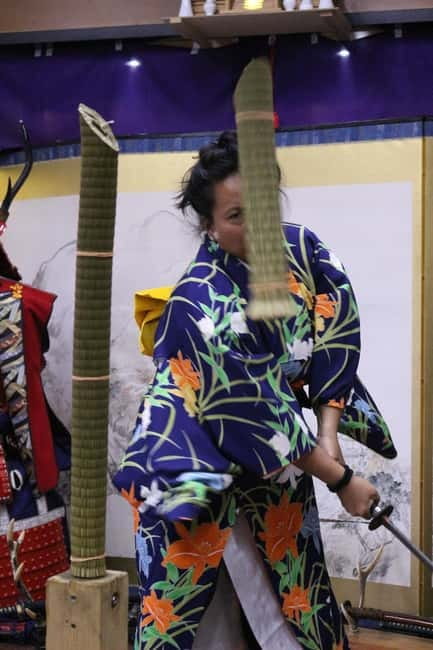
You’re not going to leave empty-handed on the camera side. Photo shooting is included, and the experience sends the data to a designated email address after your session.
During the lesson, staff may take photos and also help with pictures from your own phone. One participant noted they even took phone photos, which is useful because it means you can capture angles your own camera naturally gets.
This is a big value add for a short experience. Sword practice has a lot going on, and it’s hard to remember what position you held after the adrenaline fades—photos help you review and feel proud of the basics you learned.
Small group setup and English support that actually helps
You’ll be in a small group limited to 4 participants. That size matters because the instructor can correct form without losing everyone in a crowd.
Language support is also straightforward: interpreters default to English. If you need another language (Italian, Spanish, French, Chinese, Thai, Indonesian), you’ll need to ask the staff about scheduling before you reserve, since limited availability may affect it.
This is a session where clear guidance matters. Stances, timing, and safe handling all depend on what you’re hearing and whether you understand the “why,” not only the “do.”
Value and price: what $92 buys you in Osaka Castle area terms
At about $92 per person for a 1-hour activity, the question is whether this is worth it near Osaka Castle.
Here’s the honest way to think about it: you’re paying for access to real instruction time with a master-level teacher, plus the full flow—costume change, etiquette training, technique practice, and then a supervised trial cut with photos included. Many cheaper “sword experiences” focus mainly on spectacle. This one places the spectacle at the end of a structured practice session.
You also avoid the big friction costs. Transportation, pickup/drop-off, and other personal expenses are not included, so you’ll want to handle getting there. But inside the activity, you get the main ingredients: instruction, gear (samurai clothing), and the photo capture.
So if you’re looking for a memorable hands-on skill and not just a story, the price starts to make sense fast.
Practical things to bring (and rules that shape your experience)
Bring a T-shirt. You’ll change into the samurai costume, so you don’t want to show up dressed in something complicated you’ll struggle to remove.
A few important restrictions are part of the experience:
- No baby strollers or baby carriages
- No food or drinks
- No alcohol or drugs
- No party groups (including bachelor and bachelorette groups)
There’s also an age and health suitability filter:
- Not suitable for children under 10
- Not suitable for people with altitude sickness
- Not suitable for people over 95
That’s not being picky—it’s about safety and maintaining smooth practice conditions for everyone.
Who should book this bushido sword lesson (and who shouldn’t)
This suits you best if you:
- want hands-on practice rather than a performance-only show
- enjoy structured learning and clear step-by-step instruction
- care about the etiquette side of martial arts, not only the action
It’s also a strong choice if you’re visiting around Osaka Castle and want something more active than walking museums all day.
Skip it if you hate rules, feel overwhelmed in structured environments, or you’re traveling with someone who can’t handle the physical demands of sword stance practice. And if you’re expecting a kid-friendly “gentle demo,” note the under-10 restriction.
One more practical note from real experiences: some people found the training space also includes a calligraphy room, which can make the setting feel more cultural than purely martial.
Should you book Samurai Honor’s sword trial in Osaka?
Yes—if you want more than photos and want real practice. The biggest selling points are the step-by-step stance training, the dojo etiquette/bowing ritual that shapes how you move, and the fact that you actually reach a supervised test cut rather than stopping at costume and waving.
Book it if:
- you’re in the Osaka Castle area and want a short, high-impact activity
- you want a guided experience with English support
- you value included photos and a small group
Hold off if:
- you have tight timing afterward and can’t spare extra time for changing and instruction
- you’re not comfortable with physical posture work
- your party needs food/drink or stroller access (both are restricted)
If that sounds like you, this is a worthwhile way to spend a focused hour in Osaka—because you’ll leave with technique you can picture, not just a memory of a blade.
FAQ
Where is the meeting point?
Meet at the wooden sign that reads Honor of the Samurai. It’s a landmark rack in front of the store with activity pamphlets.
What’s the address for Samurai Honor?
Excellence Takayama 1F, 2-3-19 Shiginonishi, Joto-ku, Osaka-shi, Osaka 536-0014. The address on Apple Maps is incorrect, so use Google Maps.
How long is the experience?
The listed duration is 1 hour. You should arrive 30 minutes early for instructions and changing clothes.
Is it a small group?
Yes. The group is limited to 4 participants.
What’s included in the price?
Included: Samurai clothing, certified professional instructor, tax, tips, and photo shooting (with data sent to a designated email address).
Is pickup or transportation included?
No. Pick up and drop off at the train station or hotel are not included, and transportation is also not included.
What should I bring?
Bring a T-shirt. You’ll change into the samurai costume on site.
What languages are available?
The default interpreter language is English. Japanese is also offered. Other languages can be requested, but you must inquire about staff schedules before reserving.
What can I cut during trial slashing?
You try cutting a rolled straw during trial slashing. Some sessions also involve a tatami-mat style target that looks like bamboo.
Is the activity canceled for weather or any reason?
The experience offers free cancellation up to 24 hours in advance for a full refund.
If you want, tell me your travel dates and where you’re staying in Osaka. I can suggest the easiest way to schedule this around Osaka Castle and dinner.