REVIEW · OSAKA
From Osaka: Nara, Kiyomizu-dera & Fushimi Inari Trip
Book on GetYourGuide →Operated by AMIGO TOURS JAPAN GK · Bookable on GetYourGuide
Deer, temples, and red gates in one day. This Osaka-to-Kyoto trip strings together three heavy hitters—Nara Park deer, UNESCO Kiyomizu-dera, and the Fushimi Inari red torii walk—so you get a fast, satisfying taste of Japan’s different spiritual styles without needing to plan every train change yourself.
I love the chance to spend time in Nara Park with hundreds of friendly, free-roaming deer. I also love Kiyomizu-dera for its dramatic wooden stage views and the Otowa Waterfall area, where sacred waters are tied to wishes.
One thing to keep in mind: distances are long, and the day’s order can shift due to things like traffic or weather, so your time at each stop might not match your expectations perfectly even though the tour aims to cover everything.
In This Review
- Key things to know before you go
- Osaka Mode Gakuen start: how the day kicks off
- Nara Park deer time: what the deer really add to the visit
- Kiyomizu-dera and Otowa Waterfall: UNESCO views with a spiritual twist
- Sannenzaka lanes: old Kyoto streets without needing to navigate them
- Fushimi Inari Taisha: walking through the red torii path up Mount Inari
- Bus schedule reality: long distances and shifting stop order
- Price and value at about $49: what you’re paying for
- Guides and explanations: why it feels more “guided” than rushed
- Who this Nara, Kiyomizu-dera & Fushimi Inari trip fits best
- Should you book this trip?
- FAQ
- Where is the meeting point for the Osaka to Nara and Kyoto trip?
- Which languages are available on this tour?
- What’s included in the $49 per person price?
- Is food or drinks included?
- Do they pick you up from your hotel?
- Is the tour wheelchair-friendly?
- What should I bring for the day trip?
Key things to know before you go
- Bilingual guide (English/Spanish): you’ll get clear, on-the-ground explanations at each major stop
- Nara Park deer time: free-roaming deer plus hands-on interaction, right in a big park setting
- Kiyomizu-dera focus: UNESCO temple architecture, sweeping views, and the Otowa Waterfall wish-water moment
- Sannenzaka old-street atmosphere: preserved lanes with traditional wood buildings, shops, and tea houses
- Fushimi Inari torii path: a long walk through red gates winding up Mount Inari
- Schedule can flex: bus travel takes time, and stop order/timing may change beyond anyone’s control
Osaka Mode Gakuen start: how the day kicks off
Your day starts back on the Osaka side, with the meeting point at the corner of the building Osaka Mode Gakuen. The guide is waiting with a sign for Amigo Tours, and you’ll want to arrive at least 10 minutes early so check-in doesn’t eat your first stop time.
This is the kind of tour that works best if you keep your expectations simple: you’re not trying to “win Kyoto” on your own schedule. You’re letting the guide route you through the highlights, with bus time built in. That’s a huge value for a one-day shot from Osaka, especially if you’d rather spend your energy watching temples and deer than figuring out transfers.
Bring comfortable shoes, a camera if you like photos, and don’t skip sunscreen and water. The day moves through outdoor space at all three featured locations, and you’ll feel it if you’re under-prepared.
You can also read our reviews of more tours and experiences in Osaka.

Nara Park deer time: what the deer really add to the visit

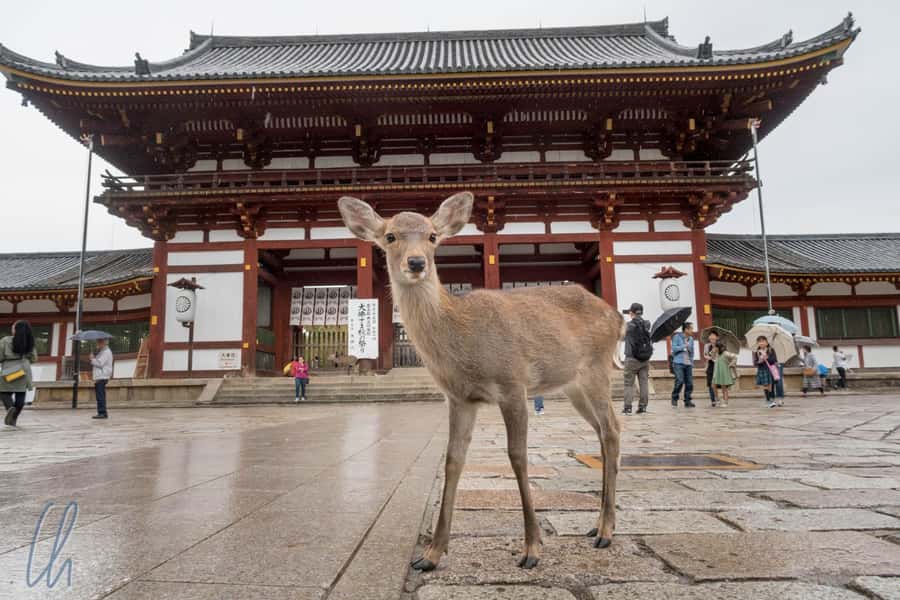
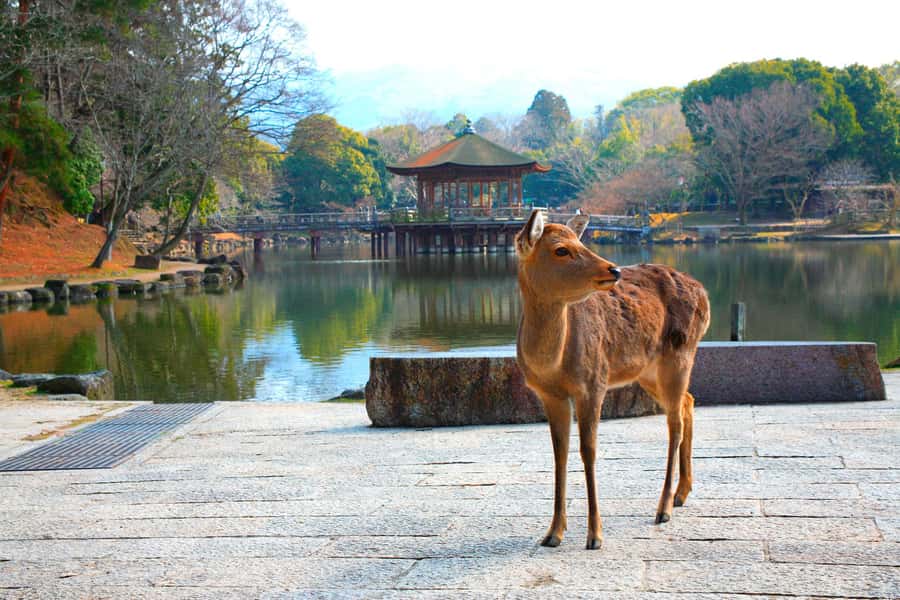
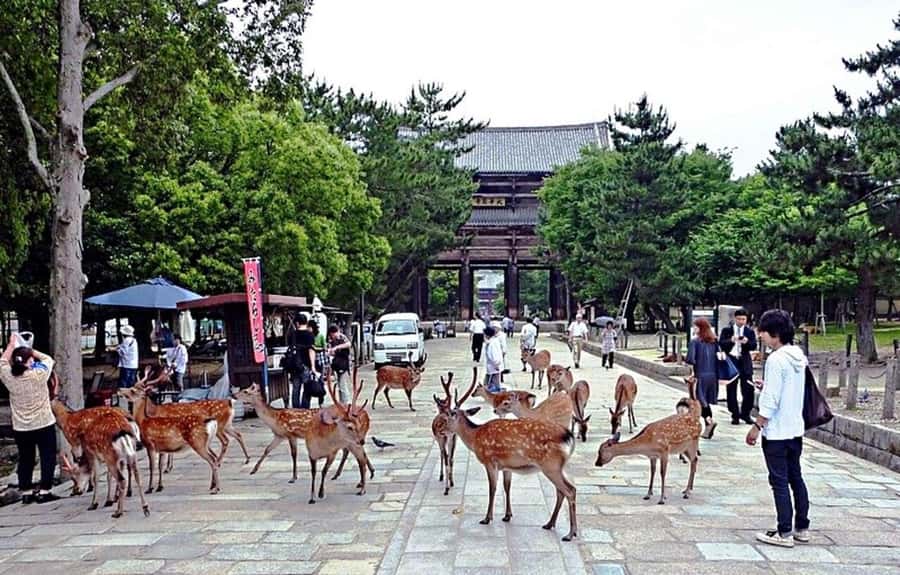
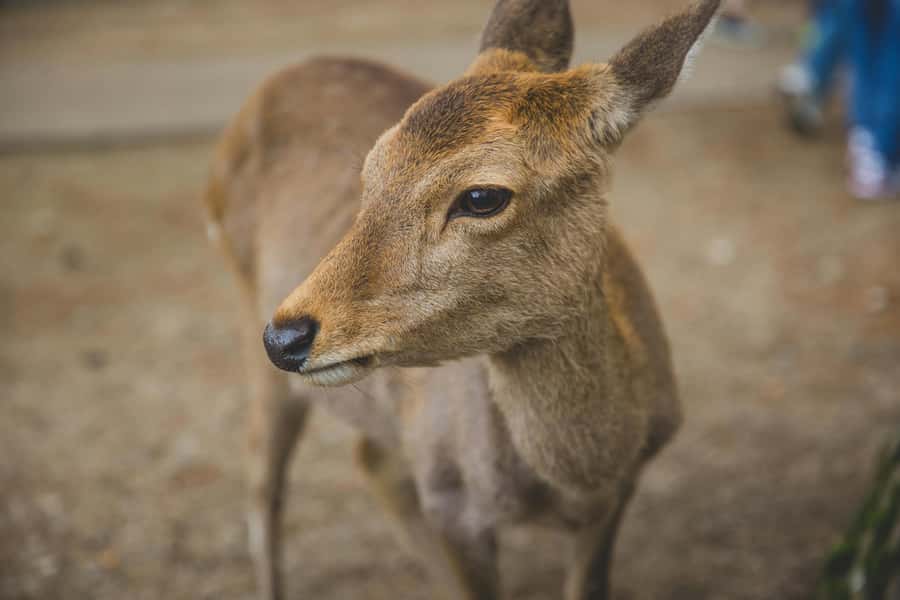
Nara Park is the opening emotional hit of the day. You’re not just looking at a statue or a museum display. You’re in a broad park area where hundreds of deer roam freely. The tour includes time for you to feed and interact with the deer while you take in the park’s calm, green setting.
Here’s what I like about building in deer time early: it slows you down. After bus rides and big-city movement, the deer make the experience feel more human and more relaxed. You can wander, look around, and get present without needing a strict sightseeing checklist.
Two practical notes so you enjoy this part more:
- Keep your walking pace easy. The ground can be uneven around wildlife areas, and you’ll want to stay balanced while watching what’s happening.
- Pay attention to the guide’s instructions before you feed or get close. You’re there for a fun interaction, not a scramble.
If you like nature elements mixed into classic sightseeing, Nara Park is the right anchor for this itinerary. It’s also a good moment for photos, because the deer plus trees and pathways create those “Japan postcard” compositions fast.
Kiyomizu-dera and Otowa Waterfall: UNESCO views with a spiritual twist
Next comes Kyoto’s crown jewel on this route: Kiyomizu-dera. This is a UNESCO World Heritage site, and the tour gives you access plus dedicated time to see what makes it famous.
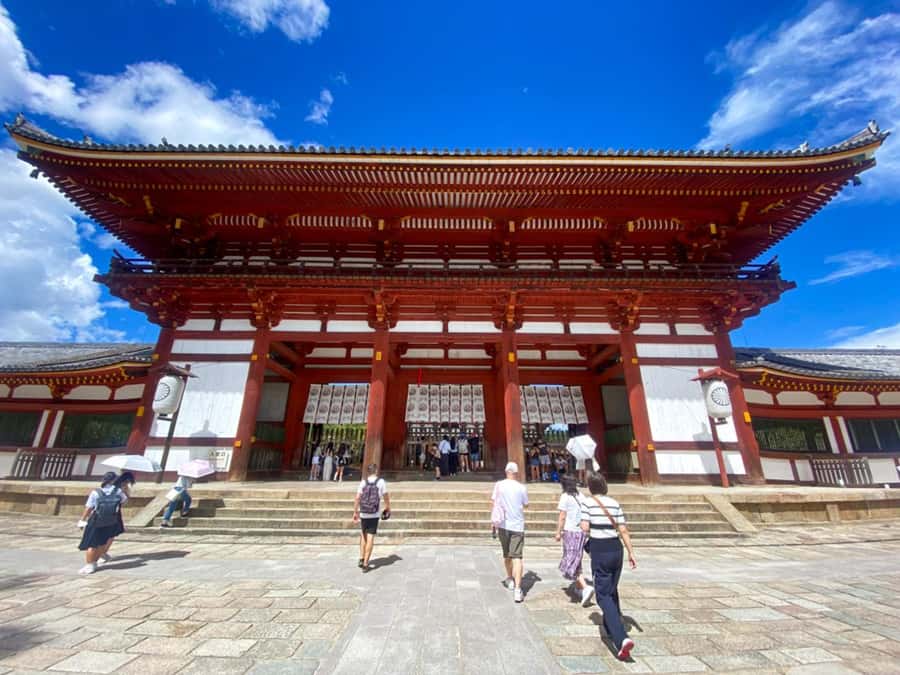
The big visual payoff is the temple’s wooden stage. Standing in the right spot, you can take in Kyoto from above in a way that feels both historic and cinematic. Even if you’ve seen photos before, the scale can still surprise you—wooden architecture looks different when you’re in it, not looking at it through a screen.
Then there’s Otowa Waterfall. The sacred waters here are known for the wish-granting idea, which adds meaning beyond just sightseeing. It’s one of those moments where you can choose to go full symbolic (think: your wish, your breath, your focus) or simply enjoy the atmosphere and the sense of ritual. Either way, it’s memorable because it’s specific and grounded in place.
How much you enjoy Kiyomizu-dera depends on how you handle crowds and timing. The tour includes a guided visit with explanations, which helps you connect details you might otherwise miss—religion, architectural style, and even how parts of the structures are put together.
One timing reality: the day’s order may shift because of traffic or weather. On some days that can mean longer time around Kiyomizu-dera and shorter time at another stop, even though the tour tries to complete everything when possible. If Kiyomizu-dera is your top priority, you’ll still be in good hands, but plan to be flexible.
Sannenzaka lanes: old Kyoto streets without needing to navigate them
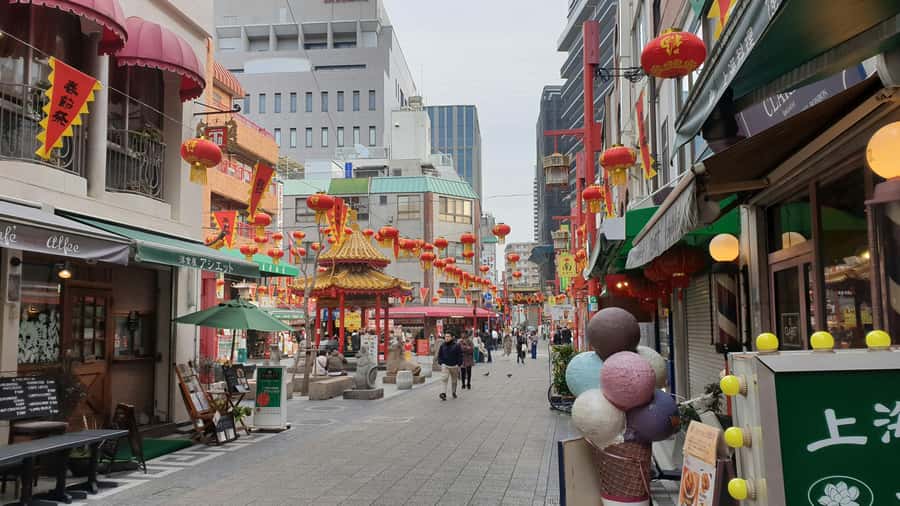
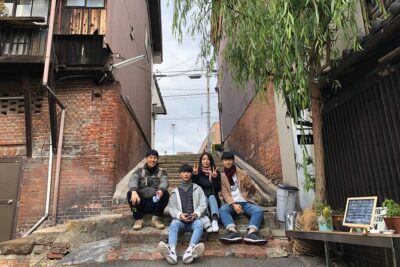
After the temple highlights, the tour brings you into Sannenzaka—one of Kyoto’s classic preserved street areas. This is where the day turns from “major monument viewing” into “slow-walk atmosphere.”
You’ll find narrow, cobbled lanes lined with traditional wooden buildings, plus little shops and tea houses. The goal isn’t just to look; it’s to experience Kyoto’s old streets in a way that feels like you’re moving through a living neighborhood. It’s also a nice pacing change after standing around temple viewpoints.
Practical tip: wear shoes you trust. Cobblestones and uneven paths can be harder than they look, and you’ll be doing a lot of walking across multiple stops.
If you like photographing streetscapes, Sannenzaka is one of the best places on this route for it. The wooden facades, signage, and lane depth create layered scenes that don’t require a lot of effort—just a good walk and a steady eye.
Fushimi Inari Taisha: walking through the red torii path up Mount Inari
The tour ends with Fushimi Inari Taisha, famous for its endless pathways of red torii gates winding up Mount Inari. This is the kind of place where the scenery changes as you walk: the gates repeat, but your perspective keeps shifting, so it doesn’t feel like you’re just standing in one spot.
This stop is also spiritually loaded in an easy-to-understand way. Even if you don’t know the theology, the sheer act of walking through the gates gives you a sense of ritual and momentum. It’s a visual rhythm that pulls you forward.
What I recommend here is simple:
- Choose a comfortable pace. Don’t sprint early and regret it later.
- Stop when you get a good sightline. The gates framed against the sky photograph beautifully, but they’re also worth pausing for with your eyes first.
This is also a good moment to take photos you’ll actually want to print. The red gates are bold, but the surrounding slopes and walkway angles help create variety rather than repeating the same shot.

Bus schedule reality: long distances and shifting stop order
A day trip like this lives and dies by logistics. The tour runs from Osaka, and the distances are long, so you’ll spend some time on the bus. That’s not a flaw—it’s the price of hitting Nara and multiple Kyoto areas in one day.
The other reality is scheduling. The order of stops and the timing can change due to traffic, weather, and local events. Still, the tour guarantees completion whenever possible. In practice, that means you might see uneven time at each site.
Here’s the balance I’d strike if you’re planning your day around this tour:
- Think in experiences, not minutes. You’ll get Nara deer time, you’ll get Kiyomizu-dera access and Otowa Waterfall, and you’ll still reach Fushimi Inari.
- If Kiyomizu-dera is your must-see, take comfort that the temple receives substantial time even when plans shift.
Also, this tour is not suitable for wheelchair users, so if mobility is a concern, you’ll need to consider alternatives or accommodations outside this format.
Price and value at about $49: what you’re paying for
At around $49 per person, this is priced like a structured day trip, not a budget taxi tour. What you’re paying for is the combination of:
- a bilingual English/Spanish guide
- transportation from the meeting point
- access to Kiyomizu-dera
What you’re not paying for is also important: food and drinks aren’t included, and there’s no pickup or drop-off at your hotel. You’ll meet at Osaka Mode Gakuen and return to that same meeting point.
So is it good value? For most people who want Nara plus major Kyoto highlights in one day, yes. The guide explanations help you understand what you’re seeing—at times, guides can explain religion, architectural style, and even construction details in plain language. That kind of context is hard to recreate when you’re on your own.
To make the price feel worth it, plan ahead for meals. Bring a snack mindset, or budget time to buy food nearby when you’re at street areas like Sannenzaka. Since food isn’t included, you control what you eat and when, which also keeps things flexible.
Guides and explanations: why it feels more “guided” than rushed
One reason the day often works well is the quality of guidance. The tour uses a bilingual guide, and examples like Angeles and Alejandro show the range of what you can get: explanations of religion, architectural style, and construction details, delivered in a way that helps you connect the dots fast.
That matters because these are three big, different sites:
- Nara Park is nature + folklore + daily life.
- Kiyomizu-dera is sacred space + architecture + views.
- Fushimi Inari is ritual walking + repetition + perspective.
Without interpretation, you can still enjoy all of it. With interpretation, you tend to remember more. You also stand in the right spots more often, because you’re guided where the meaning and the views line up.
Who this Nara, Kiyomizu-dera & Fushimi Inari trip fits best
This is the right kind of tour if:
- You’re short on time in Kansai and want Osaka-to-Kyoto highlights in one day.
- You prefer having a route and guide so you don’t stress about transfers.
- You like mixed sights: deer in a park, UNESCO temple architecture, historic lanes, and torii gates.
It’s less ideal if:
- You want a strict, minute-by-minute schedule at every stop. The day can flex for traffic and weather.
- You need wheelchair-friendly routes, since the tour is not suitable for wheelchair users.
If you’re traveling with limited energy for planning, this format is a win. You’ll trade a bit of control for a lot of convenience—and you’ll still see the major icons that most people come to this region for.
Should you book this trip?
If your ideal day is a focused sampler—Nara Park deer, Kiyomizu-dera with Otowa Waterfall, and Fushimi Inari’s torii walk—then booking makes sense. The $49 price is reasonable for a full guided day with transportation and temple access, and the bilingual guide adds value beyond just “showing up at places.”
Book it if you can handle bus time and accept that stop order might shift. Skip it if you only care about one site and need guaranteed, fixed timing there.
If you want my straightforward advice: this is a strong one-day plan for first-timers in the area, especially if you’d rather let someone else manage the flow while you focus on walking, looking, and taking in Japan’s sights at human speed.
FAQ
Where is the meeting point for the Osaka to Nara and Kyoto trip?
Meet your guide at the corner of the building Osaka Mode Gakuen. The guide will be waiting with a sign of Amigo Tours.
Which languages are available on this tour?
The tour offers English and Spanish.
What’s included in the $49 per person price?
Included are a bilingual guide (English/Spanish), transportation from the meeting point, and access to Kiyomizu-dera.
Is food or drinks included?
No. Food and drinks are not included.
Do they pick you up from your hotel?
No. Pickup and drop-off at your hotel are not included. You’ll start and end back at the meeting point.
Is the tour wheelchair-friendly?
No. It is not suitable for wheelchair users.
What should I bring for the day trip?
Bring comfortable shoes, a camera, sunscreen, and water. The tour includes a lot of walking and outdoor time.