REVIEW · OSAKA
【For adult】Traditional Mochi Pounding Experience with Tasting
Book on Viator →Operated by Theosaka · Bookable on Viator
Rice hammers, sweet rewards, Osaka style. This hands-on mochi-making class turns a short Osaka visit into a real cultural workshop, with a quick history lesson and lots of time to use traditional tools—plus friendly instruction from people like Aiko, Grace, and Seina.
I also like the small group size (up to 10) because you actually get individual turns pounding, shaping, and tasting instead of watching from the sidelines.
The best part is what you eat at the end: you taste freshly pounded mochi with classic toppings like kinako and sweet red bean paste, alongside tea. One consideration: mochi is chewy and can be harder to swallow than you expect, so older folks should stick to small portions.
In This Review
- Key highlights at a glance
- Mocha pounding in Osaka’s Dotonbori: why this feels like the real thing
- Where you meet at Oh Mochi and how to plan your hour
- The short history talk that makes the pounding meaningful
- From steamed rice to mochi: what the hands-on process feels like
- Shaping and tasting: kinako, sweet red bean paste, and tea
- Who should book this mochi pounding class (and who should think twice)
- Price and value: is $32.37 a fair deal?
- Tips to make your mochi hour smoother
- Should you book this mochi pounding experience in Osaka?
- FAQ
- How long does the mochi pounding experience last?
- Where does the tour start?
- How many people are in the group?
- What languages are offered during the experience?
- Is it okay for vegans or vegetarians?
- What if the weather is bad or I need to cancel?
Key highlights at a glance
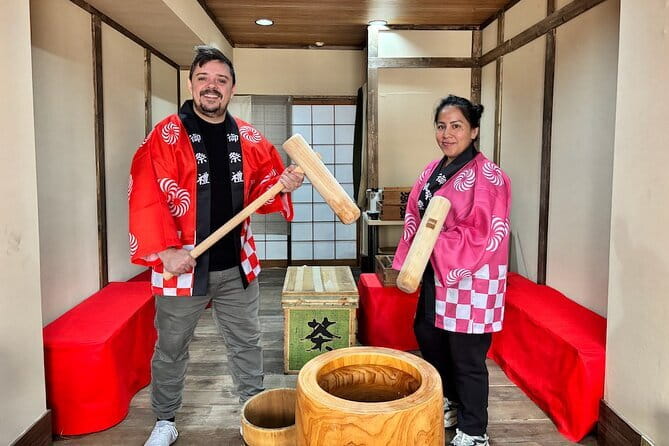
- Hands-on mochitsuki tools: you’ll steam the rice, then pound it into mochi
- Small-group rhythm: turns are organized so everyone participates
- Classic flavors included: kinako and sweet red bean paste among the topping options
- Tasting right after: you eat what you made, served with tea
- English support with Chinese materials: English-led plus Chinese slides/interpreting
Mocha pounding in Osaka’s Dotonbori: why this feels like the real thing
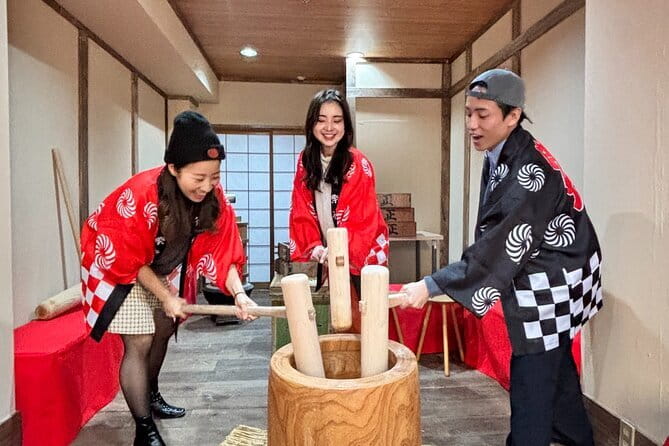
Osaka’s Dotonbori is busy, loud, and tourist-heavy—but a mochi pounding class cuts through that. You step into a focused hour where the goal is simple: make mochi, then taste it while it’s still at its best.
What makes this experience work is the structure. You’re not just shown how it’s done. You get trained on what to do with the mortar and pestle, you take part in pounding, and you shape the final pieces. That hands-on approach is the difference between watching a cooking show and learning a skill you can talk about (and remember) later.
You also get a cultural grounding before the pounding starts. The quick talk covers the history and cultural significance of mochitsuki, so the hammering isn’t just a gimmick. It’s tied to why mochi matters in Japanese life—especially around seasonal traditions and shared celebrations.
And because the group is capped at 10, the class doesn’t feel rushed or chaotic. I like that the energy stays friendly and personal, which is exactly what you want when you’re using traditional tools and trying something physical for the first time.
You can also read our reviews of more food & drink experiences in Osaka


Where you meet at Oh Mochi and how to plan your hour
The experience meets at Mochi Pounding Experience Osaka, Oh Mochi, at 2-chōme-4-11 Dōtonbori, Chuo Ward, Osaka (542-0071). It also runs from that same meeting point and ends back there.
A few practical notes make this easier to slot into your day. The class lasts about 1 hour, and you can choose either a morning or afternoon session. It’s also near public transportation, so you don’t have to fight long transfers just to get to the workshop.
You’ll use a mobile ticket, and confirmation is handled at booking. In other words, you’re not spending time printing anything or figuring out where to start.
What to wear? Think comfortable and light. People note the room can get warm, especially on hot days. Also, mochi-making is messy enough that you’ll want sleeves you don’t mind getting a bit warm or sticky. If you’re bringing kids, the setup is built for participation—some kids use smaller tools—so plan for movement, not museum behavior.
One more quick safety thought: mochi is chewy. Older adults may need to take very small bites so swallowing stays easy. (The class itself notes this kind of caution.)
The short history talk that makes the pounding meaningful
Before you touch the tools, you get a 10-minute talk about the history and cultural significance of mochi pounding. It’s not a lecture marathon. It’s timed to get you ready for what you’re about to do—steaming rice, pounding it, and turning it into something that ends up on your plate moments later.
This is valuable because mochi isn’t just a dessert. It’s tied to Japanese seasonal habits and the idea of making something together. Even if your Japanese is basic, you’ll likely understand the big themes: why people gather to pound mochi, what the process represents, and why freshly made mochi tastes different.
The class is also set up for easy language support. Instruction is in English, and Chinese support is provided through slides or interpretation via ChatGPT. That means you can follow along without losing the plot if you’re not fluent.
In practical terms, the talk helps you pay attention during the hands-on part. You’ll understand what you’re aiming for when you pound and what texture the instructors are watching for. That keeps the experience from feeling random. You’re learning a process with a goal.
From steamed rice to mochi: what the hands-on process feels like
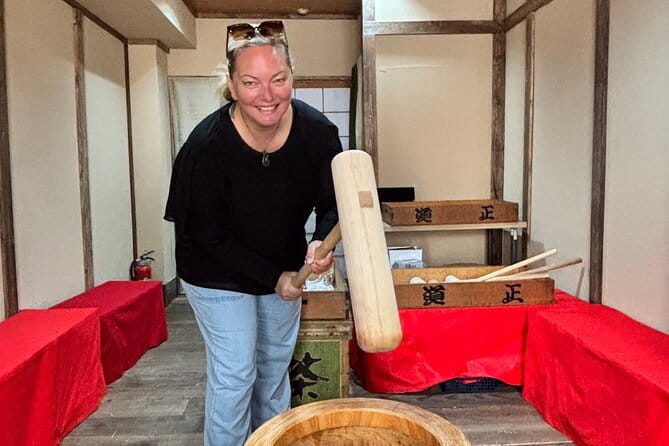
Here’s the heart of it: the workshop moves through the steps of traditional mochi-making.
First, you join the process of steaming glutinous rice. This is where the class starts to feel real. You’re handling ingredients and watching how the rice changes—softening and becoming ready for pounding.
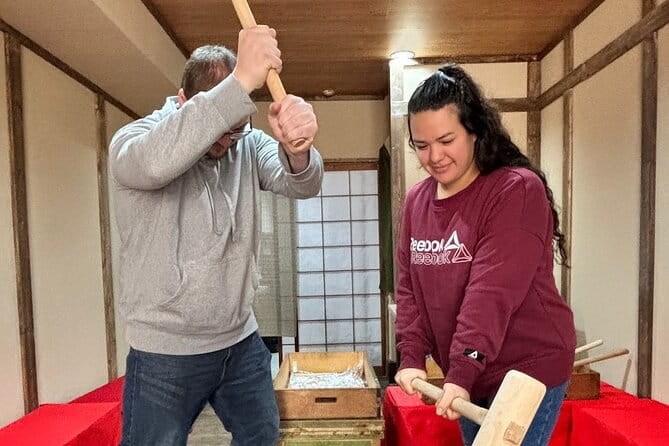
Then comes the tool work. You use traditional implements—a mortar and pestle—to pound the steamed rice into mochi. This part is physical. Reviews consistently mention the workout factor, which is a good sign. It means you’re truly participating, not just taking pictures.
The instructors guide you through the rhythm and technique so everyone gets a turn. People also mention that the hosts make sure you participate, which matters because this can’t just be one “star” hammering while everyone else stands around.
If you’re traveling with kids, the setup is family-friendly. One review notes there were small mallets available so children can pound along. That’s a big difference from classes that treat kids as observers.
Another thoughtful touch: staff help with photos and videos. You’ll still want to put your phone away at key moments, but it’s nice to know you can capture the experience without making it a distraction for the staff.
Expect plenty of energy. The instructors often keep things upbeat, with friendly encouragement that makes the pounding feel fun rather than intimidating. You leave with the kind of story that starts with the sound of the mortar—because you really get to feel the process.
Shaping and tasting: kinako, sweet red bean paste, and tea
Once the mochi is made, you don’t just take it and run. The class includes shaping and tasting immediately after pounding—so you can compare texture and flavors while everything is fresh.
You’ll be served freshly pounded mochi with five beloved Japanese seasonings and ingredients, along with a cup of tea. The topping list includes classics like kinako (roasted soybean flour) and sweet red bean paste. That’s a smart way to start, because these flavors are easy to recognize as traditional mochi partners.
Some people report tasting a wider range of flavor options—more than just the five items described—so you may find the menu feels broader in practice. Either way, the key is that you get multiple ways to eat the same fresh mochi, not just one “default” topping.
And this is where the experience earns its keep. Fresh mochi has a different feel than packaged versions: softer, stickier, and more elastic. It also changes how toppings land on the mochi. Kinako clings differently than it does on drier sweets, and sweet red bean paste feels richer when paired with warm, just-made texture.
Tea matters here too. The class serves tea with the mochi, which helps reset your palate between different toppings. If you’re doing this after a big lunch or a long morning of sightseeing, you’ll appreciate the pacing.


Who should book this mochi pounding class (and who should think twice)
This is a great match if you love food that’s both playful and rooted in tradition. Mochi lovers will have an easy time—this isn’t a “try one bite and move on” situation. You make mochi, then you eat it with multiple topping options.
It’s also ideal for people who want something more active than tea tastings or sake sampling. Mocha pounding is short, physical, and different from the typical Osaka food tour format.
Families fit well here. Kids can pound with smaller tools, and the group process keeps everyone involved. If you’re traveling with children who get bored watching adults cook, this format helps because the kids have a role.
If you’re vegan or vegetarian, the class states they accommodate dietary preferences, so you can participate without worrying that the experience is built only for meat-based diets. That’s important for value too; you want your money to buy full participation, not a watered-down experience.
Who might hesitate? If you’re sensitive to very chewy textures or you don’t like rice-based sweets, mochi may not be your favorite dessert style. Also, older adults should plan to take small portions because the texture can be harder to swallow.
Price and value: is $32.37 a fair deal?
At $32.37 per person, this is priced like a hands-on activity, not like a simple tasting. The value comes from what’s included: instruction, traditional tools, and the raw materials to steam and pound the rice—plus mochi made fresh in front of you.
You’re also getting a structured cultural lesson (the 10-minute history talk), and the experience ends with tea and mochi topped with multiple seasonings/ingredients. That makes the food part feel like part of the class, not an afterthought.
The small-group size helps too. If the group is capped at 10, you’re more likely to get real coaching and turns with the mortar. In a crowded workshop, those moments get swallowed by the logistics. Here, the format supports real participation.
So yes, it’s not a bargain in the “snack cost” sense. But it’s also not just paying for food. You’re paying for a skill-based hour, a fresh product you helped create, and a cultural context that turns it into a memorable Osaka stop.
Tips to make your mochi hour smoother
A few small choices can make the difference between a great workshop and a stressful one.
- Arrive a little early so you’re not rushing into your first pounding turn.
- Wear comfortable clothes for warmth and movement. Reports mention the room can get warm, especially on hotter days.
- If you’re traveling with kids, let them join the pounding rather than watching. The class setup includes smaller pounding tools.
- Plan for a filling sweet after: mochi is satisfying. If you’re doing it after lunch, go a bit lighter.
- If you’re aging or have swallowing concerns, take small bites. The experience explicitly notes this caution.
- Since the activity requires good weather, have a plan if it’s affected. If poor weather cancels it, you’ll be offered another date or a full refund.
Should you book this mochi pounding experience in Osaka?
Book it if you want a hands-on cultural activity that fits into a busy Osaka schedule. For the money, you’re getting exactly what you’d hope for in an authentic food workshop: real technique, real tools, real mochi you helped make, and multiple topping styles paired with tea—all within about an hour.
Skip it only if chewy sweets aren’t your thing or if you’re uncomfortable with food textures that require slow, careful bites. Also consider time: it’s short and focused, so it’s best as a single memorable stop rather than your only major “food adventure” day.
If you want an Osaka moment that’s more than photos—one where your hands do the work and your mouth tastes the result—this is a strong choice.
FAQ
How long does the mochi pounding experience last?
The experience is about 1 hour (approx.).
Where does the tour start?
It starts at Mochi Pounding Experience Osaka, Oh Mochi, at 2-chōme-4-11 Dōtonbori, Chuo Ward, Osaka 542-0071, Japan, and ends back at the meeting point.
How many people are in the group?
The class has a maximum of 10 travelers.
What languages are offered during the experience?
The experience is offered in English and Chinese. Chinese is provided through slides or interpreted by ChatGPT.
Is it okay for vegans or vegetarians?
The experience states it accommodates dietary preferences, so vegans and vegetarians can participate.
What if the weather is bad or I need to cancel?
The experience requires good weather. If it’s canceled due to poor weather, you’ll be offered a different date or a full refund. Free cancellation is available up to 24 hours in advance for a full refund.