REVIEW · OSAKA
Osaka: Traditional Tea Ceremony Experience
Book on GetYourGuide →Operated by B.B.Advisors Inc. AN OSAKA · Bookable on GetYourGuide
Thirty minutes of matcha peace in Osaka. This tea ceremony gives you a hands-on break while sightseeing, with single-origin special matcha you make yourself and Ohigashi Japanese sweets included.
You’ll get a simple flow: a quick explanation, matcha grinding, then actually taking part in the tea moment. One planning note: there’s no elevator, so you’ll need stairs to reach the venues.
In This Review
- Key highlights at a glance
- Why a 30-minute tea ceremony works in Osaka
- What you actually do: grinding matcha and taking part
- Matcha and Ohigashi: what’s included and how it lands
- Your 30-minute timeline, step by step
- Price and value: what $7 really buys here
- Finding the meeting point: multiple stations, short walks
- Language and comfort: what to expect in the room
- Who this Osaka tea ceremony suits best
- A few practical things I’d plan for
- Should you book this Osaka tea ceremony experience?
- FAQ
- How long is the Osaka tea ceremony experience?
- How much does it cost?
- What is included in the experience?
- Is there a grinding demonstration?
- Will I understand it if I only speak English?
- Is the completion certificate included?
- Where do I meet for the tea ceremony?
- Is there an elevator in the building?
- What are the operating hours?
Key highlights at a glance
- Single-origin special matcha that you’ll prepare, not just watch
- Ohigashi sweets included with your tea time
- From solo to groups: one person through a group can join easily
- Grinding demonstration plus an easy, beginner-friendly teaching pace
- English support as much as possible, even though the instructor is Japanese
- Major station access: you can reach it in minutes from several nearby stops
Why a 30-minute tea ceremony works in Osaka
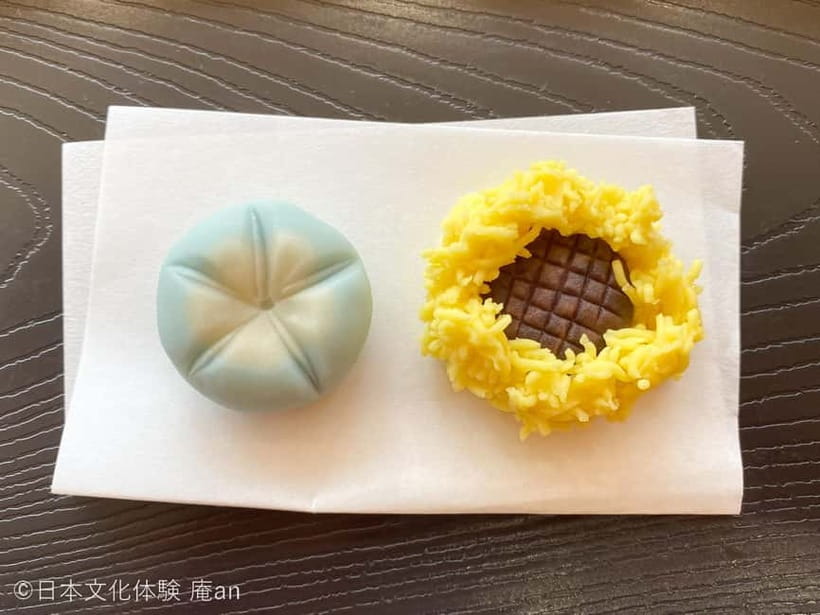
If Osaka is your first stop in Japan, you’ll notice something fast: you can pack a lot in. That’s fun, but it also burns time and energy. This tea ceremony is a neat reset—only 30 minutes—so you can fit it between sights without your whole day turning into one long sprint.
I like that it’s built for real visitors, not only people who already know tea etiquette. You’re not expected to act like a tea master. You learn the basic ideas, you participate, and you drink your matcha in a calm setting. And because it includes Ohigashi, you get that sweet-and-green pairing that feels very Japanese, even if you’re doing it casually.
There’s also a practical side: the matcha is single-origin special matcha, which matters because it changes the flavor character. One origin is usually more consistent and easier to appreciate. In plain terms, you get better odds of enjoying what’s in your cup.
You can also read our reviews of more tours and experiences in Osaka.

What you actually do: grinding matcha and taking part
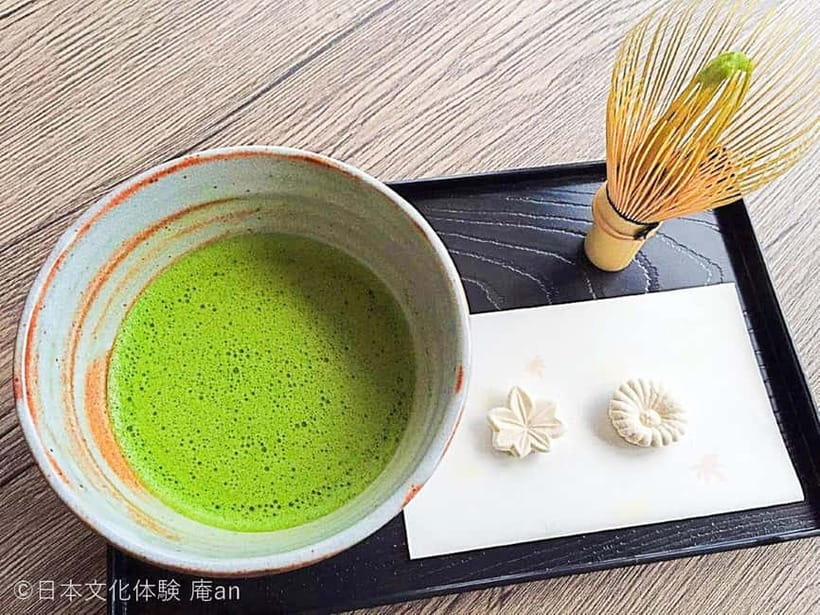
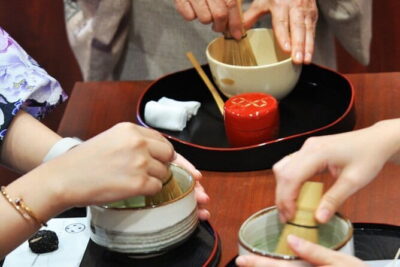
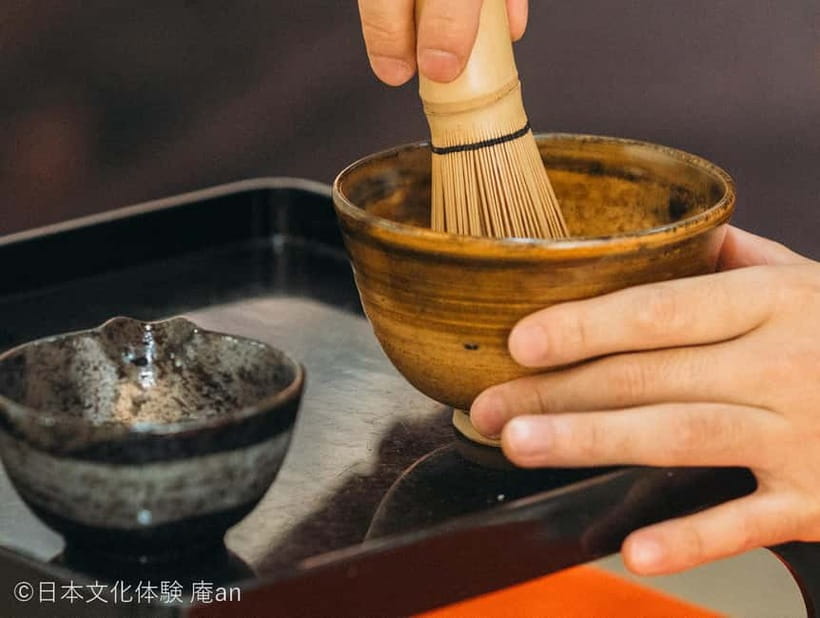
This experience is hands-on from the start. You’ll begin with a short session that covers the basics of tea, then you’ll watch and participate in the matcha process. After that, you take part in the tea ceremony itself—so you’re not just standing around.
Here’s the rhythm you can expect:
- You’ll make matcha yourself after a brief teaching moment.
- There’s a matcha grinding demonstration, which is the part many first-timers find most interesting.
- Then you move into the ceremony portion where you get to experience the flow as it’s meant to be done.
The best part for most people is that matcha isn’t treated like something too precious to touch. It’s presented as something you can enjoy thoughtfully. You can keep it relaxed, and still understand what you’re seeing and tasting.
Also, you’re dealing with a real tea setup. The experience includes an OTE-MAE (Japanese tea ceremony) set, which helps the whole thing feel authentic rather than like a quick performance.
Matcha and Ohigashi: what’s included and how it lands
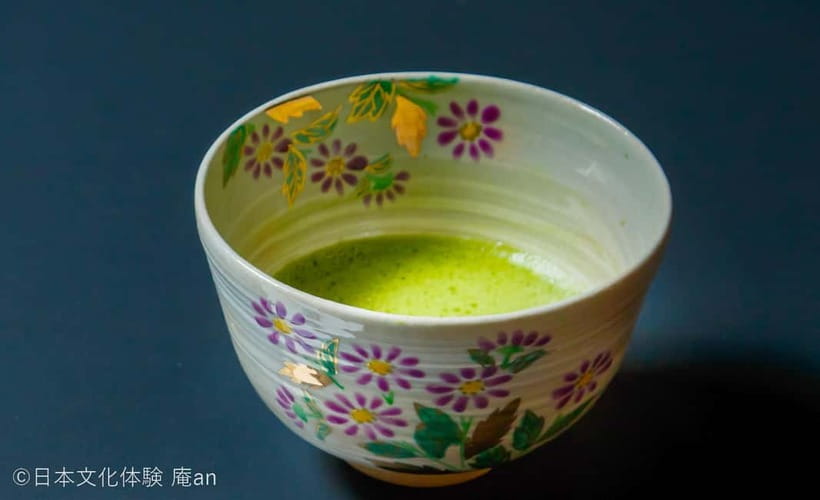
The highlights are simple for a reason. The experience leans on three things:
- Single-origin special matcha for your tea
- A casual matcha experience you make yourself
- Ohigashi Japanese sweets included with your drink
Matcha can be a surprise if you only know it from sweet lattes. Here, you get matcha in a more direct form, so you can taste it as tea rather than sugar-first. And the single-origin angle gives you a more focused flavor profile than the usual generic blend you might find elsewhere.
Then comes the balance: Ohigashi is there to pair with the tea. It’s not just a snack. It changes the whole experience because it gives you something traditional to eat during your tea moment. If you like trying small food pieces as part of sightseeing, this inclusion makes the ceremony feel complete.
Your 30-minute timeline, step by step
The session runs about half an hour total. It’s structured so you get the key pieces without feeling rushed.
A typical flow goes like this:
- Start of the experience: You get going at the scheduled time and receive an explanation about tea.
- Grinding demonstration: You’ll see (and then follow along for your own turn) how matcha gets prepared.
- Tea-ceremony experience: This is where you do the main activity and drink the matcha.
- Picture time: There’s time set aside for photos.
- Eating/drinking time: You’ll enjoy the tea and the sweets.
- Room departure: Then you’re done and can head back out to Osaka.
That “explanation → hands-on prep → ceremony → tea time” order is what makes it work for beginners. You’re taught enough to understand what you’re doing, then you get the payoff fast.
Price and value: what $7 really buys here
At around $7 per person for a 30-minute tea ceremony, the value is mostly in three places:
- Instruction and guidance so you don’t feel lost
- A real matcha-making experience (including the grinding step)
- The included sweets, Ohigashi, plus the tea ceremony set
Also, you’re paying for time that’s usually hard to replicate on your own. Grinding matcha properly and understanding the basic tea flow takes practice. Here, you get a managed version of that in one compact session.
One extra item to note: there’s an optional experience completion certificate for 300 JPY, and it’s not included in the base price. If you collect proof-of-wonder moments for your Japan trip, you might want to budget for it. If not, you can simply enjoy the tea and move on.

Finding the meeting point: multiple stations, short walks
This experience is easy to reach because it sits near several train options. Plan for a quick walk, not a long commute.
You can meet at:
- 1 minute walk from Exit 10 of Osaka Metro Yotsubashi Line Higobashi Station
- 5 minutes walk from Exit 7 of Keihan Nakanoshima Line Watanabebashi Station
- 7 minutes walk from Exit 10 of Osaka Metro/Keihan Line Yodoyabashi Station
- 10 minutes walk from Exit 11-5 of JR Tozai Line Kitashinchi Station
- 15 minutes walk from Osaka Station South Central Gate
If you’re arriving by car, there’s coin parking nearby.
Practical tip: pick the station you’ll pass closest to during your Osaka route. With only 30 minutes total, shaving even a few minutes off the walk helps you stay calm.
Language and comfort: what to expect in the room
The instructor is Japanese. English translation is provided as much as possible, which is what most non-Japanese speakers want to hear—support when you need it, without pretending this is a fully bilingual class.
In practice, this usually means you’ll still understand the steps even if your vocabulary is limited. The activity is visual: grinding, preparing, and then drinking. And the session is short enough that you’re not stuck in lecture mode for long.
One comfort detail that matters: those who don’t participate in the experience won’t be allowed to enter. So if you’re thinking of tagging along just to watch, this isn’t that kind of event. Go in with the plan to take part.
Who this Osaka tea ceremony suits best
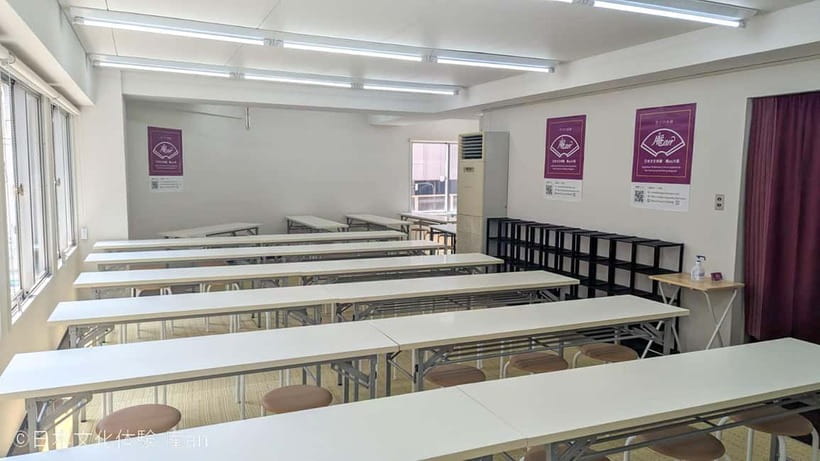
This is a good fit if you want a real cultural activity without taking a big chunk out of your sightseeing day.
You’ll probably enjoy it if:
- you want something hands-on and not just a museum stop
- you like trying matcha beyond sweet drinks
- you want a short experience that works for singles or groups
- you’d appreciate English help while still experiencing Japanese-led instruction
It’s also a smart choice for people who feel uncertain about etiquette. The pace is designed for beginners: you get a quick explanation, then you do the steps. You’re not expected to arrive knowing the correct way to hold everything.
A few practical things I’d plan for
- Bring comfortable shoes for stairs. There’s no elevator, and you’ll need to take stairs to reach the venues.
- Arrive with a buffer. The experience won’t be adjusted to accommodate delays, so late arrivals can ruin the timing.
- If you care about the completion certificate, remember it’s 300 JPY and not included.
- If you’re traveling with young kids: children sitting on a parent’s lap are free of charge if they’re under 2 years old.
These are small details, but they’re the difference between a smooth tea moment and a stressful scramble.
Should you book this Osaka tea ceremony experience?
Book it if you want a compact, authentic-feeling break with single-origin matcha and traditional sweets, plus a teacher-led flow that makes the steps clear. It’s especially worth it when you’re trying to balance Osaka sightseeing with something calmer and more hands-on than eating your way through neighborhoods.
Skip or think twice if stairs are a problem for you, because the venue has no elevator. Also, if you’re the type who often runs late, be honest about your timing—this format doesn’t shift to rescue delays.
If you’re looking for a practical cultural stop that fits inside a busy day, this one is a strong choice.
FAQ
How long is the Osaka tea ceremony experience?
It lasts about 30 minutes.
How much does it cost?
The price is $7 per person.
What is included in the experience?
You get an OTE-MAE set (Japanese tea ceremony) plus the matcha experience and Ohigashi sweets.
Is there a grinding demonstration?
Yes. There is a matcha grinding demonstration as part of the session.
Will I understand it if I only speak English?
English translation is provided as much as possible, though the instructor is Japanese.
Is the completion certificate included?
No. An experience completion certificate is available for 300 JPY.
Where do I meet for the tea ceremony?
You’ll meet near Higobashi Station, Watanabebashi Station, Yodoyabashi Station, Kitashinchi Station, or Osaka Station, depending on which route you choose.
Is there an elevator in the building?
No. There is no elevator, and you’ll need to use stairs.
What are the operating hours?
Operations run from 10:00 to 17:00. If you reserve after 17:00, it’s processed the next day.