REVIEW · OSAKA
Honor – Experience Samurai & traditional Culture to the fullest
Book on Viator →Operated by SAMURAI HONOR · Bookable on Viator
You wear armor, then walk Osaka Castle. This private, hands-on samurai culture class pairs Osaka Castle in armor with calligraphy and tea ceremony, plus a sword trial and pro photos. One watch-out: it’s a splurge at $181.19, so it makes the most sense if photos and hands-on practice matter to your trip.
The flow is tight and theatrical, but it’s also practical. You start with the brush work, then move into tea etiquette, then sword instruction with an instructor who handles the Japanese sword and keeps things safe. You’ll also get a photographer working through your whole session, and the results are sent to your email address as digital data.
You might meet instructors named in past groups, like Sakuma San for calligraphy and Taguchi San for sword training, with translation support such as Camila San. Expect about 3 hours total and a true private experience where it’s just your group, not a crowded cattle-car.
In This Review
- Key things I’d plan around
- Armor and Osaka Castle Walk Time
- Bushido Warm-Up: Calligraphy Prep and the Word of Resignation
- Matcha Etiquette: Tea Ceremony and Wagashi Manners
- Iaido Lesson and the Sword Trial Cutting
- The Battle of Osaka Role-Play and Photo Ground Time
- What You Actually Get: Prints, Photo Data, and Video Options
- Price and Pace: Is This Worth $181.19?
- Where It Fits in Your Osaka Day
- Who Should Book SamuraiHonor, and Who Might Skip It
- Should You Book This SamuraiHonor Experience at Osaka Castle?
- FAQ
- What’s the duration of the SamuraiHonor experience in Osaka?
- Is this a private experience?
- What’s included in the price?
- Will I receive printed photos?
- Do they offer video as an add-on?
- What activities are part of the itinerary?
- Where does the experience take place?
- What languages are available?
- Are there safety or health restrictions?
- What if I’m late?
Key things I’d plan around
- Osaka Castle Park plus Osaka Castle grounds in your armor for real photo time, not just a studio set
- Samurai calligraphy with a full-size take-home piece after learning how to hold the brush and prep tools
- Tea ceremony with matcha and wagashi focused on etiquette, gesture, and hospitality
- Iaido practice and a sword trial cutting session with safety instruction from a sword professional
- A role-play battle moment (April 1615 Osaka Summer Battle) that ends with a dedicated photo segment
- Professional photo prints and digital files included, with an optional video upgrade if you want more
Armor and Osaka Castle Walk Time
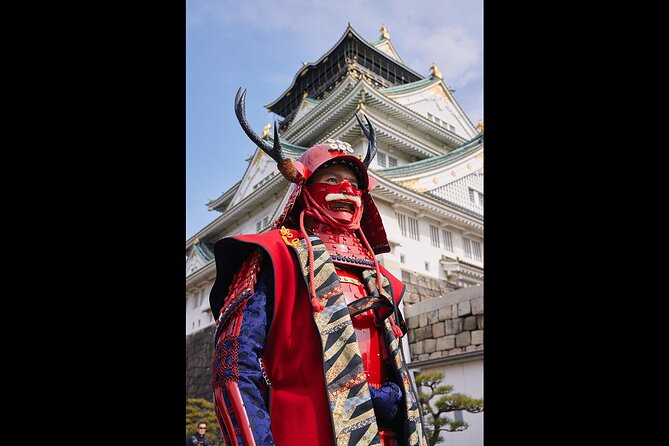
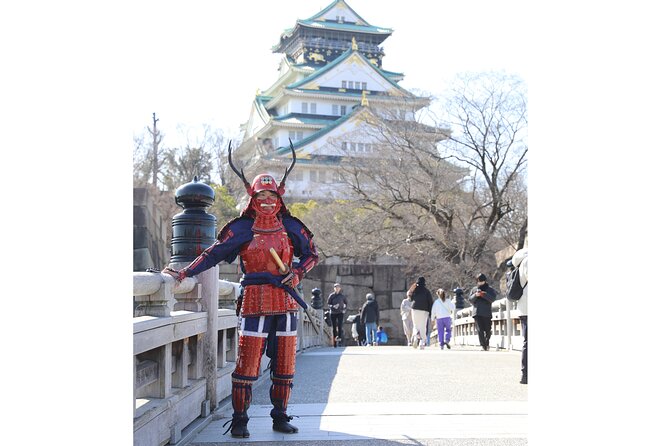
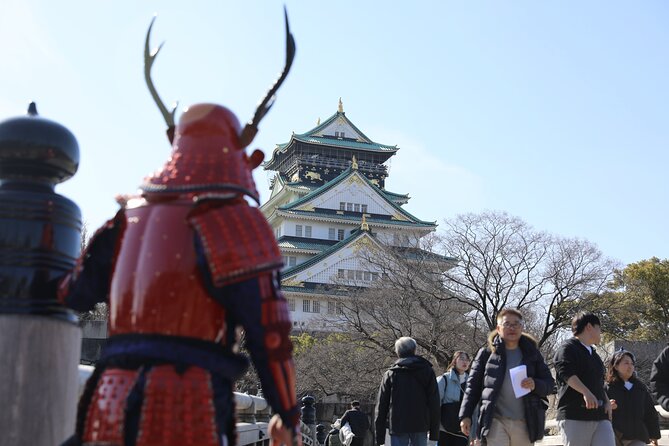
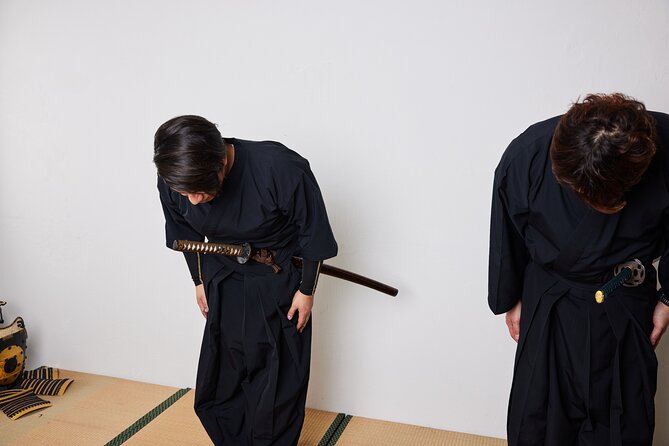
This is the part most people remember: you don a replica samurai outfit (armor plus hakama) and actually get time on the Osaka Castle grounds area, starting at Osaka Castle Park and continuing to Osaka Castle itself. It’s not just a costume change for a single quick picture. You get a real walk-through feel while the photographer captures you during key moments.
Why that matters: Osaka Castle is one of the easiest places in the city to anchor your day. Most tours give you views. This gives you a story inside the views. The contrast is fun. You’re standing in a landmark built in a different era, wearing gear built to represent a warrior who lived under total rules and discipline.
Practical reality check: you will sweat in armor and hakama, and you’ll be moving during calligraphy, tea, and sword practice. The tour specifically asks you to show up dressed in a way that makes armor fitting and movement realistic. If you’re thinking this is a light costume stroll, adjust your expectations.
Also, your armor selection depends on your measurements. They note that, in general, sizes fit heights up to about 185 cm and weights up to about 100 kg, and you may not be able to wear your preferred option. The staff help you put it on, and you’re not meant to dress yourself.
You can also read our reviews of more tours and experiences in Osaka.


Bushido Warm-Up: Calligraphy Prep and the Word of Resignation
The session starts like a samurai training day would: with preparation and discipline, not random crafts. You learn how to hold the brush and use the tools properly. Then you practice samurai calligraphy, including a set theme tied to resignation—literally words connected to saying goodbye as a warrior prepares for death.
It’s a powerful choice for a short tour. Calligraphy sounds soft until you realize it’s basically controlled intention. Your arm position, grip, and timing all matter. The lesson is short, but it’s focused on technique: preparing yourself for calligraphy, how the brush should move, and how to execute the character in a way that looks right.
Then comes the payoff. You don’t just do a tiny doodle. You practice and create a larger piece, and the experience includes professional photography throughout, so your finished character can show up in the story your photos tell.
In past sessions, people also got extra personal meaning from the lesson, like writing a kanji of choice or even names for kids. The tour information doesn’t guarantee every personalization option, but the overall setup is designed for you to leave with something tangible rather than walking away with only photos.
Matcha Etiquette: Tea Ceremony and Wagashi Manners
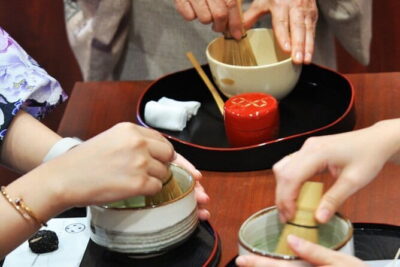
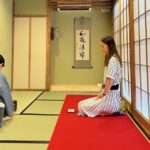
After the brushwork, the pace slows on purpose. You move into a tea ceremony where a master prepares and serves powdered green tea. You learn etiquette, manners, the look of gestures, and the spirit of hospitality—how the experience is meant to make both host and guest behave correctly.
This part works because it balances the harder segments. Sword practice and armor can make the day feel loud. Tea ceremony brings it back to control—posture, timing, and small actions. Even if you don’t remember every etiquette rule, you’ll feel the logic of the flow.
You also get traditional snacks: matcha (green tea) and wagashi (Japanese sweets). That’s not an afterthought; it’s part of the “role” you’re in. You’re dressed like a warrior, learning how a warrior culture handles calm hospitality.
If you’re the kind of traveler who loves details like how people hold objects or why gestures matter, this is one of the strongest sections of the itinerary. If you prefer purely action-based experiences, you may still appreciate this as the reset button between the sword trial and the final battle photo moment.
Iaido Lesson and the Sword Trial Cutting
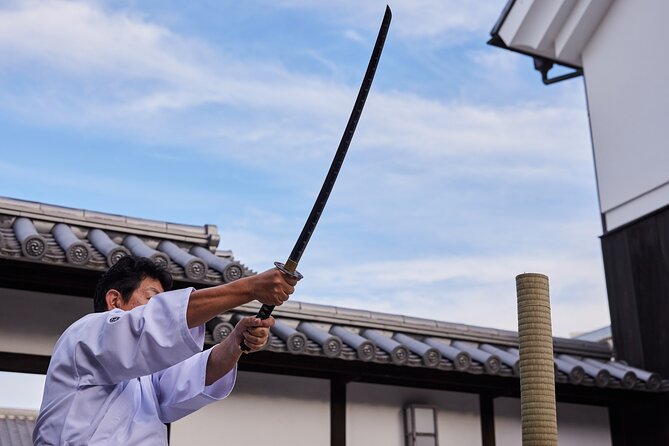
This is where the experience earns its credibility. You’ll get instruction on Iaido, a Japanese martial art focused on sword handling and controlled movement. The tour notes that an instructor with 10 years of swordsmanship experience handles the Japanese sword and provides instruction before the experience.
One big safety point from the details: the tour says drawing swords is dangerous and you shouldn’t do it without permission. That’s not just legal language. It’s a heads-up that you’ll follow a guided process, not improvise.
Then you get the hands-on highlight: a sword trial cutting session. The provided info calls it a cutting trial with about 30 minutes allocated. The experience description also frames it as trying the cutting edge and includes the idea of bamboo cutting in past experiences.
So what should you expect, realistically, in a 3-hour day? You’re not becoming a swordsman. You’re learning how to stand, how to handle the rhythm of the movement, and how to try a controlled cut under supervision. You’ll leave with a story that feels real, plus photos documenting the key moments.
If you have back problems or heart conditions, this tour is explicitly not recommended. Also remember you’re in armor and moving. The sword segment is the part that can feel physically intense, even if it’s short.
The Battle of Osaka Role-Play and Photo Ground Time
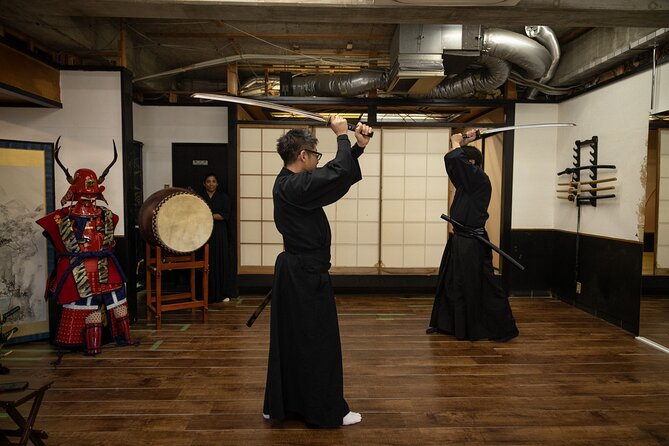
Then you put it all together in the most cinematic way the day allows. The tour stages a moment in April 1615, when the Osaka Summer Battle begins. You pretend to be a soldier on Toyotomi’s side, wear armor, and go into the battle setting for a photo segment.
The “battle” is a role-play for photos, not an actual reenactment with chaotic combat. But it’s built around a key idea: samurai culture isn’t just about gear or sword techniques. It’s about discipline, posture, and presence. The photographer captures you on the grounds of Osaka Castle as if you belong there.
In other words, you’re not just wearing armor. You’re learning how to look like the character you’re portraying. That makes a difference in the final set of images.
If you’re someone who wants the fun costume experience but also wants it to feel grounded in meaning, this section hits a sweet spot. It’s dramatic without being random.


What You Actually Get: Prints, Photo Data, and Video Options
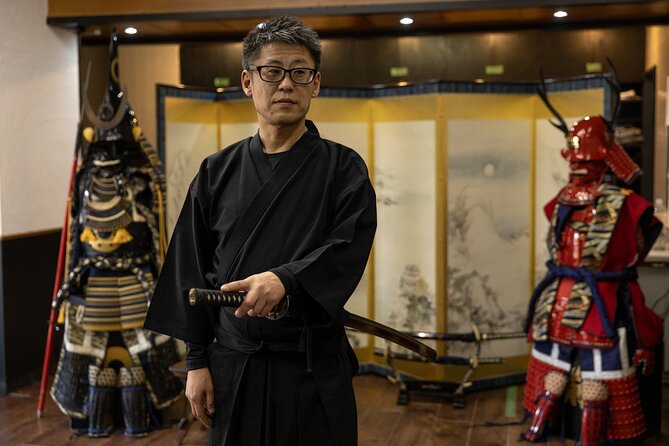
Photography is a major part of the value here, and it’s not left vague. The tour includes professional photo prints and photo files. You’ll have the data sent to your designated email address.
That’s important because a lot of “photoshoots” are basically: staff take a few pictures, you get a link, end of story. Here, the structure suggests the photographer is working throughout the calligraphy, tea ceremony, and armor moments, then wrapping around the battle-role and castle photo time.
There’s also a video upgrade option. The details don’t specify what format you’ll get, but the key point is: there’s a paid enhancement if you want more than still images.
One more practical note: smartphone photography is permitted, but you can’t take selfies or photograph other guests. Fixed tripods and recording videos are also discouraged because they may disturb others.
So bring a smartphone for your own quick shots if you want, but lean on the pro photos for the real keepsakes.
Price and Pace: Is This Worth $181.19?
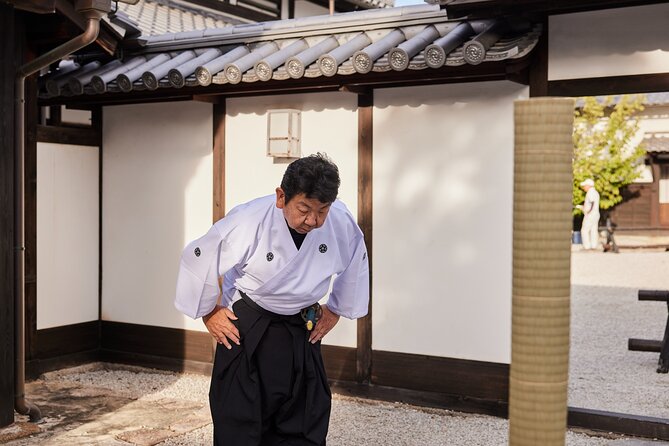
At $181.19 per person for about 3 hours, you’re paying for several things at once: costume fitting, guided lessons (calligraphy, tea etiquette, Iaido basics), sword trial cutting time, traditional snacks, and professional photography deliverables.
If your goal is only casual sightseeing, this will feel pricey. The tour doesn’t exist to replace walking around Osaka Castle on your own. It exists to make Osaka Castle part of a structured samurai training story.
Here’s how to judge value:
- You want hands-on practice, not just watching.
- You care about professional photos and delivered digital files.
- You like experiences where multiple traditional arts connect: brush, tea, sword, and etiquette.
- You’re okay with a short, focused session rather than long training.
Also, it’s private. Only your group participates. That matters because one-on-one attention makes the whole schedule feel less rushed and more tailored than many group class formats.
Where It Fits in Your Osaka Day
This experience runs about 3 hours and ends back at the meeting point. It’s near public transportation, so you won’t need a long taxi hunt. Still, do plan buffer time. The tour notes that if you’re more than 30 minutes late, you may be refused entry, even if you contact them.
Late arrivals are where these cultural-and-safety-focused experiences fall apart. Dressing into armor takes time, and the instructors need the schedule to stay on track.
One smart move before you go: use the restroom before dressing. The tour explicitly asks you to do this, since once you’re in armor and hakama, things get less convenient.
If you want to connect it with the rest of Osaka: plan this as one of your anchor experiences near Osaka Castle. It pairs well with an afterward walk, since you’ve already built context before sightseeing.
Who Should Book SamuraiHonor, and Who Might Skip It
This fits best if you’re excited by traditional arts plus a bit of action. You’ll like it if you enjoy learning through doing: writing with a brush, performing tea etiquette motions, and trying a supervised sword cut.
It’s also a strong pick for a couple or solo traveler who wants a private class. One review experience described it as a private class situation with multiple instructors and a translator, which is exactly the kind of attention you want for something this structured.
It may also work for older kids who can follow safety rules. One past participant included a 12-year-old who enjoyed sword handling and calligraphy.
Skip it or reconsider if you have back problems or heart conditions, or if you need stroller access. The tour notes it isn’t stroller accessible and includes those health cautions.
Should You Book This SamuraiHonor Experience at Osaka Castle?
Book it if you want a complete samurai-themed experience in one morning or afternoon: armor + Osaka Castle photos, guided calligraphy practice, a real tea ceremony with matcha and wagashi, and Iaido instruction that ends with a sword trial cutting moment.
Don’t book it if you mainly want cheap photos or unstructured castle wandering. This tour is structured and time-boxed. You’re buying meaning, technique, and pro images—not just a quick costume shot.
If you go, show up rested, follow the safety and no-selfie/no-tripod rules, and treat the calligraphy and tea moments as more than breaks. That’s where the day stops feeling like a theme and starts feeling like a culture lesson you can actually remember.
FAQ
What’s the duration of the SamuraiHonor experience in Osaka?
It runs for about 3 hours (approx.).
Is this a private experience?
Yes. It’s private, and only your group participates.
What’s included in the price?
You get a samurai outfit (armor and hakama), photography with photo data sent by email, traditional matcha and wagashi, and gratuities and taxes/tips.
Will I receive printed photos?
Yes. Professional photo prints and photo files are included.
Do they offer video as an add-on?
A video upgrade is available as a paid option.
What activities are part of the itinerary?
You’ll practice calligraphy, do a tea ceremony, and have an Iaido sword experience that includes a sword trial cutting. You’ll also dress in samurai armor and participate in a role-play photo moment connected to the Battle of Osaka.
Where does the experience take place?
It begins at the Osaka Castle Park area and includes time at Osaka Castle. The activity ends back at the meeting point.
What languages are available?
English is the default. Other languages may be available if you inquire, but it depends on staff availability.
Are there safety or health restrictions?
The tour is not recommended for people with back problems or heart conditions. You’ll also need to sign a liability waiver. Drawing swords is dangerous, and you must follow instructor permission and guidance.
What if I’m late?
If you’re more than 30 minutes late, entry may be refused regardless of whether you contact them.